
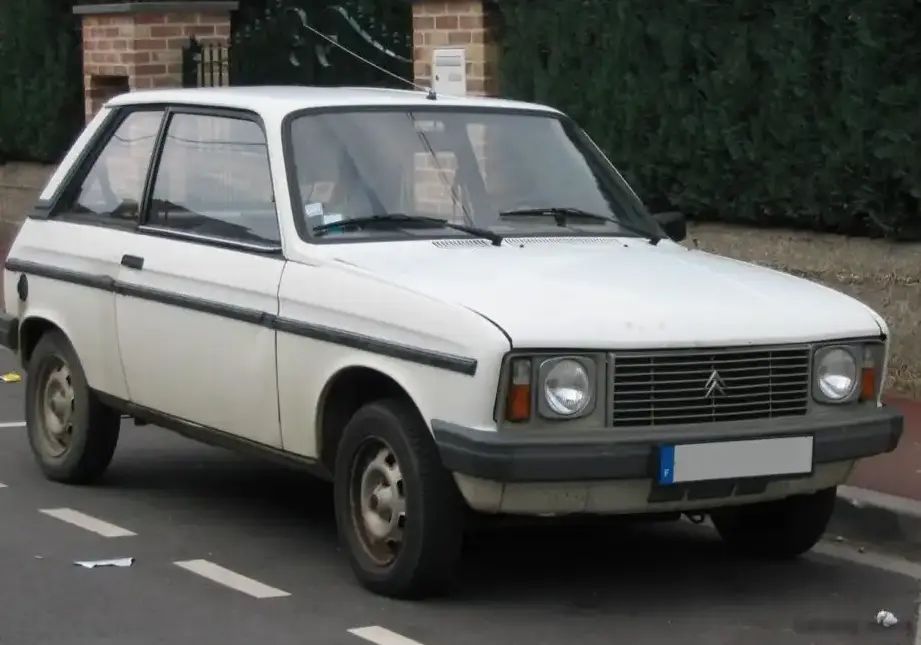
The Citroen LNA 11E, produced between 1983 and 1985, was a budget-focused hatchback positioned as the entry-level model within the Citroen LN range. It represented a simplified and more affordable alternative to the larger and more technologically advanced Citroen BX, and the more upscale LNA variants. The LNA, and specifically the 11E, was designed to offer economical transportation in a period of rising fuel costs and economic uncertainty, primarily targeting the European market. It was built on the platform shared with the Peugeot 205, though significantly differentiated in styling and intended market segment. The 11E designation refers to the 1.1-liter engine and represents the base level of engine options available for the LNA.
Technical Specifications
| Brand | Citroen |
| Model | LN |
| Generation | LNA |
| Type (Engine) | 11E (50 Hp) |
| Start of production | 1983 |
| End of production | 1985 |
| Powertrain Architecture | Internal Combustion engine |
| Body type | Hatchback |
| Seats | 4 |
| Doors | 3 |
| Fuel consumption (urban) | 5.8 l/100 km (40.6 US mpg, 48.7 UK mpg, 17.2 km/l) |
| Fuel consumption (extra urban) | 4.7 l/100 km (50 US mpg, 60.1 UK mpg, 21.3 km/l) |
| Fuel Type | Petrol (Gasoline) |
| Acceleration 0 – 100 km/h | 15.6 sec |
| Acceleration 0 – 62 mph | 15.6 sec |
| Acceleration 0 – 60 mph | 14.8 sec |
| Maximum speed | 140 km/h (86.99 mph) |
| Weight-to-power ratio | 15 kg/Hp, 66.8 Hp/tonne |
| Weight-to-torque ratio | 9 kg/Nm, 110.8 Nm/tonne |
| Power | 50 Hp @ 5500 rpm |
| Power per litre | 44.5 Hp/l |
| Torque | 83 Nm @ 2500 rpm (61.22 lb.-ft. @ 2500 rpm) |
| Engine Model/Code | 109/5F |
| Engine displacement | 1123 cm3 (68.53 cu. in.) |
| Number of cylinders | 4 |
| Engine configuration | Inline |
| Cylinder Bore | 72 mm (2.83 in.) |
| Piston Stroke | 69 mm (2.72 in.) |
| Compression ratio | 9.7:1 |
| Engine oil capacity | 5 l (5.28 US qt | 4.4 UK qt) |
| Coolant | 6.5 l (6.87 US qt | 5.72 UK qt) |
| Kerb Weight | 749 kg (1651.26 lbs.) |
| Max. weight | 1090 kg (2403.04 lbs.) |
| Max load | 341 kg (751.78 lbs.) |
| Trunk (boot) space – minimum | 214 l (7.56 cu. ft.) |
| Trunk (boot) space – maximum | 532 l (18.79 cu. ft.) |
| Fuel tank capacity | 40 l (10.57 US gal | 8.8 UK gal) |
| Max. roof load | 50 kg (110.23 lbs.) |
| Permitted trailer load with brakes (12%) | 750 kg (1653.47 lbs.) |
| Permitted trailer load without brakes | 405 kg (892.87 lbs.) |
| Length | 3427 mm (134.92 in.) |
| Width | 1540 mm (60.63 in.) |
| Height | 1380 mm (54.33 in.) |
| Drivetrain Architecture | The Internal combustion engine (ICE) drives the front wheels of the vehicle. |
| Drive wheel | Front wheel drive |
| Number of gears and type of gearbox | 4 gears, manual transmission |
| Front suspension | Independent, type McPherson with coil spring and anti-roll bar |
| Rear suspension | Spring Strut, Trailing arm |
| Front brakes | Disc |
| Rear brakes | Drum |
| Steering type | Steering rack and pinion |
Powertrain & Engine Architecture
The Citroen LNA 11E was powered by the 109/5F engine, a 1.1-liter (1123 cc) inline-four cylinder petrol engine. This engine was a relatively simple design, featuring a single overhead camshaft and two valves per cylinder. It utilized a Solex carburetor for fuel delivery, a common setup for vehicles of this era aiming for affordability. The engine produced 50 horsepower at 5500 rpm and 83 Nm (61.22 lb-ft) of torque at 2500 rpm. The engine’s compression ratio was 9.7:1. The engine was mated to a four-speed manual transmission, which was the only transmission option available for the 11E model. This powertrain configuration was chosen for its simplicity, reliability, and fuel efficiency, rather than outright performance.
Driving Characteristics
The LNA 11E’s driving experience was characterized by its modest performance. Acceleration was slow, taking approximately 15.6 seconds to reach 100 km/h (62 mph). Top speed was limited to 140 km/h (87 mph). The four-speed manual transmission offered relatively long gear ratios, prioritizing fuel economy over spirited driving. The engine felt strained at higher speeds, and overtaking required careful planning. Compared to other LNA variants with larger engines, the 11E felt noticeably underpowered. However, the light weight of the vehicle (749 kg / 1651 lbs) helped to mitigate some of the performance deficit. The steering was light and precise, making it easy to maneuver in urban environments.
Equipment & Trim Levels
The LNA 11E was deliberately spartan in its equipment levels. It was designed to be the most affordable LNA model, and as such, many features were either omitted or offered as optional extras. Standard equipment typically included basic cloth upholstery, a simple dashboard layout, and manual windows and door locks. A basic AM/FM radio was often included, but more advanced features like central locking or power steering were not available. Optional extras included a sunroof, upgraded upholstery, and a more comprehensive radio system. The interior was functional and durable, but lacked the refinement of more expensive vehicles.
Chassis & Braking
The LNA 11E utilized a relatively simple chassis design. The front suspension featured independent McPherson struts with coil springs and an anti-roll bar, providing a reasonable level of comfort and handling. The rear suspension employed a trailing arm setup with coil springs. Braking was provided by disc brakes on the front wheels and drum brakes on the rear wheels. The braking system was adequate for the vehicle’s weight and performance, but lacked the stopping power of more modern systems. The steering was a rack and pinion system, offering precise and responsive control.
Market Reception & Comparison
The Citroen LNA 11E was generally well-received as an affordable and economical hatchback. Critics praised its fuel efficiency and ease of driving, but noted its lack of performance and basic interior. Compared to other vehicles in its class, such as the Renault 5 and Peugeot 205, the LNA 11E offered a competitive price point but lacked the overall refinement and driving enjoyment of its rivals. The 11E was often seen as a practical choice for budget-conscious buyers, but those seeking a more engaging driving experience would typically opt for a higher-spec LNA variant or a different model altogether. Fuel economy was a strong point, achieving around 5.8 l/100km in urban driving and 4.7 l/100km on the open road.
Legacy
The Citroen LNA 11E, while not a particularly groundbreaking vehicle, played an important role in providing affordable transportation during the 1980s. The 109/5F engine proved to be relatively reliable, and many examples are still on the road today. However, due to its basic nature and limited production numbers, the LNA 11E is not a particularly sought-after classic car. Parts availability can be challenging, but many components are shared with other Citroen and Peugeot models of the era. The LNA 11E represents a snapshot of a time when simplicity and economy were prioritized over performance and luxury.
