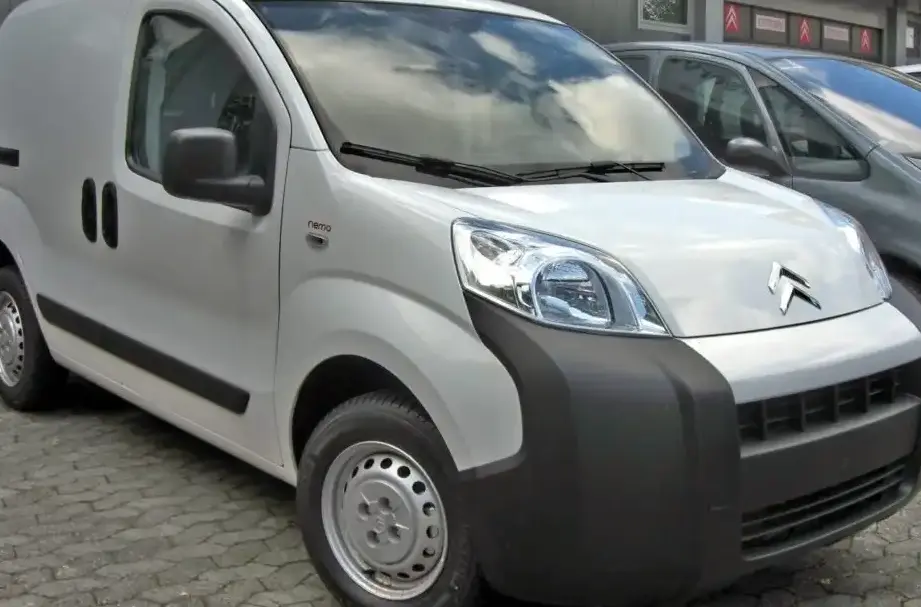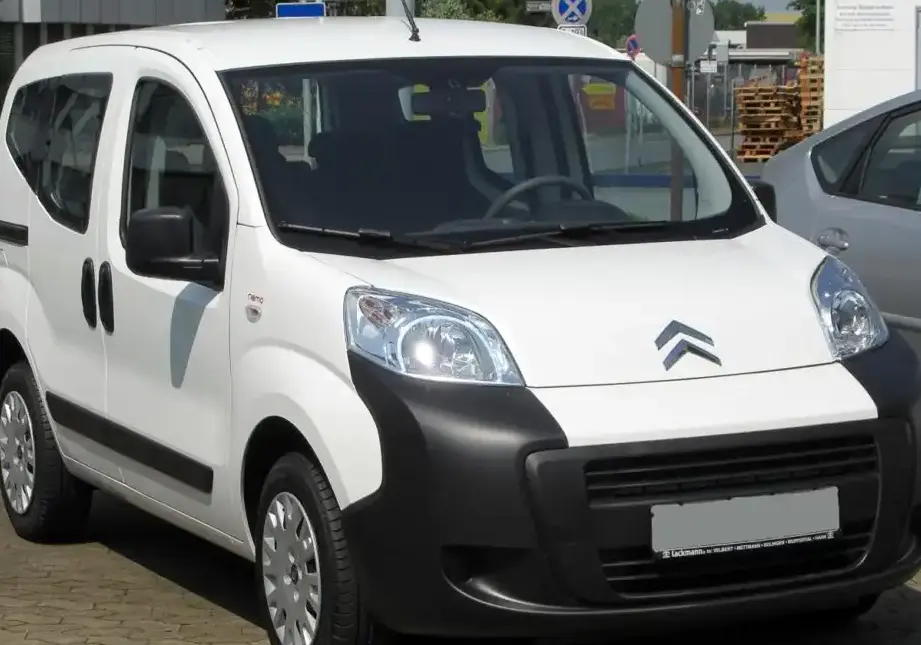
The Citroen Nemo Multispace 1.4 HDi, producing 70 horsepower, was a compact leisure activity vehicle (LAV) marketed by Citroen from 2008 to 2010. Part of the first generation Nemo (codenamed AY), it was developed in collaboration with Fiat and Peugeot, resulting in the closely related Fiat Fiorino and Peugeot Bipper. The Nemo Multispace aimed to provide an affordable and practical vehicle for small families or individuals needing versatile cargo space within a relatively small footprint. This particular 1.4 HDi 70 hp variant served as the entry-level engine option in many European markets, prioritizing fuel efficiency and low running costs over outright performance.
Technical Specifications
| Brand | Citroen |
| Model | Nemo |
| Generation | Nemo Multispace |
| Type (Engine) | 1.4 HDi (70 Hp) |
| Start of production | 2008 |
| End of production | 2010 |
| Powertrain Architecture | Internal Combustion engine |
| Body type | Minivan |
| Seats | 5 |
| Doors | 5 |
| Fuel consumption (urban) | 5.7-5.9 l/100 km (41.3 – 39.9 US mpg) |
| Fuel consumption (extra urban) | 3.8-3.9 l/100 km (61.9 – 60.3 US mpg) |
| Fuel consumption (combined) | 4.5-4.6 l/100 km (52.3 – 51.1 US mpg) |
| CO2 emissions | 119-123 g/km |
| Fuel Type | Diesel |
| Acceleration 0 – 100 km/h | 18.7 sec |
| Acceleration 0 – 62 mph | 18.7 sec |
| Acceleration 0 – 60 mph | 17.8 sec |
| Maximum speed | 151 km/h (93.83 mph) |
| Emission standard | Euro 4 |
| Weight-to-power ratio | 16.9 kg/Hp |
| Weight-to-torque ratio | 7.4 kg/Nm |
| Power | 70 Hp @ 4000 rpm |
| Torque | 160 Nm @ 1750 rpm (118.01 lb.-ft. @ 1750 rpm) |
| Engine layout | Front, Transverse |
| Engine Model/Code | 8HS DV4TED |
| Engine displacement | 1399 cm3 (85.37 cu. in.) |
| Number of cylinders | 4 |
| Engine configuration | Inline |
| Cylinder Bore | 73.7 mm (2.9 in.) |
| Piston Stroke | 82 mm (3.23 in.) |
| Compression ratio | 17:1 |
| Number of valves per cylinder | 2 |
| Fuel injection system | Diesel Commonrail |
| Engine aspiration | Turbocharger, Intercooler |
| Valvetrain | SOHC |
| Engine oil capacity | 3.75 l (3.96 US qt | 3.3 UK qt) |
| Coolant | 7.35 l (7.77 US qt | 6.47 UK qt) |
| Kerb Weight | 1185-1200 kg (2612.48 – 2645.55 lbs.) |
| Max. weight | 1700-1710 kg (3747.86 – 3769.9 lbs.) |
| Max load | 510-515 kg (1124.36 – 1135.38 lbs.) |
| Trunk (boot) space – minimum | 356 l (12.57 cu. ft.) |
| Trunk (boot) space – maximum | 2500 l (88.29 cu. ft.) |
| Fuel tank capacity | 45 l (11.89 US gal | 9.9 UK gal) |
| Max. roof load | 100 kg (220.46 lbs.) |
| Permitted trailer load with brakes (12%) | 600 kg (1322.77 lbs.) |
| Permitted trailer load without brakes | 400 kg (881.85 lbs.) |
| Permitted towbar download | 60 kg (132.28 lbs.) |
| Length | 3959 mm (155.87 in.) |
| Width | 1716 mm (67.56 in.) |
| Width with mirrors folded | 1816 mm (71.5 in.) |
| Width including mirrors | 2019 mm (79.49 in.) |
| Height | 1721 mm (67.76 in.) |
| Wheelbase | 2513 mm (98.94 in.) |
| Front track | 1464 mm (57.64 in.) |
| Rear (Back) track | 1465 mm (57.68 in.) |
| Front overhang | 855 mm (33.66 in.) |
| Rear overhang | 591 mm (23.27 in.) |
| Minimum turning circle | 9.95 m (32.64 ft.) |
| Drivetrain | Front wheel drive |
| Number of gears and type of gearbox | 5 gears, manual transmission |
| Front suspension | Independent, type McPherson with coil spring and anti-roll bar |
| Rear suspension | Transverse stabilizer, Trailing arm, Coil spring, Torsion |
| Front brakes | Ventilated discs |
| Rear brakes | Drum |
| Assisting systems | ABS (Anti-lock braking system) |
| Steering type | Steering rack and pinion |
| Power steering | Hydraulic Steering |
| Tires size | 185/65 R15 |
| Wheel rims size | 6J x 15 |
Powertrain & Engine Architecture
The Nemo Multispace 1.4 HDi 70 hp was powered by the PSA Group’s 8HS (DV4TED) engine. This is a 1.4-liter, inline-four cylinder diesel engine utilizing common rail direct injection and a turbocharger with intercooler. The DV4TED engine family is known for its robustness and fuel efficiency, though it’s not particularly powerful. The 70 hp output was achieved at 4000 rpm, with a torque figure of 160 Nm (118 lb-ft) available from 1750 rpm. This engine featured a single overhead camshaft (SOHC) valvetrain with two valves per cylinder. The engine’s design prioritized low-end torque for everyday drivability rather than high-revving performance. The engine was typically paired with a five-speed manual transmission, although an automated manual gearbox was also available in some markets.
Driving Characteristics
The 1.4 HDi 70 hp Nemo Multispace offered modest performance. Acceleration was slow, with a 0-60 mph time around 17.8 seconds. The focus was on fuel economy and ease of driving in urban environments. The engine’s torque delivery was relatively flat, making it suitable for navigating city streets and carrying light loads. Compared to higher-powered versions of the Nemo, or its Peugeot and Fiat counterparts with larger engines, this variant felt noticeably underpowered, especially when fully loaded or traveling on inclines. The five-speed manual transmission was geared for economy, with taller ratios contributing to lower fuel consumption but also impacting acceleration. The driving experience was best described as utilitarian, prioritizing practicality over excitement.
Equipment & Trim Levels
The 1.4 HDi 70 hp Nemo Multispace typically represented the base trim level. Standard equipment generally included power steering, central locking, electric front windows, and an adjustable steering column. Safety features included ABS brakes and driver/passenger airbags. Interior upholstery was typically a durable cloth material. Optional extras included air conditioning, a radio/CD player, and rear parking sensors. Higher trim levels added features like alloy wheels, body-colored bumpers, and upgraded interior trim.
Chassis & Braking
The Nemo Multispace utilized a front-wheel-drive layout with an independent McPherson strut suspension at the front and a trailing arm torsion beam suspension at the rear. The front suspension incorporated a stabilizer bar to reduce body roll. Braking was handled by ventilated discs at the front and drum brakes at the rear. The braking system was adequate for the vehicle’s weight and performance, but lacked the stopping power of more powerful vehicles. The suspension setup prioritized comfort and ride quality over sporty handling.
Market Reception & Comparison
The Citroen Nemo Multispace 1.4 HDi 70 hp was generally well-received as an affordable and economical small van. Critics praised its fuel efficiency and practicality, but noted its lack of power. Compared to the more powerful 1.6 HDi variants, the 1.4 HDi offered significantly lower performance but also lower running costs. The Nemo competed with other small vans such as the Renault Kangoo and Fiat Fiorino, offering a similar blend of practicality and affordability. Its main appeal lay with buyers seeking a low-cost, fuel-efficient vehicle for urban use.
Legacy
The 1.4 HDi engine, while not known for its longevity in higher-tuned applications, proved relatively reliable in the Nemo Multispace. Common issues included turbocharger wear and potential problems with the diesel particulate filter (DPF), particularly on vehicles used primarily for short journeys. On the used car market, the 1.4 HDi 70 hp Nemo Multispace remains an affordable option for those seeking a practical and economical small van. Its simplicity and relatively low maintenance costs make it an attractive choice for budget-conscious buyers. However, potential buyers should be aware of the engine’s limited power and the potential for DPF-related issues.