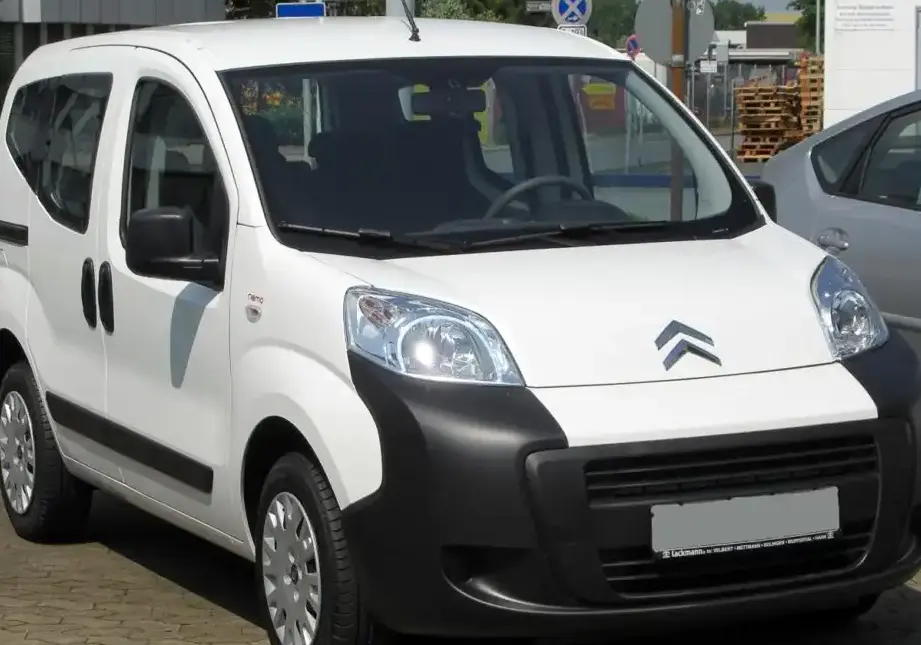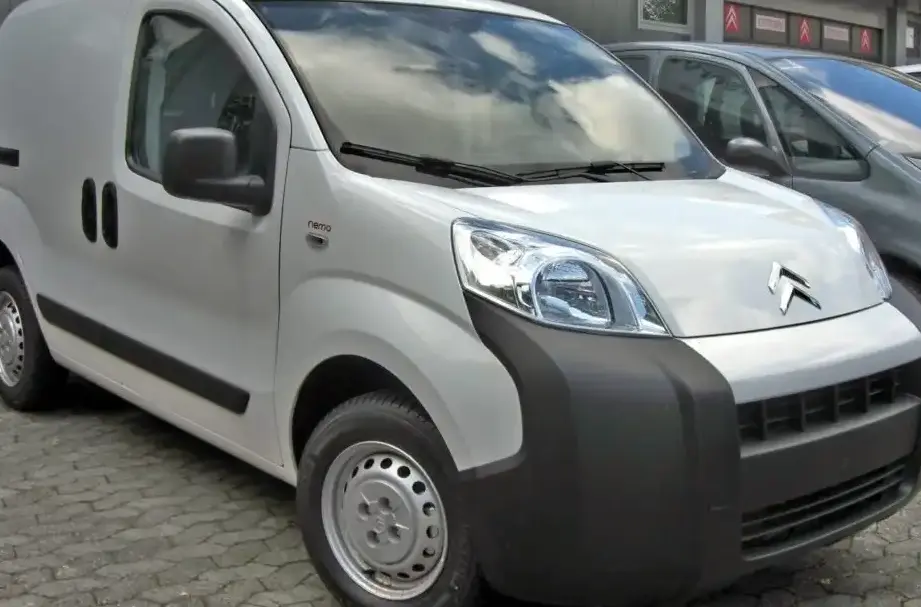
The Citroen Nemo Panel Van 1.3 HDi (75 hp) was a compact, front-wheel-drive light commercial vehicle produced from 2010 to 2015. Part of the first generation Nemo (codenamed AY), it was developed in collaboration with Fiat and Peugeot, resulting in the closely related Fiat Fiorino and Peugeot Bipper. The Nemo Panel Van served as Citroen’s entry-level offering in the microvan segment, primarily aimed at businesses and tradespeople requiring a small, economical, and practical vehicle for urban deliveries and service calls. This specific 1.3 HDi 75 hp variant represented a balance between affordability and functionality within the Nemo range.
Technical Specifications
| Brand | Citroen |
| Model | Nemo |
| Generation | Nemo Panel Van |
| Type (Engine) | 1.3 HDi (75 Hp) |
| Start of production | 2010 |
| End of production | 2015 |
| Powertrain Architecture | Internal Combustion engine |
| Body type | Minivan |
| Seats | 2 |
| Doors | 3-5 |
| Fuel consumption (urban) | 5.1-5.7 l/100 km (46.1 – 41.3 US mpg, 55.4 – 49.6 UK mpg, 19.6 – 17.5 km/l) |
| Fuel consumption (extra urban) | 3.8 l/100 km (61.9 US mpg, 74.3 UK mpg, 26.3 km/l) |
| Fuel consumption (combined) | 4.3-4.7 l/100 km (54.7 – 50 US mpg, 65.7 – 60.1 UK mpg, 23.3 – 21.3 km/l) |
| CO2 emissions | 113-124 g/km |
| Fuel Type | Diesel |
| Acceleration 0 – 100 km/h | 15.6 sec |
| Acceleration 0 – 62 mph | 15.6 sec |
| Acceleration 0 – 60 mph | 14.8 sec |
| Maximum speed | 157 km/h (97.56 mph) |
| Emission standard | Euro 5 |
| Weight-to-power ratio | 14.5 kg/Hp, 68.8 Hp/tonne |
| Weight-to-torque ratio | 5.7 kg/Nm, 174.3 Nm/tonne |
| Power | 75 Hp @ 4000 rpm |
| Power per litre | 60.1 Hp/l |
| Torque | 190 Nm @ 1500 rpm (140.14 lb.-ft. @ 1500 rpm) |
| Engine layout | Front, Transverse |
| Engine Model/Code | FHZ F13DTE5 |
| Engine displacement | 1248 cm3 (76.16 cu. in.) |
| Number of cylinders | 4 |
| Engine configuration | Inline |
| Cylinder Bore | 69.6 mm (2.74 in.) |
| Piston Stroke | 82 mm (3.23 in.) |
| Number of valves per cylinder | 2 |
| Fuel injection system | Diesel Commonrail |
| Engine aspiration | Turbocharger, Intercooler |
| Valvetrain | SOHC |
| Engine oil capacity | 3.2 l (3.38 US qt | 2.82 UK qt) |
| Coolant | 7.6 l (8.03 US qt | 6.69 UK qt) |
| Kerb Weight | 1090-1290 kg (2403.04 – 2843.96 lbs.) |
| Max. weight | 1750-1800 kg (3858.09 – 3968.32 lbs.) |
| Max load | 510-660 kg (1124.36 – 1455.05 lbs.) |
| Trunk (boot) space – minimum | 2500 l (88.29 cu. ft.) |
| Trunk (boot) space – maximum | 2800 l (98.88 cu. ft.) |
| Fuel tank capacity | 45 l (11.89 US gal | 9.9 UK gal) |
| Max. roof load | 75 kg (165.35 lbs.) |
| Permitted trailer load with brakes (12%) | 1000 kg (2204.62 lbs.) |
| Permitted trailer load without brakes | 400 kg (881.85 lbs.) |
| Permitted towbar download | 60 kg (132.28 lbs.) |
| Length | 3864 mm (152.13 in.) |
| Width | 1716 mm (67.56 in.) |
| Width with mirrors folded | 1816 mm (71.5 in.) |
| Width including mirrors | 2019 mm (79.49 in.) |
| Height | 1721 mm (67.76 in.) |
| Wheelbase | 2513 mm (98.94 in.) |
| Front track | 1469 mm (57.83 in.) |
| Rear (Back) track | 1465 mm (57.68 in.) |
| Front overhang | 760 mm (29.92 in.) |
| Rear overhang | 591 mm (23.27 in.) |
| Minimum turning circle | 9.95 m (32.64 ft.) |
| Drivetrain Architecture | The Internal combustion engine (ICE) drives the front wheels of the vehicle. |
| Drive wheel | Front wheel drive |
| Number of gears and type of gearbox | 5 gears, manual transmission |
| Front suspension | Independent, type McPherson with coil spring and anti-roll bar |
| Rear suspension | Transverse stabilizer, Trailing arm, Coil spring, Torsion |
| Front brakes | Ventilated discs |
| Rear brakes | Drum |
| Assisting systems | ABS (Anti-lock braking system) |
| Steering type | Steering rack and pinion |
| Power steering | Hydraulic Steering |
| Tires size | 185/65 R15 |
| Wheel rims size | 6J x 15 |
INTRODUCTION
The Citroen Nemo Panel Van 1.3 HDi (75 hp) was introduced in 2010 as part of the first generation Nemo range (AY platform). This microvan, jointly developed with Fiat and Peugeot, aimed to provide a practical and economical solution for small businesses and urban delivery services. The 75 hp variant, powered by the FHZ F13DTE5 engine, occupied the entry-level position in the Nemo Panel Van lineup, offering a balance between affordability and functionality. It was designed to compete with other small vans like the Renault Kangoo Express and Volkswagen Caddy in the European market.
Powertrain & Engine Architecture
The heart of the Nemo 1.3 HDi is the FHZ F13DTE5, a 1.3-liter inline-four cylinder diesel engine. This engine is part of the PSA Group’s (Peugeot Société Anonyme and Citroen) HDi (High Pressure Diesel Injection) family. It utilizes a common rail direct injection system, delivering fuel directly into the combustion chamber at extremely high pressure for improved efficiency and reduced emissions. The engine features a single overhead camshaft (SOHC) valvetrain operating two valves per cylinder. A turbocharger with an intercooler is employed to boost power output and improve torque across a wider rev range. The 75 hp output is achieved at 4000 rpm, while peak torque of 190 Nm (140.14 lb.-ft.) is available from 1500 rpm. The engine is transversely mounted at the front of the vehicle. The Nemo 1.3 HDi typically came equipped with a 5-speed manual transmission, optimized for fuel economy rather than outright performance.
Driving Characteristics
The 1.3 HDi 75 hp engine in the Nemo Panel Van provides adequate, but not exhilarating, performance. Acceleration is modest, taking approximately 15.6 seconds to reach 100 km/h (62 mph). The focus is on fuel efficiency and low-speed torque for urban driving. The 5-speed manual transmission is geared for economy, with relatively tall gear ratios. This means that while fuel consumption is excellent (4.3-4.7 l/100 km combined), overtaking maneuvers require careful planning. Compared to higher-output versions of the Nemo, or those equipped with more powerful engines, the 75 hp variant feels noticeably slower, particularly when fully loaded. The engine is happiest operating in the mid-range, providing sufficient power for everyday tasks. The relatively light weight of the vehicle helps to mitigate the lack of outright horsepower.
Equipment & Trim Levels
The Nemo Panel Van 1.3 HDi 75 hp was typically offered with a basic, functional specification. Standard equipment generally included a driver’s airbag, central locking, power steering, and a basic audio system. The interior was designed for practicality, with durable, easy-to-clean materials. The cabin featured a simple dashboard layout with clearly marked controls. Optional extras included air conditioning, electric windows, and a passenger airbag. Trim levels were relatively limited, with the focus being on providing a cost-effective work vehicle. The load area, accessible through rear doors and often a side sliding door, was the primary focus, offering a generous 2.5 to 2.8 cubic meters of cargo space.
Chassis & Braking
The Nemo Panel Van utilizes a front-wheel-drive layout with an independent McPherson strut suspension at the front and a trailing arm torsion beam suspension at the rear. This setup provides a reasonable balance between ride comfort and handling. The front suspension incorporates a stabilizer bar to reduce body roll. Braking duties are handled by ventilated discs at the front and drum brakes at the rear. ABS (Anti-lock Braking System) is standard, enhancing safety during emergency braking. The steering is rack and pinion, providing precise and responsive control. The vehicle’s relatively light weight contributes to its nimble handling characteristics.
Market Reception & Comparison
The Citroen Nemo Panel Van 1.3 HDi 75 hp was generally well-received by critics as a practical and economical choice for small businesses. Its fuel efficiency was a major selling point, and its compact size made it ideal for navigating congested urban environments. However, some reviewers noted the engine’s lack of power, particularly when the vehicle was fully loaded. Compared to the Peugeot Bipper and Fiat Fiorino, which were mechanically identical, the Nemo differentiated itself primarily through its styling and brand image. The Nemo offered a competitive fuel economy compared to rivals like the Renault Kangoo Express and Volkswagen Caddy, but generally lacked the refinement and performance of the latter.
Legacy
The Citroen Nemo Panel Van 1.3 HDi (75 hp) has proven to be a relatively reliable and durable vehicle. The 1.3 HDi engine, while not particularly powerful, is known for its longevity and fuel efficiency. Common maintenance items include regular oil changes, filter replacements, and timing belt servicing. On the used car market, the Nemo 1.3 HDi remains a popular choice for budget-conscious buyers seeking a practical and economical light commercial vehicle. Its simplicity and relatively low running costs contribute to its continued appeal. While not a performance icon, the Nemo 1.3 HDi served a valuable role in the microvan segment, providing a cost-effective solution for businesses and tradespeople.