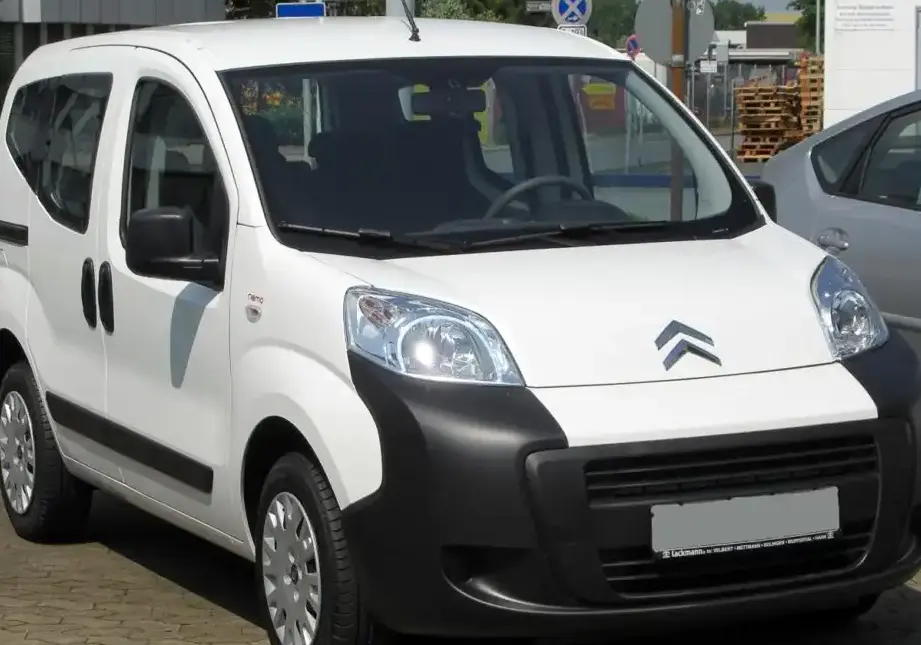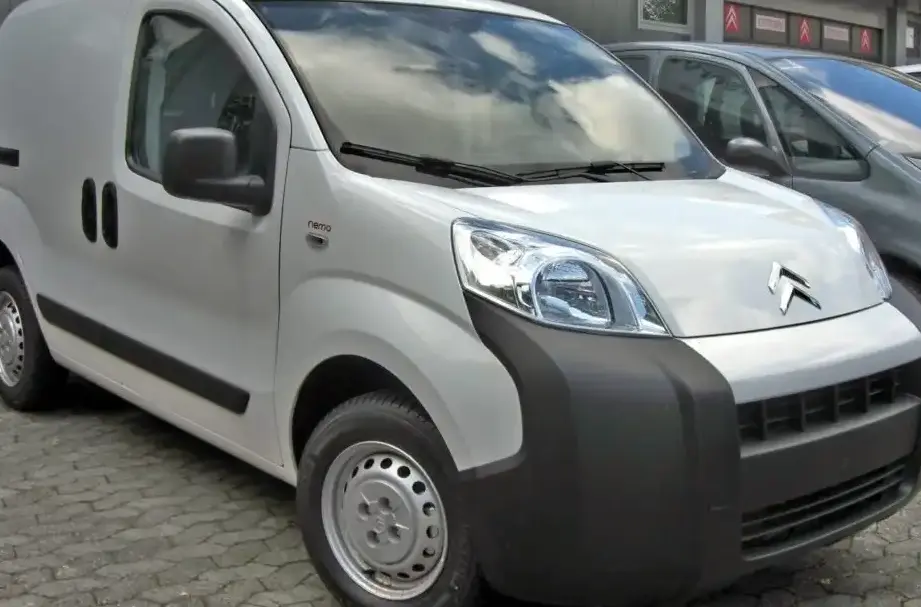
The Citroen Nemo Panel Van 1.3 HDi, producing 80 horsepower, was a compact commercial vehicle sold primarily in Europe from 2015 to 2017. It represented Citroen’s entry in the burgeoning microvan segment, designed for urban delivery and small business applications. Built in collaboration with Fiat and Peugeot (resulting in the Fiat Fiorino and Peugeot Bipper respectively), the Nemo Panel Van offered a practical and economical solution for businesses needing a small, maneuverable cargo carrier. This particular 1.3 HDi 80 hp variant occupied the lower end of the Nemo Panel Van lineup, prioritizing fuel efficiency and affordability over outright performance.
Technical Specifications
| Brand | Citroen |
| Model | Nemo |
| Generation | Nemo Panel Van |
| Type (Engine) | 1.3 HDi (80 Hp) |
| Start of production | 2015 year |
| End of production | 2017 year |
| Powertrain Architecture | Internal Combustion engine |
| Body type | Minivan |
| Seats | 2 |
| Doors | 3-5 |
| Fuel consumption (economy) – urban | 5.6 l/100 km (42 US mpg, 50.4 UK mpg, 17.9 km/l) |
| Fuel consumption (economy) – extra urban | 3.7 l/100 km (63.6 US mpg, 76.3 UK mpg, 27 km/l) |
| Fuel consumption (economy) – combined | 4.4 l/100 km (53.5 US mpg, 64.2 UK mpg, 22.7 km/l) |
| CO2 emissions | 115 g/km |
| Fuel Type | Diesel |
| Acceleration 0 – 100 km/h | 16.4 sec |
| Acceleration 0 – 62 mph | 16.4 sec |
| Acceleration 0 – 60 mph | 15.6 sec |
| Maximum speed | 163 km/h (101.28 mph) |
| Emission standard | Euro 6 |
| Weight-to-power ratio | 13.6 kg/Hp, 73.4 Hp/tonne |
| Weight-to-torque ratio | 5.5 kg/Nm, 183.5 Nm/tonne |
| Power | 80 Hp @ 3750 rpm |
| Power per litre | 64.1 Hp/l |
| Torque | 200 Nm @ 1500 rpm (147.51 lb.-ft. @ 1500 rpm) |
| Engine layout | Front, Transverse |
| Engine Model/Code | FHY F13DTE6 |
| Engine displacement | 1248 cm3 (76.16 cu. in.) |
| Number of cylinders | 4 |
| Engine configuration | Inline |
| Cylinder Bore | 69.6 mm (2.74 in.) |
| Piston Stroke | 82 mm (3.23 in.) |
| Number of valves per cylinder | 2 |
| Fuel injection system | Diesel Commonrail |
| Engine aspiration | Turbocharger, Intercooler |
| Valvetrain | SOHC |
| Engine oil capacity | 3.9 l (4.12 US qt | 3.43 UK qt) |
| Kerb Weight | 1090 kg (2403.04 lbs.) |
| Max. weight | 1750 kg (3858.09 lbs.) |
| Max load | 660 kg (1455.05 lbs.) |
| Trunk (boot) space – minimum | 2500 l (88.29 cu. ft.) |
| Trunk (boot) space – maximum | 2800 l (98.88 cu. ft.) |
| Fuel tank capacity | 45 l (11.89 US gal | 9.9 UK gal) |
| Max. roof load | 100 kg (220.46 lbs.) |
| Permitted trailer load with brakes (12%) | 1000 kg (2204.62 lbs.) |
| Permitted trailer load without brakes | 400 kg (881.85 lbs.) |
| Length | 3864 mm (152.13 in.) |
| Width | 1716 mm (67.56 in.) |
| Width with mirrors folded | 1816 mm (71.5 in.) |
| Width including mirrors | 2019 mm (79.49 in.) |
| Height | 1721 mm (67.76 in.) |
| Wheelbase | 2513 mm (98.94 in.) |
| Front track | 1469 mm (57.83 in.) |
| Rear (Back) track | 1465 mm (57.68 in.) |
| Front overhang | 760 mm (29.92 in.) |
| Rear overhang | 591 mm (23.27 in.) |
| Minimum turning circle | 9.95 m (32.64 ft.) |
| Drivetrain Architecture | The Internal combustion engine (ICE) drives the front wheels of the vehicle. |
| Drive wheel | Front wheel drive |
| Number of gears and type of gearbox | 5 gears, manual transmission |
| Front suspension | Independent, type McPherson with coil spring and anti-roll bar |
| Rear suspension | Transverse stabilizer, Trailing arm, Coil spring, Torsion |
| Front brakes | Ventilated discs |
| Rear brakes | Drum |
| Assisting systems | ABS (Anti-lock braking system) |
| Steering type | Steering rack and pinion |
| Power steering | Hydraulic Steering |
| Tires size | 185/65 R15 |
| Wheel rims size | 6J x 15 |
Powertrain & Engine Architecture
The heart of the Nemo Panel Van 1.3 HDi (80 hp) is the FHY (or F13DTE6) engine, a 1.3-liter inline-four cylinder diesel engine. This engine is part of the PSA Group’s (Peugeot Citroen) DV series of diesel engines, known for their compact size and fuel efficiency. The engine utilizes a turbocharger with an intercooler to boost power output, and employs a diesel common rail direct injection system for precise fuel delivery. The single overhead camshaft (SOHC) valvetrain operates two valves per cylinder. The 80 horsepower output is achieved at 3750 rpm, with a torque figure of 200 Nm (147.51 lb.-ft.) available from just 1500 rpm, prioritizing low-end grunt for hauling loads. The engine is paired with a standard five-speed manual transmission, optimized for economy rather than sporty performance. The transmission’s gear ratios are relatively tall, further emphasizing fuel efficiency at cruising speeds.
Driving Characteristics
The 1.3 HDi 80 hp engine in the Nemo Panel Van delivers adequate, but not exhilarating, performance. Acceleration is leisurely, taking approximately 16.4 seconds to reach 62 mph (100 km/h). The focus is clearly on practicality and economy. The engine’s strong low-end torque makes it suitable for urban driving and carrying loads, but overtaking maneuvers require careful planning. Compared to higher-output versions of the Nemo (which were not commonly available in panel van form), this variant feels noticeably slower. The manual transmission, while not particularly refined, is durable and easy to operate. The tall gear ratios contribute to good fuel economy, but can also make the engine feel strained when climbing hills or accelerating quickly with a full load.
Equipment & Trim Levels
The Nemo Panel Van 1.3 HDi 80 hp was typically offered with a basic level of equipment, reflecting its commercial vehicle status. Standard features generally included a driver’s airbag, central locking, power steering, and a basic audio system. The interior was functional and durable, with hard-wearing plastics and cloth upholstery. Optional extras included air conditioning, electric windows, and a passenger airbag. Trim levels were minimal, with most variations stemming from the addition of optional equipment packages. The emphasis was on providing a cost-effective and practical work vehicle.
Chassis & Braking
The Nemo Panel Van utilizes a front-wheel-drive layout with an independent McPherson strut suspension at the front and a trailing arm torsion beam suspension at the rear. This setup provides a reasonable balance between ride comfort and handling, although the vehicle is not designed for sporty driving. The front brakes are ventilated discs, while the rear brakes are drums. Anti-lock Braking System (ABS) was standard, enhancing safety. The suspension is tuned for carrying loads, with a relatively firm ride when unladen. The steering is hydraulic, providing reasonable assistance at low speeds.
Market Reception & Comparison
The Citroen Nemo Panel Van 1.3 HDi (80 hp) was generally well-received as a practical and economical solution for urban delivery and small business applications. Critics praised its fuel efficiency, maneuverability, and low operating costs. However, the engine’s lack of power was a common criticism. Compared to its rivals, such as the Fiat Fiorino and Peugeot Bipper (which were mechanically identical), the Nemo offered a similar package. The 1.3 HDi engine provided competitive fuel economy, but its performance lagged behind larger-engined competitors. Reliability was generally good, although the diesel particulate filter (DPF) could be a potential source of issues if the vehicle was primarily used for short trips.
Legacy
The Citroen Nemo Panel Van 1.3 HDi (80 hp) remains a relatively common sight on European roads today, particularly in urban areas. The 1.3 HDi engine, while not known for its refinement, has proven to be reasonably durable and reliable. On the used car market, these vans are typically offered at affordable prices, making them an attractive option for small businesses and individuals needing a low-cost cargo carrier. The simplicity of the engine and mechanical components makes them relatively easy and inexpensive to maintain. However, potential buyers should be aware of the potential for DPF issues and the relatively slow performance of this particular engine variant.