Technical Specifications
| Brand | Citroen |
| Model | Nemo |
| Generation | Nemo Panel Van |
| Type (Engine) | 1.4 HDi (70 Hp) |
| Start of production | 2008 |
| End of production | 2010 |
| Powertrain Architecture | Internal Combustion engine |
| Body type | Minivan |
| Seats | 2 |
| Doors | 3-5 |
| Fuel consumption (urban) | 5.7 l/100 km (41.3 US mpg, 49.6 UK mpg, 17.5 km/l) |
| Fuel consumption (extra urban) | 3.8 l/100 km (61.9 US mpg, 74.3 UK mpg, 26.3 km/l) |
| Fuel consumption (combined) | 4.5 l/100 km (52.3 US mpg, 62.8 UK mpg, 22.2 km/l) |
| CO2 emissions | 119 g/km |
| Fuel Type | Diesel |
| Acceleration 0 – 100 km/h | 16.9 sec |
| Acceleration 0 – 62 mph | 16.9 sec |
| Acceleration 0 – 60 mph | 16.1 sec |
| Maximum speed | 152 km/h (94.45 mph) |
| Weight-to-power ratio | 15.6 kg/Hp, 64.2 Hp/tonne |
| Weight-to-torque ratio | 6.8 kg/Nm, 146.8 Nm/tonne |
| Power | 70 Hp @ 4000 rpm |
| Power per litre | 50 Hp/l |
| Torque | 160 Nm @ 1750 rpm (118.01 lb.-ft. @ 1750 rpm) |
| Engine layout | Front, Transverse |
| Engine Model/Code | 8HS DV4TED |
| Engine displacement | 1399 cm3 (85.37 cu. in.) |
| Number of cylinders | 4 |
| Engine configuration | Inline |
| Cylinder Bore | 73.7 mm (2.9 in.) |
| Piston Stroke | 82 mm (3.23 in.) |
| Compression ratio | 17:1 |
| Number of valves per cylinder | 2 |
| Fuel injection system | Diesel Commonrail |
| Engine aspiration | Turbocharger, Intercooler |
| Valvetrain | SOHC |
| Engine oil capacity | 3.75 l (3.96 US qt | 3.3 UK qt) |
| Coolant | 7.35 l (7.77 US qt | 6.47 UK qt) |
| Kerb Weight | 1090 kg (2403.04 lbs.) |
| Max. weight | 1700 kg (3747.86 lbs.) |
| Max load | 610 kg (1344.82 lbs.) |
| Trunk (boot) space – minimum | 2500 l (88.29 cu. ft.) |
| Trunk (boot) space – maximum | 2800 l (98.88 cu. ft.) |
| Fuel tank capacity | 45 l (11.89 US gal | 9.9 UK gal) |
| Max. roof load | 75 kg (165.35 lbs.) |
| Permitted trailer load with brakes (12%) | 600 kg (1322.77 lbs.) |
| Permitted trailer load without brakes | 400 kg (881.85 lbs.) |
| Length | 3864 mm (152.13 in.) |
| Width | 1716 mm (67.56 in.) |
| Width with mirrors folded | 1816 mm (71.5 in.) |
| Width including mirrors | 2019 mm (79.49 in.) |
| Height | 1721 mm (67.76 in.) |
| Wheelbase | 2513 mm (98.94 in.) |
| Front track | 1469 mm (57.83 in.) |
| Rear (Back) track | 1465 mm (57.68 in.) |
| Front overhang | 760 mm (29.92 in.) |
| Rear overhang | 591 mm (23.27 in.) |
| Minimum turning circle | 9.95 m (32.64 ft.) |
| Drivetrain Architecture | The Internal combustion engine (ICE) drives the front wheels of the vehicle. |
| Drive wheel | Front wheel drive |
| Number of gears and type of gearbox | 5 gears, manual transmission |
| Front suspension | Independent, type McPherson with coil spring and anti-roll bar |
| Rear suspension | Transverse stabilizer, Trailing arm, Coil spring, Torsion |
| Front brakes | Ventilated discs |
| Rear brakes | Drum |
| Assisting systems | ABS (Anti-lock braking system) |
| Steering type | Steering rack and pinion |
| Power steering | Hydraulic Steering |
| Tires size | 175/70 R14; 185/65 R15 |
| Wheel rims size | 5.5J x 14; 6J x 15 |
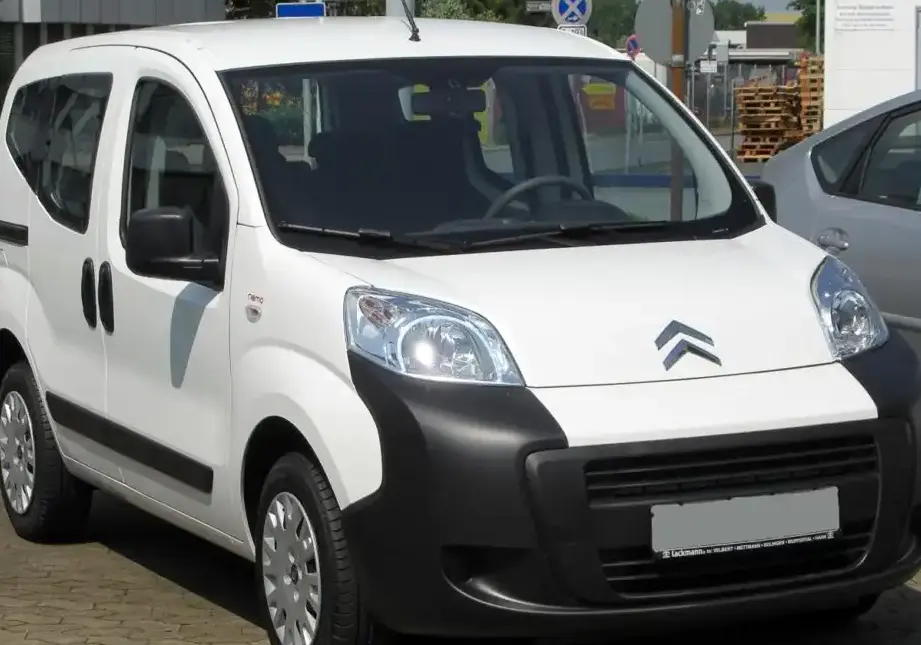
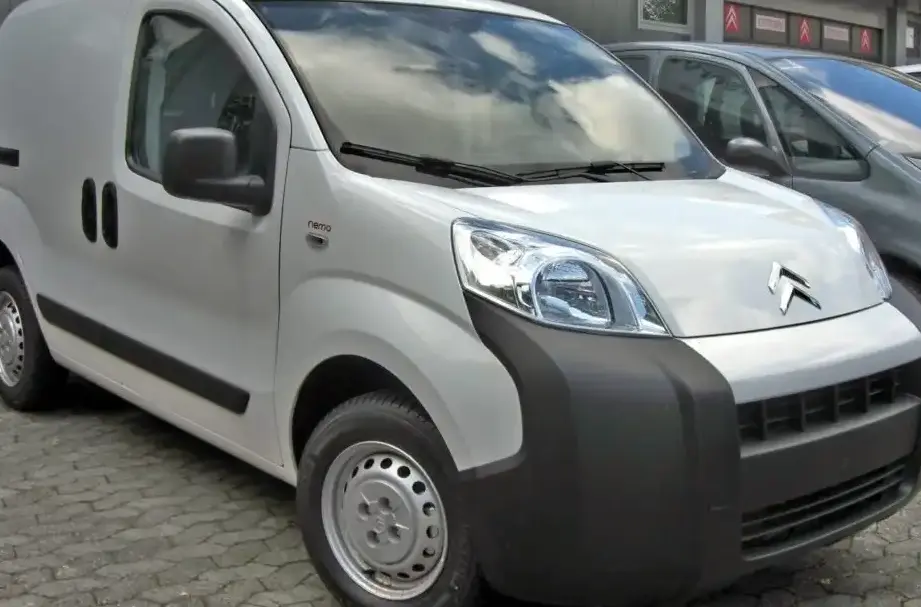
The Citroen Nemo Panel Van 1.4 HDi, producing 70 horsepower, was a compact commercial vehicle primarily sold in Europe from 2008 to 2010. It was a crucial part of Citroen’s light commercial vehicle lineup, designed to compete in the growing microvan segment. Developed in collaboration with Fiat and Peugeot – resulting in the Fiat Fiorino and Peugeot Bipper respectively – the Nemo offered a practical and economical solution for urban delivery and small business needs. This particular variant, with its 1.4-liter diesel engine and five-speed manual transmission, represented an entry-level option within the Nemo range, prioritizing fuel efficiency and affordability over outright performance.
Powertrain & Engine Architecture
The core of this Nemo variant is the 1.4-liter HDi diesel engine, identified by the engine code 8HS (DV4TED). This engine utilizes common rail direct injection, a system where fuel is delivered to the cylinders at very high pressure through a shared fuel rail, optimizing combustion. The engine features a single overhead camshaft (SOHC) controlling two valves per cylinder. A turbocharger, coupled with an intercooler, is used to increase power and improve torque delivery. The intercooler cools the compressed air from the turbocharger, increasing its density and further enhancing performance. The engine’s relatively simple design was intended to maximize reliability and fuel economy. The Nemo was equipped with a standard five-speed manual transmission, selected for its cost-effectiveness and efficiency.
Driving Characteristics
The 70 hp output of the 1.4 HDi engine in the Nemo Panel Van results in modest performance. Acceleration is slow, taking approximately 16.1 seconds to reach 60 mph. However, the engine’s 160 Nm (118 lb-ft) of torque, available from 1750 rpm, provides sufficient pulling power for city driving and light loads. The gear ratios in the five-speed manual transmission are optimized for fuel economy, which can make the engine feel strained when climbing hills or carrying a full load. Compared to the more powerful 1.9-liter diesel options found in some of the Nemo’s sibling vehicles, this 1.4 HDi variant delivers a more relaxed and economical driving experience, though at the cost of performance.
Equipment & Trim Levels
The 1.4 HDi 70 hp Nemo Panel Van was typically offered as a base trim level, emphasizing functionality and affordability. Standard features generally included power steering, ABS brakes, a driver’s airbag, and a basic audio system. The interior was practical, with durable plastic trim and cloth upholstery. Optional extras included air conditioning, electric windows, and a passenger airbag. The van’s cargo area was its main attraction, offering between 2.5 and 2.8 cubic meters of load space, depending on the seating arrangement.
Chassis & Braking
The Nemo Panel Van uses a front-wheel-drive layout with an independent McPherson strut suspension at the front and a trailing arm torsion beam suspension at the rear. This setup provides a reasonable balance between ride comfort and handling. The front brakes are ventilated discs, providing good stopping power, while the rear brakes are drums, a cost-saving measure common in this vehicle class. A hydraulic power steering system offers light and easy steering, simplifying maneuvering in tight urban environments.
Market Reception & Comparison
The Citroen Nemo 1.4 HDi 70 hp was well-received for its fuel efficiency and low running costs. Reviewers praised its practicality and maneuverability, making it ideal for urban delivery drivers. However, its limited power was often noted, especially when compared to more powerful alternatives. Compared to the Peugeot Bipper and Fiat Fiorino, which shared the same platform and engine options, the Nemo differentiated itself primarily through its styling and brand identity. The 1.4 HDi offered a compelling value proposition for businesses seeking a cost-effective and reliable light commercial vehicle.
Legacy
The 1.4 HDi engine, while not known for high performance, proved to be relatively reliable in the Nemo Panel Van. With regular maintenance, these engines can achieve high mileage. In the used car market, the Nemo 1.4 HDi remains an affordable option for small businesses and individuals needing a practical and economical van. Its simplicity and readily available parts contribute to its continued appeal, although potential buyers should be aware of the engine’s limited power and the potential for age-related wear and tear.