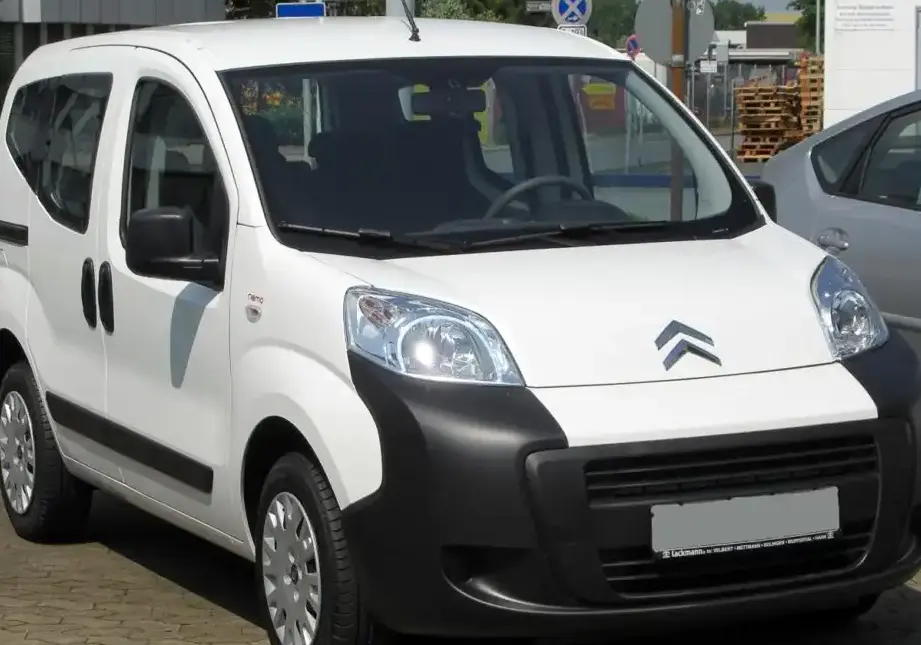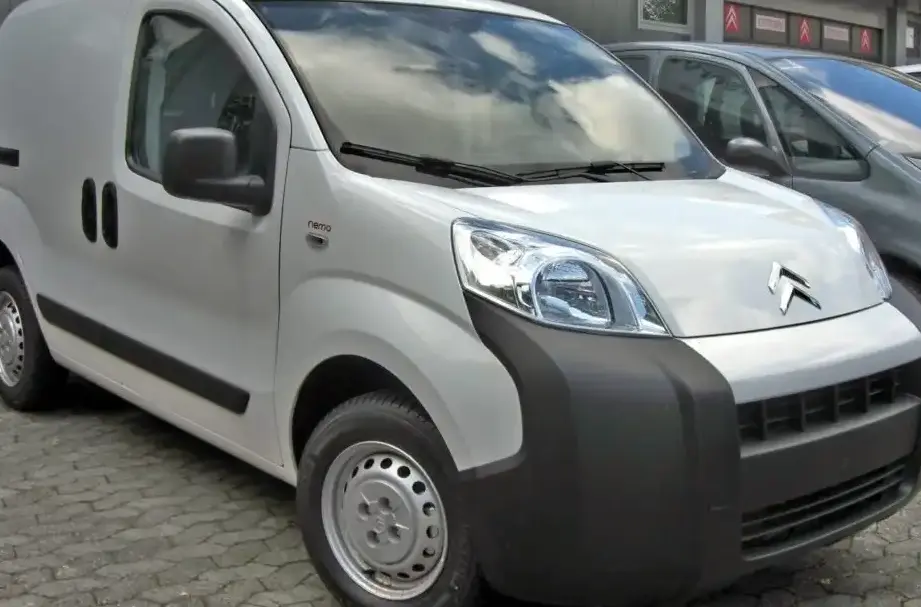
The Citroen Nemo Panel Van 1.4 HDi (70 hp) SensoDrive was a compact panel van produced by Citroen between 2008 and 2010. Part of the first generation Nemo (codenamed AY), it was developed in collaboration with Fiat and Peugeot, resulting in the closely related Fiat Fiorino and Peugeot Bipper. The Nemo Panel Van aimed to provide a practical and economical solution for small businesses and urban delivery services, offering a relatively small footprint combined with a usable cargo area. This particular variant, equipped with the 1.4 HDi engine and SensoDrive automated manual transmission, represented an entry-level option within the Nemo Panel Van range, prioritizing fuel efficiency and ease of use over outright performance.
Technical Specifications
| Brand | Citroen |
| Model | Nemo |
| Generation | Nemo Panel Van |
| Type (Engine) | 1.4 HDi (70 Hp) SensoDrive |
| Start of production | 2008 |
| End of production | 2010 |
| Powertrain Architecture | Internal Combustion engine |
| Body type | Minivan |
| Seats | 2 |
| Doors | 3-5 |
| Fuel consumption (urban) | 5.5 l/100 km (42.8 US mpg, 51.4 UK mpg, 18.2 km/l) |
| Fuel consumption (extra urban) | 3.7 l/100 km (63.6 US mpg, 76.3 UK mpg, 27 km/l) |
| Fuel consumption (combined) | 4.4-4.5 l/100 km (53.5 – 52.3 US mpg, 64.2 – 62.8 UK mpg, 22.7 – 22.2 km/l) |
| CO2 emissions | 116 g/km |
| Fuel Type | Diesel |
| Acceleration 0 – 100 km/h | 16.9 sec |
| Acceleration 0 – 62 mph | 16.9 sec |
| Acceleration 0 – 60 mph | 16.1 sec |
| Maximum speed | 152 km/h (94.45 mph) |
| Weight-to-power ratio | 15.6 kg/Hp, 64.2 Hp/tonne |
| Weight-to-torque ratio | 6.8 kg/Nm, 146.8 Nm/tonne |
| Power | 70 Hp @ 4000 rpm |
| Power per litre | 50 Hp/l |
| Torque | 160 Nm @ 1750 rpm (118.01 lb.-ft. @ 1750 rpm) |
| Engine layout | Front, Transverse |
| Engine Model/Code | 8HS DV4TED |
| Engine displacement | 1399 cm3 (85.37 cu. in.) |
| Number of cylinders | 4 |
| Engine configuration | Inline |
| Cylinder Bore | 73.7 mm (2.9 in.) |
| Piston Stroke | 82 mm (3.23 in.) |
| Compression ratio | 17:1 |
| Number of valves per cylinder | 2 |
| Fuel injection system | Diesel Commonrail |
| Engine aspiration | Turbocharger, Intercooler |
| Valvetrain | SOHC |
| Engine oil capacity | 3.75 l (3.96 US qt | 3.3 UK qt) |
| Coolant | 7.35 l (7.77 US qt | 6.47 UK qt) |
| Kerb Weight | 1090 kg (2403.04 lbs.) |
| Max. weight | 1700 kg (3747.86 lbs.) |
| Max load | 610 kg (1344.82 lbs.) |
| Trunk (boot) space – minimum | 2500 l (88.29 cu. ft.) |
| Trunk (boot) space – maximum | 2800 l (98.88 cu. ft.) |
| Fuel tank capacity | 45 l (11.89 US gal | 9.9 UK gal) |
| Max. roof load | 75 kg (165.35 lbs.) |
| Permitted trailer load with brakes (12%) | 600 kg (1322.77 lbs.) |
| Permitted trailer load without brakes | 400 kg (881.85 lbs.) |
| Length | 3864 mm (152.13 in.) |
| Width | 1716 mm (67.56 in.) |
| Width with mirrors folded | 1816 mm (71.5 in.) |
| Width including mirrors | 2019 mm (79.49 in.) |
| Height | 1721 mm (67.76 in.) |
| Wheelbase | 2513 mm (98.94 in.) |
| Front track | 1469 mm (57.83 in.) |
| Rear (Back) track | 1465 mm (57.68 in.) |
| Front overhang | 760 mm (29.92 in.) |
| Rear overhang | 591 mm (23.27 in.) |
| Minimum turning circle | 9.95 m (32.64 ft.) |
| Drivetrain Architecture | The Internal combustion engine (ICE) drives the front wheels of the vehicle. |
| Drive wheel | Front wheel drive |
| Number of gears and type of gearbox | 5 gears, automatic transmission SensoDrive |
| Front suspension | Independent, type McPherson with coil spring and anti-roll bar |
| Rear suspension | Transverse stabilizer, Trailing arm, Coil spring, Torsion |
| Front brakes | Ventilated discs |
| Rear brakes | Drum |
| Assisting systems | ABS (Anti-lock braking system) |
| Steering type | Steering rack and pinion |
| Power steering | Hydraulic Steering |
| Tires size | 175/70 R14; 185/65 R15 |
| Wheel rims size | 5.5J x 14; 6J x 15 |
Powertrain & Engine Architecture
The Citroen Nemo 1.4 HDi (70 hp) utilized the DV4TED engine, a 1.4-liter inline-four cylinder diesel engine. This engine, part of the PSA Group’s (Peugeot Citroen) HDi family, featured a turbocharger with an intercooler to improve efficiency and power output. The engine employed a diesel common rail direct injection system, delivering fuel directly into the combustion chamber at high pressure for optimized combustion. The engine’s head featured a single overhead camshaft (SOHC) operating two valves per cylinder. The SensoDrive transmission was a five-speed automated manual gearbox. Unlike a traditional automatic transmission with a torque converter, SensoDrive used actuators to shift gears, offering a degree of fuel efficiency closer to a manual transmission but with the convenience of automatic operation. It was known for its sometimes jerky shifts, particularly at lower speeds.
Driving Characteristics
The 70 hp output and SensoDrive transmission resulted in a driving experience focused on economy rather than performance. Acceleration was slow, with a 0-60 mph time of around 16.1 seconds. The SensoDrive transmission, while offering convenience, could exhibit noticeable delays during gear changes and a less refined feel compared to conventional automatic transmissions. The gear ratios were optimized for fuel efficiency, meaning the engine often operated at higher RPMs during acceleration. This configuration was best suited for urban driving and light-duty delivery work, where maximizing fuel economy and ease of use were prioritized over spirited driving.
Equipment & Trim Levels
The 1.4 HDi (70 hp) SensoDrive variant of the Nemo Panel Van typically represented the base trim level. Standard equipment generally included power steering, ABS brakes, a driver’s airbag, and basic steel wheels. The interior was functional and utilitarian, with durable plastic trim and cloth upholstery. Optional extras could include air conditioning, a radio/CD player, and power windows. The focus was on providing a practical and affordable work vehicle, so luxury features were limited.
Chassis & Braking
The Nemo Panel Van utilized a front-engine, front-wheel-drive layout. The front suspension consisted of independent McPherson struts with a coil spring and anti-roll bar, while the rear suspension employed a trailing arm setup with a torsion beam and coil springs. The braking system featured ventilated discs on the front wheels and drum brakes on the rear. This configuration was adequate for the vehicle’s weight and intended use, but not designed for heavy loads or demanding driving conditions.
Market Reception & Comparison
The Citroen Nemo Panel Van, and its siblings from Fiat and Peugeot, were generally well-received in the European market as affordable and practical small vans. The 1.4 HDi (70 hp) SensoDrive variant was praised for its fuel efficiency, making it an attractive option for businesses looking to minimize operating costs. However, the SensoDrive transmission received mixed reviews, with some critics finding its shifts to be slow and jerky. Compared to higher-powered versions of the Nemo, such as those with the 1.6 HDi engine, the 70 hp variant offered significantly less performance but at a lower purchase price.
Legacy
The Citroen Nemo Panel Van, along with the Fiat Fiorino and Peugeot Bipper, proved to be a successful formula for a compact, economical van. While the first generation Nemo was discontinued in 2010, it established a strong presence in the small van segment. The 1.4 HDi engine, while not known for its power, generally proved to be reliable with proper maintenance. On the used car market, these vans are often sought after for their low running costs and practicality, though potential buyers should be aware of the quirks of the SensoDrive transmission and ensure it has been well-maintained.