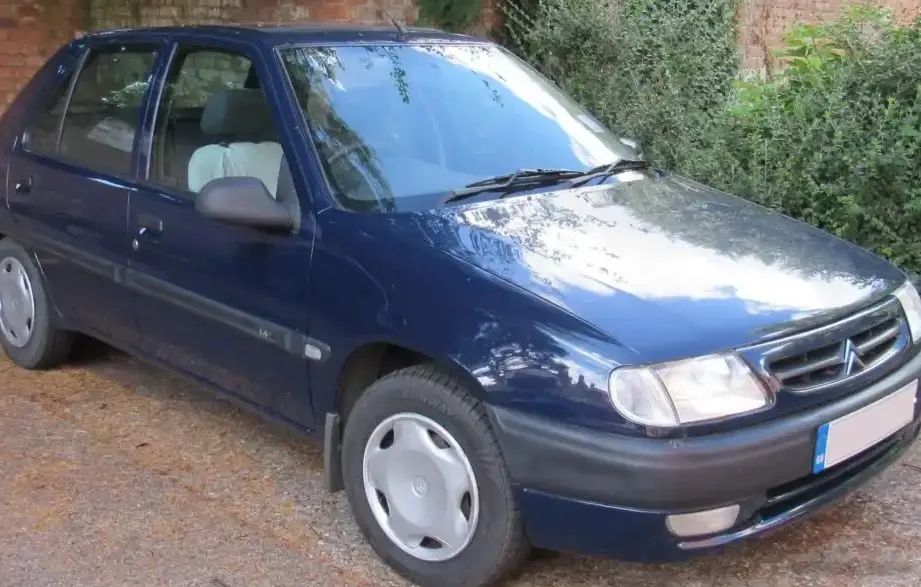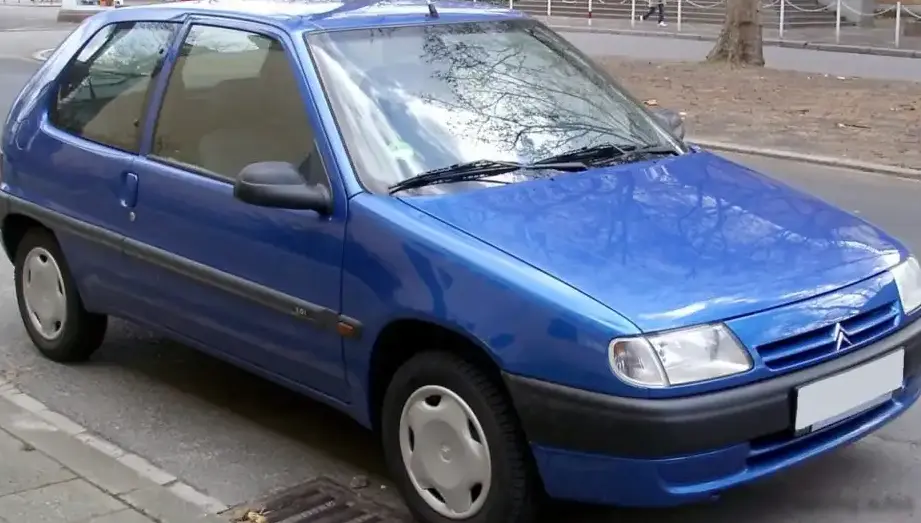
The Citroen Saxo 1.4 Automatic, produced between 1996 and 1999, represents an entry-level offering within the first generation (Phase I) of the Saxo supermini. Positioned as a practical and affordable vehicle, it catered to buyers seeking economical transportation with the convenience of an automatic transmission. This 3-door hatchback was a common sight on European roads, particularly in France and the United Kingdom, where it served as a popular choice for first-time drivers and city commuters. The Saxo, built on the shared Peugeot 205 platform, aimed to provide a modern and efficient alternative in the competitive small car segment.
Technical Specifications
| Brand | Citroen |
| Model | Saxo |
| Generation | Saxo (Phase I, 1996) 3-door |
| Type (Engine) | 1.4 (75 Hp) Automatic |
| Start of production | 1996 |
| End of production | 1999 |
| Powertrain Architecture | Internal Combustion engine |
| Body type | Hatchback |
| Seats | 5 |
| Doors | 3 |
| Fuel consumption (urban) | 10.5 l/100 km (22.4 US mpg, 26.9 UK mpg, 9.5 km/l) |
| Fuel consumption (extra urban) | 6.4 l/100 km (36.8 US mpg, 44.1 UK mpg, 15.6 km/l) |
| Fuel consumption (combined) | 7.9 l/100 km (29.8 US mpg, 35.8 UK mpg, 12.7 km/l) |
| Fuel Type | Petrol (Gasoline) |
| Acceleration 0 – 100 km/h | 17 sec |
| Acceleration 0 – 62 mph | 17 sec |
| Acceleration 0 – 60 mph | 16.2 sec |
| Maximum speed | 166 km/h (103.15 mph) |
| Weight-to-power ratio | 11.5 kg/Hp, 87.2 Hp/tonne |
| Weight-to-torque ratio | 7.7 kg/Nm, 129.1 Nm/tonne |
| Power | 75 Hp @ 5500 rpm |
| Power per litre | 55.1 Hp/l |
| Torque | 111 Nm @ 3400 rpm (81.87 lb.-ft. @ 3400 rpm) |
| Engine layout | Front, Transverse |
| Engine Model/Code | TU3JP |
| Engine displacement | 1360 cm3 (82.99 cu. in.) |
| Number of cylinders | 4 |
| Engine configuration | Inline |
| Cylinder Bore | 75 mm (2.95 in.) |
| Piston Stroke | 77 mm (3.03 in.) |
| Compression ratio | 10.2:1 |
| Number of valves per cylinder | 2 |
| Fuel injection system | Multi-port manifold injection |
| Engine aspiration | Naturally aspirated engine |
| Valvetrain | OHC |
| Engine oil capacity | 3.5 l (3.7 US qt | 3.08 UK qt) |
| Coolant | 6.1 l (6.45 US qt | 5.37 UK qt) |
| Kerb Weight | 860 kg (1895.98 lbs.) |
| Max. weight | 1360 kg (2998.29 lbs.) |
| Max load | 500 kg (1102.31 lbs.) |
| Trunk (boot) space – minimum | 280 l (9.89 cu. ft.) |
| Trunk (boot) space – maximum | 953 l (33.65 cu. ft.) |
| Fuel tank capacity | 45 l (11.89 US gal | 9.9 UK gal) |
| Max. roof load | 50 kg (110.23 lbs.) |
| Permitted trailer load with brakes (12%) | 500 kg (1102.31 lbs.) |
| Permitted trailer load without brakes | 465 kg (1025.15 lbs.) |
| Permitted towbar download | 50 kg (110.23 lbs.) |
| Length | 3718 mm (146.38 in.) |
| Width | 1595 mm (62.8 in.) |
| Height | 1390 mm (54.72 in.) |
| Wheelbase | 2385 mm (93.9 in.) |
| Front track | 1401 mm (55.16 in.) |
| Rear (Back) track | 1321 mm (52.01 in.) |
| Front overhang | 748 mm (29.45 in.) |
| Rear overhang | 585 mm (23.03 in.) |
| Drivetrain Architecture | The Internal combustion engine (ICE) drives the front wheels of the vehicle. |
| Drive wheel | Front wheel drive |
| Number of gears and type of gearbox | 3 gears, automatic transmission |
| Front suspension | Independent type McPherson, Transverse stabilizer |
| Rear suspension | Trailing arm, Torsion |
| Front brakes | Disc |
| Rear brakes | Drum |
| Assisting systems | ABS (Anti-lock braking system) |
| Steering type | Steering rack and pinion |
| Power steering | Hydraulic Steering |
| Tires size | 165/70 R13 |
| Wheel rims size | 13 |
Powertrain & Engine Architecture
The Saxo 1.4 Automatic is powered by the Citroen TU3JP engine, a 1.4-liter inline-four cylinder petrol engine. This engine, a mainstay in many Peugeot and Citroen vehicles of the era, is known for its simplicity and relative reliability. The TU3JP features a single overhead camshaft (OHC) operating two valves per cylinder. Fuel delivery is managed by a multi-port fuel injection system, providing adequate, though not exceptional, performance. The engine produces 75 horsepower at 5500 rpm and 111 Nm (81.87 lb-ft) of torque at 3400 rpm. Paired with a 3-speed automatic transmission, the powertrain prioritizes ease of use over outright performance. This automatic gearbox, while offering convenience, is a relatively basic unit and contributes to the car’s somewhat sluggish acceleration.
Driving Characteristics
The driving experience in the Saxo 1.4 Automatic is best described as unhurried. The 3-speed automatic transmission, while smooth in operation, lacks the responsiveness of a manual gearbox or a more modern automatic. Acceleration from 0 to 60 mph takes around 16.2 seconds, and the car reaches a top speed of 103.15 mph. The gear ratios are optimized for fuel economy rather than spirited driving. The engine feels strained when pushed hard, and overtaking maneuvers require careful planning. Compared to the manual version of the 1.4, the automatic suffers a noticeable performance penalty. Higher-spec Saxo models, such as those equipped with the 1.6-liter engine, offer significantly more power and a more engaging driving experience. However, the automatic’s strength lies in its ease of use, making it well-suited for urban driving and less demanding commutes.
Equipment & Trim Levels
The Saxo 1.4 Automatic typically came with a fairly basic level of equipment. Standard features included power steering, central locking, and an AM/FM radio. Interior upholstery was typically cloth, and the dashboard featured a simple, functional design. Optional extras included electric windows, a sunroof, and upgraded audio systems. The trim level was generally considered entry-level, focusing on providing essential features at an affordable price point. The interior plastics were durable but lacked the refinement found in more expensive vehicles.
Chassis & Braking
The Saxo 1.4 Automatic utilizes a McPherson strut front suspension and a trailing arm rear suspension. This setup provides a comfortable ride, although it’s not particularly sporty. The front brakes are discs, while the rear brakes are drums, a common configuration for vehicles in this class at the time. Anti-lock braking system (ABS) was often included as standard equipment, enhancing safety. The car’s relatively light weight (860 kg / 1895.98 lbs) helps to mitigate the effects of the modest engine power.
Market Reception & Comparison
The Citroen Saxo 1.4 Automatic was generally well-received as a practical and affordable city car. Critics praised its fuel efficiency and ease of driving, but noted its lack of performance. Compared to other trims in the Saxo lineup, the 1.4 Automatic was the least powerful and slowest. The manual version of the 1.4 offered better fuel economy and more responsive driving. The higher-spec 1.6-liter models provided a more enjoyable driving experience but came at a higher price. The Saxo competed with other superminis such as the Renault Clio, Peugeot 205, and Ford Fiesta.
Legacy
The Saxo 1.4 Automatic, while not a performance icon, has proven to be a relatively reliable vehicle. The TU3JP engine is known for its durability, and the automatic transmission, while simple, is generally robust. Today, these cars are increasingly rare and are often sought after by enthusiasts looking for affordable classic cars. Maintenance costs are generally low, and parts availability is still reasonable. However, potential buyers should be aware of the possibility of age-related issues such as rust and wear and tear on suspension components. The Saxo 1.4 Automatic remains a testament to Citroen’s commitment to providing practical and affordable transportation.