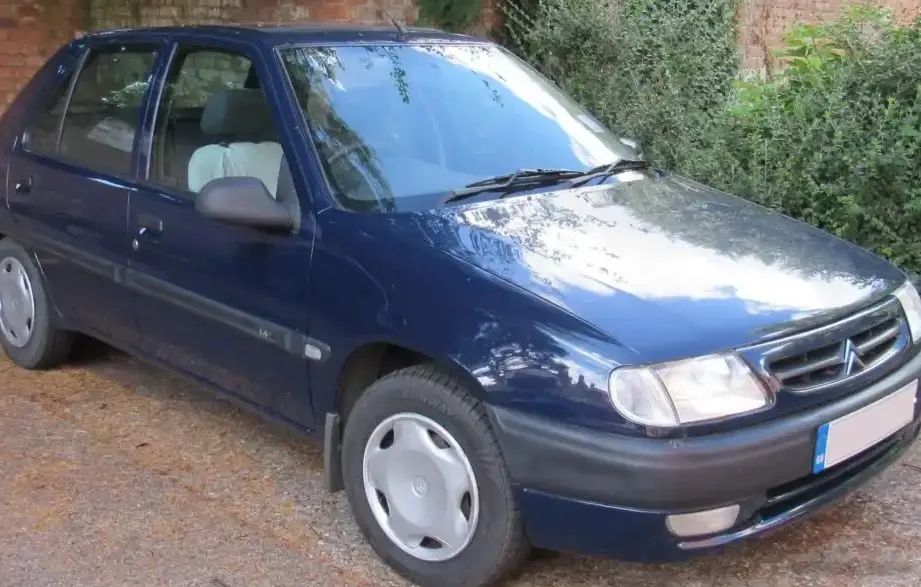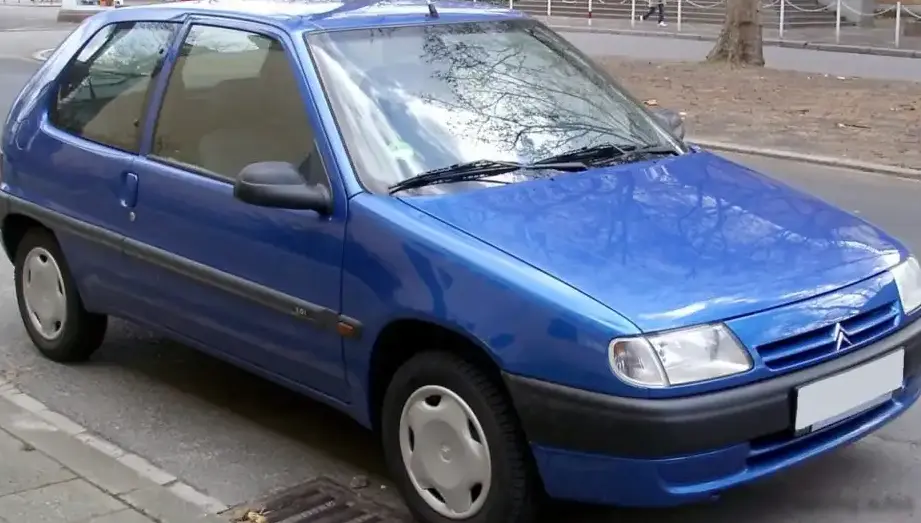
The Citroën Saxo 1.6 16V, produced between 1996 and 1999, represents a performance-oriented variant within the first generation (Phase I) of the Saxo supermini. Positioned as a sporty offering, it aimed to provide an engaging driving experience in a small, affordable package. The Saxo itself was a collaborative effort, sharing its platform – the X15 – with the Peugeot 106. This partnership allowed Citroën to enter the competitive small car market with a relatively low-cost, yet modern vehicle. The 1.6 16V model, distinguished by its higher horsepower output, served as a step up from the base models, appealing to drivers seeking more than just basic transportation.
Technical Specifications
| Brand | Citroen |
| Model | Saxo |
| Generation | Saxo (Phase I, 1996) 3-door |
| Type (Engine) | 1.6 16V (118 Hp) |
| Start of production | 1996 |
| End of production | 1999 |
| Powertrain Architecture | Internal Combustion engine |
| Body type | Hatchback |
| Seats | 5 |
| Doors | 3 |
| Fuel consumption (urban) | 8.2 l/100 km (28.7 US mpg, 34.4 UK mpg, 12.2 km/l) |
| Fuel consumption (extra urban) | 5.3 l/100 km (44.4 US mpg, 53.3 UK mpg, 18.9 km/l) |
| Fuel consumption (combined) | 6.8 l/100 km (34.6 US mpg, 41.5 UK mpg, 14.7 km/l) |
| Fuel Type | Petrol (Gasoline) |
| Acceleration 0 – 100 km/h | 7.7 sec |
| Acceleration 0 – 62 mph | 7.7 sec |
| Acceleration 0 – 60 mph | 7.3 sec |
| Maximum speed | 205 km/h (127.38 mph) |
| Weight-to-power ratio | 7.5 kg/Hp, 133.8 Hp/tonne |
| Weight-to-torque ratio | 6.1 kg/Nm, 164.4 Nm/tonne |
| Power | 118 Hp @ 6600 rpm |
| Power per litre | 74.4 Hp/l |
| Torque | 145 Nm @ 5200 rpm (106.95 lb.-ft. @ 5200 rpm) |
| Engine layout | Front, Transverse |
| Engine Model/Code | NFX TU5JP4 |
| Engine displacement | 1587 cm3 (96.84 cu. in.) |
| Number of cylinders | 4 |
| Engine configuration | Inline |
| Cylinder Bore | 78.5 mm (3.09 in.) |
| Piston Stroke | 82 mm (3.23 in.) |
| Compression ratio | 10.8:1 |
| Number of valves per cylinder | 4 |
| Fuel injection system | Multi-port manifold injection |
| Engine aspiration | Naturally aspirated engine |
| Valvetrain | DOHC |
| Engine oil capacity | 3.5 l (3.7 US qt | 3.08 UK qt) |
| Coolant | 5.8 l (6.13 US qt | 5.1 UK qt) |
| Kerb Weight | 882 kg (1944.48 lbs.) |
| Max. weight | 1380 kg (3042.38 lbs.) |
| Max load | 498 kg (1097.9 lbs.) |
| Trunk (boot) space – minimum | 280 l (9.89 cu. ft.) |
| Trunk (boot) space – maximum | 953 l (33.65 cu. ft.) |
| Fuel tank capacity | 45 l (11.89 US gal | 9.9 UK gal) |
| Max. roof load | 50 kg (110.23 lbs.) |
| Permitted trailer load with brakes (12%) | 700 kg (1543.24 lbs.) |
| Permitted trailer load without brakes | 441 kg (972.24 lbs.) |
| Permitted towbar download | 50 kg (110.23 lbs.) |
| Length | 3718 mm (146.38 in.) |
| Width | 1595 mm (62.8 in.) |
| Height | 1390 mm (54.72 in.) |
| Wheelbase | 2385 mm (93.9 in.) |
| Front track | 1401 mm (55.16 in.) |
| Rear (Back) track | 1321 mm (52.01 in.) |
| Front overhang | 748 mm (29.45 in.) |
| Rear overhang | 585 mm (23.03 in.) |
| Minimum turning circle | 10.9 m (35.76 ft.) |
| Drivetrain Architecture | The Internal combustion engine (ICE) drives the front wheels of the vehicle. |
| Drive wheel | Front wheel drive |
| Number of gears and type of gearbox | 5 gears, manual transmission |
| Front suspension | Independent type McPherson, Transverse stabilizer |
| Rear suspension | Trailing arm, Torsion |
| Front brakes | Ventilated discs |
| Rear brakes | Disc |
| Assisting systems | ABS (Anti-lock braking system) |
| Steering type | Steering rack and pinion |
| Power steering | Hydraulic Steering |
| Tires size | 185/55 R14 |
Powertrain & Engine Architecture
The heart of the Saxo 1.6 16V is the NFX TU5JP4 engine, a 1.6-liter inline-four cylinder petrol engine. This engine is part of the PSA Group’s (Peugeot Société Anonyme) TU series, known for its reliability and relatively simple design. The “16V” designation indicates a four-valve-per-cylinder configuration, enhancing breathing and contributing to the engine’s higher power output. It utilizes a multi-port fuel injection system, delivering fuel directly into the intake ports, optimizing combustion efficiency. The engine features a double overhead camshaft (DOHC) valvetrain, further improving valve control and performance. The engine produces 118 horsepower at 6600 rpm and 145 Nm (106.95 lb-ft) of torque at 5200 rpm. The engine is transversely mounted, driving the front wheels. While a five-speed manual transmission was standard, an optional four-speed automatic transmission was available, though less common.
Driving Characteristics
The Saxo 1.6 16V offered a noticeable step up in performance compared to the lower-spec models. Acceleration to 60 mph took approximately 7.3-7.7 seconds, and it could achieve a top speed of around 127 mph. The engine felt responsive, particularly in the mid-range, making it enjoyable for everyday driving and spirited back-road excursions. The manual transmission, with its relatively short gear ratios, allowed the driver to keep the engine in its power band. The automatic transmission, while offering convenience, did diminish performance somewhat, resulting in slower acceleration and a less engaging driving experience. The Saxo’s lightweight construction contributed to its nimble handling, and the suspension provided a reasonable balance between comfort and control.
Equipment & Trim Levels
The 1.6 16V trim typically included features such as power steering, central locking, and an upgraded interior trim compared to the base models. Options included alloy wheels, electric windows, and a sunroof. Interior upholstery was generally cloth, with a sporty design. The dashboard layout was functional and straightforward, prioritizing usability over luxury. Air conditioning was often an optional extra. The specific equipment level could vary depending on the market and any optional packages selected by the original purchaser.
Chassis & Braking
The Saxo utilized a McPherson strut front suspension and a trailing arm rear suspension. The front suspension incorporated a transverse stabilizer bar to reduce body roll during cornering. Braking consisted of ventilated discs at the front and discs at the rear, providing adequate stopping power for the vehicle’s weight and performance. ABS (Anti-lock Braking System) was standard, enhancing safety by preventing wheel lockup during hard braking.
Market Reception & Comparison
The Saxo 1.6 16V was generally well-received by automotive critics as a fun-to-drive and affordable hot hatch. It offered a compelling alternative to rivals like the Peugeot 106 XSi and the Renault Clio 16V. Compared to the base Saxo models, the 1.6 16V offered significantly improved performance, but at the cost of slightly reduced fuel economy. The automatic transmission version, while convenient, was often criticized for its sluggishness and impact on fuel consumption. Reliability was generally good, although regular maintenance was essential to ensure the longevity of the engine and other components.
Legacy
Today, the Citroën Saxo 1.6 16V has gained a following among enthusiasts, particularly those interested in affordable performance cars. Well-maintained examples are becoming increasingly collectible. The TU5JP4 engine is known for its durability, but like any older vehicle, it requires regular servicing to prevent issues. Rust can be a concern, particularly in areas with harsh winters. The Saxo 1.6 16V remains a testament to the idea that a small, lightweight car can provide a surprisingly engaging and enjoyable driving experience.