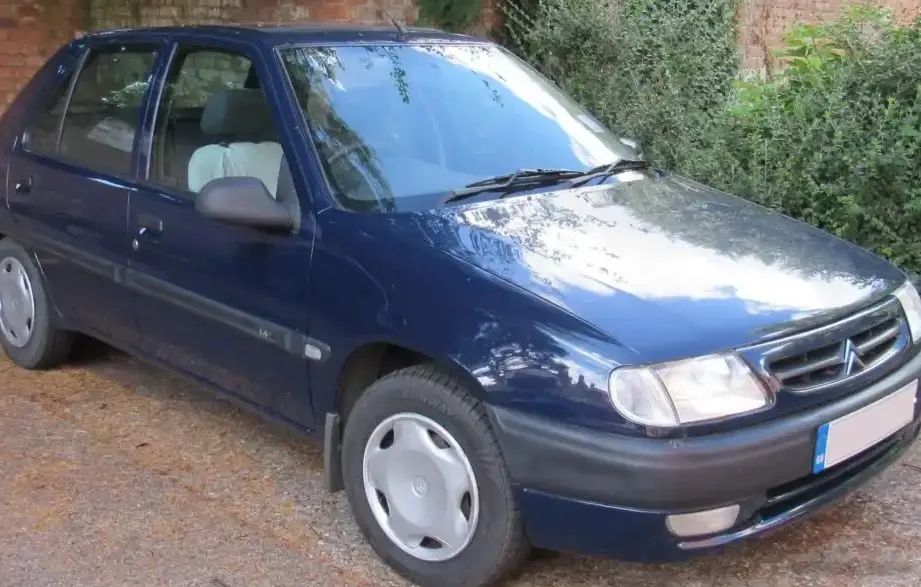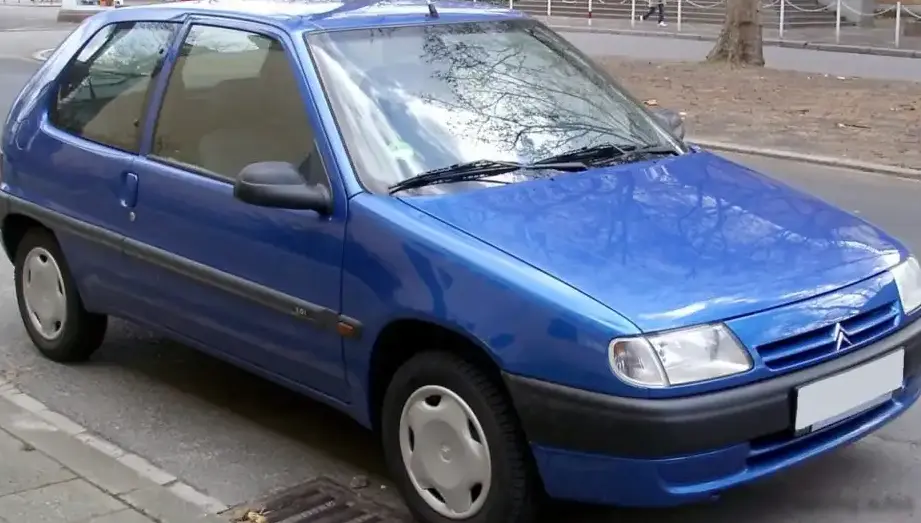
The Citroën Saxo 1.6, produced between 1996 and 1999, represented a mid-range offering within the Phase I Saxo lineup. Positioned above the base 1.0 and 1.4 liter models, but below the sportier 1.6 VTS and diesel variants, the 1.6-liter engine provided a balance of performance and affordability for European buyers. The Saxo itself was a supermini, designed as a replacement for the aging AX, and shared its platform (the X10/A16) with the Peugeot 106. This 3-door hatchback aimed to provide practical transportation with a touch of French flair, becoming a popular choice for first-time car owners and city dwellers.
Technical Specifications
| Brand | Citroen |
| Model | Saxo |
| Generation | Saxo (Phase I, 1996) 3-door |
| Type (Engine) | 1.6 (90 Hp) |
| Start of production | 1996 |
| End of production | 1999 |
| Powertrain Architecture | Internal Combustion engine |
| Body type | Hatchback |
| Seats | 5 |
| Doors | 3 |
| Fuel consumption (urban) | 8.2 l/100 km (28.7 US mpg, 34.4 UK mpg, 12.2 km/l) |
| Fuel consumption (extra urban) | 5.2 l/100 km (45.2 US mpg, 54.3 UK mpg, 19.2 km/l) |
| Fuel consumption (combined) | 6.7 l/100 km (35.1 US mpg, 42.2 UK mpg, 14.9 km/l) |
| Fuel Type | Petrol (Gasoline) |
| Acceleration 0 – 100 km/h | 10.2 sec |
| Acceleration 0 – 62 mph | 10.2 sec |
| Acceleration 0 – 60 mph | 9.7 sec |
| Maximum speed | 185 km/h (114.95 mph) |
| Weight-to-power ratio | 9.9 kg/Hp, 100.6 Hp/tonne |
| Weight-to-torque ratio | 6.6 kg/Nm, 150.8 Nm/tonne |
| Power | 90 Hp @ 5600 rpm |
| Power per litre | 56.7 Hp/l |
| Torque | 135 Nm @ 3000 rpm (99.57 lb.-ft. @ 3000 rpm) |
| Engine layout | Front, Transverse |
| Engine Model/Code | TU5JP |
| Engine displacement | 1587 cm3 (96.84 cu. in.) |
| Number of cylinders | 4 |
| Engine configuration | Inline |
| Cylinder Bore | 78.5 mm (3.09 in.) |
| Piston Stroke | 82 mm (3.23 in.) |
| Compression ratio | 9.6:1 |
| Number of valves per cylinder | 2 |
| Fuel injection system | Multi-port manifold injection |
| Engine aspiration | Naturally aspirated engine |
| Valvetrain | OHC |
| Engine oil capacity | 3.5 l (3.7 US qt | 3.08 UK qt) |
| Coolant | 5.8 l (6.13 US qt | 5.1 UK qt) |
| Kerb Weight | 895 kg (1973.14 lbs.) |
| Max. weight | 1360 kg (2998.29 lbs.) |
| Max load | 465 kg (1025.15 lbs.) |
| Trunk (boot) space – minimum | 280 l (9.89 cu. ft.) |
| Trunk (boot) space – maximum | 953 l (33.65 cu. ft.) |
| Fuel tank capacity | 45 l (11.89 US gal | 9.9 UK gal) |
| Max. roof load | 50 kg (110.23 lbs.) |
| Permitted trailer load with brakes (12%) | 700 kg (1543.24 lbs.) |
| Permitted trailer load without brakes | 447 kg (985.47 lbs.) |
| Permitted towbar download | 50 kg (110.23 lbs.) |
| Length | 3718 mm (146.38 in.) |
| Width | 1595 mm (62.8 in.) |
| Height | 1390 mm (54.72 in.) |
| Wheelbase | 2385 mm (93.9 in.) |
| Front track | 1401 mm (55.16 in.) |
| Rear (Back) track | 1321 mm (52.01 in.) |
| Front overhang | 748 mm (29.45 in.) |
| Rear overhang | 585 mm (23.03 in.) |
| Drivetrain Architecture | The Internal combustion engine (ICE) drives the front wheels of the vehicle. |
| Drive wheel | Front wheel drive |
| Number of gears and type of gearbox | 5 gears, manual transmission |
| Front suspension | Independent type McPherson, Transverse stabilizer |
| Rear suspension | Trailing arm, Torsion |
| Front brakes | Ventilated discs |
| Rear brakes | Disc |
| Steering type | Steering rack and pinion |
| Tires size | 185/55 R14 |
Powertrain & Engine Architecture
The heart of the Saxo 1.6 was the PSA TU5JP engine, a 1.6-liter inline-four cylinder petrol engine. This engine was a mainstay in many Peugeot and Citroën models of the era. The TU5JP featured a single overhead camshaft (OHC) design with two valves per cylinder. Fuel delivery was handled by a multi-port fuel injection system, providing a reasonable balance between efficiency and performance. The engine produced 90 horsepower at 5600 rpm and 135 Nm (99.57 lb-ft) of torque at 3000 rpm. The Saxo 1.6 was typically paired with a five-speed manual transmission, although an automatic transmission was also available, albeit less common. The automatic gearbox was a four-speed unit, designed for ease of use rather than outright performance.
Driving Characteristics
The Saxo 1.6 offered a noticeable step up in performance compared to the lower-displacement models. While not a sports car, the 90 hp engine provided adequate acceleration for everyday driving, with a 0-60 mph time of around 9.7 seconds. The automatic transmission, while convenient, did slightly diminish the car’s responsiveness. Gear changes were not particularly quick, and the engine could feel strained during rapid acceleration. The manual transmission version offered a more engaging driving experience, allowing drivers to better utilize the engine’s power band. Handling was typical of a supermini – light and nimble, making it easy to maneuver in urban environments. The suspension provided a comfortable ride, although it could become a little unsettled on rougher roads.
Equipment & Trim Levels
The Saxo 1.6 typically came with a reasonable level of standard equipment. This included power steering, central locking, and an adjustable steering column. Interior trim was relatively basic, with cloth upholstery and a functional dashboard layout. Optional extras included electric windows, a sunroof, and upgraded audio systems. Higher trim levels might have featured alloy wheels and more luxurious interior appointments. The Saxo was designed to be an affordable car, so even the 1.6 model didn’t offer the same level of luxury as some of its competitors.
Chassis & Braking
The Saxo utilized a McPherson strut front suspension and a trailing arm rear suspension. This setup provided a good balance between ride comfort and handling. The front brakes were ventilated discs, offering good stopping power, while the rear brakes were typically discs as well. The steering was a rack and pinion system, providing precise and responsive steering feel. The Saxo’s relatively light weight contributed to its nimble handling characteristics.
Market Reception & Comparison
The Citroën Saxo 1.6 was generally well-received by automotive critics as a practical and affordable supermini. It was praised for its fuel efficiency, comfortable ride, and nimble handling. However, the automatic transmission version was often criticized for its sluggish performance. Compared to the 1.6 VTS, the 1.6 offered a more relaxed driving experience and better fuel economy, but lacked the VTS’s sporty pretensions. Against the diesel models, the 1.6 provided more power and a smoother engine, but at the cost of higher fuel consumption. The Saxo competed with other popular superminis such as the Peugeot 106, Renault Clio, and Volkswagen Polo.
Legacy
The Citroën Saxo, and specifically the 1.6 variant, has proven to be a relatively reliable car. The TU5JP engine is known for its durability, and with regular maintenance, can last for many years. However, like any older car, the Saxo is prone to age-related issues such as rust and wear and tear on suspension components. Today, the Saxo 1.6 is a popular choice for budget-conscious buyers and classic car enthusiasts. Its affordability, simplicity, and relatively good reliability make it a practical and enjoyable car to own. Parts availability is generally good, and the Saxo’s straightforward design makes it relatively easy to maintain and repair.