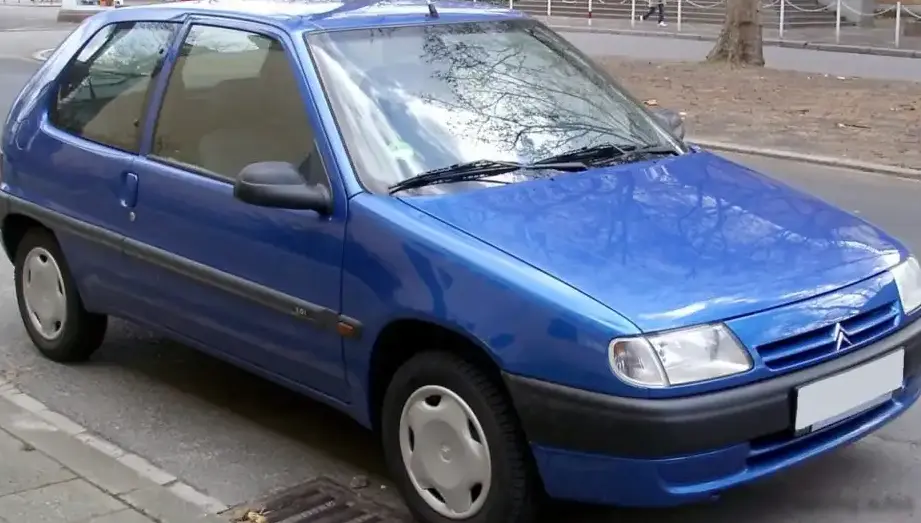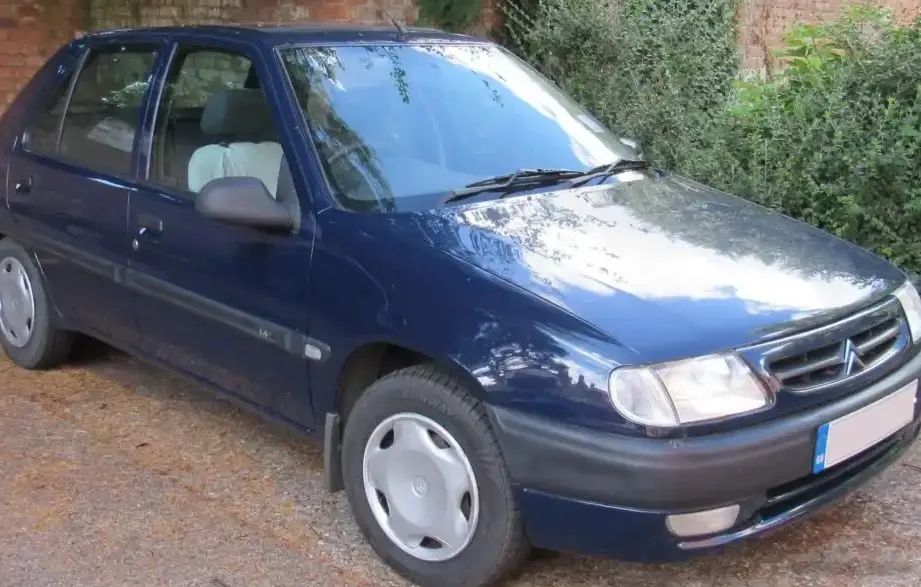
The Citroen Saxo 1.4, produced between 1996 and 1999 as part of the Phase I generation, represented an entry-level offering within the Saxo range. Positioned as a practical and affordable supermini, the 5-door 1.4 model with 75 horsepower aimed at buyers prioritizing economy and everyday usability over outright performance. The Saxo itself was a collaborative effort, sharing its platform (the X18/A16) and many components with the Peugeot 106. This partnership allowed Citroen to offer a competitive vehicle in the crowded European small car market, and the Saxo quickly gained popularity for its nimble handling and low running costs.
Technical Specifications
| Brand | Citroen |
| Model | Saxo |
| Generation | Saxo (Phase I, 1996) 5-door |
| Type (Engine) | 1.4 (75 Hp) |
| Start of production | 1996 |
| End of production | 1999 |
| Powertrain Architecture | Internal Combustion engine |
| Body type | Hatchback |
| Seats | 5 |
| Doors | 5 |
| Fuel consumption (urban) | 7.9 l/100 km (29.8 US mpg, 35.8 UK mpg, 12.7 km/l) |
| Fuel consumption (extra urban) | 5 l/100 km (47 US mpg, 56.5 UK mpg, 20 km/l) |
| Fuel consumption (combined) | 6.5 l/100 km (36.2 US mpg, 43.5 UK mpg, 15.4 km/l) |
| Fuel Type | Petrol (Gasoline) |
| Acceleration 0 – 100 km/h | 11.2 sec |
| Acceleration 0 – 62 mph | 11.2 sec |
| Acceleration 0 – 60 mph | 10.6 sec |
| Maximum speed | 175 km/h (108.74 mph) |
| Weight-to-power ratio | 11.1 kg/Hp, 89.8 Hp/tonne |
| Weight-to-torque ratio | 7.5 kg/Nm, 132.9 Nm/tonne |
| Power | 75 Hp @ 5500 rpm |
| Power per litre | 55.1 Hp/l |
| Torque | 111 Nm @ 3400 rpm (81.87 lb.-ft. @ 3400 rpm) |
| Engine layout | Front, Transverse |
| Engine Model/Code | KFX TU3JP |
| Engine displacement | 1360 cm3 (82.99 cu. in.) |
| Number of cylinders | 4 |
| Engine configuration | Inline |
| Cylinder Bore | 75 mm (2.95 in.) |
| Piston Stroke | 77 mm (3.03 in.) |
| Compression ratio | 10.2:1 |
| Number of valves per cylinder | 2 |
| Fuel injection system | Multi-port manifold injection |
| Engine aspiration | Naturally aspirated engine |
| Valvetrain | SOHC |
| Engine oil capacity | 3.5 l (3.7 US qt | 3.08 UK qt) |
| Coolant | 5.5 l (5.81 US qt | 4.84 UK qt) |
| Kerb Weight | 835 kg (1840.86 lbs.) |
| Max. weight | 1340 kg (2954.19 lbs.) |
| Max load | 505 kg (1113.33 lbs.) |
| Trunk (boot) space – minimum | 280 l (9.89 cu. ft.) |
| Trunk (boot) space – maximum | 953 l (33.65 cu. ft.) |
| Fuel tank capacity | 45 l (11.89 US gal | 9.9 UK gal) |
| Max. roof load | 50 kg (110.23 lbs.) |
| Permitted trailer load with brakes (12%) | 700 kg (1543.24 lbs.) |
| Permitted trailer load without brakes | 410 kg (903.9 lbs.) |
| Permitted towbar download | 50 kg (110.23 lbs.) |
| Length | 3718 mm (146.38 in.) |
| Width | 1595 mm (62.8 in.) |
| Height | 1390 mm (54.72 in.) |
| Wheelbase | 2385 mm (93.9 in.) |
| Front track | 1401 mm (55.16 in.) |
| Rear (Back) track | 1321 mm (52.01 in.) |
| Front overhang | 748 mm (29.45 in.) |
| Rear overhang | 585 mm (23.03 in.) |
| Drivetrain Architecture | The Internal combustion engine (ICE) drives the front wheels of the vehicle. |
| Drive wheel | Front wheel drive |
| Number of gears and type of gearbox | 5 gears, manual transmission |
| Front suspension | Independent type McPherson, Transverse stabilizer |
| Rear suspension | Trailing arm, Torsion |
| Front brakes | Disc |
| Rear brakes | Drum |
| Steering type | Steering rack and pinion |
| Power steering | Electric Steering |
| Tires size | 165/70 R13 |
| Wheel rims size | 5J x 13 |
Powertrain & Engine Architecture
The heart of the Saxo 1.4 was the KFX (also known as TU3JP) 1.4-liter inline-four cylinder engine. This engine was a staple in many Peugeot and Citroen models of the era. It featured a single overhead camshaft (SOHC) valvetrain operating two valves per cylinder. Fuel delivery was handled by a multi-port fuel injection system, providing a balance between efficiency and performance. The engine produced 75 horsepower at 5500 rpm and 111 Nm (82 lb-ft) of torque at 3400 rpm. The engine’s relatively simple design contributed to its reliability and ease of maintenance. The Saxo 1.4 was typically paired with a five-speed manual transmission, although a four-speed automatic transmission was also available, albeit less common. The automatic transmission, while offering convenience, did impact acceleration and fuel economy.
Driving Characteristics
The Saxo 1.4, particularly in its five-speed manual form, offered a surprisingly engaging driving experience for a supermini. The 75 hp engine, while not powerful, provided adequate acceleration for urban and highway driving. The car felt nimble and responsive, thanks to its light weight and well-tuned suspension. The automatic transmission version, however, felt noticeably slower, with the engine often needing to be revved hard to maintain speed, especially when overtaking. Gear ratios were optimized for fuel efficiency rather than outright performance. The steering was light and precise, making it easy to maneuver in tight spaces. The suspension, while comfortable enough for everyday use, could become a little unsettled on rougher road surfaces.
Equipment & Trim Levels
The Saxo 1.4 typically came with a fairly basic level of equipment, reflecting its position as an entry-level model. Standard features included power steering, central locking, and a basic stereo system. Interior upholstery was typically cloth, and the dashboard was constructed from durable plastics. Optional extras included air conditioning, electric windows, and alloy wheels. Higher trim levels, such as the ‘X’ or ‘GS’, added more features, but the base 1.4 model prioritized affordability. Safety features were limited by the standards of the time, with only a driver’s airbag being standard on some models.
Chassis & Braking
The Saxo utilized a MacPherson strut independent suspension setup at the front, providing good handling and ride comfort. The rear suspension employed a torsion beam setup, which was cost-effective and space-efficient. Brakes were disc brakes at the front and drum brakes at the rear. The braking system was adequate for the car’s weight and performance, but lacked the stopping power of more modern vehicles. The Saxo’s relatively lightweight construction contributed to its nimble handling and reduced braking distances.
Market Reception & Comparison
The Citroen Saxo 1.4 was generally well-received by critics as a practical and affordable supermini. It was praised for its nimble handling, low running costs, and spacious interior. However, the 1.4 engine was sometimes criticized for being underpowered, particularly when paired with the automatic transmission. Compared to other Saxo variants, such as the 1.6i or the diesel models, the 1.4 offered a more economical option, but at the expense of performance. The 1.6i provided a noticeable boost in power, while the diesel models offered superior fuel economy. The Saxo competed directly with other popular superminis of the time, such as the Peugeot 106, Renault Clio, and Ford Fiesta.
Legacy
The Citroen Saxo 1.4, and the KFX engine it utilized, proved to be remarkably reliable. Many examples are still on the road today, testament to their robust construction and simple design. The engine is known for its longevity and relatively low maintenance costs. On the used car market, the Saxo 1.4 remains an affordable and practical option for those seeking a cheap and cheerful runabout. However, potential buyers should be aware of the car’s age and the possibility of wear and tear on components such as the suspension and brakes. The Saxo’s enduring popularity has also made it a popular choice for motorsport enthusiasts, with many examples being modified for rally and track use.