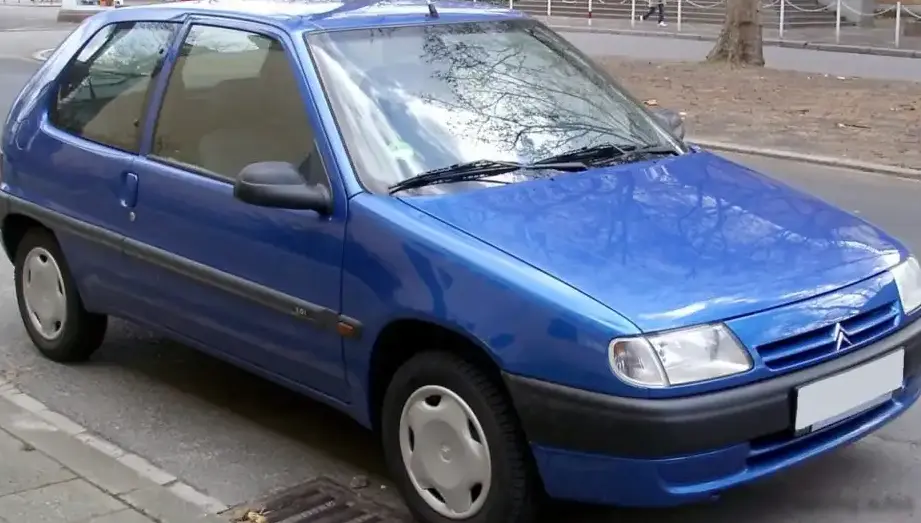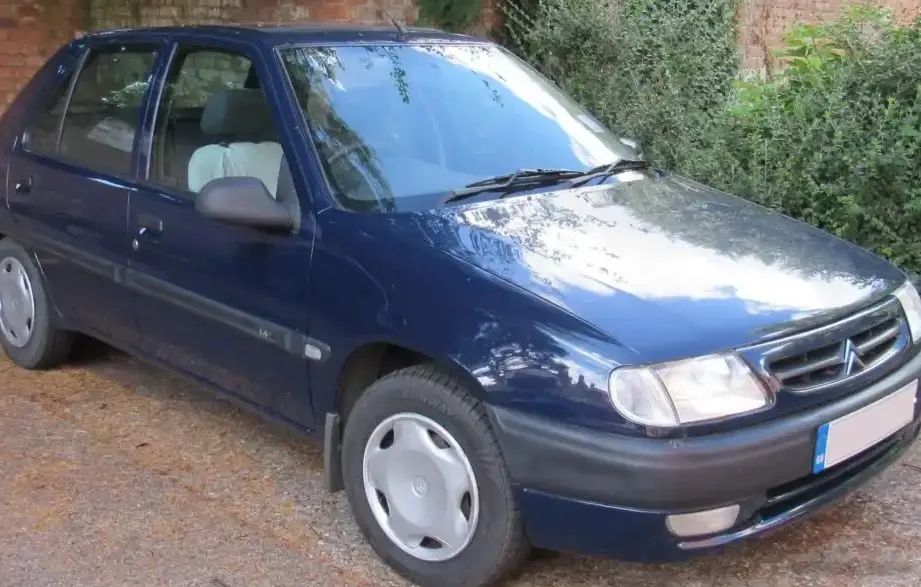
The Citroen Saxo 1.6 Automatic, produced between 1996 and 1999, represented a comfortable and practical entry point into the supermini segment for buyers prioritizing ease of use over outright performance. Part of the first generation (Phase I) Saxo range, designated 1HX, this five-door hatchback offered a more refined driving experience than its lower-powered siblings, while remaining an affordable and economical choice. It occupied a mid-range position within the Saxo lineup, bridging the gap between the base 1.0L and 1.4L models and the sportier 1.6L versions with manual transmissions.
Technical Specifications
| Brand | Citroen |
| Model | Saxo |
| Generation | Saxo (Phase I, 1996) 5-door |
| Type (Engine) | 1.6 (90 Hp) Automatic |
| Start of production | 1996 |
| End of production | 1999 |
| Powertrain Architecture | Internal Combustion engine |
| Body type | Hatchback |
| Seats | 5 |
| Doors | 5 |
| Fuel consumption (urban) | 9.4 l/100 km (25 US mpg, 30.1 UK mpg, 10.6 km/l) |
| Fuel consumption (extra urban) | 5.9 l/100 km (39.9 US mpg, 47.9 UK mpg, 16.9 km/l) |
| Fuel consumption (combined) | 7.6 l/100 km (30.9 US mpg, 37.2 UK mpg, 13.2 km/l) |
| Fuel Type | Petrol (Gasoline) |
| Acceleration 0 – 100 km/h | 12.5 sec |
| Acceleration 0 – 62 mph | 12.5 sec |
| Acceleration 0 – 60 mph | 11.9 sec |
| Maximum speed | 176 km/h (109.36 mph) |
| Weight-to-power ratio | 10.3 kg/Hp, 97.3 Hp/tonne |
| Weight-to-torque ratio | 6.9 kg/Nm, 145.9 Nm/tonne |
| Power | 90 Hp @ 5600 rpm |
| Power per litre | 56.7 Hp/l |
| Torque | 135 Nm @ 3000 rpm (99.57 lb.-ft. @ 3000 rpm) |
| Engine layout | Front, Transverse |
| Engine Model/Code | NFZ TU5JP |
| Engine displacement | 1587 cm3 (96.84 cu. in.) |
| Number of cylinders | 4 |
| Engine configuration | Inline |
| Cylinder Bore | 78.5 mm (3.09 in.) |
| Piston Stroke | 82 mm (3.23 in.) |
| Compression ratio | 9.6:1 |
| Number of valves per cylinder | 2 |
| Fuel injection system | Multi-port manifold injection |
| Engine aspiration | Naturally aspirated engine |
| Valvetrain | SOHC |
| Engine oil capacity | 3.5 l (3.7 US qt | 3.08 UK qt) |
| Coolant | 5.8 l (6.13 US qt | 5.1 UK qt) |
| Kerb Weight | 925 kg (2039.28 lbs.) |
| Max. weight | 1400 kg (3086.47 lbs.) |
| Max load | 475 kg (1047.2 lbs.) |
| Trunk (boot) space – minimum | 280 l (9.89 cu. ft.) |
| Trunk (boot) space – maximum | 953 l (33.65 cu. ft.) |
| Fuel tank capacity | 45 l (11.89 US gal | 9.9 UK gal) |
| Max. roof load | 50 kg (110.23 lbs.) |
| Permitted trailer load with brakes (12%) | 700 kg (1543.24 lbs.) |
| Permitted trailer load without brakes | 475 kg (1047.2 lbs.) |
| Permitted towbar download | 50 kg (110.23 lbs.) |
| Length | 3718 mm (146.38 in.) |
| Width | 1595 mm (62.8 in.) |
| Height | 1390 mm (54.72 in.) |
| Wheelbase | 2385 mm (93.9 in.) |
| Front track | 1401 mm (55.16 in.) |
| Rear (Back) track | 1321 mm (52.01 in.) |
| Front overhang | 748 mm (29.45 in.) |
| Rear overhang | 585 mm (23.03 in.) |
| Drivetrain Architecture | The Internal combustion engine (ICE) drives the front wheels of the vehicle. |
| Drive wheel | Front wheel drive |
| Number of gears and type of gearbox | 3 gears, automatic transmission |
| Front suspension | Independent type McPherson, Transverse stabilizer |
| Rear suspension | Trailing arm, Torsion |
| Front brakes | Disc |
| Rear brakes | Drum |
| Steering type | Steering rack and pinion |
| Power steering | Electric Steering |
| Tires size | 165/65 R14 |
| Wheel rims size | 5.5J x 14 |
INTRODUCTION
The Citroen Saxo, launched in 1996, was a direct replacement for the AX, aiming to offer a more modern and appealing supermini. The 1.6-liter automatic variant, while not the most common, provided a comfortable and convenient option for drivers who preferred an automatic transmission. Built on the Peugeot-Citroen (PSA) 1HX platform – shared with the Peugeot 106 – the Saxo was designed to be a practical, affordable, and reliable city car. The five-door body style enhanced its practicality, making it suitable for small families or those needing versatile passenger and cargo space.
Powertrain & Engine Architecture
The heart of the Saxo 1.6 Automatic is the NFZ (also known as TU5JP) 1.6-liter inline-four cylinder engine. This engine, a staple of PSA vehicles during the 1990s, features a single overhead camshaft (SOHC) valvetrain operating two valves per cylinder. Fuel delivery is managed by a multi-port fuel injection system, contributing to reasonable fuel efficiency and smooth operation. The engine produces 90 horsepower at 5600 rpm and 135 Nm (99.57 lb-ft) of torque at 3000 rpm. Paired with this engine is a three-speed automatic transmission. This transmission, while providing convenience, was not known for its sportiness or rapid shifts. It was selected for its simplicity and cost-effectiveness, prioritizing smooth cruising over dynamic performance.
Driving Characteristics
The Saxo 1.6 Automatic offered a noticeably more relaxed driving experience compared to the 1.4L models. The automatic transmission, while lacking the responsiveness of a manual, provided smooth gear changes and eliminated the need for clutch operation. Acceleration from 0-60 mph took around 11.9 seconds, and the top speed was approximately 109 mph. The three-speed automatic transmission meant that the engine often operated at higher revs during highway cruising, potentially impacting fuel economy. Compared to the manual 1.6L versions, the automatic felt somewhat slower and less engaging, but it remained perfectly adequate for everyday driving and urban commutes.
Equipment & Trim Levels
The Saxo 1.6 Automatic typically came with a reasonable level of standard equipment for its price point. This included central locking, power steering, and an adjustable steering column. Interior upholstery was typically cloth, and the dashboard featured a functional, if somewhat basic, design. Optional extras could include electric windows, a sunroof, and upgraded audio systems. The trim level often dictated the quality of the interior materials and the availability of additional features.
Chassis & Braking
The Saxo 1.6 Automatic utilized a McPherson strut front suspension and a trailing arm rear suspension. This setup provided a comfortable ride quality, absorbing bumps and imperfections in the road surface effectively. Front brakes were discs, offering adequate stopping power, while rear brakes were drums, a cost-saving measure common in this class of vehicle. The electric power steering provided light and easy steering, making it ideal for maneuvering in tight urban environments.
Market Reception & Comparison
The Saxo 1.6 Automatic was generally well-received as a practical and affordable city car. Critics praised its comfortable ride and ease of use, but noted that the automatic transmission detracted from the overall driving experience compared to the manual versions. Fuel economy was respectable, but not class-leading. Compared to rivals like the Renault Clio and Peugeot 106, the Saxo offered a similar level of practicality and affordability, with the automatic transmission being a key differentiator.
Legacy
The Citroen Saxo 1.6 Automatic, while not a performance icon, remains a relatively reliable and affordable used car option. The NFZ engine is known for its durability, and the automatic transmission, while simple, is generally robust. However, like any older vehicle, regular maintenance is crucial to ensure its continued reliability. Parts availability is generally good, and the Saxo’s simple construction makes it relatively easy to repair. Today, it appeals to those seeking a cheap and cheerful runabout or a classic 1990s supermini.