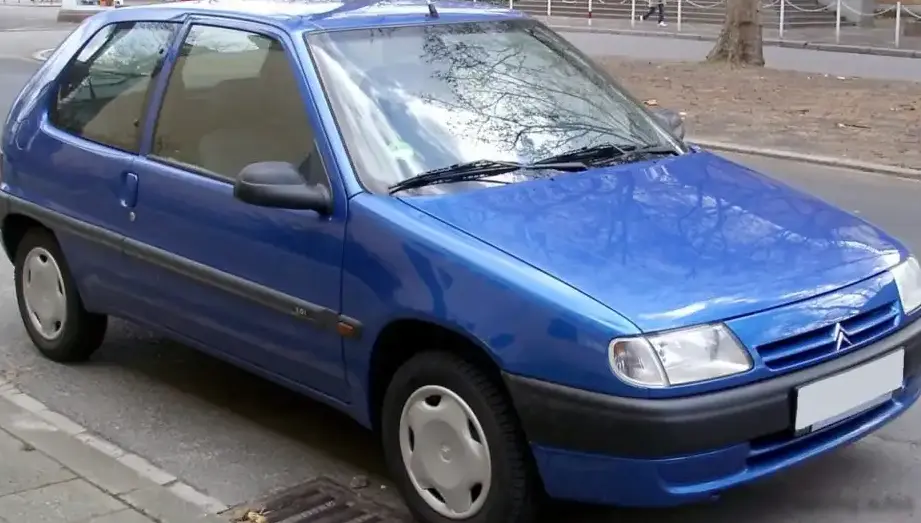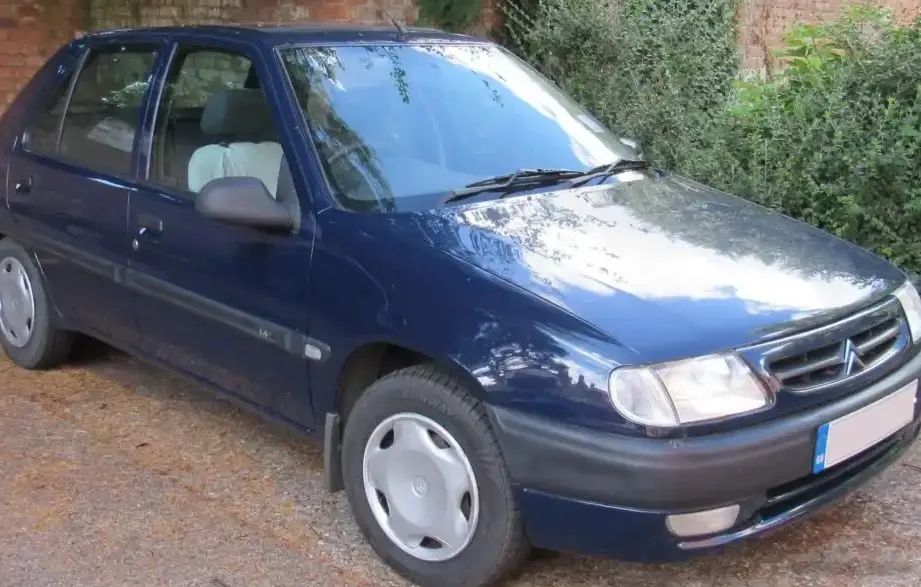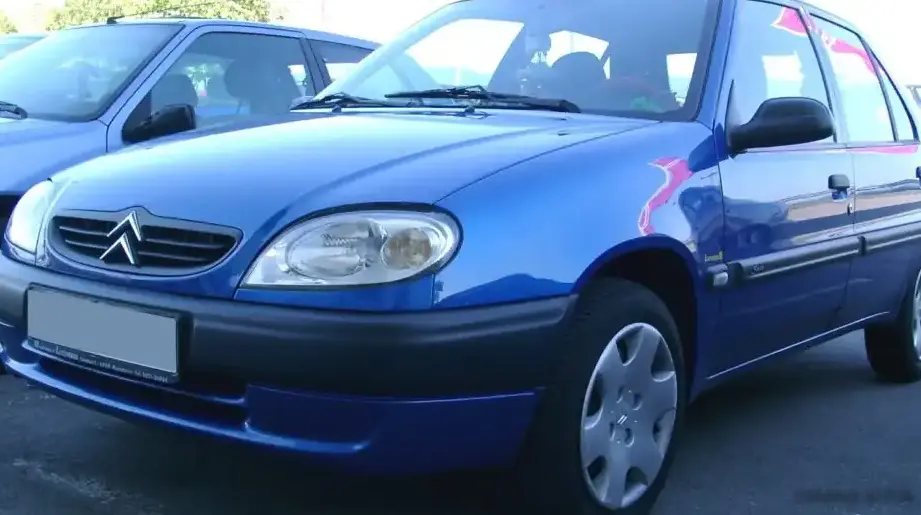
The Citroën Saxo 1.1, produced between 1999 and 2002 as part of the Phase II refresh of the Saxo model range, represented the entry point into Citroën ownership for many European buyers. This five-door hatchback, powered by the 60 horsepower HFX (TU1JP) engine and typically paired with a manual transmission, was designed for affordability, practicality, and low running costs. It occupied the base trim level within the Saxo lineup, sitting below the more powerful 1.4 and 1.6-liter variants, as well as the sportier VTS models. The Saxo itself was a popular supermini, built upon the shared Peugeot 206 platform (known internally as the T1 platform), and aimed at providing a cost-effective and reliable vehicle in a competitive market segment.
Technical Specifications
| Brand | Citroen |
| Model | Saxo |
| Generation | Saxo (Phase II, 1999) 5-door |
| Type (Engine) | 1.1 (60 Hp) |
| Start of production | September, 1999 |
| End of production | 2002 |
| Powertrain Architecture | Internal Combustion engine |
| Body type | Hatchback |
| Seats | 5 |
| Doors | 5 |
| Fuel consumption (urban) | 8.1 l/100 km (29 US mpg, 34.9 UK mpg, 12.3 km/l) |
| Fuel consumption (extra urban) | 5.1 l/100 km (46.1 US mpg, 55.4 UK mpg, 19.6 km/l) |
| Fuel consumption (combined) | 6.2 l/100 km (37.9 US mpg, 45.6 UK mpg, 16.1 km/l) |
| CO2 emissions | 147 g/km |
| Fuel Type | Petrol (Gasoline) |
| Acceleration 0 – 100 km/h | 14.9 sec |
| Acceleration 0 – 62 mph | 14.9 sec |
| Acceleration 0 – 60 mph | 14.2 sec |
| Maximum speed | 164 km/h (101.9 mph) |
| Emission standard | Euro 3 |
| Weight-to-power ratio | 15.4 kg/Hp, 64.9 Hp/tonne |
| Weight-to-torque ratio | 9.8 kg/Nm, 101.6 Nm/tonne |
| Power | 60 Hp @ 5500 rpm |
| Power per litre | 53.4 Hp/l |
| Torque | 94 Nm @ 3500 rpm (69.33 lb.-ft. @ 3500 rpm) |
| Engine layout | Front, Transverse |
| Engine Model/Code | HFX TU1JP |
| Engine displacement | 1124 cm3 (68.59 cu. in.) |
| Number of cylinders | 4 |
| Engine configuration | Inline |
| Cylinder Bore | 72 mm (2.83 in.) |
| Piston Stroke | 69 mm (2.72 in.) |
| Compression ratio | 9.7:1 |
| Number of valves per cylinder | 2 |
| Fuel injection system | Multi-port manifold injection |
| Engine aspiration | Naturally aspirated |
| Valvetrain | SOHC |
| Engine oil capacity | 3.2 l (3.38 US qt, 2.82 UK qt) |
| Coolant capacity | 6.1 l (6.45 US qt, 5.37 UK qt) |
| Kerb Weight | 925 kg (2039.28 lbs.) |
| Max. weight | 1330 kg (2932.15 lbs.) |
| Max load | 405 kg (892.87 lbs.) |
| Trunk (boot) space – minimum | 280 l (9.89 cu. ft.) |
| Trunk (boot) space – maximum | 953 l (33.65 cu. ft.) |
| Fuel tank capacity | 45 l (11.89 US gal, 9.9 UK gal) |
| Max. roof load | 50 kg (110.23 lbs.) |
| Permitted trailer load (braked) | 600 kg (1322.77 lbs.) |
| Permitted trailer load (unbraked) | 450 kg (992.08 lbs.) |
| Permitted towbar download | 50 kg (110.23 lbs.) |
| Length | 3718 mm (146.38 in.) |
| Width | 1595 mm (62.8 in.) |
| Height | 1368 mm (53.86 in.) |
| Wheelbase | 2385 mm (93.9 in.) |
| Front track | 1370 mm (53.94 in.) |
| Rear track | 1305 mm (51.38 in.) |
| Turning circle | 10.9 m (35.76 ft.) |
| Drivetrain | Front wheel drive |
| Number of gears | 5 |
| Gearbox type | Manual transmission |
| Front suspension | Independent type McPherson, Transverse stabilizer |
| Rear suspension | Trailing arm, Torsion |
| Front brakes | Disc |
| Rear brakes | Drum |
| Steering type | Steering rack and pinion |
| Tires size | 155/70 R13; 165/70 R13; 165/65 R14 |
| Wheel rims size | 5J x 13; 5.5J x 14 |
INTRODUCTION
The Citroën Saxo 1.1 (60 hp) was a mainstay of the Phase II Saxo range, produced from September 1999 to 2002. Positioned as the most affordable option, it was aimed at first-time car buyers, city dwellers, and those seeking a reliable and economical mode of transport. The Saxo, in general, was Citroën’s replacement for the AX, and shared its platform with the Peugeot 206. The Phase II update brought subtle styling revisions, improved interior trim, and enhanced safety features compared to the earlier models. The 1.1-liter engine, while not offering blistering performance, provided adequate power for urban driving and reasonable fuel economy.
Powertrain & Engine Architecture
The heart of the Saxo 1.1 is the HFX (also known as TU1JP) 1.1-liter inline-four cylinder engine. This engine is a naturally aspirated, single overhead camshaft (SOHC) unit featuring two valves per cylinder. It utilizes a multi-point fuel injection system, delivering fuel directly into the intake ports. The HFX engine is known for its simplicity and robustness, contributing to its reliability. The engine produces 60 horsepower at 5500 rpm and 94 Nm (69.33 lb-ft) of torque at 3500 rpm. The engine’s relatively low compression ratio of 9.7:1 helps it run reliably on standard unleaded gasoline. The Saxo 1.1 was almost exclusively paired with a five-speed manual transmission, although a four-speed automatic was available in some markets, albeit less common. The automatic transmission, while offering convenience, noticeably impacted acceleration and fuel economy.
Driving Characteristics
The Saxo 1.1, with its 60 horsepower, wasn’t designed for speed. Acceleration from 0 to 60 mph took around 14.2 seconds, and top speed was limited to approximately 102 mph. However, the engine’s torque delivery was reasonably linear, making it easy to drive in urban environments. The five-speed manual transmission allowed drivers to keep the engine in its optimal power band, while the automatic version, when equipped, felt sluggish and required more frequent downshifts. The Saxo’s light weight (around 925 kg or 2039 lbs) helped to mitigate the lack of power, making it feel more nimble than its specifications might suggest. Compared to the 1.4 and 1.6-liter Saxo models, the 1.1 offered a significantly more relaxed driving experience, prioritizing fuel efficiency over outright performance.
Equipment & Trim Levels
The Saxo 1.1 typically came with a basic, but functional, level of equipment. Standard features included power steering, central locking, and a basic audio system. Interior upholstery was typically cloth, with a simple dashboard layout. Optional extras included air conditioning, electric windows, and alloy wheels. The trim level was generally considered the entry-level specification, focusing on providing essential features at an affordable price. Higher trim levels, such as the LX or GS, added features like upgraded interior trim, body-colored bumpers, and more sophisticated audio systems.
Chassis & Braking
The Saxo 1.1 utilized a MacPherson strut independent suspension at the front and a trailing arm torsion beam suspension at the rear. This setup provided a comfortable ride quality, particularly on smoother roads. Front brakes were disc brakes, while rear brakes were drum brakes – a cost-saving measure typical of vehicles in this segment. The steering was a rack and pinion system, offering precise and responsive handling. The relatively light weight of the vehicle contributed to its agility and ease of maneuvering. Stabilizer bars were typically fitted to the front suspension to reduce body roll during cornering.
Market Reception & Comparison
The Citroën Saxo 1.1 was generally well-received by critics as an affordable and practical city car. It was praised for its low running costs, reliability, and ease of driving. However, its lack of power was often noted, and the automatic transmission was criticized for its sluggish performance. Compared to rivals like the Renault Clio and Peugeot 206, the Saxo 1.1 offered a competitive price point and similar levels of practicality. The 1.4-liter Saxo offered a noticeable performance improvement, but at a higher price. The 1.6-liter and VTS models were aimed at a different market segment, prioritizing sporty handling and performance over fuel economy.
Legacy
The Citroën Saxo 1.1 has proven to be a remarkably durable and reliable vehicle. Many examples are still on the road today, testament to the robustness of the HFX engine and the overall build quality of the car. In the used car market, the Saxo 1.1 remains an affordable option for those seeking a cheap and cheerful runabout. While not a particularly exciting car to drive, its simplicity, low running costs, and readily available spare parts make it a popular choice for students, first-time drivers, and those on a tight budget. The HFX engine, while basic, is known for its longevity and relatively straightforward maintenance requirements.