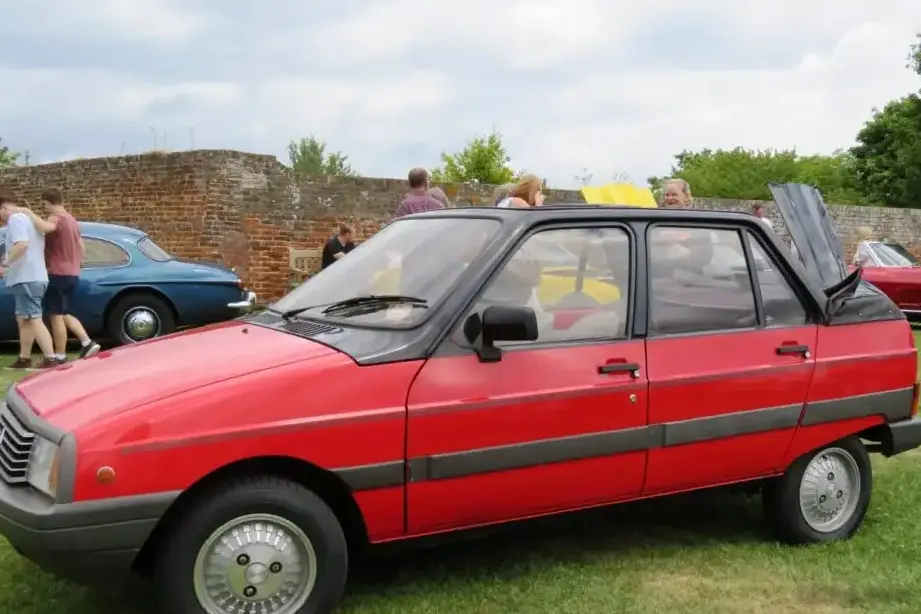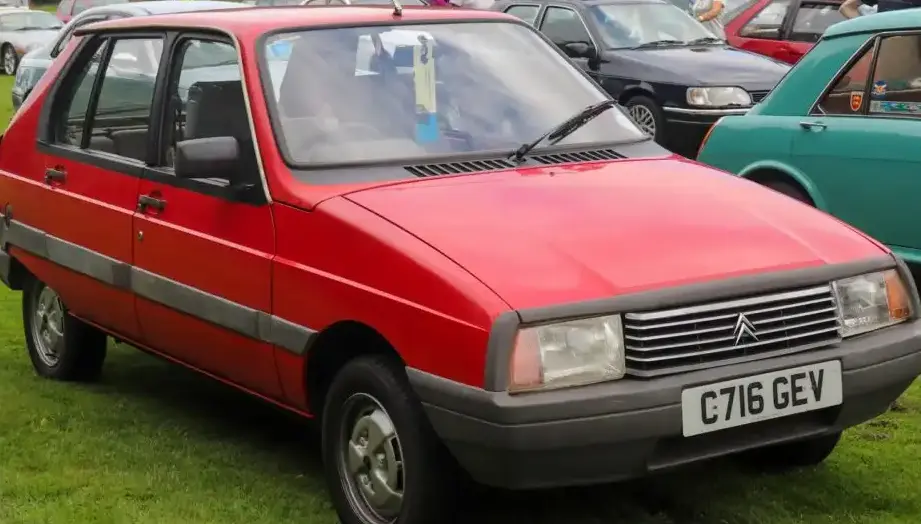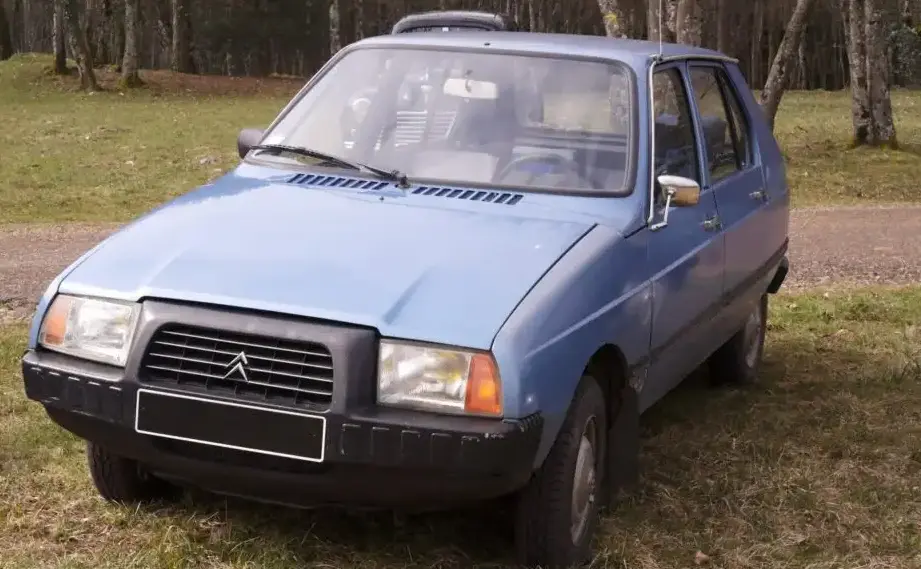
The Citroen Visa (Phase I) 0.6, produced between 1978 and 1981, represents the entry point into the first generation of Citroen’s compact hatchback. Positioned as an affordable and practical family car, the 0.6-liter Visa aimed to provide economical transportation within the European market. It was a key component of Citroen’s strategy to offer a modern, smaller alternative to the larger, more complex Citroen models of the time. The Visa, along with the Peugeot 104, were built in a shared factory in Poissy, France, a result of the partial merger between the two French automakers in 1974. This initial phase (Phase I) of the Visa is characterized by its relatively simple design and focus on fuel efficiency.
Technical Specifications
| Brand | Citroen |
| Model | Visa |
| Generation | Visa (Phase I) |
| Type (Engine) | 0.6 (36 Hp) |
| Start of production | 1978 |
| End of production | 1981 |
| Powertrain Architecture | Internal Combustion engine |
| Body type | Hatchback |
| Seats | 4 |
| Doors | 5 |
| Fuel consumption (urban) | 7.6 l/100 km (30.9 US mpg) |
| Fuel consumption (extra urban) | 5.7 l/100 km (41.3 US mpg) |
| Fuel Type | Petrol (Gasoline) |
| Acceleration 0 – 100 km/h | 26.2 sec |
| Acceleration 0 – 62 mph | 26.2 sec |
| Acceleration 0 – 60 mph | 24.9 sec |
| Maximum speed | 124 km/h (77.05 mph) |
| Weight-to-power ratio | 20.4 kg/Hp |
| Weight-to-torque ratio | 14.1 kg/Nm |
| Power | 36 Hp @ 5500 rpm |
| Torque | 52 Nm @ 3500 rpm (38.35 lb.-ft. @ 3500 rpm) |
| Maximum engine speed | 6500 rpm |
| Engine layout | Front, Longitudinal |
| Engine Model/Code | V06/630 |
| Engine displacement | 652 cm3 (39.79 cu. in.) |
| Number of cylinders | 2 |
| Engine configuration | Boxer |
| Cylinder Bore | 77 mm (3.03 in.) |
| Piston Stroke | 70 mm (2.76 in.) |
| Compression ratio | 9:1 |
| Number of valves per cylinder | 2 |
| Fuel injection system | Carburettor |
| Engine oil capacity | 3.3 l (3.49 US qt | 2.9 UK qt) |
| Kerb Weight | 735 kg (1620.4 lbs.) |
| Max. weight | 1065 kg (2347.92 lbs.) |
| Max load | 330 kg (727.53 lbs.) |
| Trunk (boot) space – minimum | 300 l (10.59 cu. ft.) |
| Trunk (boot) space – maximum | 694 l (24.51 cu. ft.) |
| Fuel tank capacity | 40 l (10.57 US gal | 8.8 UK gal) |
| Length | 3690 mm (145.28 in.) |
| Width | 1510 mm (59.45 in.) |
| Height | 1408 mm (55.43 in.) |
| Wheelbase | 2430 mm (95.67 in.) |
| Front track | 1292 mm (50.87 in.) |
| Rear track | 1241 mm (48.86 in.) |
| Drivetrain Architecture | Front wheel drive |
| Number of gears | 4 gears, manual transmission |
Powertrain & Engine Architecture
The heart of the Visa 0.6 is the Citroen V06/630 engine, a 652cc two-cylinder, boxer engine. This engine design, while unusual for its displacement, was chosen for its inherent smoothness and compact size. The boxer configuration, with pistons moving horizontally opposed to each other, helps to cancel out vibrations. The engine utilizes a single carburetor for fuel delivery, a common feature for vehicles of this era aiming for affordability. The engine produces 36 horsepower at 5500 rpm and 52 Nm (38.35 lb-ft) of torque at 3500 rpm. The four-speed manual transmission was the only gearbox option available with this engine. The longitudinal engine placement, while less common in front-wheel-drive cars, was a characteristic of Citroen’s engineering philosophy at the time.
Driving Characteristics
The Visa 0.6’s driving experience is defined by its modest performance. Acceleration is slow, taking approximately 26.2 seconds to reach 100 km/h (62 mph). The engine’s limited power output necessitates frequent gear changes to maintain momentum, especially when climbing hills or overtaking. However, the light weight of the vehicle (735 kg or 1620 lbs) helps to mitigate the lack of power. The steering is light and precise, making the Visa easy to maneuver in urban environments. Compared to later, more powerful Visa variants like the 1.1-liter or 1.6-liter models, the 0.6 offers a significantly less refined driving experience. The manual transmission, while basic, provides a direct connection to the engine, allowing the driver to extract the most from the limited power available. The gear ratios are optimized for fuel economy rather than outright performance.
Equipment & Trim Levels
The Visa 0.6 was offered with a relatively basic level of equipment, reflecting its position as the entry-level model. Standard features typically included cloth upholstery, basic instrumentation (speedometer, fuel gauge), and manually operated windows and door locks. Optional extras were limited but could include a radio, heated rear window, and upgraded interior trim. The interior design was functional and utilitarian, prioritizing practicality over luxury. The dashboard layout was simple and straightforward, with all essential controls within easy reach of the driver. The 0.6 trim level generally lacked the more sophisticated features found in higher-spec Visas, such as power steering or alloy wheels.
Chassis & Braking
The Visa’s chassis features independent coil spring suspension at both the front and rear, providing a comfortable ride quality, especially considering the vehicle’s price point. A transverse stabilizer bar was fitted to the front suspension to reduce body roll during cornering. The braking system consists of disc brakes at the front and drum brakes at the rear. While adequate for the vehicle’s performance capabilities, the braking system is not particularly powerful. The relatively light weight of the Visa helps to compensate for the limited braking performance. The steering system utilizes a rack and pinion setup, providing precise and responsive steering feel.
Market Reception & Comparison
The Citroen Visa 0.6 was generally well-received as an affordable and economical city car. Critics praised its fuel efficiency and ease of driving, but noted its lack of performance. Compared to its rivals, such as the Renault 5 and Peugeot 104, the Visa 0.6 offered a similar level of practicality and affordability. However, the Visa’s unique styling and comfortable ride quality set it apart from the competition. Fuel economy was a key selling point, with the Visa 0.6 achieving around 7.6 l/100 km (30.9 US mpg) in urban driving and 5.7 l/100 km (41.3 US mpg) on the open road. Reliability was generally good, although the two-cylinder engine required regular maintenance.
Legacy
The Citroen Visa 0.6, while not a performance icon, played an important role in Citroen’s history. It provided affordable transportation for a wide range of customers and helped to establish the Visa as a popular model in Europe. The 0.6-liter engine, while modest in its output, proved to be relatively durable and reliable. Today, the Visa 0.6 is a relatively rare sight on the roads, but it remains a popular choice among classic car enthusiasts. Parts availability can be challenging, but the relatively simple mechanical design makes it a relatively easy car to maintain for those with mechanical skills. The Visa 0.6 represents a snapshot of automotive engineering from the late 1970s, prioritizing fuel efficiency and practicality over outright performance.