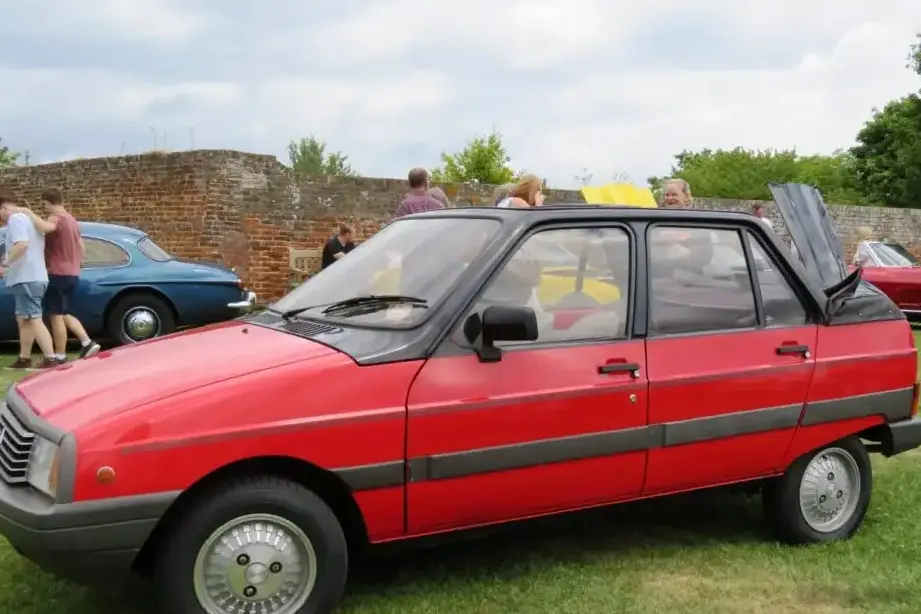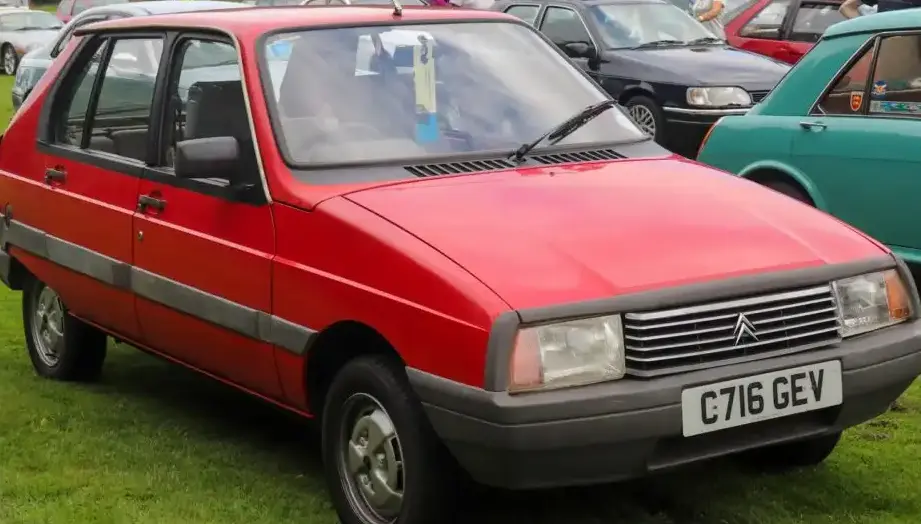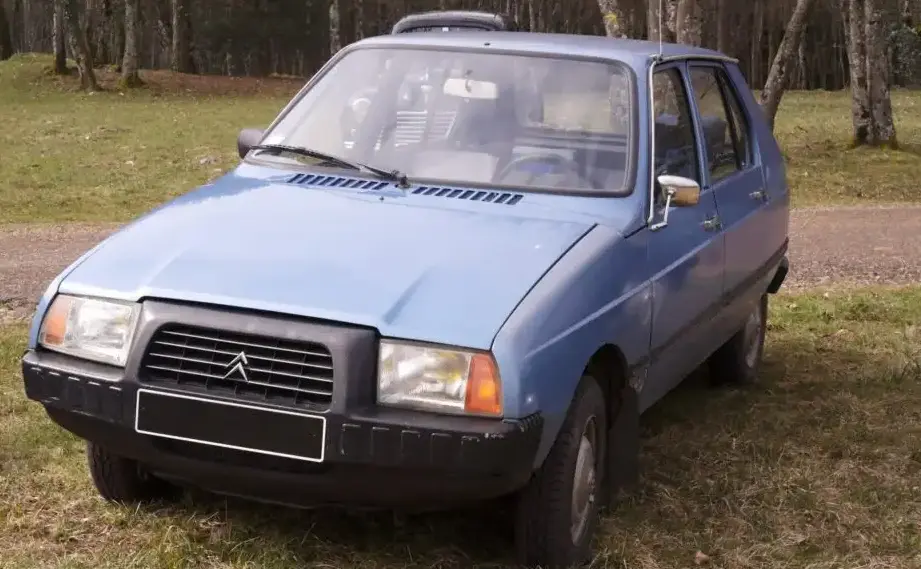
The Citroen Visa (Phase I) 11 E, produced between 1980 and 1981, represented the entry point into the Visa range, a small family hatchback designed to replace the aging Citroen GS and GSA. Positioned as an affordable and practical vehicle, the 11 E utilized a modest 1.1-liter engine and a four-speed manual transmission. It was a key component of Citroen’s strategy to offer a modern, fuel-efficient alternative in the increasingly competitive European small car market. The Visa, as a whole, was notable for its relatively lightweight construction and innovative (for the time) features, though the 11 E trim prioritized economy over performance.
Technical Specifications
| Brand | Citroen |
| Model | Visa |
| Generation | Visa (Phase I) |
| Type (Engine) | 11 E (50 Hp) |
| Start of production | 1980 |
| End of production | 1981 |
| Powertrain Architecture | Internal Combustion engine |
| Body type | Hatchback |
| Seats | 5 |
| Doors | 4 |
| Fuel Type | Petrol (Gasoline) |
| Maximum speed | 142 km/h (88.23 mph) |
| Weight-to-power ratio | 16.4 kg/Hp, 61 Hp/tonne |
| Power | 50 Hp @ 5500 rpm |
| Power per litre | 44.5 Hp/l |
| Engine layout | Front, Transverse |
| Engine Model/Code | 109/5 |
| Engine displacement | 1123 cm3 (68.53 cu. in.) |
| Number of cylinders | 4 |
| Engine configuration | Inline |
| Cylinder Bore | 72 mm (2.83 in.) |
| Piston Stroke | 69 mm (2.72 in.) |
| Fuel injection system | Carburettor |
| Engine aspiration | Naturally aspirated engine |
| Kerb Weight | 820 kg (1807.79 lbs.) |
| Max. weight | 1170 kg (2579.41 lbs.) |
| Max load | 350 kg (771.62 lbs.) |
| Max. roof load | 60 kg (132.28 lbs.) |
| Permitted trailer load with brakes (12%) | 750 kg (1653.47 lbs.) |
| Permitted trailer load without brakes | 405 kg (892.87 lbs.) |
| Length | 3690 mm (145.28 in.) |
| Width | 1535 mm (60.43 in.) |
| Height | 1408 mm (55.43 in.) |
| Wheelbase | 2430 mm (95.67 in.) |
| Front track | 1280 mm (50.39 in.) |
| Rear (Back) track | 1245 mm (49.02 in.) |
| Front overhang | 665 mm (26.18 in.) |
| Rear overhang | 595 mm (23.43 in.) |
| Drivetrain Architecture | The Internal combustion engine (ICE) drives the front wheels of the vehicle. |
| Drive wheel | Front wheel drive |
| Number of gears and type of gearbox | 4 gears, manual transmission |
| Front suspension | Independent type McPherson, Transverse stabilizer |
| Rear suspension | Independent coil spring |
| Front brakes | Disc |
| Rear brakes | Drum |
| Steering type | Steering rack and pinion |
| Wheel rims size | 4.5J x 13 |
Powertrain & Engine Architecture
The heart of the Visa 11 E was the 109/5 engine, a 1.1-liter (1123 cc) inline-four cylinder unit. This engine was a relatively simple design, utilizing a single overhead camshaft and a two-barrel carburetor for fuel delivery. The engine produced 50 horsepower at 5500 rpm, and 66 lb-ft of torque. The engine’s design prioritized fuel efficiency and reliability over outright performance. The four-speed manual transmission was a standard unit for the time, offering a straightforward driving experience. The transmission was directly connected to the front wheels, making the Visa 11 E a front-wheel-drive vehicle.
Driving Characteristics
The Visa 11 E’s driving experience was defined by its modest power output. Acceleration was leisurely, and overtaking required careful planning. The four-speed gearbox was well-matched to the engine’s characteristics, providing adequate ratios for everyday driving. The car’s relatively light weight (820 kg / 1808 lbs) helped to mitigate the lack of power, making it feel reasonably nimble in urban environments. Compared to the more powerful Visa 8 Special or later models with larger engines, the 11 E felt significantly slower. However, its simplicity and predictable handling made it an easy car to drive, particularly for novice drivers.
Equipment & Trim Levels
The 11 E represented the base trim level for the Visa. Standard equipment was fairly basic, reflecting its position as an affordable entry-level model. Features typically included cloth upholstery, vinyl floor coverings, and a simple dashboard layout. Power steering and central locking were not standard, though they could be added as optional extras. The interior was functional and durable, prioritizing practicality over luxury. Exterior features included steel wheels with hubcaps, and basic chrome trim. Optional extras included a sunroof, upgraded upholstery, and a radio.
Chassis & Braking
The Visa utilized a relatively simple chassis design. The front suspension employed an independent McPherson strut setup with a transverse stabilizer bar, providing a reasonable level of ride comfort and handling. The rear suspension featured an independent coil spring arrangement. Braking was provided by disc brakes on the front wheels and drum brakes on the rear. The braking system was adequate for the car’s weight and performance, but lacked the stopping power of more modern systems. The steering was a rack and pinion system, offering precise and responsive control.
Market Reception & Comparison
The Citroen Visa 11 E was generally well-received as an affordable and practical small car. Critics praised its fuel efficiency and ease of driving, but noted its lack of performance. Compared to rivals such as the Renault 5 and Peugeot 104, the Visa offered a slightly more refined driving experience, but was often perceived as being less sporty. The 11 E’s fuel economy was competitive for the time, making it an attractive option for budget-conscious buyers. Reliability was generally good, though the carbureted engine required regular maintenance. The Visa 8 Special, with its larger engine, offered significantly better performance but at a higher price point.
Legacy
The Citroen Visa 11 E, while not a particularly exciting vehicle, played an important role in Citroen’s lineup during the early 1980s. It provided an affordable and practical entry point into the Visa range, appealing to a wide range of buyers. The 109/5 engine proved to be a reliable unit, and many examples are still on the road today. In the used car market, the Visa 11 E is valued for its simplicity, affordability, and classic Citroen charm. While not a collector’s item, it represents a significant piece of automotive history, showcasing Citroen’s commitment to innovation and practicality.