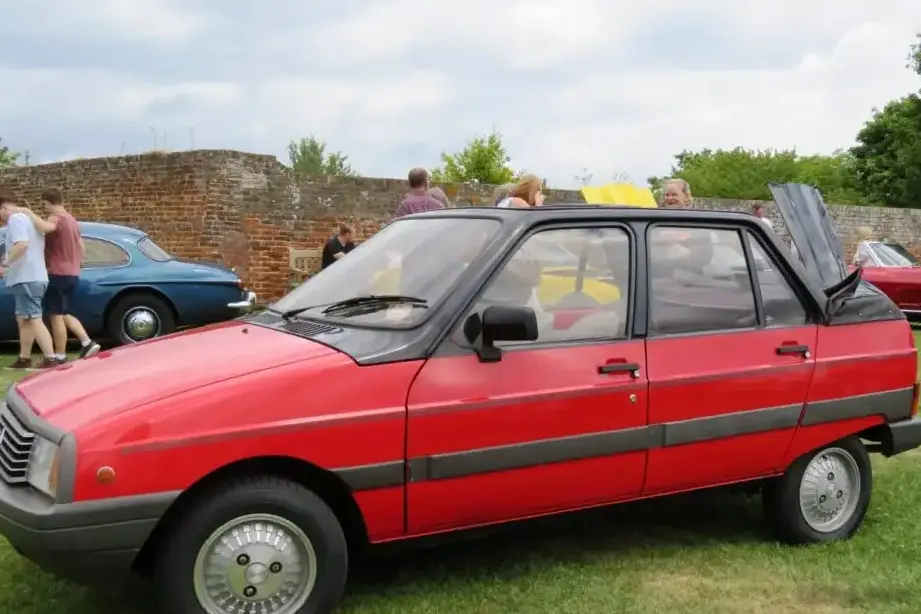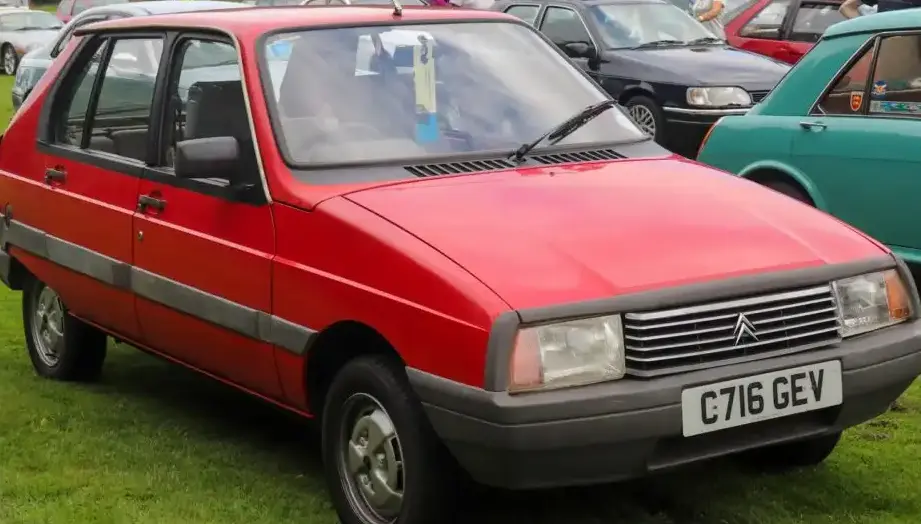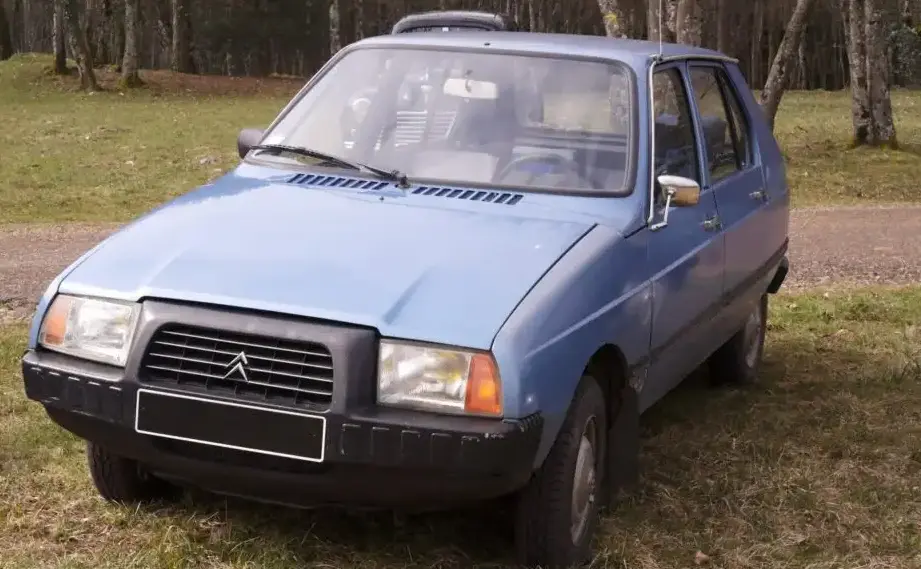
The Citroen Visa (Phase I) 11 E, produced between 1978 and 1980, represented Citroen’s entry into the supermini segment, aiming to provide a practical and affordable vehicle for the European market. Positioned as the base model within the initial Visa range, the 11 E featured a modest 1.1-liter engine and a four-speed manual transmission. It was designed to appeal to buyers prioritizing economy and everyday usability over outright performance. The Visa itself was a significant departure for Citroen, moving away from the complex hydropneumatic suspension systems of its larger models towards a more conventional, and cost-effective, design. It shared many components with the Peugeot 104, a result of the partial merger between the two French automakers in the 1970s.
Technical Specifications
| Brand | Citroen |
| Model | Visa |
| Generation | Visa (Phase I) |
| Type (Engine) | 11 E (57 Hp) |
| Start of production | 1978 |
| End of production | 1980 |
| Powertrain Architecture | Internal Combustion engine |
| Body type | Hatchback |
| Seats | 4 |
| Doors | 5 |
| Fuel consumption (urban) | 8.4 l/100 km (28 US mpg, 33.6 UK mpg, 11.9 km/l) |
| Fuel consumption (extra urban) | 6.2 l/100 km (37.9 US mpg, 45.6 UK mpg, 16.1 km/l) |
| Fuel Type | Petrol (Gasoline) |
| Acceleration 0 – 100 km/h | 16.6 sec |
| Acceleration 0 – 62 mph | 16.6 sec |
| Acceleration 0 – 60 mph | 15.8 sec |
| Maximum speed | 144 km/h (89.48 mph) |
| Weight-to-power ratio | 14 kg/Hp, 71.3 Hp/tonne |
| Weight-to-torque ratio | 10 kg/Nm, 100 Nm/tonne |
| Power | 57 Hp @ 6250 rpm |
| Power per litre | 50.7 Hp/l |
| Torque | 80 Nm @ 3000 rpm (59 lb.-ft. @ 3000 rpm) |
| Engine layout | Front, Transverse |
| Engine Model/Code | 109/5 |
| Engine displacement | 1124 cm3 (68.59 cu. in.) |
| Number of cylinders | 4 |
| Engine configuration | Inline |
| Cylinder Bore | 72 mm (2.83 in.) |
| Piston Stroke | 69 mm (2.72 in.) |
| Compression ratio | 9.2:1 |
| Number of valves per cylinder | 2 |
| Fuel injection system | Carburettor |
| Engine aspiration | Naturally aspirated engine |
| Valvetrain | SOHC |
| Kerb Weight | 800 kg (1763.7 lbs.) |
| Max. weight | 1210 kg (2667.59 lbs.) |
| Max load | 410 kg (903.9 lbs.) |
| Trunk (boot) space – minimum | 280 l (9.89 cu. ft.) |
| Trunk (boot) space – maximum | 674 l (23.8 cu. ft.) |
| Fuel tank capacity | 40 l (10.57 US gal, 8.8 UK gal) |
| Max. roof load | 40 kg (88.18 lbs.) |
| Permitted trailer load with brakes (12%) | 750 kg (1653.47 lbs.) |
| Permitted trailer load without brakes | 400 kg (881.85 lbs.) |
| Permitted towbar download | 60 kg (132.28 lbs.) |
| Length | 3690 mm (145.28 in.) |
| Width | 1534 mm (60.39 in.) |
| Height | 1415 mm (55.71 in.) |
| Wheelbase | 2420 mm (95.28 in.) |
| Front track | 1292 mm (50.87 in.) |
| Rear (Back) track | 1241 mm (48.86 in.) |
| Front overhang | 675 mm (26.57 in.) |
| Rear overhang | 595 mm (23.43 in.) |
| Minimum turning circle | 9.5 m (31.17 ft.) |
| Drivetrain Architecture | Front wheel drive |
| Number of gears and type of gearbox | 4 gears, manual transmission |
| Front suspension | Independent coil spring |
| Rear suspension | Independent coil spring |
| Front brakes | Disc |
| Rear brakes | Drum |
| Steering type | Steering rack and pinion |
Powertrain & Engine Architecture
The heart of the Visa 11 E was the 109/5 engine, a 1.1-liter (1124 cc) inline-four cylinder unit. This engine, derived from the Peugeot 205’s engine family, featured a single overhead camshaft (SOHC) valvetrain with two valves per cylinder. Fuel delivery was managed by a single downdraft carburetor, a common setup for vehicles of this era aiming for affordability. The engine produced 57 horsepower at 6250 rpm and 80 Nm (59 lb-ft) of torque at 3000 rpm. The four-speed manual transmission was a conventional unit, chosen for its simplicity and cost-effectiveness. The engine’s transverse mounting, a space-saving design, was becoming increasingly common in front-wheel-drive vehicles.
Driving Characteristics
The Visa 11 E’s driving experience was defined by its modest power output. Acceleration was leisurely, taking approximately 16.6 seconds to reach 62 mph (100 km/h). Top speed was around 89.48 mph (144 km/h). Compared to later, more powerful Visa variants like the 1.6 GT, the 11 E felt significantly slower. However, the light weight of the vehicle (around 800 kg or 1764 lbs) helped to make it feel nimble in city driving. The four-speed gearbox offered relatively short ratios, requiring frequent shifting to maintain momentum, especially when overtaking. The steering was light and precise, making it easy to maneuver in tight spaces. The ride quality, while not as sophisticated as Citroen’s larger models with hydropneumatic suspension, was generally comfortable for a vehicle in its class.
Equipment & Trim Levels
As the entry-level model, the Visa 11 E was equipped with basic, but functional, features. Standard equipment included cloth upholstery, a simple dashboard layout with basic instrumentation, and manually operated windows and door locks. The interior was designed with practicality in mind, offering adequate space for four passengers and a reasonably sized trunk (280-674 liters depending on rear seat configuration). Optional extras were limited, but could include a radio, upgraded upholstery, and occasionally, a sunroof. The overall interior aesthetic was utilitarian, reflecting the car’s focus on affordability.
Chassis & Braking
The Visa’s chassis featured independent coil spring suspension at both the front and rear, providing a reasonable level of ride comfort and handling. The front brakes were disc brakes, offering better stopping power than the drum brakes fitted to the rear wheels. The steering system utilized a rack and pinion setup, providing precise and responsive steering. The car’s relatively light weight contributed to its agility. Stabilizer bars were not standard on the base 11 E model, further emphasizing its focus on cost savings.
Market Reception & Comparison
The Citroen Visa 11 E was generally well-received as an affordable and practical supermini. Critics praised its fuel economy and ease of driving, but noted its lack of performance. Compared to rivals like the Renault 5 and Peugeot 104, the Visa 11 E offered a similar level of practicality and affordability. However, the Renault 5 was often considered more stylish, while the Peugeot 104 offered a slightly more refined driving experience. The Visa 11 E’s fuel economy was competitive for its time, achieving around 38 mpg on the extra-urban cycle. Reliability was generally good, although the carburetor required periodic adjustment and maintenance.
Legacy
The Citroen Visa 11 E, while not a particularly groundbreaking vehicle, played an important role in Citroen’s transition towards more conventional automotive designs. The 109/5 engine proved to be a reliable and durable unit, and continued to be used in other Citroen and Peugeot models for several years. Today, the Visa 11 E is a relatively rare sight on the roads, but it remains a popular choice among classic car enthusiasts seeking an affordable and charming piece of French automotive history. Parts availability can be challenging, but the car’s simple mechanical design makes it relatively easy to maintain for those with some mechanical aptitude. The 11 E represents a snapshot of the late 1970s automotive landscape, prioritizing practicality and economy over outright performance and luxury.