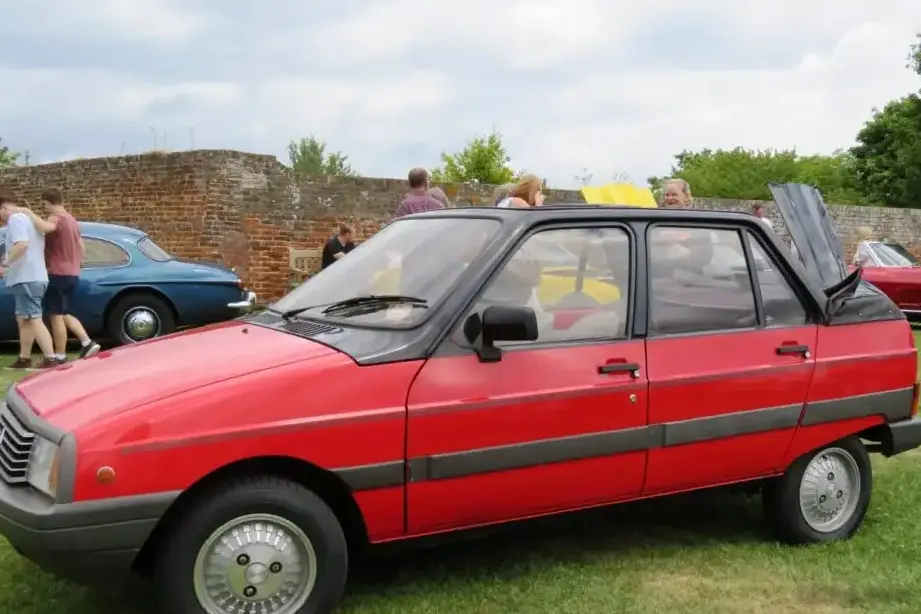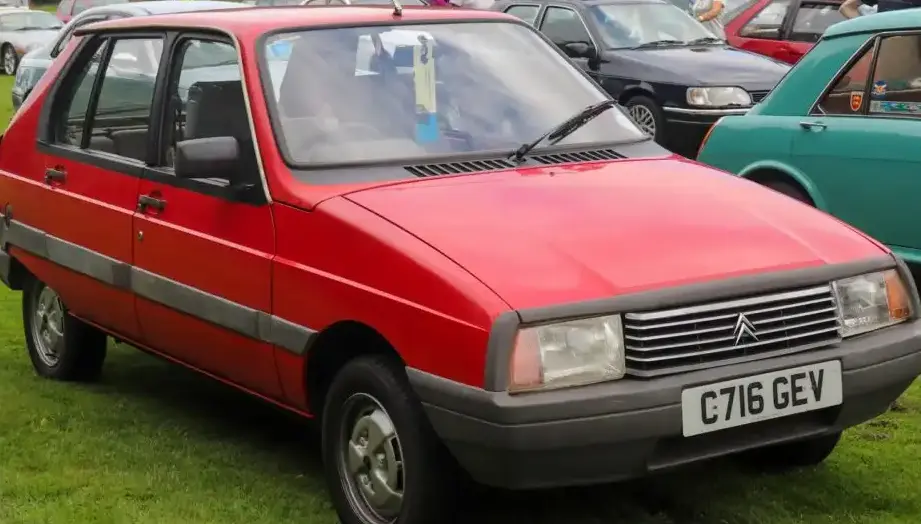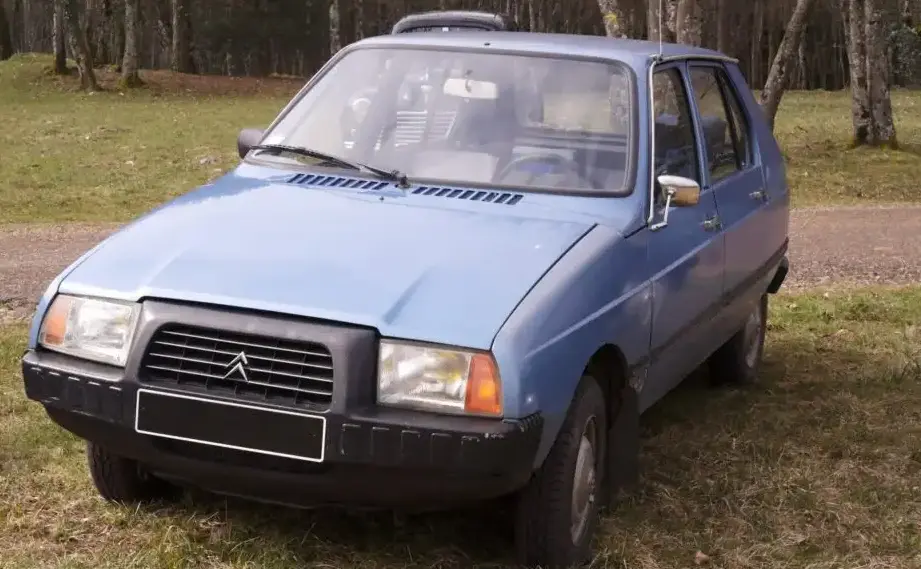
The Citroen Visa Super X (64 hp) represents an early iteration of Citroen’s compact hatchback, produced between 1980 and 1981. Positioned as a mainstream offering within the Phase I Visa range, it aimed to provide economical and practical transportation for families. The Visa, as a whole, was intended to replace the aging Citroen GS/GSA, offering a more modern and efficient alternative in the increasingly competitive European small car market. This particular variant, with its modest 64 horsepower engine, served as an entry point into the Visa lineup, prioritizing affordability and fuel economy over outright performance. It was built on Citroen’s ‘BX’ platform, a design that would underpin several models throughout the 1980s.
Technical Specifications
| Brand | Citroen |
| Model | Visa |
| Generation | Visa (Phase I) |
| Type (Engine) | Super X (64 Hp) |
| Start of production | 1980 |
| End of production | 1981 |
| Powertrain Architecture | Internal Combustion engine |
| Body type | Hatchback |
| Seats | 5 |
| Doors | 5 |
| Fuel Type | Petrol (Gasoline) |
| Maximum speed | 155 km/h (96.31 mph) |
| Weight-to-power ratio | 12.8 kg/Hp, 78 Hp/tonne |
| Power | 64 Hp @ 6000 rpm |
| Power per litre | 52.5 Hp/l |
| Engine layout | Front, Transverse |
| Engine Model/Code | 129/5 |
| Engine displacement | 1219 cm3 (74.39 cu. in.) |
| Number of cylinders | 4 |
| Engine configuration | Inline |
| Cylinder Bore | 75 mm (2.95 in.) |
| Piston Stroke | 69 mm (2.72 in.) |
| Fuel injection system | Carburettor |
| Engine aspiration | Naturally aspirated engine |
| Engine oil capacity | 4.5 l (4.76 US qt | 3.96 UK qt) |
| Coolant | 6.5 l (6.87 US qt | 5.72 UK qt) |
| Kerb Weight | 820 kg (1807.79 lbs.) |
| Max. weight | 1170 kg (2579.41 lbs.) |
| Max load | 350 kg (771.62 lbs.) |
| Max. roof load | 60 kg (132.28 lbs.) |
| Permitted trailer load with brakes (12%) | 750 kg (1653.47 lbs.) |
| Permitted trailer load without brakes | 405 kg (892.87 lbs.) |
| Length | 3690 mm (145.28 in.) |
| Width | 1535 mm (60.43 in.) |
| Height | 1408 mm (55.43 in.) |
| Wheelbase | 2430 mm (95.67 in.) |
| Front track | 1295 mm (50.98 in.) |
| Rear (Back) track | 1260 mm (49.61 in.) |
| Front overhang | 665 mm (26.18 in.) |
| Rear overhang | 595 mm (23.43 in.) |
| Drivetrain Architecture | The Internal combustion engine (ICE) drives the front wheels of the vehicle. |
| Drive wheel | Front wheel drive |
| Number of gears and type of gearbox | 4 gears, manual transmission |
| Front suspension | Independent coil spring, Transverse stabilizer |
| Rear suspension | Independent coil spring |
| Front brakes | Disc |
| Rear brakes | Drum |
| Steering type | Steering rack and pinion |
| Tires size | 155/70 R13 |
Powertrain & Engine Architecture
The Citroen Visa Super X was powered by the 129/5 engine, a 1.2-liter (1219 cc) inline-four cylinder petrol engine. This engine was a relatively simple design, utilizing a single overhead camshaft and a two-barrel carburetor for fuel delivery. The engine produced 64 horsepower at 6000 rpm, and while not particularly powerful, it was known for its reliability and relatively low fuel consumption. The engine’s transverse mounting, a common feature in front-wheel-drive cars of the era, contributed to a more compact engine bay and improved packaging. The four-speed manual transmission was the standard offering for this variant, providing a straightforward driving experience. The gearbox was not known for its particularly short ratios, prioritizing fuel efficiency over spirited acceleration.
Driving Characteristics
The 1.8L/Automatic Visa Super X offered a comfortable, if uninspiring, driving experience. Acceleration was modest, with the 64 horsepower engine requiring a fair amount of throttle to achieve brisk speeds. The four-speed manual transmission, while precise, had relatively long gearing, further emphasizing the car’s focus on economy. Handling was predictable and safe, thanks to the independent suspension on all four wheels. However, the car’s relatively narrow tires and modest power output limited its cornering ability. Compared to higher-spec Visas with larger engines, the Super X felt noticeably slower and less refined. The emphasis was on ease of use and practicality, making it a suitable choice for urban commuting and everyday driving.
Equipment & Trim Levels
The Super X trim level represented a mid-range offering in the Visa lineup. Standard equipment included cloth upholstery, basic instrumentation (speedometer, fuel gauge, temperature gauge), and a heater. The interior was functional and durable, though not particularly luxurious. Optional extras included a radio, upgraded upholstery, and a sunroof. The dashboard layout was simple and straightforward, with all controls within easy reach of the driver. The Super X aimed to provide a balance between affordability and comfort, offering a step up from the base model without the added expense of the more luxurious trims.
Chassis & Braking
The Visa featured an independent suspension system on all four wheels, utilizing coil springs and telescopic dampers. The front suspension incorporated a transverse stabilizer bar to reduce body roll. The rear suspension was also independent, contributing to a comfortable ride quality. Braking was provided by disc brakes on the front wheels and drum brakes on the rear. While adequate for the car’s weight and performance, the braking system lacked the stopping power of more modern vehicles. The steering was rack and pinion, providing precise and responsive handling.
Market Reception & Comparison
The Citroen Visa Super X was generally well-received by critics as a practical and economical small car. It was praised for its comfortable ride, good fuel economy, and reliable engine. However, it was also criticized for its modest performance and somewhat dated interior. Compared to rivals such as the Renault 5 and Peugeot 205, the Visa offered a slightly more refined driving experience but lacked the sporty appeal of the Peugeot. In terms of fuel economy, the Super X performed competitively with other small cars of the era, achieving around 35-40 mpg in typical driving conditions. Reliability was generally good, although the carburetor required periodic adjustment and maintenance.
Legacy
The Citroen Visa, and specifically the Super X variant, holds a nostalgic place in the hearts of many European car enthusiasts. While not a particularly groundbreaking vehicle, it represented a solid and dependable choice for those seeking affordable transportation. The 129/5 engine proved to be a durable and long-lasting unit, and many examples are still on the road today. In the used car market, the Visa Super X is valued for its simplicity, affordability, and classic Citroen charm. It remains a popular choice for classic car collectors and those seeking a retro driving experience. The Visa’s influence can be seen in subsequent Citroen models, particularly in its emphasis on comfort and practicality.