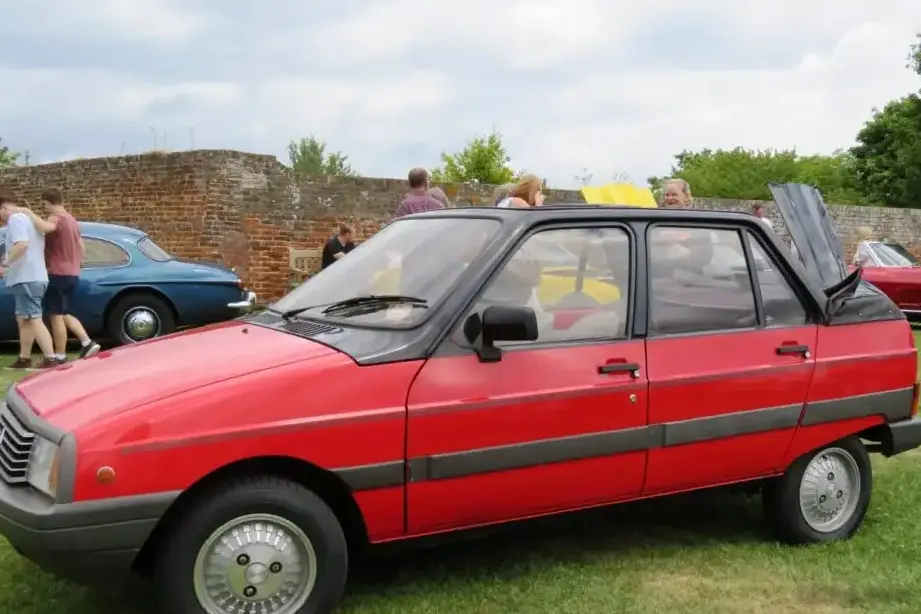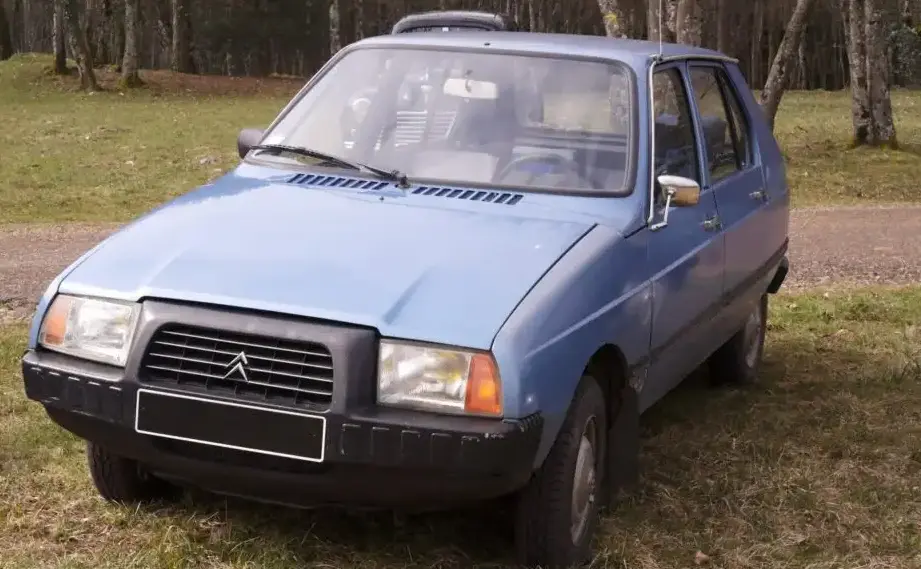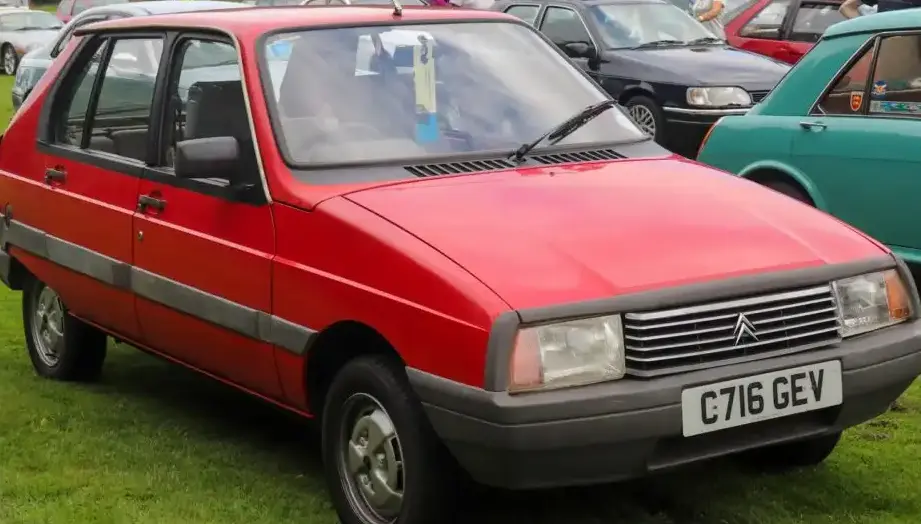
The Citroen Visa (Phase II) 1.0 E, produced between 1984 and 1986, represented the entry point into the Visa range during its second generation. Positioned as an economical and practical hatchback, it served as a budget-friendly option within Citroen’s lineup, appealing to buyers prioritizing fuel efficiency and affordability over outright performance. The Phase II Visa, built upon the X1A platform, aimed to modernize the original Visa design while retaining its core values of comfort and practicality. This 1.0 E variant, with its modest 45 horsepower, was specifically targeted at urban drivers and those seeking a reliable, low-cost vehicle for everyday transportation.
Technical Specifications
| Brand | Citroen |
| Model | Visa |
| Generation | Visa (Phase II) |
| Type (Engine) | 1.0 E (45 Hp) |
| Start of production | 1984 |
| End of production | 1986 |
| Powertrain Architecture | Internal Combustion engine |
| Body type | Hatchback |
| Seats | 5 |
| Doors | 5 |
| Fuel consumption (combined) | 6.6 l/100 km (35.6 US mpg, 42.8 UK mpg, 15.2 km/l) |
| Fuel Type | Petrol (Gasoline) |
| Acceleration 0 – 100 km/h | 19.8 sec |
| Acceleration 0 – 62 mph | 19.8 sec |
| Acceleration 0 – 60 mph | 18.8 sec |
| Maximum speed | 133 km/h (82.64 mph) |
| Power | 45 Hp @ 6000 rpm |
| Power per litre | 47.2 Hp/l |
| Torque | 65 Nm @ 2750 rpm (47.94 lb.-ft. @ 2750 rpm) |
| Engine layout | Front, Transverse |
| Engine Model/Code | XV8 |
| Engine displacement | 954 cm3 (58.22 cu. in.) |
| Number of cylinders | 4 |
| Engine configuration | Inline |
| Cylinder Bore | 70 mm (2.76 in.) |
| Piston Stroke | 62 mm (2.44 in.) |
| Compression ratio | 9.3:1 |
| Fuel injection system | Carburettor |
| Engine aspiration | Naturally aspirated engine |
| Engine oil capacity | 4.5 l (4.76 US qt | 3.96 UK qt) |
| Coolant | 6.5 l (6.87 US qt | 5.72 UK qt) |
| Fuel tank capacity | 40 l (10.57 US gal | 8.8 UK gal) |
| Length | 3725 mm (146.65 in.) |
| Width | 1526 mm (60.08 in.) |
| Height | 1408 mm (55.43 in.) |
| Wheelbase | 2430 mm (95.67 in.) |
| Drivetrain Architecture | The Internal combustion engine (ICE) drives the front wheels of the vehicle. |
| Drive wheel | Front wheel drive |
| Number of gears and type of gearbox | 4 gears, manual transmission |
| Front suspension | Independent coil spring, Transverse stabilizer |
| Rear suspension | Independent coil spring |
| Front brakes | Disc |
| Rear brakes | Drum |
| Steering type | Steering rack and pinion |
Powertrain & Engine Architecture
The heart of the Visa 1.0 E was the XV8 engine, a 954cc inline-four cylinder unit. This engine was a relatively simple design, utilizing a single overhead camshaft and a two-valve per cylinder configuration. Fuel delivery was managed by a single carburetor, a common feature for vehicles of this era aiming for affordability. The XV8 engine produced 45 horsepower at 6000 rpm and 65 Nm (47.94 lb-ft) of torque at 2750 rpm. The engine’s modest output was a direct result of its small displacement and carbureted fuel system. The engine was transversely mounted at the front of the vehicle, driving the front wheels. The transmission was a four-speed manual gearbox, chosen for its simplicity and cost-effectiveness. This configuration, while not offering exhilarating performance, prioritized fuel economy and ease of maintenance.
Driving Characteristics
The driving experience in the Visa 1.0 E was characterized by its light steering and comfortable ride. However, performance was decidedly modest. Acceleration was slow, taking nearly 20 seconds to reach 62 mph (100 km/h). The four-speed gearbox, while adequate, lacked the versatility of a five-speed unit, and the engine felt strained at higher speeds. The gear ratios were optimized for fuel efficiency rather than spirited driving. Compared to other Visa variants, such as the 1.6L models, the 1.0 E felt significantly underpowered. The 1.6L offered a much more responsive driving experience, but at the cost of increased fuel consumption. The 1.0 E was best suited for urban driving and shorter journeys where its low running costs and maneuverability were its greatest strengths.
Equipment & Trim Levels
The Visa 1.0 E was typically equipped with basic, but functional, features. Standard equipment included cloth upholstery, a simple dashboard layout, and manual windows and door locks. The interior was designed with practicality in mind, offering adequate space for five passengers. Optional extras were limited, but could include a radio, upgraded seat fabrics, and occasionally, a sunroof. The trim level was deliberately kept basic to maintain the vehicle’s affordability. The dashboard featured a straightforward instrument cluster with a speedometer, fuel gauge, and temperature indicator. The overall interior ambiance was functional and utilitarian, reflecting the car’s budget-oriented positioning.
Chassis & Braking
The Visa 1.0 E utilized a relatively simple chassis design. The front suspension consisted of independent coil springs with a transverse stabilizer bar, while the rear suspension employed independent coil springs. This setup provided a comfortable ride, absorbing bumps and imperfections in the road surface effectively. The braking system featured disc brakes on the front wheels and drum brakes on the rear wheels. While adequate for the vehicle’s weight and performance, the braking system lacked the stopping power of more modern vehicles. The steering was a rack and pinion system, providing light and precise steering feel. The overall chassis setup was geared towards comfort and ease of driving rather than sporty handling.
Market Reception & Comparison
The Citroen Visa 1.0 E was generally well-received as an affordable and economical hatchback. Critics praised its fuel efficiency and comfortable ride, but noted its lack of performance. Compared to rivals such as the Renault 5 and Peugeot 205, the Visa 1.0 E offered a similar level of practicality and affordability. However, the Renault 5 and Peugeot 205 often offered more engaging driving experiences. In terms of reliability, the Visa 1.0 E proved to be a reasonably dependable vehicle, although the carbureted engine required regular maintenance. Fuel economy was a key selling point, with the Visa 1.0 E achieving around 35.6 US mpg on average.
Legacy
The Citroen Visa 1.0 E, while not a performance icon, holds a place in automotive history as a practical and affordable hatchback of its time. The XV8 engine, while simple, proved to be relatively durable and reliable. Today, the Visa 1.0 E is a relatively rare sight on the roads, but it remains a popular choice among classic car enthusiasts seeking a simple and affordable vintage vehicle. Parts availability can be a challenge, but the car’s straightforward design makes it relatively easy to maintain for those with mechanical skills. The Visa 1.0 E represents a bygone era of automotive engineering, where affordability and practicality were prioritized over outright performance and technological sophistication.