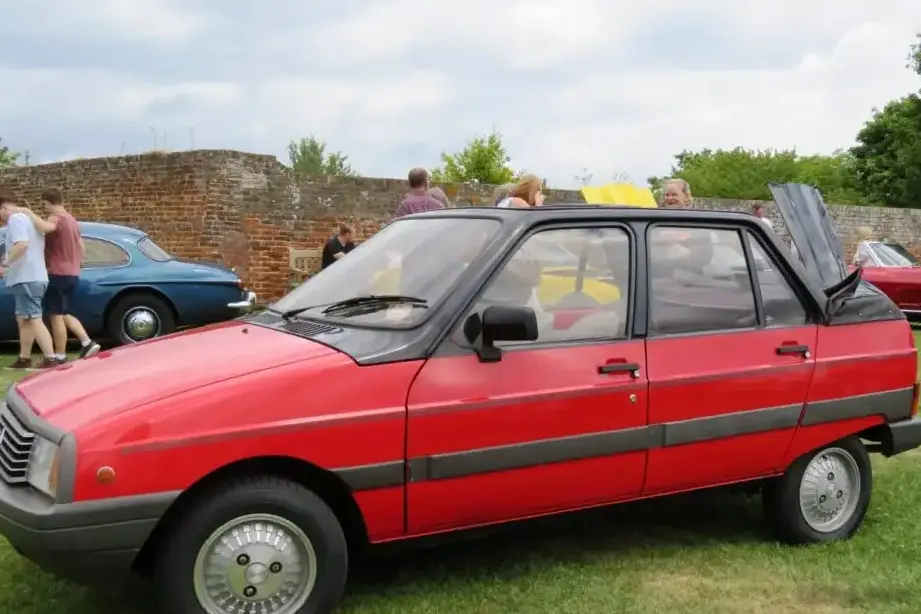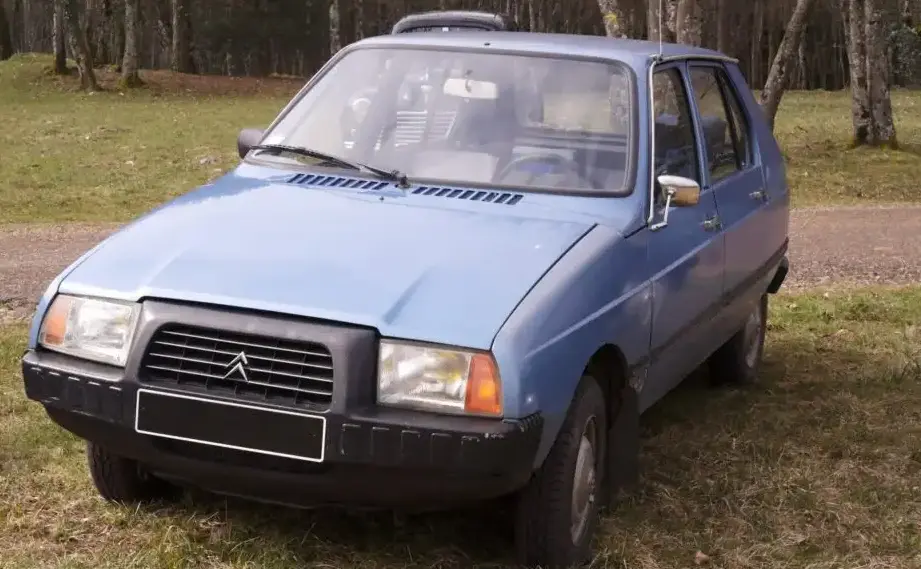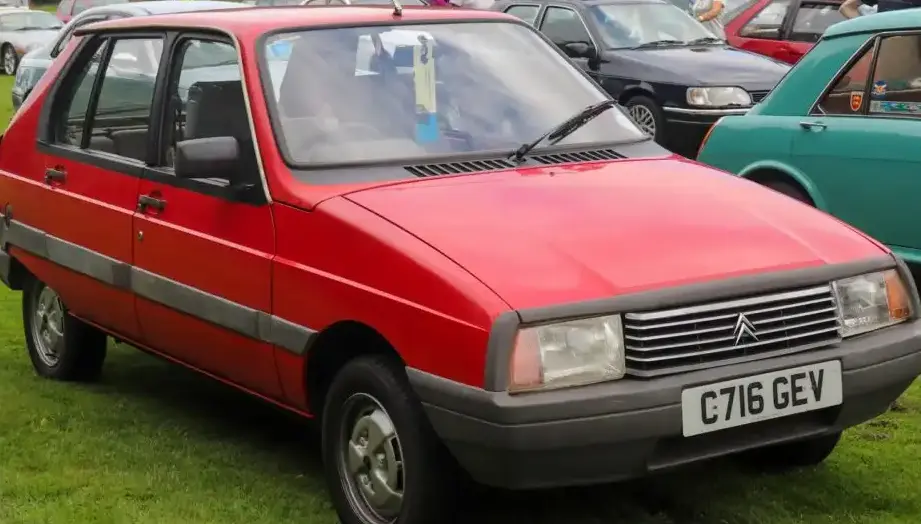
The Citroen Visa (Phase II) 11 RE, produced between 1982 and 1988, represented the entry point into the Visa range, a small family hatchback designed to replace the aging Citroen GS and GSA. Positioned as an affordable and practical vehicle, the 11 RE utilized a modest 1.1-liter engine paired with a four-speed manual transmission. It was primarily aimed at budget-conscious buyers seeking reliable transportation, particularly in European markets where smaller, fuel-efficient cars were highly valued. The Phase II update brought minor cosmetic and mechanical refinements over the original Visa, solidifying its place as a popular choice in its segment.
Technical Specifications
| Brand | Citroen |
| Model | Visa |
| Generation | Visa (Phase II) |
| Type (Engine) | 11 RE (48 Hp) |
| Start of production | 1982 |
| End of production | 1988 |
| Powertrain Architecture | Internal Combustion engine |
| Body type | Hatchback |
| Seats | 5 |
| Doors | 5 |
| Fuel consumption (urban) | 6.8 l/100 km (34.6 US mpg, 41.5 UK mpg, 14.7 km/l) |
| Fuel consumption (extra urban) | 5.4 l/100 km (43.6 US mpg, 52.3 UK mpg, 18.5 km/l) |
| Fuel Type | Petrol (Gasoline) |
| Acceleration 0 – 100 km/h | 17.2 sec |
| Acceleration 0 – 62 mph | 17.2 sec |
| Acceleration 0 – 60 mph | 16.3 sec |
| Maximum speed | 140 km/h (86.99 mph) |
| Weight-to-power ratio | 16.9 kg/Hp, 59.3 Hp/tonne |
| Weight-to-torque ratio | 10.4 kg/Nm, 96.3 Nm/tonne |
| Power | 48 Hp @ 5750 rpm |
| Power per litre | 42.7 Hp/l |
| Torque | 78 Nm @ 2500 rpm (57.53 lb.-ft. @ 2500 rpm) |
| Engine layout | Front, Transverse |
| Engine Model/Code | XW7 |
| Engine displacement | 1124 cm3 (68.59 cu. in.) |
| Number of cylinders | 4 |
| Engine configuration | Inline |
| Cylinder Bore | 72 mm (2.83 in.) |
| Piston Stroke | 69 mm (2.72 in.) |
| Compression ratio | 8.2:1 |
| Number of valves per cylinder | 2 |
| Fuel injection system | Carburettor |
| Engine aspiration | Naturally aspirated engine |
| Valvetrain | SOHC |
| Engine oil capacity | 4.5 l (4.76 US qt | 3.96 UK qt) |
| Coolant | 6.5 l (6.87 US qt | 5.72 UK qt) |
| Kerb Weight | 810 kg (1785.74 lbs.) |
| Max. weight | 1235 kg (2722.71 lbs.) |
| Max load | 425 kg (936.96 lbs.) |
| Trunk (boot) space – minimum | 300 l (10.59 cu. ft.) |
| Trunk (boot) space – maximum | 674 l (23.8 cu. ft.) |
| Fuel tank capacity | 40 l (10.57 US gal | 8.8 UK gal) |
| Max. roof load | 60 kg (132.28 lbs.) |
| Permitted trailer load with brakes (12%) | 750 kg (1653.47 lbs.) |
| Permitted trailer load without brakes | 400 kg (881.85 lbs.) |
| Length | 3725 mm (146.65 in.) |
| Width | 1526 mm (60.08 in.) |
| Height | 1405 mm (55.31 in.) |
| Wheelbase | 2420 mm (95.28 in.) |
| Minimum turning circle | 10.1 m (33.14 ft.) |
| Drivetrain Architecture | The Internal combustion engine (ICE) drives the front wheels of the vehicle. |
| Drive wheel | Front wheel drive |
| Number of gears and type of gearbox | 4 gears, manual transmission |
| Front suspension | Independent coil spring, Transverse stabilizer |
| Rear suspension | Independent coil spring |
| Front brakes | Disc |
| Rear brakes | Drum |
| Steering type | Steering rack and pinion |
INTRODUCTION
The Citroen Visa 11 RE, launched in 1982 as part of the Phase II revisions, was a crucial model for Citroen, offering a modern, albeit basic, hatchback option in a competitive market. Built on the shared Peugeot 104 and Talbot Samba platform, the Visa aimed to provide a comfortable and practical vehicle for everyday use. The “11 RE” designation signified the 1.1-liter engine (the ‘11’) and the ‘RE’ indicated a relatively basic trim level. This variant served as the entry-level model, appealing to buyers prioritizing affordability and fuel economy over outright performance. Production continued until 1988, with the Visa eventually being replaced by the Citroen AX.
Powertrain & Engine Architecture
The heart of the Visa 11 RE was the XW7 engine, a 1124cc inline-four cylinder petrol engine. This engine, while not particularly powerful, was known for its reliability and simplicity. It featured a single overhead camshaft (SOHC) valvetrain with two valves per cylinder. Fuel delivery was managed by a single downdraft carburetor, a common setup for vehicles of this era. The engine produced 48 horsepower at 5750 rpm and 78 Nm (57.53 lb-ft) of torque at 2500 rpm. The engine was transversely mounted, a layout becoming increasingly common in front-wheel-drive cars for space efficiency. The four-speed manual transmission was a standard unit, providing relatively long gearing to maximize fuel economy. The transmission was directly driven by the engine, without the benefit of a clutch cable, using a hydraulic system.
Driving Characteristics
The driving experience in the Visa 11 RE was characterized by its light steering and comfortable ride. However, performance was modest. Acceleration from 0 to 60 mph took around 16.3 seconds, and the top speed was approximately 87 mph. The long gearing of the four-speed gearbox meant that the engine often felt strained when accelerating, particularly when fully loaded. Compared to higher-spec Visas equipped with larger engines (like the 1.6-liter), the 11 RE felt noticeably slower. The manual transmission offered a more engaging driving experience than the optional three-speed automatic, which further reduced performance. Despite its lack of outright speed, the Visa 11 RE was perfectly adequate for urban driving and shorter journeys.
Equipment & Trim Levels
The 11 RE was the base model, and as such, it came with a relatively sparse equipment list. Standard features typically included cloth upholstery, basic instrumentation (speedometer, fuel gauge, temperature gauge), and a heater. Power steering and central locking were not usually fitted as standard, though they could be specified as optional extras. The interior was functional and durable, prioritizing practicality over luxury. Optional extras included a sunroof, upgraded stereo, and different wheel trims. The dashboard layout was simple and straightforward, with all controls within easy reach of the driver.
Chassis & Braking
The Visa 11 RE utilized a relatively simple chassis design. Front suspension consisted of independent coil springs with a transverse stabilizer bar, while the rear suspension employed an independent coil spring setup. This provided a comfortable ride, although handling was not particularly sporty. The braking system featured disc brakes on the front wheels and drum brakes on the rear. The brakes were adequate for the car’s weight and performance, but lacked the stopping power of more modern systems. The steering was a rack and pinion system, providing light and precise steering feel.
Market Reception & Comparison
The Citroen Visa 11 RE was generally well-received by critics as a practical and affordable small car. However, its modest performance was often criticized. Compared to rivals like the Renault 5 and Peugeot 104, the Visa offered a slightly more refined ride and a more spacious interior. The 11 RE’s fuel economy was a strong point, making it an attractive option for budget-conscious buyers. The higher-spec Visa variants, with their larger engines and improved equipment levels, offered a more compelling driving experience, but came at a higher price. The 11 RE’s reliability was generally good, although the carburetor required periodic adjustment and maintenance.
Legacy
The Citroen Visa 11 RE, while not a particularly exciting car, played an important role in Citroen’s lineup during the 1980s. Its simple design and reliable powertrain made it a popular choice for many years. Today, the Visa 11 RE is a relatively rare sight on the roads, but it has gained a following among classic car enthusiasts. The XW7 engine is known for its durability, and parts availability is generally good. While not a collector’s item, well-maintained examples of the Visa 11 RE can provide a charming and affordable taste of 1980s motoring. Its legacy lies in its practicality, affordability, and the comfortable ride it offered to a generation of drivers.