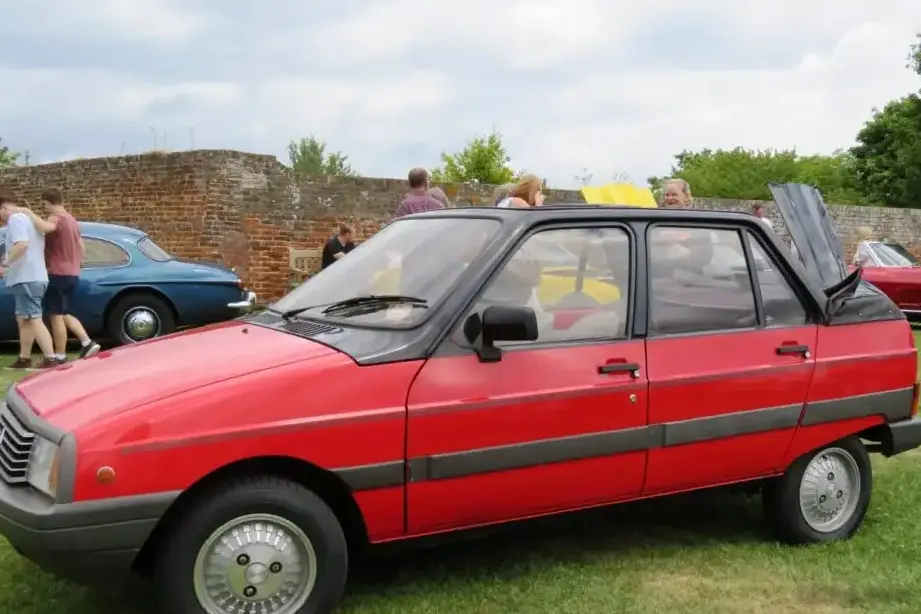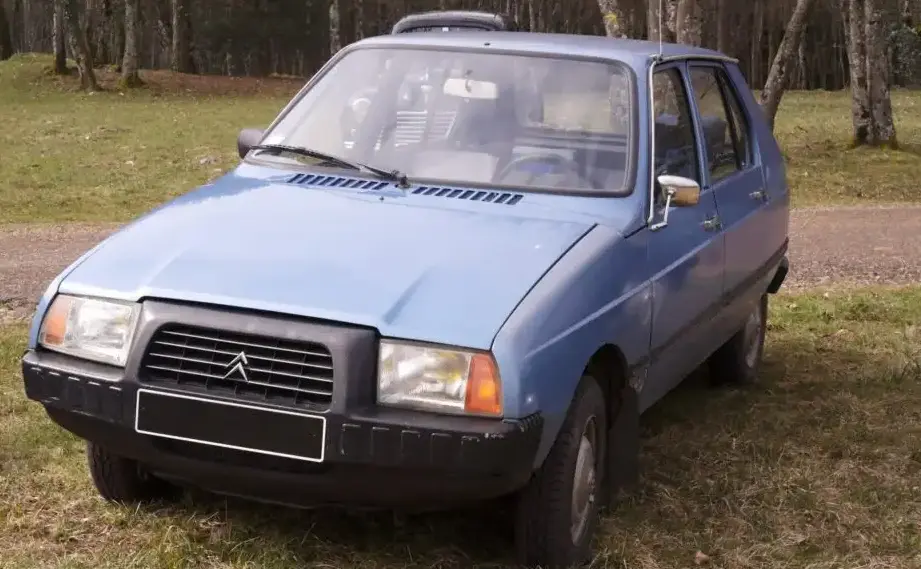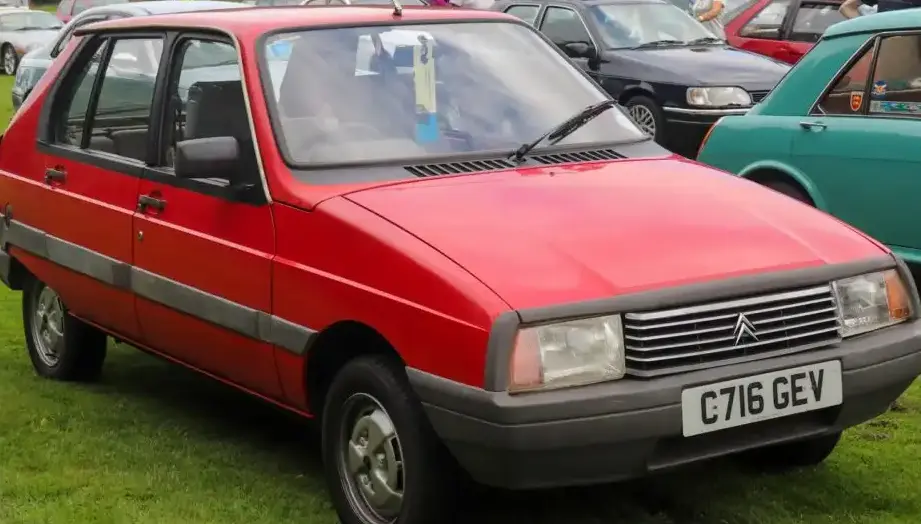
The Citroen Visa (Phase II) 14 RS, produced between 1984 and 1988, represented an entry-level offering within the broader Visa range. Positioned as a practical and economical hatchback, it served as a key model for Citroen in the European market, particularly in France. The Phase II update brought subtle styling revisions and refinements to the original Visa, which debuted in 1978 as a replacement for the aging GS. The 14 RS variant, equipped with a 1.4-liter engine and a five-speed manual transmission, was designed for buyers prioritizing fuel efficiency and affordability over outright performance. It played a significant role in Citroen’s strategy to offer a diverse lineup catering to various consumer needs.
Technical Specifications
| Brand | Citroen |
| Model | Visa |
| Generation | Visa (Phase II) |
| Type (Engine) | 14 RS (54 Hp) CAT |
| Start of production | 1984 |
| End of production | 1988 |
| Powertrain Architecture | Internal Combustion engine |
| Body type | Hatchback |
| Seats | 5 |
| Doors | 5 |
| Fuel consumption (urban) | 9.5 l/100 km (24.8 US mpg) |
| Fuel consumption (extra urban) | 5.7 l/100 km (41.3 US mpg) |
| Fuel Type | Petrol (Gasoline) |
| Acceleration 0 – 100 km/h | 17.3 sec |
| Acceleration 0 – 62 mph | 17.3 sec |
| Acceleration 0 – 60 mph | 16.4 sec |
| Maximum speed | 151 km/h (93.83 mph) |
| Weight-to-power ratio | 15.4 kg/Hp |
| Weight-to-torque ratio | 8.1 kg/Nm |
| Power | 54 Hp @ 5000 rpm |
| Torque | 103 Nm @ 2500 rpm (75.97 lb.-ft. @ 2500 rpm) |
| Engine layout | Front, Transverse |
| Engine Model/Code | XY7 |
| Engine displacement | 1360 cm3 (82.99 cu. in.) |
| Number of cylinders | 4 |
| Engine configuration | Inline |
| Cylinder Bore | 75 mm (2.95 in.) |
| Piston Stroke | 77 mm (3.03 in.) |
| Compression ratio | 8.4:1 |
| Number of valves per cylinder | 2 |
| Fuel injection system | Carburettor |
| Engine aspiration | Naturally aspirated |
| Engine oil capacity | 5 l (5.28 US qt | 4.4 UK qt) |
| Coolant capacity | 6.5 l (6.87 US qt | 5.72 UK qt) |
| Kerb Weight | 830 kg (1829.84 lbs.) |
| Max. weight | 1250 kg (2755.78 lbs.) |
| Max load | 420 kg (925.94 lbs.) |
| Trunk (boot) space – minimum | 300 l (10.59 cu. ft.) |
| Trunk (boot) space – maximum | 674 l (23.8 cu. ft.) |
| Fuel tank capacity | 40 l (10.57 US gal | 8.8 UK gal) |
| Max. roof load | 60 kg (132.28 lbs.) |
| Permitted trailer load with brakes (12%) | 750 kg (1653.47 lbs.) |
| Permitted trailer load without brakes | 415 kg (914.92 lbs.) |
| Length | 3725 mm (146.65 in.) |
| Width | 1526 mm (60.08 in.) |
| Height | 1396 mm (54.96 in.) |
| Wheelbase | 2426 mm (95.51 in.) |
| Minimum turning circle | 10.1 m (33.14 ft.) |
| Drivetrain | Front wheel drive |
| Number of gears | 5 gears, manual transmission |
Powertrain & Engine Architecture
The heart of the Visa 14 RS was the XY7 engine, a 1360cc inline-four cylinder unit. This engine utilized a single overhead camshaft (SOHC) valvetrain with two valves per cylinder. Fuel delivery was managed by a carburetor, a common feature for vehicles of this era, prioritizing simplicity and cost-effectiveness over the precision of fuel injection. The engine produced 54 horsepower at 5000 rpm and 103 Nm (76 lb-ft) of torque at 2500 rpm. The five-speed manual transmission was a standard feature, offering a reasonable spread of gears for both urban driving and highway cruising. The engine’s transverse mounting within the front-wheel-drive configuration contributed to efficient packaging within the Visa’s compact footprint.
Driving Characteristics
The 14 RS, with its modest 54 horsepower, wasn’t designed for spirited acceleration. Acceleration from 0 to 60 mph took approximately 16.4 seconds, and top speed was around 94 mph. The focus was on providing adequate performance for everyday driving. The five-speed gearbox allowed drivers to keep the engine within its optimal power band, but overtaking maneuvers required careful planning. Compared to the more powerful Visa 17 or the diesel-powered variants, the 14 RS felt noticeably slower. However, its lighter weight and responsive steering made it enjoyable to drive in urban environments. The gear ratios were tuned for economy, resulting in a relatively relaxed driving experience at highway speeds.
Equipment & Trim Levels
The 14 RS trim level was considered fairly basic within the Visa range. Standard equipment typically included cloth upholstery, a simple dashboard layout, and manual windows and door locks. While not lavishly equipped, it offered essential features for comfortable transportation. Optional extras, such as a sunroof, upgraded audio system, and metallic paint, were available to enhance the vehicle’s appeal. The interior was designed with practicality in mind, offering a reasonable amount of space for passengers and luggage. The overall aesthetic was functional rather than luxurious.
Chassis & Braking
The Visa 14 RS featured an independent coil spring suspension on both the front and rear axles, providing a comfortable ride quality. A transverse stabilizer bar was fitted to the front suspension to reduce body roll during cornering. The braking system consisted of disc brakes on the front wheels and drum brakes on the rear. While adequate for the vehicle’s weight and performance, the rear drum brakes were a cost-saving measure compared to the all-disc setups found on higher-spec Visa models. The steering was a rack and pinion system, offering precise and responsive handling.
Market Reception & Comparison
The Citroen Visa 14 RS was generally well-received as an affordable and reliable hatchback. Critics praised its fuel efficiency and practicality, but noted its lack of outright performance. Compared to rivals like the Renault 5 and Peugeot 205, the Visa offered a slightly more comfortable ride but lacked the sporty handling characteristics of the Peugeot. The 14 RS’s fuel economy was competitive with other small cars of the era, making it an attractive option for budget-conscious buyers. Reliability was generally good, although carburetor maintenance could be required periodically.
Legacy
The Citroen Visa 14 RS, while not a particularly groundbreaking vehicle, remains a fondly remembered example of 1980s European motoring. The XY7 engine, while simple in design, proved to be reasonably durable. Today, well-maintained examples are sought after by classic car enthusiasts and collectors. The Visa’s practicality and affordability continue to appeal to those seeking a nostalgic and economical driving experience. Parts availability can be a challenge, but a dedicated community of owners and specialists helps to keep these cars on the road. The 14 RS represents a significant chapter in Citroen’s history, showcasing the brand’s commitment to providing accessible and reliable transportation.