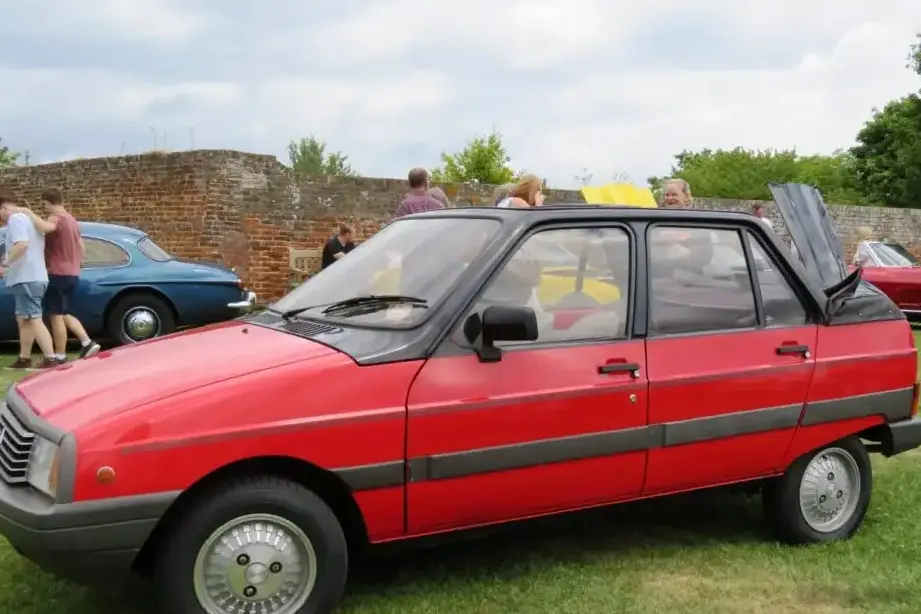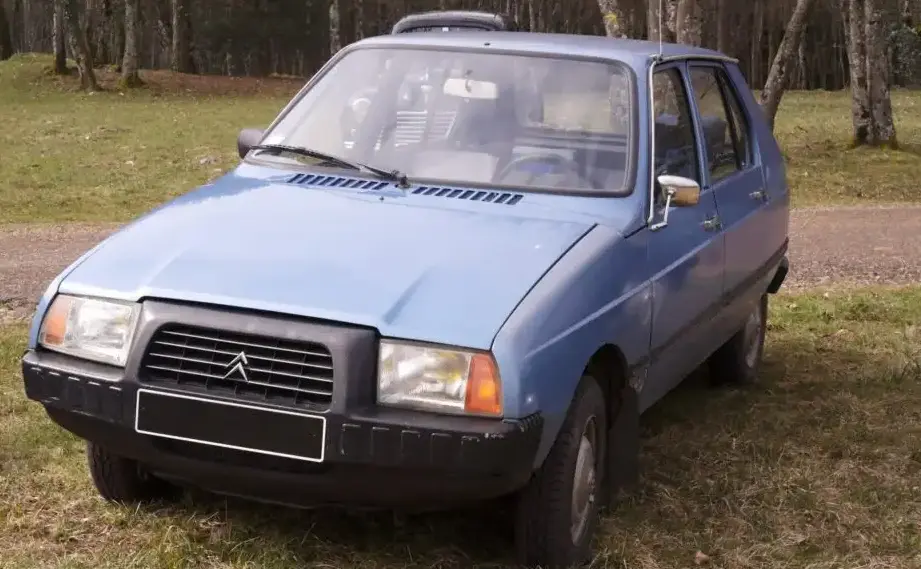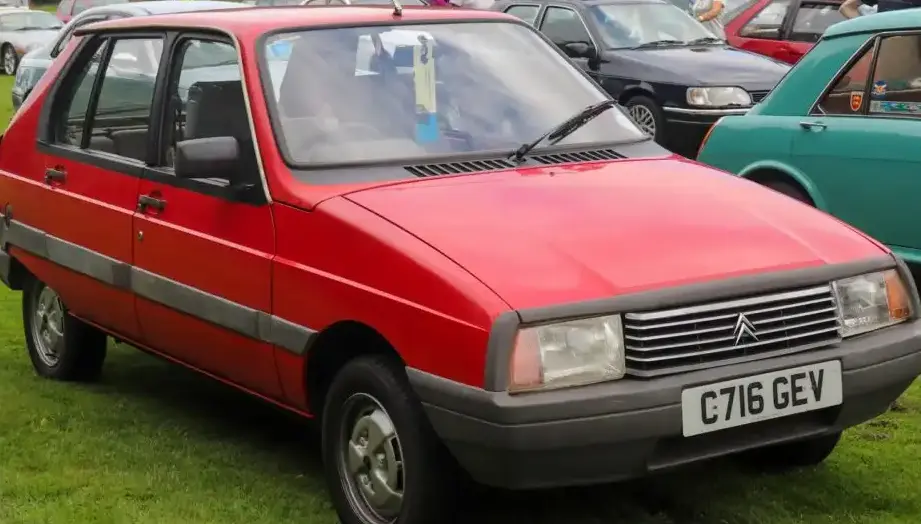
The Citroen Visa 16 GTI, produced between 1985 and 1986, represented a performance-oriented variant within the Phase II generation of the Visa. Positioned as the flagship model, it aimed to provide a sporty driving experience in the compact hatchback segment. The Visa itself was a relatively short-lived model, intended to replace the aging Citroen GS and GSA, and was built on the shared Peugeot 205 and Talbot Horizon platform – known internally as the X11 project. The 16 GTI was a direct response to the success of the Peugeot 205 GTI, offering a similar blend of nimble handling and spirited performance, albeit with Citroen’s characteristic hydropneumatic suspension. This model year saw a refinement of the Phase II design, focusing on improved build quality and a more modern interior.
Technical Specifications
| Brand | Citroen |
| Model | Visa |
| Generation | Visa (Phase II) |
| Type (Engine) | 16 GTI (105 Hp) |
| Start of production | 1985 |
| End of production | 1986 |
| Powertrain Architecture | Internal Combustion engine |
| Body type | Hatchback |
| Seats | 5 |
| Doors | 5 |
| Fuel consumption (urban) | 8.7 l/100 km (27 US mpg, 32.5 UK mpg, 11.5 km/l) |
| Fuel consumption (extra urban) | 5.9 l/100 km (39.9 US mpg, 47.9 UK mpg, 16.9 km/l) |
| Fuel Type | Petrol (Gasoline) |
| Acceleration 0 – 100 km/h | 9.1 sec |
| Acceleration 0 – 62 mph | 9.1 sec |
| Acceleration 0 – 60 mph | 8.6 sec |
| Maximum speed | 188 km/h (116.82 mph) |
| Weight-to-power ratio | 8.1 kg/Hp, 123.5 Hp/tonne |
| Weight-to-torque ratio | 6.4 kg/Nm, 155.3 Nm/tonne |
| Power | 105 Hp @ 6250 rpm |
| Power per litre | 66.5 Hp/l |
| Torque | 132 Nm @ 4000 rpm (97.36 lb.-ft. @ 4000 rpm) |
| Engine layout | Front, Transverse |
| Engine Model/Code | XU5J |
| Engine displacement | 1580 cm3 (96.42 cu. in.) |
| Number of cylinders | 4 |
| Engine configuration | Inline |
| Cylinder Bore | 83 mm (3.27 in.) |
| Piston Stroke | 73 mm (2.87 in.) |
| Compression ratio | 9.8:1 |
| Number of valves per cylinder | 2 |
| Fuel injection system | Multi-port manifold injection |
| Engine aspiration | Naturally aspirated engine |
| Valvetrain | OHC |
| Engine oil capacity | 5 l (5.28 US qt | 4.4 UK qt) |
| Coolant | 6.5 l (6.87 US qt | 5.72 UK qt) |
| Kerb Weight | 850 kg (1873.93 lbs.) |
| Max. weight | 1210 kg (2667.59 lbs.) |
| Max load | 360 kg (793.66 lbs.) |
| Trunk (boot) space – minimum | 266 l (9.39 cu. ft.) |
| Trunk (boot) space – maximum | 673 l (23.77 cu. ft.) |
| Fuel tank capacity | 40 l (10.57 US gal | 8.8 UK gal) |
| Max. roof load | 60 kg (132.28 lbs.) |
| Permitted trailer load with brakes (12%) | 750 kg (1653.47 lbs.) |
| Permitted trailer load without brakes | 425 kg (936.96 lbs.) |
| Length | 3725 mm (146.65 in.) |
| Width | 1535 mm (60.43 in.) |
| Height | 1430 mm (56.3 in.) |
| Ride height (ground clearance) | 135 mm (5.31 in.) |
| Drivetrain Architecture | The Internal combustion engine (ICE) drives the front wheels of the vehicle. |
| Drive wheel | Front wheel drive |
| Number of gears and type of gearbox | 5 gears, manual transmission |
| Front suspension | Independent, type McPherson with coil spring and anti-roll bar |
| Rear suspension | Independent coil spring |
| Front brakes | Disc, 247 mm |
| Rear brakes | Drum, 180 mm |
| Steering type | Steering rack and pinion |
| Tires size | 185/60 R13 |
| Wheel rims size | 5.5J x 13 |
Powertrain & Engine Architecture
The heart of the Visa 16 GTI is the XU5J engine, a 1.6-liter inline-four cylinder unit. This engine, derived from the Peugeot-Renault-Volvo (PRV) V6, was a robust and well-regarded design. It featured a single overhead camshaft (OHC) operating two valves per cylinder. Fuel delivery was handled by Bosch multi-port fuel injection, contributing to improved efficiency and responsiveness compared to earlier carbureted versions. The XU5J produced 105 horsepower at 6250 rpm and 132 Nm (97.36 lb-ft) of torque at 4000 rpm. The engine’s relatively high compression ratio of 9.8:1 further enhanced its performance. The engine was transversely mounted, driving the front wheels through a five-speed manual transmission. This transmission was known for its precise shift action and relatively short ratios, complementing the engine’s sporty character.
Driving Characteristics
The Visa 16 GTI offered a noticeably more engaging driving experience than the standard Visa models. The 105 hp engine, while not overwhelming by modern standards, provided brisk acceleration, with a 0-60 mph time of around 8.6 seconds. The five-speed gearbox allowed drivers to keep the engine in its optimal power band. The car’s relatively light weight (850 kg or 1873.93 lbs) contributed to its nimble handling. The Citroen’s hydropneumatic suspension, a hallmark of the brand, provided a comfortable ride while also maintaining excellent body control in corners. Compared to the base model Visas, the 16 GTI’s suspension was firmer and lower, further enhancing its handling capabilities. While the 205 GTI was often considered the sharper handling car, the Visa 16 GTI offered a unique blend of comfort and performance.
Equipment & Trim Levels
The Visa 16 GTI came reasonably well-equipped for its time. Standard features included sports seats with patterned upholstery, a leather-wrapped steering wheel, and a comprehensive instrument cluster. Power steering was also standard. Optional extras included a sunroof, alloy wheels (often Speedline), and upgraded audio systems. The interior design was functional and relatively minimalist, reflecting the car’s focus on driving enjoyment. The trim level was generally consistent, with limited options for customization beyond the factory-installed extras.
Chassis & Braking
The Visa 16 GTI utilized an independent suspension system at all four wheels. The front suspension employed McPherson struts with coil springs and an anti-roll bar, while the rear suspension featured independent coil springs. This setup provided a good balance between ride comfort and handling precision. Braking duties were handled by disc brakes at the front and drum brakes at the rear. While the front discs provided adequate stopping power, the rear drums were a point of criticism, as they lacked the stopping power of rear discs. The steering system was a rack-and-pinion setup, offering precise and responsive steering feel.
Market Reception & Comparison
The Citroen Visa 16 GTI was generally well-received by automotive critics, who praised its performance, handling, and comfortable ride. However, it often found itself overshadowed by the Peugeot 205 GTI, which was considered the benchmark in the small hot hatch segment. The Visa 16 GTI offered a more comfortable and refined driving experience than the 205 GTI, but it lacked the same level of outright performance and handling sharpness. Fuel economy was respectable for a performance car of the era, averaging around 27 mpg in urban driving and 40 mpg on the highway. Reliability was generally good, although the hydropneumatic suspension required periodic maintenance.
Legacy
The Citroen Visa 16 GTI remains a fondly remembered hot hatch from the 1980s. While not as iconic as its Peugeot counterpart, it offered a unique and appealing combination of performance, comfort, and French flair. Today, well-maintained examples are becoming increasingly collectible. The XU5J engine is known for its durability, but the hydropneumatic suspension requires regular attention to prevent leaks and maintain proper operation. The Visa 16 GTI represents a significant chapter in Citroen’s history, showcasing the brand’s commitment to innovative engineering and driving pleasure.