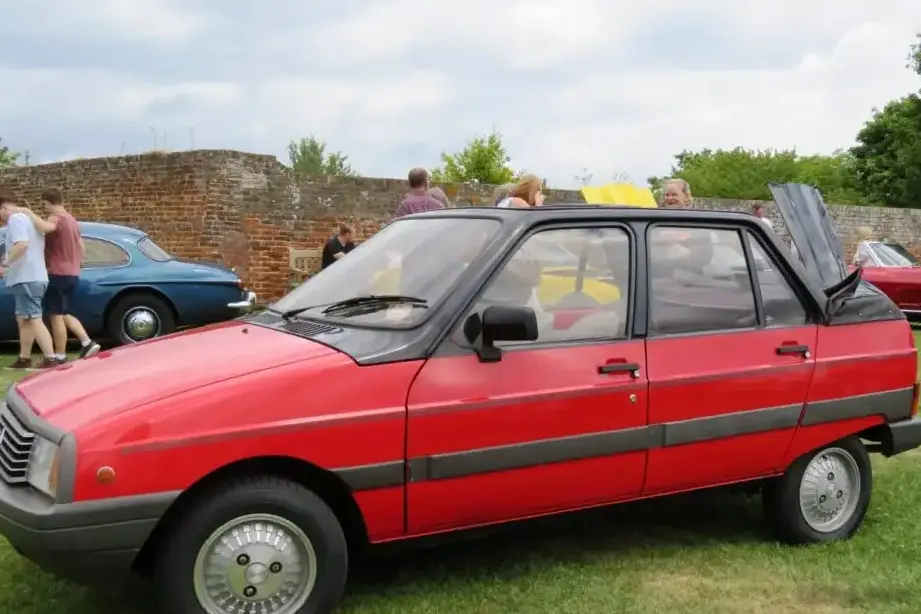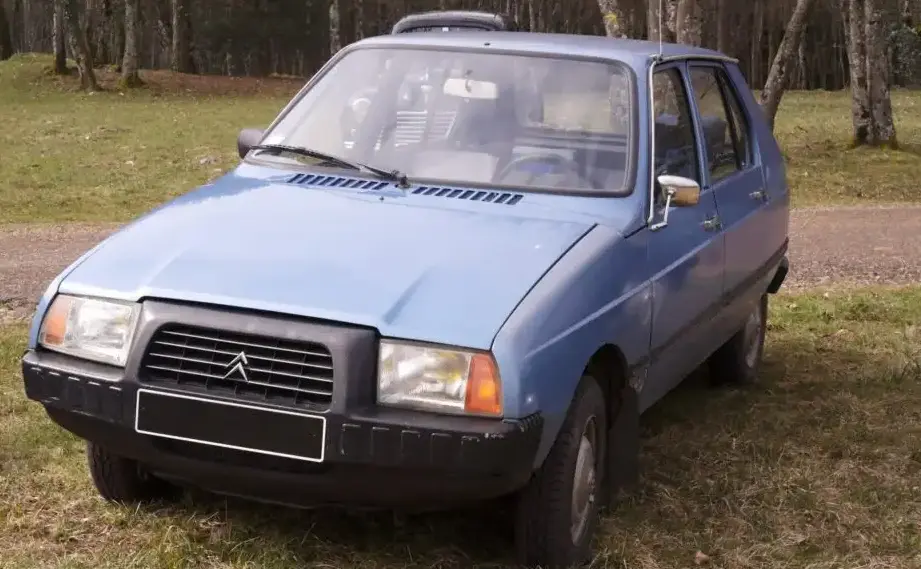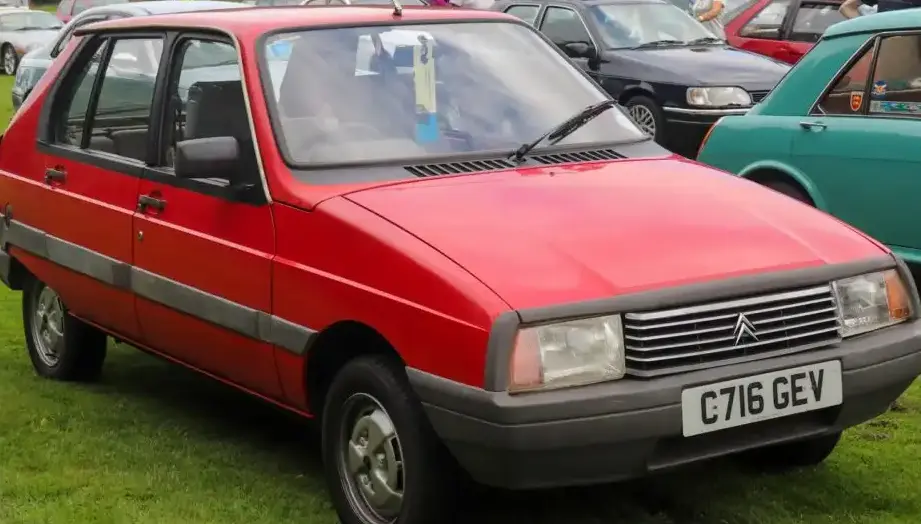
The Citroën Visa 16 GTI, produced between 1986 and 1988, represented a performance-oriented variant within the Phase II generation of the Visa. Positioned as the flagship model, it aimed to provide a sporty driving experience in the compact hatchback segment. The Visa itself was conceived as a replacement for the Citroën GS/GSA, offering a more modern and economical alternative. The 16 GTI, with its fuel-injected engine and upgraded components, was Citroën’s answer to rivals like the Peugeot 205 GTI and Renault 5 Gordini, though it occupied a slightly different niche, often being seen as a more mature and refined option.
Technical Specifications
| Brand | Citroën |
| Model | Visa |
| Generation | Visa (Phase II) |
| Type (Engine) | 16 GTI (115 Hp) |
| Start of production | 1986 |
| End of production | 1988 |
| Powertrain Architecture | Internal Combustion engine |
| Body type | Hatchback |
| Seats | 5 |
| Doors | 5 |
| Fuel Type | Petrol (Gasoline) |
| Acceleration 0 – 100 km/h | 8.8 sec |
| Acceleration 0 – 62 mph | 8.8 sec |
| Acceleration 0 – 60 mph | 8.4 sec |
| Maximum speed | 192 km/h (119.3 mph) |
| Power | 115 Hp @ 6000 rpm |
| Power per litre | 72.8 Hp/l |
| Engine layout | Front, Transverse |
| Engine Model/Code | XU5J |
| Engine displacement | 1580 cm3 (96.42 cu. in.) |
| Number of cylinders | 4 |
| Engine configuration | Inline |
| Cylinder Bore | 83 mm (3.27 in.) |
| Piston Stroke | 73 mm (2.87 in.) |
| Number of valves per cylinder | 2 |
| Fuel injection system | Multi-port manifold injection |
| Engine aspiration | Naturally aspirated engine |
| Valvetrain | OHC |
| Engine oil capacity | 5 l (5.28 US qt | 4.4 UK qt) |
| Coolant | 6.5 l (6.87 US qt | 5.72 UK qt) |
| Fuel tank capacity | 40 l (10.57 US gal | 8.8 UK gal) |
| Length | 3725 mm (146.65 in.) |
| Width | 1535 mm (60.43 in.) |
| Height | 1430 mm (56.3 in.) |
| Drivetrain Architecture | The Internal combustion engine (ICE) drives the front wheels of the vehicle. |
| Drive wheel | Front wheel drive |
| Number of gears and type of gearbox | 5 gears, manual transmission |
| Front suspension | Independent, type McPherson with coil spring and anti-roll bar |
| Rear suspension | Independent coil spring |
| Front brakes | Disc, 247 mm |
| Rear brakes | Drum, 180 mm |
| Steering type | Steering rack and pinion |
| Tires size | 185/60 R13 |
| Wheel rims size | 5.5J x 13 |
Powertrain & Engine Architecture
The heart of the Visa 16 GTI is the XU5J engine, a 1.6-liter inline-four cylinder unit. This engine was part of the XU series developed by Peugeot-Citroën, and was known for its robustness and tunability. The XU5J featured a single overhead camshaft (OHC) design operating two valves per cylinder. Crucially, it employed Bosch multi-port fuel injection, a significant upgrade over the carbureted engines found in lower Visa models. This injection system, combined with a compression ratio of 9.5:1, allowed the engine to produce 115 horsepower at 6000 rpm and 108 lb-ft of torque. The engine’s transverse mounting and front-wheel drive configuration were typical for European hatchbacks of the era. The 16 GTI exclusively came with a five-speed manual transmission, designed to maximize the engine’s potential and provide a more engaging driving experience.
Driving Characteristics
The Visa 16 GTI offered a noticeably more spirited driving experience than its lesser-equipped siblings. The 115 hp engine, while not exceptionally powerful by modern standards, provided brisk acceleration. The 0-60 mph time of around 8.4 seconds was competitive for its class in the late 1980s. The five-speed gearbox was well-matched to the engine’s powerband, allowing for responsive acceleration in each gear. The gear ratios were relatively short, prioritizing acceleration over top-end speed. Compared to the standard Visa models, the 16 GTI’s suspension was firmer, reducing body roll and improving handling. While not as overtly sporty as the Peugeot 205 GTI, the Visa 16 GTI offered a comfortable yet engaging driving experience, suitable for both daily commuting and spirited weekend drives.
Equipment & Trim Levels
The Visa 16 GTI was the best-equipped model in the Visa range. Standard features included upgraded cloth upholstery, a leather-wrapped steering wheel, and a more comprehensive instrument cluster with a tachometer. Power steering was also standard, a welcome addition for a performance-oriented vehicle. Optional extras included a sunroof, central locking, and upgraded audio systems. The interior design, while functional, was relatively understated compared to some of its rivals, reflecting Citroën’s focus on practicality and comfort. The exterior was distinguished by subtle body-colored spoilers and alloy wheels, giving it a more aggressive appearance than the standard Visa.
Chassis & Braking
The Visa 16 GTI utilized an independent suspension system at all four wheels. The front suspension employed McPherson struts with coil springs and an anti-roll bar, while the rear suspension featured independent coil springs. This setup provided a good balance between ride comfort and handling. The braking system consisted of disc brakes at the front and drum brakes at the rear. While adequate for normal driving, the rear drum brakes were a point of criticism, as they lacked the stopping power of disc brakes, especially during hard braking. The steering was a rack-and-pinion system, providing precise and responsive steering feel.
Market Reception & Comparison
The Citroën Visa 16 GTI was generally well-received by automotive critics, who praised its performance, handling, and comfortable ride. However, it often found itself overshadowed by the more popular Peugeot 205 GTI and Renault 5 Gordini. Critics noted that the Visa 16 GTI lacked the outright sporting character of its rivals, but offered a more refined and practical package. Fuel economy was reasonable for a performance car of the era, averaging around 30-35 mpg. Reliability was generally good, although the rear drum brakes were a potential weak point. Compared to the base Visa models, the 16 GTI commanded a significant price premium, reflecting its upgraded engine and equipment.
Legacy
The Citroën Visa 16 GTI, while not a sales blockbuster, remains a fondly remembered performance hatchback from the 1980s. The XU5J engine proved to be durable and reliable, and many examples are still on the road today. The Visa 16 GTI has gained a following among classic car enthusiasts, who appreciate its understated styling, comfortable ride, and engaging driving experience. In the used car market, well-maintained examples command a premium, particularly those with low mileage and a complete service history. The Visa 16 GTI represents a unique chapter in Citroën’s history, showcasing the brand’s ability to produce a capable and enjoyable performance car.