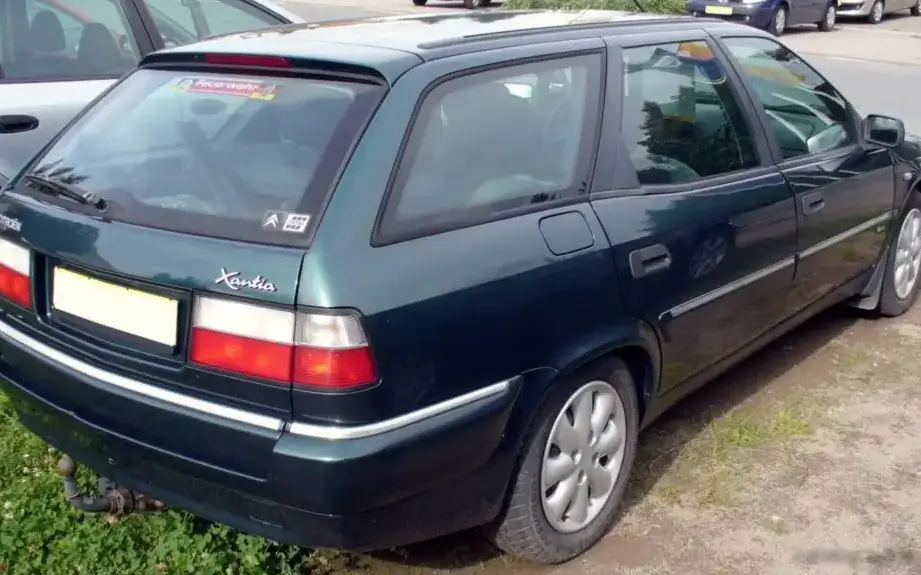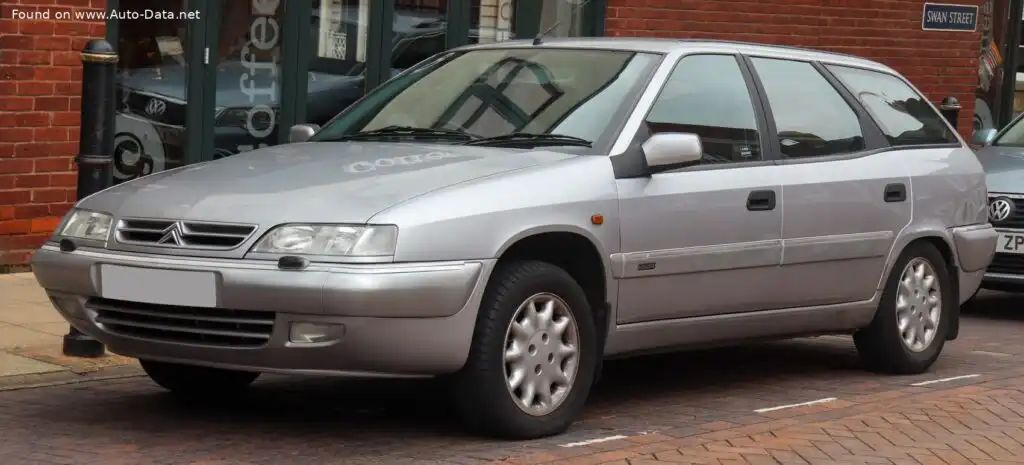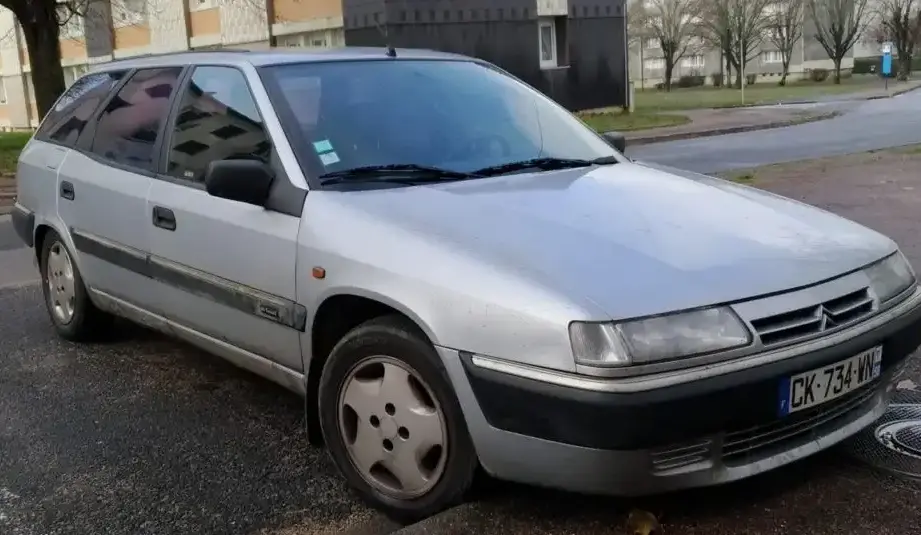
The Citroën Xantia Break 1.8 i, produced between 1995 and 1998, represents an entry-level offering within the Xantia Break (estate) range. Positioned as a practical and comfortable family vehicle, it served as a more affordable alternative to the higher-performance and more technologically advanced versions of the Xantia, such as those equipped with the 2.0 16V or the V6 engines. The Xantia Break itself was part of Citroën’s X1 project, a large family car that aimed to combine comfort, practicality, and a touch of innovation, building upon the success of the BX model it replaced. This variant, with its 1.8-liter engine and automatic transmission, was primarily aimed at buyers prioritizing ease of use and fuel efficiency over outright performance.
Technical Specifications
| Brand | Citroën |
| Model | Xantia |
| Generation | Xantia Break (X1) |
| Type (Engine) | 1.8 i (90 Hp) |
| Start of production | 1995 |
| End of production | 1998 |
| Powertrain Architecture | Internal Combustion engine |
| Body type | Station wagon (estate) |
| Seats | 5 |
| Doors | 5 |
| Fuel Type | Petrol (Gasoline) |
| Power | 90 Hp @ 5000 rpm |
| Power per litre | 51.1 Hp/l |
| Torque | 147 Nm @ 2600 rpm (108.42 lb.-ft. @ 2600 rpm) |
| Maximum engine speed | 6400 rpm |
| Engine layout | Front, Transverse |
| Engine Model/Code | LFX XU7JB |
| Engine displacement | 1761 cm3 (107.46 cu. in.) |
| Number of cylinders | 4 |
| Engine configuration | Inline |
| Cylinder Bore | 83 mm (3.27 in.) |
| Piston Stroke | 81.4 mm (3.2 in.) |
| Compression ratio | 9.3:1 |
| Number of valves per cylinder | 2 |
| Fuel injection system | Multi-port manifold injection |
| Engine aspiration | Naturally aspirated engine |
| Engine oil capacity | 4.75 l (5.02 US qt | 4.18 UK qt) |
| Coolant | 7 l (7.4 US qt | 6.16 UK qt) |
| Trunk (boot) space – minimum | 512 l (18.08 cu. ft.) |
| Trunk (boot) space – maximum | 1144 l (40.4 cu. ft.) |
| Fuel tank capacity | 65 l (17.17 US gal | 14.3 UK gal) |
| Length | 4660 mm (183.46 in.) |
| Width | 1755 mm (69.09 in.) |
| Height | 1416 mm (55.75 in.) |
| Wheelbase | 2740 mm (107.87 in.) |
| Front overhang | 931 mm (36.65 in.) |
| Rear overhang | 989 mm (38.94 in.) |
| Drivetrain Architecture | The Internal combustion engine (ICE) drives the front wheels of the vehicle. |
| Drive wheel | Front wheel drive |
| Number of gears and type of gearbox | 4 gears, automatic transmission |
| Front suspension | Independent type McPherson, Wishbone |
| Rear suspension | Hydro-pneumatic element, Trailing arm |
| Front brakes | Ventilated discs, 266×20.4 mm |
| Rear brakes | Disc, 224×7 mm |
| Assisting systems | ABS (Anti-lock braking system) |
| Steering type | Steering rack and pinion |
| Power steering | Hydraulic Steering |
| Tires size | 185/65 R14 |
Powertrain & Engine Architecture
The heart of the Xantia Break 1.8 i is the Citroën LFX engine, a member of the XU7JB family. This 1761cc inline-four cylinder engine utilizes a naturally aspirated configuration and multi-port fuel injection. The XU7JB engine was a mainstay in Peugeot and Citroën vehicles for many years, known for its relative simplicity and durability. The 90 horsepower output is achieved at 5000 rpm, with a torque figure of 147 Nm (108.42 lb-ft) available at 2600 rpm. This engine features a single overhead camshaft (SOHC) design with two valves per cylinder. Paired with this engine is a four-speed automatic transmission, which was a popular choice for drivers seeking a more relaxed driving experience. This transmission, while not known for its sportiness, provided smooth shifts and contributed to the car’s overall comfort.
Driving Characteristics
The 1.8L automatic Xantia Break offers a comfortable, if not particularly exhilarating, driving experience. Acceleration is adequate for everyday driving, but the 90 hp output and the four-speed automatic transmission mean it’s not a particularly quick vehicle. The automatic gearbox prioritizes smooth shifts over rapid acceleration, resulting in a more leisurely pace. Compared to the five-speed manual version of the same engine, the automatic suffers a slight performance penalty. The Xantia’s renowned hydropneumatic suspension, however, provides a remarkably smooth ride, absorbing bumps and imperfections in the road with ease. This suspension system, a Citroën hallmark, contributes significantly to the car’s overall comfort and handling characteristics. The steering is light and precise, making it easy to maneuver in urban environments.
Equipment & Trim Levels
The 1.8 i automatic Xantia Break typically came equipped with a reasonable level of standard equipment. This included power steering, central locking, electric front windows, and an AM/FM radio. Interior upholstery was generally cloth, with a practical and durable finish. Optional extras included air conditioning, alloy wheels, and a sunroof. Higher trim levels, such as the Exclusive, added features like leather upholstery, upgraded audio systems, and additional comfort features. The dashboard layout is functional and ergonomically designed, with easy-to-read gauges and intuitive controls.
Chassis & Braking
The Xantia Break utilizes an independent McPherson strut front suspension and a hydro-pneumatic rear suspension. This combination provides a unique blend of comfort and handling. The front suspension incorporates a stabilizer bar to reduce body roll during cornering. Braking duties are handled by ventilated discs at the front and solid discs at the rear. An Anti-lock Braking System (ABS) was standard, enhancing safety by preventing wheel lockup during hard braking. The tires are typically 185/65 R14, providing a good balance of grip and ride comfort.
Market Reception & Comparison
The Xantia Break 1.8 i automatic was generally well-received as a practical and comfortable family car. Critics praised its ride quality, spacious interior, and fuel efficiency. However, some reviewers noted its lack of outright performance compared to other engines in the Xantia range, such as the 2.0 16V. The 1.8L engine offered better fuel economy than the larger engines, making it an attractive option for drivers covering long distances. Compared to the 1.9 TDI diesel version, the 1.8 i offered a smoother and quieter driving experience, but at the expense of fuel economy and low-end torque. The automatic transmission, while convenient, was often criticized for being somewhat dated compared to more modern automatic gearboxes.
Legacy
The Citroën Xantia Break 1.8 i automatic, while not the most sought-after version of the Xantia, remains a reasonably reliable and affordable used car. The XU7JB engine is known for its durability, and the automatic transmission, while not particularly sophisticated, is generally dependable if properly maintained. Common issues include wear and tear on the hydropneumatic suspension, which requires periodic servicing. Today, the Xantia Break 1.8 i represents a comfortable and practical classic, offering a unique driving experience thanks to its innovative suspension system. Its affordability and relative simplicity make it an appealing option for enthusiasts and those seeking a spacious and comfortable family vehicle.