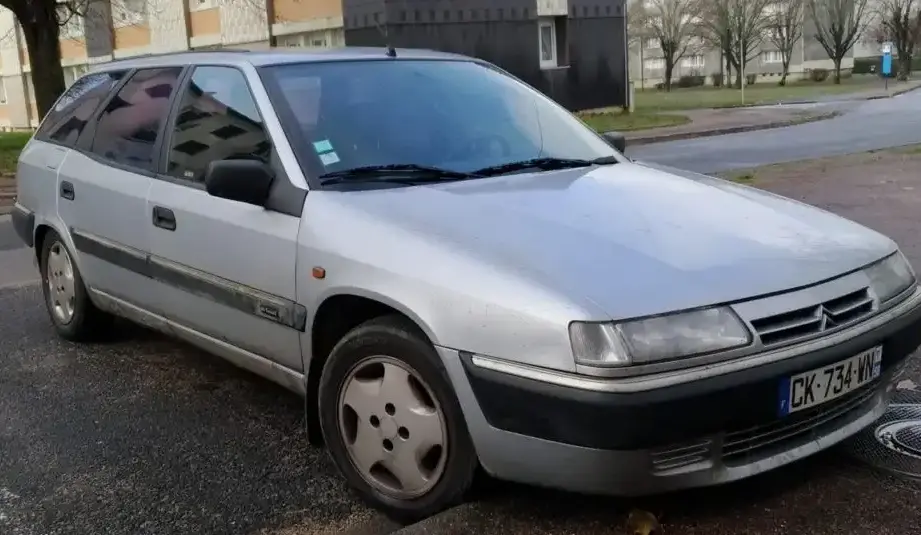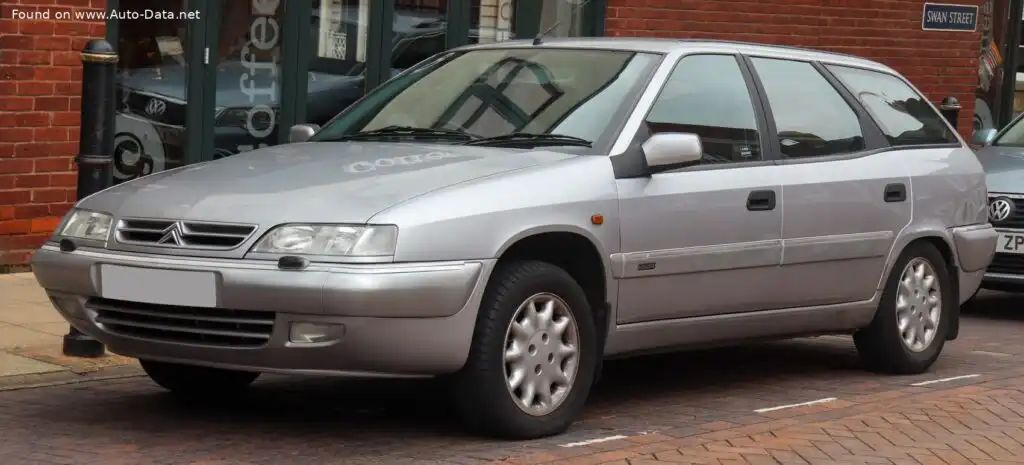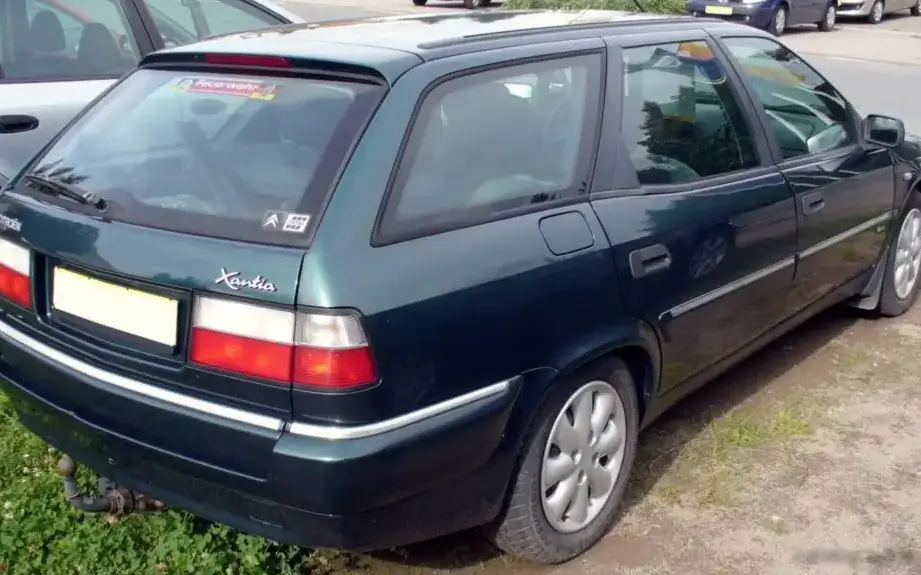
The Citroen Xantia Break (X2) 1.8 i 16V, produced between 1998 and 2001, represents a compelling blend of practicality, comfort, and French engineering within the mid-size station wagon segment. Positioned as a versatile family vehicle, the Xantia Break offered a spacious interior and a large cargo area, making it a popular choice for those needing both passenger and load-carrying capacity. This particular 1.8L 16V variant occupied a middle ground in the Xantia Break lineup, offering a balance between performance and fuel economy, appealing to buyers who didn’t require the higher output of the V6 models or the fuel efficiency of the diesel options.
Technical Specifications
| Brand | Citroen |
| Model | Xantia |
| Generation | Xantia Break (X2) |
| Type (Engine) | 1.8 i 16V (110 Hp) |
| Start of production | 1998 year |
| End of production | 2001 year |
| Powertrain Architecture | Internal Combustion engine |
| Body type | Station wagon (estate) |
| Seats | 5 |
| Doors | 5 |
| Fuel consumption (economy) – urban | 12.4 l/100 km (19 US mpg, 22.8 UK mpg, 8.1 km/l) |
| Fuel consumption (economy) – extra urban | 7 l/100 km (33.6 US mpg, 40.4 UK mpg, 14.3 km/l) |
| Fuel consumption (economy) – combined | 9 l/100 km (26.1 US mpg, 31.4 UK mpg, 11.1 km/l) |
| CO2 emissions | 214 g/km |
| Fuel Type | Petrol (Gasoline) |
| Acceleration 0 – 100 km/h | 12.6 sec |
| Acceleration 0 – 62 mph | 12.6 sec |
| Acceleration 0 – 60 mph | 12 sec |
| Maximum speed | 189 km/h (117.44 mph) |
| Weight-to-power ratio | 11.9 kg/Hp, 83.8 Hp/tonne |
| Weight-to-torque ratio | 8.5 kg/Nm, 118.1 Nm/tonne |
| Power | 110 Hp @ 5500 rpm |
| Power per litre | 62.4 Hp/l |
| Torque | 155 Nm @ 4250 rpm (114.32 lb.-ft. @ 4250 rpm) |
| Engine layout | Front, Transverse |
| Engine Model/Code | LFY XU7JP4 |
| Engine displacement | 1762 cm3 (107.52 cu. in.) |
| Number of cylinders | 4 |
| Engine configuration | Inline |
| Cylinder Bore | 83 mm (3.27 in.) |
| Piston Stroke | 81.4 mm (3.2 in.) |
| Compression ratio | 10.4:1 |
| Number of valves per cylinder | 4 |
| Fuel injection system | Multi-port manifold injection |
| Engine aspiration | Naturally aspirated engine |
| Valvetrain | DOHC |
| Engine oil capacity | 4.75 l (5.02 US qt | 4.18 UK qt) |
| Coolant | 7.5 l (7.93 US qt | 6.6 UK qt) |
| Kerb Weight | 1312 kg (2892.46 lbs.) |
| Max. weight | 1870 kg (4122.64 lbs.) |
| Max load | 558 kg (1230.18 lbs.) |
| Trunk (boot) space – minimum | 618 l (21.82 cu. ft.) |
| Trunk (boot) space – maximum | 1690 l (59.68 cu. ft.) |
| Fuel tank capacity | 65 l (17.17 US gal | 14.3 UK gal) |
| Max. roof load | 75 kg (165.35 lbs.) |
| Permitted trailer load with brakes (12%) | 1200 kg (2645.55 lbs.) |
| Permitted trailer load without brakes | 690 kg (1521.19 lbs.) |
| Permitted towbar download | 85 kg (187.39 lbs.) |
| Length | 4712 mm (185.51 in.) |
| Width | 1755 mm (69.09 in.) |
| Width including mirrors | 1980 mm (77.95 in.) |
| Height | 1420 mm (55.91 in.) |
| Wheelbase | 2740 mm (107.87 in.) |
| Front track | 1502 mm (59.13 in.) |
| Rear (Back) track | 1478 mm (58.19 in.) |
| Front overhang | 983 mm (38.7 in.) |
| Rear overhang | 989 mm (38.94 in.) |
| Drivetrain Architecture | The Internal combustion engine (ICE) drives the front wheels of the vehicle. |
| Drive wheel | Front wheel drive |
| Number of gears and type of gearbox | 5 gears, manual transmission |
| Front suspension | Independent type McPherson, Wishbone |
| Rear suspension | Hydro-pneumatic element, Trailing arm |
| Front brakes | Ventilated discs |
| Rear brakes | Disc |
| Assisting systems | ABS (Anti-lock braking system) |
| Steering type | Steering rack and pinion |
| Power steering | Hydraulic Steering |
| Tires size | 185/65 R15 |
INTRODUCTION
The Citroen Xantia Break (X2) 1.8 i 16V, launched in 1998 and continuing through 2001, was a key variant within the second generation of the Xantia model range. Building upon the innovative hydropneumatic suspension system that defined Citroen, the Xantia Break offered a unique driving experience focused on comfort and refinement. The X2 series represented a significant update to the original Xantia, with styling revisions and improvements to the interior. The 1.8L 16V engine, coupled with a five-speed manual transmission, provided a balance of performance and economy, making it a popular choice for families and individuals seeking a practical and comfortable estate car.
Powertrain & Engine Architecture
At the heart of the Xantia Break 1.8 i 16V lies the LFY (or sometimes XU7JP4) 1.8-liter inline-four cylinder engine. This engine is a naturally aspirated unit featuring a double overhead camshaft (DOHC) valvetrain and multi-port fuel injection. The 16 valves (four per cylinder) contribute to improved breathing and higher power output compared to earlier 8-valve designs. The engine produces 110 horsepower at 5500 rpm and 155 Nm (114 lb-ft) of torque at 4250 rpm. The five-speed manual transmission was the standard offering for this variant, providing a reasonable spread of gears for both urban driving and highway cruising. The transmission itself is a conventional design, known for its durability and relatively simple maintenance requirements. The engine’s transverse mounting and front-wheel-drive configuration were typical for vehicles in this class during the late 1990s and early 2000s.
Driving Characteristics
The Xantia Break 1.8 i 16V delivers a driving experience heavily influenced by Citroen’s renowned hydropneumatic suspension. This system provides a remarkably smooth and comfortable ride, absorbing bumps and imperfections in the road surface with ease. While the 110 horsepower engine doesn’t offer blistering acceleration (0-60 mph in around 12 seconds), it provides adequate power for everyday driving and overtaking maneuvers. The five-speed manual transmission allows the driver to keep the engine in its optimal power band. Compared to the more powerful V6 versions, the 1.8L feels less strained during acceleration, but lacks the outright punch. Compared to the diesel variants, the 1.8L offers a more responsive and refined driving experience, albeit with higher fuel consumption. The steering is light and precise, contributing to the car’s ease of maneuverability.
Equipment & Trim Levels
The Xantia Break 1.8 i 16V typically came equipped with a reasonable level of standard features. These included central locking, power windows, power steering, and an AM/FM radio. Higher trim levels, often denoted by designations like “Exclusive” or “VSX,” added features such as alloy wheels, air conditioning, a sunroof, and upgraded interior upholstery. The interior typically featured cloth upholstery, with options for leather available on higher-spec models. The dashboard layout was functional and ergonomically designed, with easy-to-read gauges and intuitive controls. Optional extras included a CD changer, rear parking sensors, and upgraded sound systems.
Chassis & Braking
The Xantia Break’s chassis is built around a monocoque construction, providing a good balance of strength and rigidity. The front suspension utilizes an independent McPherson strut setup, while the rear suspension employs Citroen’s signature hydropneumatic system with trailing arms. This combination delivers exceptional ride quality and handling characteristics. Braking duties are handled by ventilated discs at the front and solid discs at the rear. Anti-lock Braking System (ABS) was standard, enhancing safety and control during emergency braking situations. The Xantia Break’s suspension system allows for self-leveling, maintaining a consistent ride height regardless of load.
Market Reception & Comparison
The Citroen Xantia Break 1.8 i 16V was generally well-received by automotive critics. It was praised for its comfortable ride, spacious interior, and practical estate car body style. However, some critics noted that the 1.8L engine could feel underpowered when fully loaded or when tackling steep hills. Compared to rivals like the Ford Mondeo Estate and the Vauxhall/Opel Vectra Estate, the Xantia Break offered a more distinctive driving experience thanks to its hydropneumatic suspension. Fuel economy was considered average for its class, and reliability was generally good, although the hydropneumatic suspension system could require specialized maintenance.
Legacy
The Citroen Xantia Break 1.8 i 16V has developed a loyal following among enthusiasts who appreciate its unique blend of comfort, practicality, and French engineering. While not as common as some of its rivals, well-maintained examples are still found on the used car market today. The engine itself is known for its durability, but the hydropneumatic suspension system requires regular attention and can be expensive to repair if neglected. The Xantia Break represents a high point in Citroen’s history, showcasing the company’s commitment to innovation and providing a comfortable and refined driving experience. Its distinctive styling and unique suspension system continue to set it apart from more conventional estate cars.