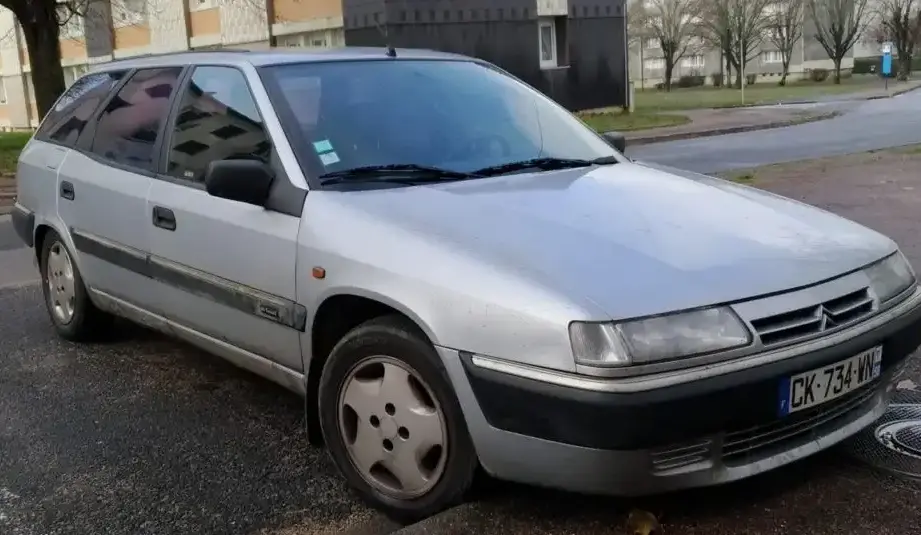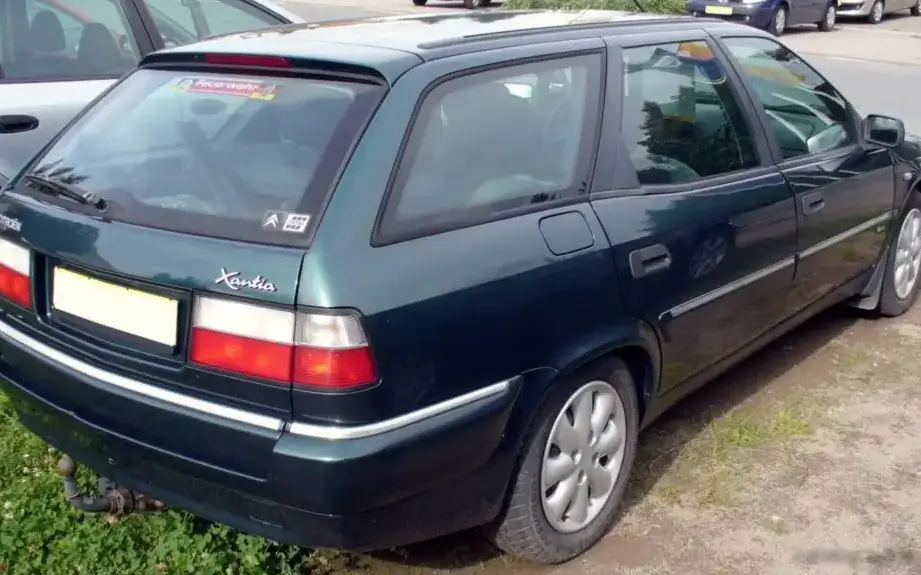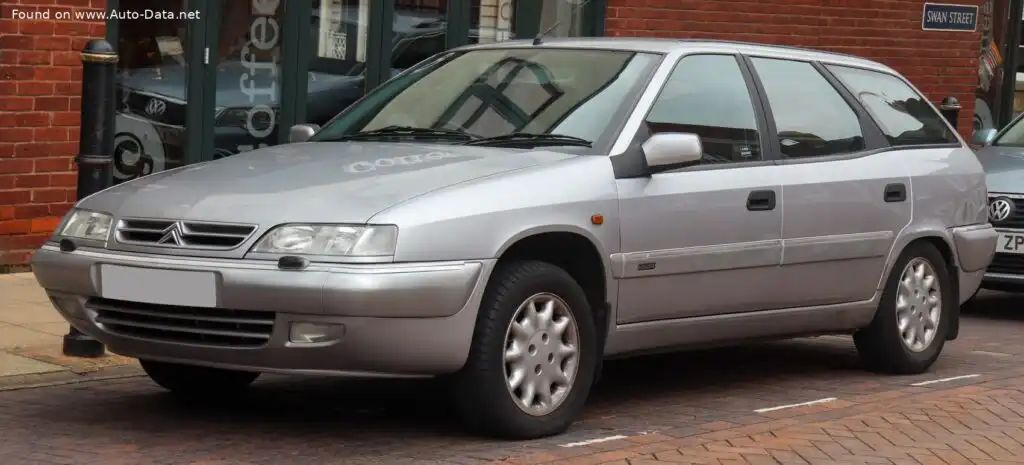
The Citroen Xantia Break (X2) 1.8 i, producing 90 horsepower, was a popular variant of Citroen’s large family car, produced between 1998 and 2001. Positioned as an entry-level to mid-range option within the Xantia Break lineup, it offered a balance of practicality, comfort, and affordability. The Xantia, launched in 1993, was intended as a replacement for the BX, and the X2 series represented a significant refresh of the original model. The Break (estate) body style was particularly favored in European markets for its spaciousness and versatility, making it a common sight as a family vehicle. This specific 1.8L engine and automatic transmission combination aimed to provide a more accessible entry point into the Xantia range, appealing to buyers prioritizing ease of use over outright performance.
Technical Specifications
| Brand | Citroen |
| Model | Xantia |
| Generation | Xantia Break (X2) |
| Type (Engine) | 1.8 i (90 Hp) |
| Start of production | 1998 year |
| End of production | 2001 year |
| Powertrain Architecture | Internal Combustion engine |
| Body type | Station wagon (estate) |
| Seats | 5 |
| Doors | 5 |
| Fuel consumption (economy) – urban | 11.9 l/100 km (19.8 US mpg, 23.7 UK mpg, 8.4 km/l) |
| Fuel consumption (economy) – extra urban | 6.5 l/100 km (36.2 US mpg, 43.5 UK mpg, 15.4 km/l) |
| Fuel consumption (economy) – combined | 8.5 l/100 km (27.7 US mpg, 33.2 UK mpg, 11.8 km/l) |
| CO2 emissions | 207 g/km |
| Fuel Type | Petrol (Gasoline) |
| Acceleration 0 – 100 km/h | 14.7 sec |
| Acceleration 0 – 62 mph | 14.7 sec |
| Acceleration 0 – 60 mph | 14 sec |
| Maximum speed | 177 km/h (109.98 mph) |
| Weight-to-power ratio | 14.4 kg/Hp, 69.2 Hp/tonne |
| Weight-to-torque ratio | 8.8 kg/Nm, 113.1 Nm/tonne |
| Power | 90 Hp @ 5000 rpm |
| Power per litre | 51.1 Hp/l |
| Torque | 147 Nm @ 2600 rpm (108.42 lb.-ft. @ 2600 rpm) |
| Engine layout | Front, Transverse |
| Engine Model/Code | LFX XU7JB |
| Engine displacement | 1762 cm3 (107.52 cu. in.) |
| Number of cylinders | 4 |
| Engine configuration | Inline |
| Cylinder Bore | 83 mm (3.27 in.) |
| Piston Stroke | 81.4 mm (3.2 in.) |
| Compression ratio | 9.5:1 |
| Number of valves per cylinder | 2 |
| Fuel injection system | Multi-port manifold injection |
| Engine aspiration | Naturally aspirated engine |
| Valvetrain | OHC |
| Engine oil capacity | 4.75 l (5.02 US qt | 4.18 UK qt) |
| Coolant | 7 l (7.4 US qt | 6.16 UK qt) |
| Kerb Weight | 1300 kg (2866.01 lbs.) |
| Max. weight | 1840 kg (4056.51 lbs.) |
| Max load | 540 kg (1190.5 lbs.) |
| Trunk (boot) space – minimum | 512 l (18.08 cu. ft.) |
| Trunk (boot) space – maximum | 1690 l (59.68 cu. ft.) |
| Fuel tank capacity | 65 l (17.17 US gal | 14.3 UK gal) |
| Max. roof load | 75 kg (165.35 lbs.) |
| Permitted trailer load with brakes (12%) | 1200 kg (2645.55 lbs.) |
| Permitted trailer load without brakes | 685 kg (1510.17 lbs.) |
| Permitted towbar download | 85 kg (187.39 lbs.) |
| Length | 4712 mm (185.51 in.) |
| Width | 1760 mm (69.29 in.) |
| Width including mirrors | 1980 mm (77.95 in.) |
| Height | 1420 mm (55.91 in.) |
| Wheelbase | 2740 mm (107.87 in.) |
| Front track | 1502 mm (59.13 in.) |
| Rear (Back) track | 1478 mm (58.19 in.) |
| Front overhang | 983 mm (38.7 in.) |
| Rear overhang | 989 mm (38.94 in.) |
| Drivetrain Architecture | The Internal combustion engine (ICE) drives the front wheels of the vehicle. |
| Drive wheel | Front wheel drive |
| Number of gears and type of gearbox | 5 gears, manual transmission |
| Front suspension | Independent type McPherson, Wishbone |
| Rear suspension | Hydro-pneumatic element, Trailing arm |
| Front brakes | Ventilated discs |
| Rear brakes | Disc |
| Assisting systems | ABS (Anti-lock braking system) |
| Steering type | Steering rack and pinion |
| Power steering | Hydraulic Steering |
| Tires size | 185/65 R15 |
Powertrain & Engine Architecture
The Xantia Break 1.8 i utilized the PSA XU7JB engine, a 1.8-liter inline-four cylinder petrol engine. This engine, often referred to by its engine code LFX, was a mainstay in many PSA (Peugeot Société Anonyme) vehicles of the era. It featured a single overhead camshaft (OHC) design and multi-port fuel injection. The XU7JB engine was known for its relative simplicity and durability, though it wasn’t particularly powerful. The 90 horsepower output was achieved at 5000 rpm, with a torque figure of 147 Nm (108.42 lb-ft) available at 2600 rpm. The engine’s 9.5:1 compression ratio was typical for the time, balancing performance and fuel efficiency. Paired with this engine was a four-speed automatic transmission, which, while providing convenience, did impact acceleration and fuel economy compared to the available five-speed manual gearbox.
Driving Characteristics
The 1.8L automatic Xantia Break offered a comfortable, but not particularly sporty, driving experience. Acceleration from 0-60 mph took around 14 seconds, and top speed was approximately 109.98 mph. The automatic transmission, while smooth, resulted in noticeable power loss and a less engaging driving feel. Gear ratios were optimized for fuel economy and relaxed cruising rather than rapid acceleration. Compared to the more powerful 2.0L 16V or V6 versions of the Xantia, the 1.8 automatic felt noticeably slower, especially when fully loaded or tackling inclines. However, the hydropneumatic suspension, a Citroen hallmark, provided an exceptionally smooth and comfortable ride, absorbing bumps and imperfections in the road with ease. This made it a very pleasant long-distance cruiser.
Equipment & Trim Levels
The 1.8 i automatic Xantia Break typically came with a reasonable level of standard equipment. This included power steering, central locking, electric front windows, and an AM/FM radio. Interior upholstery was usually cloth, with a relatively simple dashboard layout. Optional extras included air conditioning, alloy wheels, a sunroof, and upgraded audio systems. The trim level was generally considered to be mid-range, offering a good balance of features without the luxury appointments found in the higher-spec models. Safety features were fairly basic for the time, consisting primarily of ABS brakes.
Chassis & Braking
The Xantia Break featured independent front suspension using a McPherson strut and wishbone setup, providing good handling and stability. The rear suspension utilized Citroen’s innovative hydropneumatic system, which offered self-leveling and adjustable ride height. This system contributed significantly to the car’s renowned ride comfort. Braking was handled by ventilated discs at the front and solid discs at the rear. The ABS system helped to prevent wheel lock-up during hard braking, enhancing safety. Stabilizer bars were fitted to both the front and rear axles to reduce body roll during cornering.
Market Reception & Comparison
The Xantia Break 1.8 i automatic was generally well-received as a practical and comfortable family car. Critics praised the ride quality and spaciousness of the estate body style. However, the engine and automatic transmission combination were often criticized for being underpowered and lacking in responsiveness. Compared to the manual transmission versions or the higher-output engines, the 1.8 automatic offered lower fuel economy and slower acceleration. However, it appealed to buyers who prioritized ease of driving and comfort over performance. Its fuel economy, around 27.7 US mpg combined, was reasonable for the time, but not class-leading.
Legacy
The XU7JB engine, in its various iterations, proved to be a relatively reliable unit, although regular maintenance is crucial. The automatic transmission, while generally dependable, can be prone to wear and tear with high mileage. Today, the Xantia Break 1.8 i automatic is a relatively affordable classic car. Parts availability can be a challenge, but a dedicated community of Citroen enthusiasts exists to provide support and assistance. While not a performance icon, it remains a comfortable and practical choice for those seeking a spacious and distinctive estate car with a unique driving experience, and a testament to Citroen’s innovative engineering.