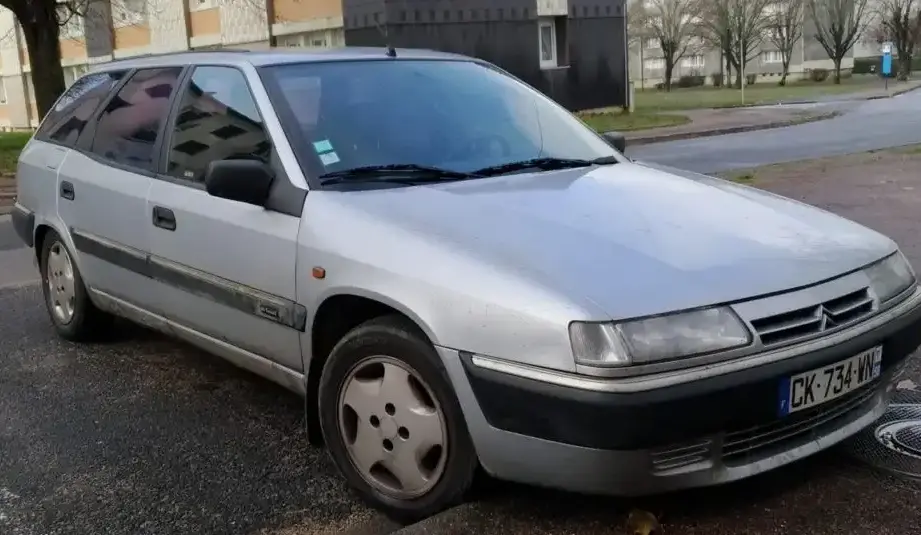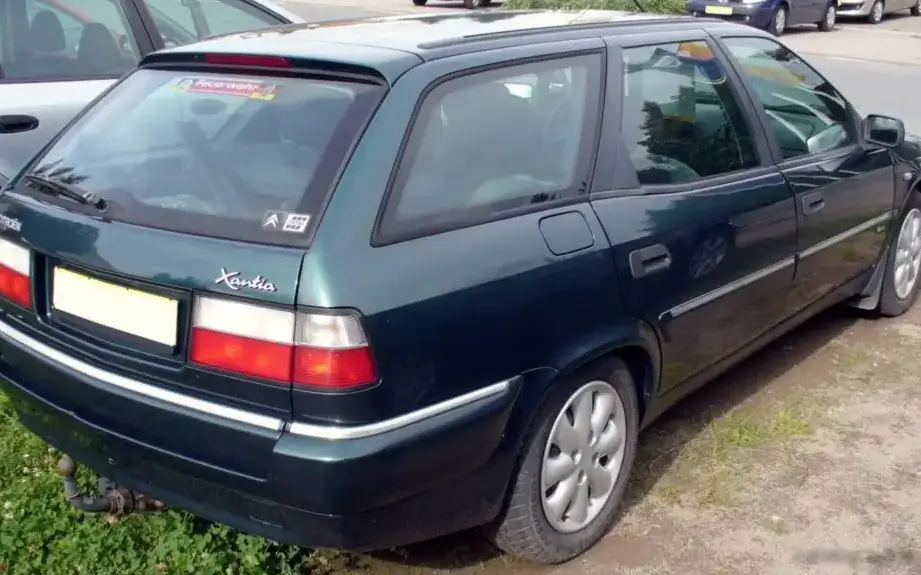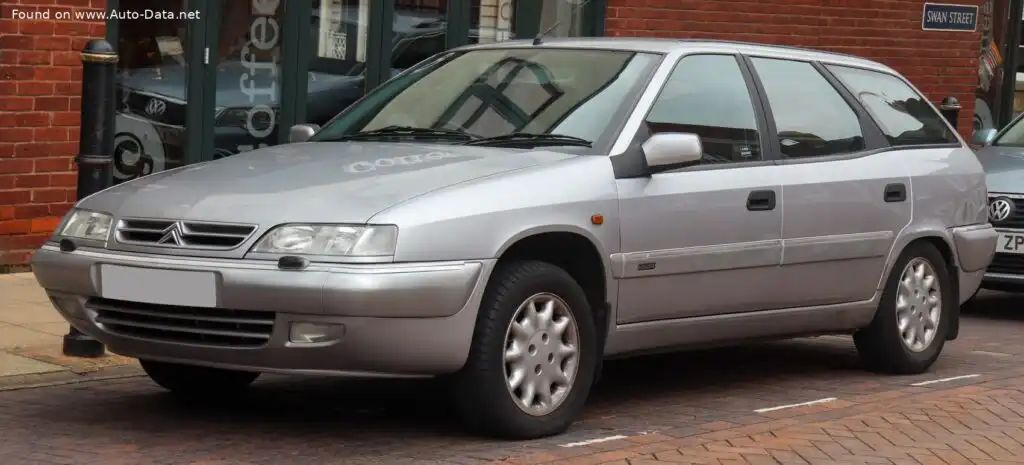
The Citroen Xantia Break (X2) 1.9 Turbo D, produced between 1998 and 2001, represented a practical and efficient option within the Xantia lineup. Positioned as a mid-range offering, it catered to buyers seeking the spaciousness of a station wagon (estate) combined with the fuel economy of a diesel engine. The Xantia, launched in 1993 as a replacement for the BX, was known for its innovative hydropneumatic suspension and aerodynamic styling. The Break (estate) version further enhanced its practicality, making it a popular choice for families and those requiring substantial cargo capacity. This particular 1.9 Turbo D variant aimed to balance performance with affordability, offering a compromise between the more powerful petrol engines and the lower-spec diesel options.
Technical Specifications
| Brand | Citroen |
| Model | Xantia |
| Generation | Xantia Break (X2) |
| Type (Engine) | 1.9 Turbo D (90 Hp) |
| Start of production | 1998 year |
| End of production | 2001 year |
| Powertrain Architecture | Internal Combustion engine |
| Body type | Station wagon (estate) |
| Seats | 5 |
| Doors | 5 |
| Fuel consumption (economy) – urban | 9.4 l/100 km (25 US mpg, 30.1 UK mpg, 10.6 km/l) |
| Fuel consumption (economy) – extra urban | 5.6 l/100 km (42 US mpg, 50.4 UK mpg, 17.9 km/l) |
| Fuel consumption (economy) – combined | 7 l/100 km (33.6 US mpg, 40.4 UK mpg, 14.3 km/l) |
| CO2 emissions | 183 g/km |
| Fuel Type | Diesel |
| Acceleration 0 – 100 km/h | 15.3 sec |
| Acceleration 0 – 62 mph | 15.3 sec |
| Acceleration 0 – 60 mph | 14.5 sec |
| Maximum speed | 172 km/h (106.88 mph) |
| Emission standard | Euro 2 |
| Weight-to-power ratio | 15.1 kg/Hp, 66.2 Hp/tonne |
| Weight-to-torque ratio | 6.9 kg/Nm, 144.1 Nm/tonne |
| Power | 90 Hp @ 4000 rpm |
| Power per litre | 47.2 Hp/l |
| Torque | 196 Nm @ 2250 rpm (144.56 lb.-ft. @ 2250 rpm) |
| Engine layout | Front, Transverse |
| Engine Model/Code | DHX XUD9TF |
| Engine displacement | 1905 cm3 (116.25 cu. in.) |
| Number of cylinders | 4 |
| Engine configuration | Inline |
| Cylinder Bore | 83 mm (3.27 in.) |
| Piston Stroke | 88 mm (3.46 in.) |
| Compression ratio | 21.8:1 |
| Number of valves per cylinder | 2 |
| Fuel injection system | Precombustion chamber injection |
| Engine aspiration | Turbocharger, Intercooler |
| Valvetrain | OHC |
| Engine oil capacity | 4.25 l (4.49 US qt | 3.74 UK qt) |
| Coolant | 9 l (9.51 US qt | 7.92 UK qt) |
| Kerb Weight | 1360 kg (2998.29 lbs.) |
| Max. weight | 1910 kg (4210.83 lbs.) |
| Max load | 550 kg (1212.54 lbs.) |
| Trunk (boot) space – minimum | 512 l (18.08 cu. ft.) |
| Trunk (boot) space – maximum | 1690 l (59.68 cu. ft.) |
| Fuel tank capacity | 65 l (17.17 US gal | 14.3 UK gal) |
| Max. roof load | 75 kg (165.35 lbs.) |
| Permitted trailer load with brakes (12%) | 1200 kg (2645.55 lbs.) |
| Permitted trailer load without brakes | 715 kg (1576.31 lbs.) |
| Permitted towbar download | 85 kg (187.39 lbs.) |
| Length | 4712 mm (185.51 in.) |
| Width | 1760 mm (69.29 in.) |
| Width including mirrors | 1980 mm (77.95 in.) |
| Height | 1420 mm (55.91 in.) |
| Wheelbase | 2740 mm (107.87 in.) |
| Front track | 1502 mm (59.13 in.) |
| Rear (Back) track | 1478 mm (58.19 in.) |
| Front overhang | 983 mm (38.7 in.) |
| Rear overhang | 989 mm (38.94 in.) |
| Drivetrain Architecture | The Internal combustion engine (ICE) drives the front wheels of the vehicle. |
| Drive wheel | Front wheel drive |
| Number of gears and type of gearbox | 5 gears, manual transmission |
| Front suspension | Independent type McPherson, Wishbone |
| Rear suspension | Hydro-pneumatic element, Trailing arm |
| Front brakes | Ventilated discs |
| Rear brakes | Disc |
| Assisting systems | ABS (Anti-lock braking system) |
| Steering type | Steering rack and pinion |
| Power steering | Hydraulic Steering |
| Tires size | 185/65 R15 |
Powertrain & Engine Architecture
The heart of the Xantia Break 1.9 Turbo D was the DHX XUD9TF engine, a 1.9-liter inline-four diesel. This engine was a mainstay of Citroen and Peugeot vehicles during the 1990s and early 2000s, known for its robustness and relatively simple design. It employed precombustion chamber injection, a system where fuel is injected into a small chamber within the cylinder head, promoting more complete combustion. A turbocharger with an intercooler was added to boost power output to 90 horsepower and 196 Nm (144.56 lb-ft) of torque. The engine’s layout was front-mounted and transverse, driving the front wheels. The XUD9TF engine was known for its durability, but could suffer from issues related to turbocharger wear and injector problems with age. The transmission was a five-speed manual, offering a reasonable spread of gears for both economy and performance.
Driving Characteristics
The 1.9 Turbo D automatic Xantia Break offered a comfortable, if not particularly sporty, driving experience. Acceleration was modest, taking around 15.3 seconds to reach 62 mph, but the engine provided sufficient torque for relaxed cruising and overtaking on highways. The hydropneumatic suspension, a Citroen hallmark, delivered a remarkably smooth ride, absorbing bumps and imperfections in the road surface with ease. The automatic transmission, while convenient, wasn’t known for its responsiveness, and could feel somewhat sluggish during quick acceleration. Compared to the more powerful petrol versions of the Xantia, the 1.9 Turbo D lacked outright performance, but it excelled in fuel economy, achieving around 40.4 UK mpg on the combined cycle. The manual transmission version of this engine offered slightly quicker acceleration and a more engaging driving experience.
Equipment & Trim Levels
The 1.9 Turbo D Break typically came with a reasonable level of standard equipment. This included central locking, power steering, electric front windows, and an adjustable steering column. Interior upholstery was typically cloth, with a functional and durable design. Optional extras included air conditioning, alloy wheels, a sunroof, and upgraded audio systems. The trim level was generally positioned as mid-range, offering a good balance of features and affordability. Higher-spec Xantia models featured leather upholstery, more comprehensive audio systems, and additional comfort features.
Chassis & Braking
The Xantia Break featured independent front suspension with McPherson struts and wishbones, providing good handling and stability. The rear suspension utilized Citroen’s innovative hydropneumatic system, offering self-leveling and exceptional ride comfort. Brakes were ventilated discs at the front and solid discs at the rear, providing adequate stopping power for the vehicle’s weight and performance. Anti-lock braking system (ABS) was standard, enhancing safety during emergency braking situations. The steering was a rack and pinion system with hydraulic power assistance, offering precise and responsive control.
Market Reception & Comparison
The Citroen Xantia Break 1.9 Turbo D was generally well-received by critics as a practical and economical family car. It was praised for its spacious interior, comfortable ride, and fuel efficiency. However, some reviewers noted the engine’s lack of refinement and the automatic transmission’s sluggishness. Compared to other station wagons in its class, such as the Ford Mondeo Estate and the Vauxhall/Opel Vectra Estate, the Xantia offered a unique driving experience thanks to its hydropneumatic suspension. The 1.9 Turbo D offered a compelling alternative to the petrol-powered Xantia models for buyers prioritizing fuel economy and low running costs.
Legacy
The Xantia Break 1.9 Turbo D has proven to be a relatively reliable vehicle, with many examples still on the road today. The XUD9TF engine, while not without its quirks, is known for its durability and longevity. However, age-related issues such as turbocharger wear, injector problems, and suspension component deterioration are common. In the used car market, the Xantia Break 1.9 Turbo D represents an affordable and practical option for those seeking a spacious and comfortable estate car. Its unique hydropneumatic suspension and distinctive styling continue to appeal to enthusiasts and those seeking a vehicle with character.