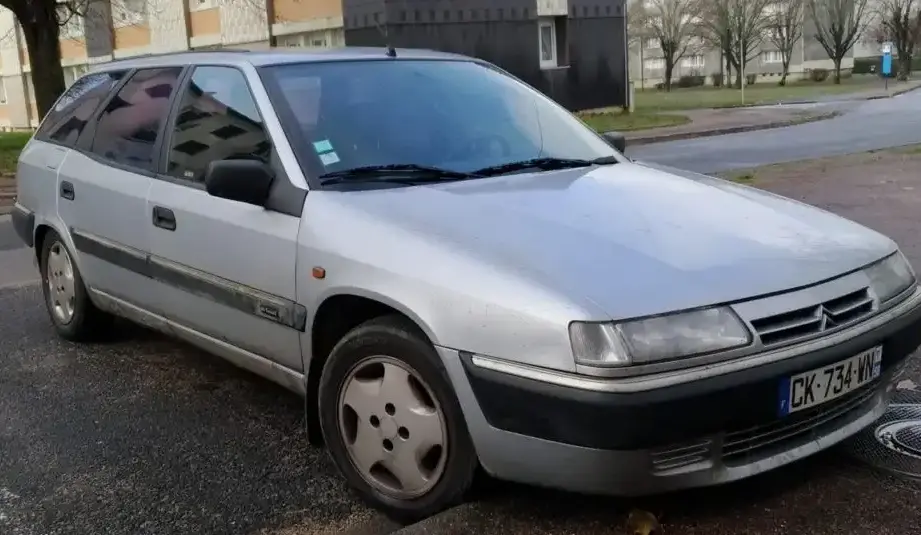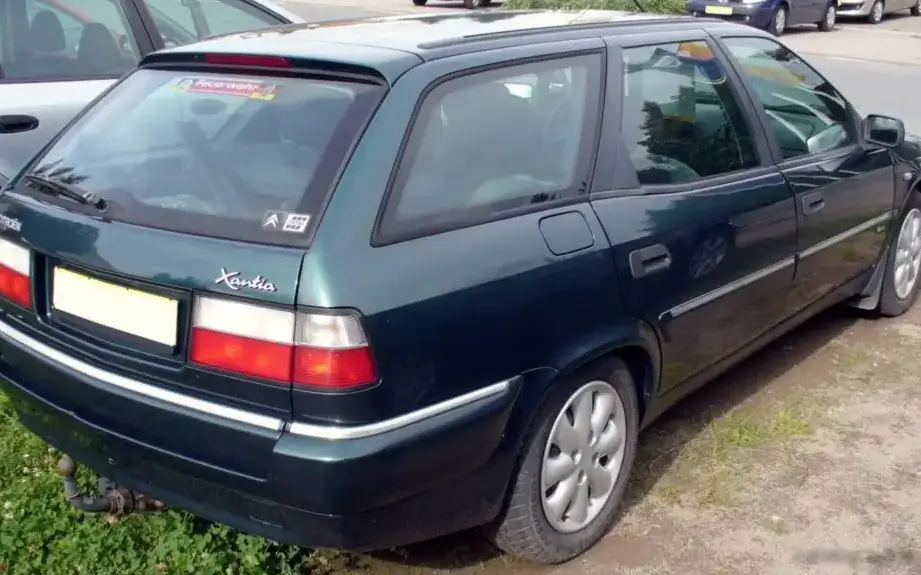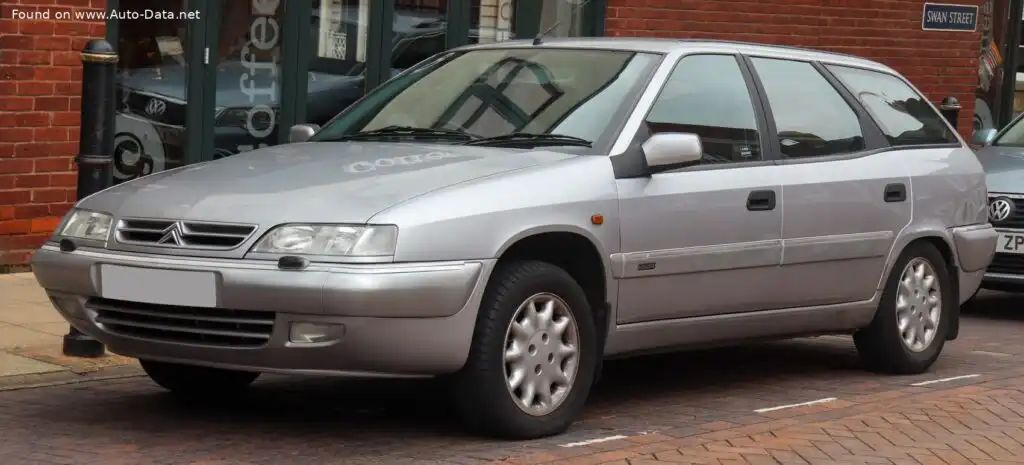
The Citroen Xantia Break 2.0 HDi (90 hp) was a station wagon produced between 1999 and 2001, representing a key variant within the X2 generation of the Xantia model. Positioned as a fuel-efficient and practical option, it catered to buyers seeking a spacious family vehicle with the benefits of a modern diesel engine. The Xantia, launched in 1993, was Citroen’s replacement for the BX, and continued the company’s tradition of innovative suspension technology and distinctive styling. The Break (estate) body style offered increased cargo capacity, making it a popular choice for families and those requiring versatile load-carrying capabilities. This particular 2.0 HDi variant occupied a mid-range position in the Xantia Break lineup, offering a balance between performance, economy, and equipment.
Technical Specifications
| Brand | Citroen |
| Model | Xantia |
| Generation | Xantia Break (X2) |
| Type (Engine) | 2.0 HDi (90 Hp) |
| Start of production | 1999 year |
| End of production | 2001 year |
| Powertrain Architecture | Internal Combustion engine |
| Body type | Station wagon (estate) |
| Seats | 5 |
| Doors | 5 |
| Fuel consumption (economy) – urban | 7.6 l/100 km (30.9 US mpg, 37.2 UK mpg, 13.2 km/l) |
| Fuel consumption (economy) – extra urban | 4.8 l/100 km (49 US mpg, 58.9 UK mpg, 20.8 km/l) |
| Fuel consumption (economy) – combined | 5.8 l/100 km (40.6 US mpg, 48.7 UK mpg, 17.2 km/l) |
| CO2 emissions | 160 g/km |
| Fuel Type | Diesel |
| Acceleration 0 – 100 km/h | 15.3 sec |
| Acceleration 0 – 62 mph | 15.3 sec |
| Acceleration 0 – 60 mph | 14.5 sec |
| Maximum speed | 175 km/h (108.74 mph) |
| Emission standard | Euro 2 |
| Weight-to-power ratio | 14.9 kg/Hp, 66.9 Hp/tonne |
| Weight-to-torque ratio | 6.6 kg/Nm, 152.4 Nm/tonne |
| Power | 90 Hp @ 4000 rpm |
| Power per litre | 45.1 Hp/l |
| Torque | 205 Nm @ 1900 rpm (151.2 lb.-ft. @ 1900 rpm) |
| Engine layout | Front, Transverse |
| Engine Model/Code | RHY DW10TD |
| Engine displacement | 1997 cm3 (121.86 cu. in.) |
| Number of cylinders | 4 |
| Engine configuration | Inline |
| Cylinder Bore | 85 mm (3.35 in.) |
| Piston Stroke | 88 mm (3.46 in.) |
| Number of valves per cylinder | 2 |
| Fuel injection system | Diesel Commonrail |
| Engine aspiration | Turbocharger |
| Valvetrain | OHC |
| Engine oil capacity | 4.25 l (4.49 US qt | 3.74 UK qt) |
| Coolant | 9 l (9.51 US qt | 7.92 UK qt) |
| Kerb Weight | 1345 kg (2965.22 lbs.) |
| Max. weight | 1910 kg (4210.83 lbs.) |
| Max load | 565 kg (1245.61 lbs.) |
| Trunk (boot) space – minimum | 512 l (18.08 cu. ft.) |
| Trunk (boot) space – maximum | 1690 l (59.68 cu. ft.) |
| Fuel tank capacity | 65 l (17.17 US gal | 14.3 UK gal) |
| Max. roof load | 75 kg (165.35 lbs.) |
| Permitted trailer load with brakes (12%) | 1200 kg (2645.55 lbs.) |
| Permitted trailer load without brakes | 710 kg (1565.28 lbs.) |
| Permitted towbar download | 85 kg (187.39 lbs.) |
| Length | 4712 mm (185.51 in.) |
| Width | 1760 mm (69.29 in.) |
| Width including mirrors | 1980 mm (77.95 in.) |
| Height | 1420 mm (55.91 in.) |
| Wheelbase | 2740 mm (107.87 in.) |
| Front track | 1502 mm (59.13 in.) |
| Rear (Back) track | 1478 mm (58.19 in.) |
| Front overhang | 983 mm (38.7 in.) |
| Rear overhang | 989 mm (38.94 in.) |
| Drivetrain Architecture | The Internal combustion engine (ICE) drives the front wheels of the vehicle. |
| Drive wheel | Front wheel drive |
| Number of gears and type of gearbox | 5 gears, manual transmission |
| Front suspension | Independent type McPherson, Wishbone |
| Rear suspension | Hydro-pneumatic element, Trailing arm |
| Front brakes | Ventilated discs |
| Rear brakes | Disc |
| Assisting systems | ABS (Anti-lock braking system) |
| Steering type | Steering rack and pinion |
| Power steering | Hydraulic Steering |
| Tires size | 185/65 R15 |
Powertrain & Engine Architecture
The heart of the Xantia Break 2.0 HDi was the RHY DW10TD engine, a 1.997-liter inline-four cylinder diesel. This engine was part of the DW10 family developed by PSA Peugeot Citroën, and represented a significant step forward in diesel technology. It featured a turbocharger with intercooling to boost power output, and crucially, a second-generation common rail direct injection system. This system allowed for more precise fuel delivery, resulting in improved combustion efficiency, reduced noise, and lower emissions. The engine produced 90 horsepower at 4000 rpm and 205 Nm (151.2 lb-ft) of torque at 1900 rpm. The engine utilized an overhead camshaft (OHC) valvetrain with two valves per cylinder. The transmission was a five-speed manual gearbox, chosen for its durability and efficiency. While an automatic transmission was available on other Xantia models, it wasn’t offered with this specific 2.0 HDi engine.
Driving Characteristics
The 2.0 HDi engine in the Xantia Break provided a comfortable and economical driving experience. While not particularly sporty, the engine delivered adequate power for everyday driving and highway cruising. The 205 Nm of torque, available from relatively low engine speeds, provided good responsiveness for overtaking and climbing hills. The five-speed manual transmission allowed drivers to keep the engine in its optimal power band. Compared to the more powerful 2.1 TD model, the 2.0 HDi offered significantly better fuel economy, but at the expense of outright performance. Acceleration from 0-60 mph took around 14.5 seconds, and top speed was approximately 108.74 mph. The Xantia’s renowned hydropneumatic suspension system, a Citroen hallmark, provided a remarkably smooth and comfortable ride, even on uneven road surfaces.
Equipment & Trim Levels
The Xantia Break 2.0 HDi typically came with a reasonable level of standard equipment. This included power steering, central locking, electric front windows, and an ABS anti-lock braking system. Interior upholstery was typically cloth, with a functional and durable design. Optional extras included air conditioning, a sunroof, alloy wheels, and a radio/cassette player. The dashboard layout was typical of Citroen designs of the era, with a focus on ergonomics and ease of use. The trim level was generally considered mid-range, offering a good balance of features and affordability.
Chassis & Braking
The Xantia Break featured independent front suspension using a McPherson strut and wishbone setup, providing good handling and stability. The rear suspension utilized Citroen’s innovative hydropneumatic system, which offered self-leveling and exceptional ride comfort. The front brakes were ventilated discs, while the rear brakes were solid discs. The ABS system helped to maintain steering control during emergency braking. The steering was a rack and pinion type with hydraulic power assistance, providing light and precise steering feel.
Market Reception & Comparison
The Citroen Xantia Break 2.0 HDi was generally well-received by automotive critics for its fuel efficiency, spaciousness, and comfortable ride. It was seen as a practical and sensible choice for families and those needing a versatile estate car. Compared to other diesel estate cars of the time, the Xantia offered a compelling combination of features and value. The 2.0 HDi engine was praised for its refinement and economy, although some critics noted its lack of outright power. The hydropneumatic suspension was consistently highlighted as a major selling point, providing a level of ride comfort that was unmatched by many competitors.
Legacy
The DW10 engine family, including the RHY variant found in the Xantia Break 2.0 HDi, proved to be remarkably durable and reliable. With proper maintenance, these engines can cover high mileages. Today, the Xantia Break 2.0 HDi is a relatively affordable used car, appealing to those seeking a practical and comfortable estate car with good fuel economy. While not a particularly collectible model, it represents a significant example of Citroen’s engineering innovation and commitment to providing a unique driving experience. Parts availability is generally good, although some specific components may become increasingly difficult to find as the car ages.