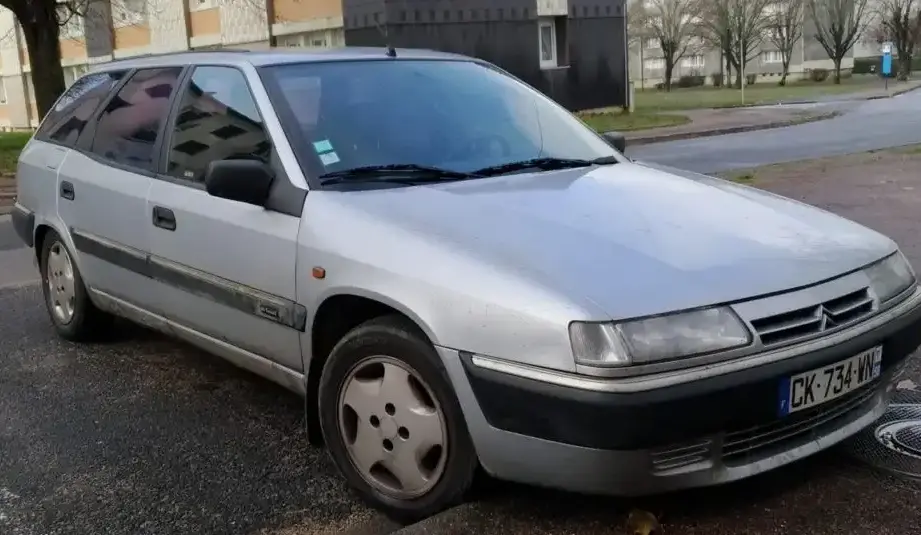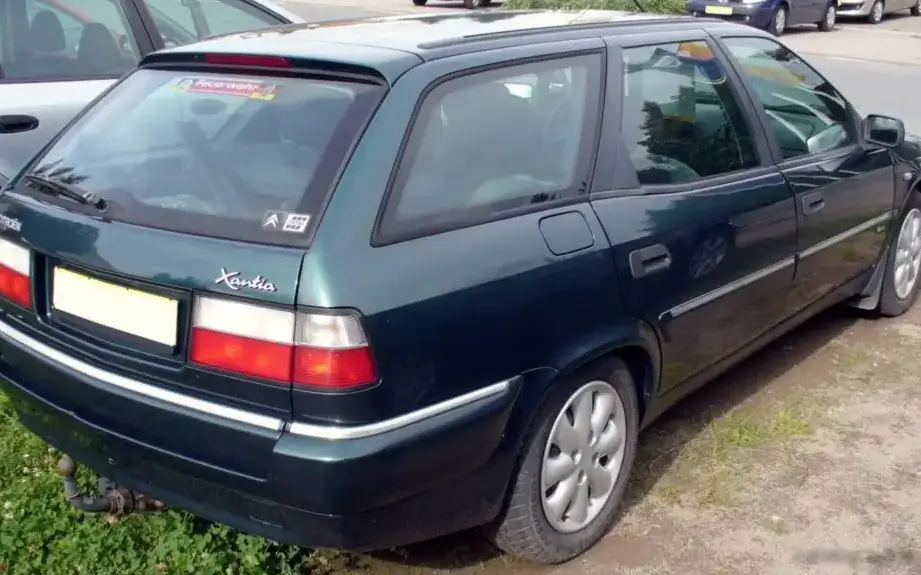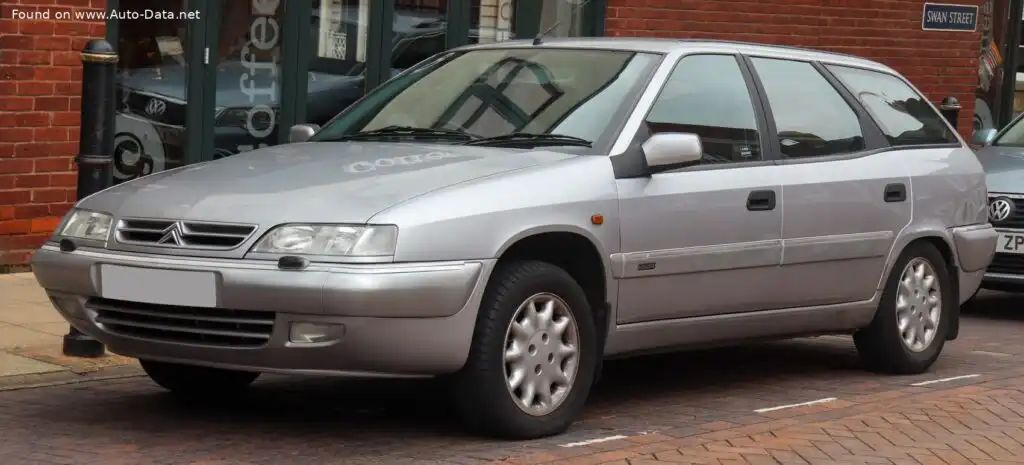
The Citroen Xantia Break (X2) 2.1 Turbo D12, produced from 1998 to 1999, represents a compelling blend of practicality, comfort, and diesel-fueled performance within the Xantia lineup. As a station wagon (estate) variant of the X2 generation, it offered increased cargo capacity compared to the sedan, catering to families and those requiring versatile load-carrying capabilities. This particular model, equipped with the 2.1-liter turbocharged diesel engine producing 109 horsepower, occupied a mid-range position in the Xantia Break portfolio, offering a balance between economy and usable power. It was positioned above the naturally aspirated diesel options and below the more potent petrol engines.
Technical Specifications
| Brand | Citroen |
| Model | Xantia |
| Generation | Xantia Break (X2) |
| Type (Engine) | 2.1 Turbo D12 (109 Hp) |
| Start of production | 1998 |
| End of production | 1999 |
| Powertrain Architecture | Internal Combustion engine |
| Body type | Station wagon (estate) |
| Seats | 5 |
| Doors | 5 |
| Fuel consumption (urban) | 9.5 l/100 km (24.8 US mpg, 29.7 UK mpg, 10.5 km/l) |
| Fuel consumption (extra urban) | 5.7 l/100 km (41.3 US mpg, 49.6 UK mpg, 17.5 km/l) |
| Fuel consumption (combined) | 7.1 l/100 km (33.1 US mpg, 39.8 UK mpg, 14.1 km/l) |
| Fuel Type | Diesel |
| Maximum speed | 185 km/h (114.95 mph) |
| Emission standard | Euro 2 |
| Weight-to-power ratio | 12.4 kg/Hp, 80.5 Hp/tonne |
| Weight-to-torque ratio | 5.8 kg/Nm, 173.6 Nm/tonne |
| Power | 109 Hp @ 4300 rpm |
| Power per litre | 52.2 Hp/l |
| Torque | 235 Nm @ 2000 rpm (173.33 lb.-ft. @ 2000 rpm) |
| Engine layout | Front, Transverse |
| Engine Model/Code | P8C XUD11BTE |
| Engine displacement | 2088 cm3 (127.42 cu. in.) |
| Number of cylinders | 4 |
| Engine configuration | Inline |
| Cylinder Bore | 85 mm (3.35 in.) |
| Piston Stroke | 92 mm (3.62 in.) |
| Compression ratio | 21:1 |
| Number of valves per cylinder | 3 |
| Fuel injection system | Precombustion chamber injection |
| Engine aspiration | Turbocharger, Intercooler |
| Engine oil capacity | 5 l (5.28 US qt | 4.4 UK qt) |
| Coolant | 11.4 l (12.05 US qt | 10.03 UK qt) |
| Kerb Weight | 1354 kg (2985.06 lbs.) |
| Max. weight | 2010 kg (4431.29 lbs.) |
| Max load | 656 kg (1446.23 lbs.) |
| Trunk (boot) space – minimum | 512 l (18.08 cu. ft.) |
| Trunk (boot) space – maximum | 1690 l (59.68 cu. ft.) |
| Fuel tank capacity | 65 l (17.17 US gal | 14.3 UK gal) |
| Max. roof load | 75 kg (165.35 lbs.) |
| Permitted trailer load with brakes (12%) | 1500 kg (3306.93 lbs.) |
| Permitted trailer load without brakes | 750 kg (1653.47 lbs.) |
| Length | 4712 mm (185.51 in.) |
| Width | 1760 mm (69.29 in.) |
| Width including mirrors | 1980 mm (77.95 in.) |
| Height | 1420 mm (55.91 in.) |
| Wheelbase | 2740 mm (107.87 in.) |
| Front track | 1502 mm (59.13 in.) |
| Rear (Back) track | 1478 mm (58.19 in.) |
| Front overhang | 983 mm (38.7 in.) |
| Rear overhang | 989 mm (38.94 in.) |
| Drivetrain Architecture | The Internal combustion engine (ICE) drives the front wheels of the vehicle. |
| Drive wheel | Front wheel drive |
| Number of gears and type of gearbox | 5 gears, manual transmission |
| Front suspension | Independent type McPherson, Wishbone |
| Rear suspension | Hydro-pneumatic element, Trailing arm |
| Front brakes | Ventilated discs |
| Rear brakes | Disc |
| Assisting systems | ABS (Anti-lock braking system) |
| Steering type | Steering rack and pinion |
| Power steering | Hydraulic Steering |
| Tires size | 205/60 R15 |
Powertrain & Engine Architecture
The heart of the Xantia Break 2.1 Turbo D12 is the P8C XUD11BTE engine, a 2.1-liter inline-four cylinder diesel. This engine utilizes precombustion chamber injection, a system common in older diesel designs, where fuel is injected into a precombustion chamber before entering the main cylinder. This aids in more complete combustion, particularly during cold starts. The engine is turbocharged and intercooled, boosting power output to 109 horsepower and 235 Nm (173 lb-ft) of torque. The turbocharger provides increased air intake, enhancing combustion efficiency and power delivery. The XUD engine family is known for its robustness and longevity, though it can be prone to issues with the Lucas rotary injection pump if not properly maintained. The engine is transversely mounted in the front of the vehicle, driving the front wheels. The transmission is a 5-speed manual gearbox, chosen for its simplicity and efficiency.
Driving Characteristics
The 2.1 Turbo D12 Xantia Break offers a comfortable and relaxed driving experience. While not a performance-oriented vehicle, the turbo diesel engine provides adequate power for everyday driving and highway cruising. The 235 Nm of torque is available from 2000 rpm, providing good pulling power for overtaking and carrying loads. Compared to the naturally aspirated diesel versions, the turbo variant offers a noticeable improvement in acceleration and responsiveness. However, it doesn’t match the performance of the petrol engines in the Xantia range. The 5-speed manual transmission is well-matched to the engine, offering smooth gear changes. The Citroen’s signature hydropneumatic suspension provides a remarkably smooth and comfortable ride, absorbing bumps and imperfections in the road with ease.
Equipment & Trim Levels
The Xantia Break 2.1 Turbo D12 typically came equipped with a reasonable level of standard features. These included central locking, power windows, power steering, and an anti-lock braking system (ABS). Interior upholstery was typically cloth, with options for upgraded materials available. The dashboard layout is functional and driver-focused, with clear instrumentation. Optional extras could include air conditioning, a sunroof, and upgraded audio systems. The Break (estate) body style itself added to the practicality with a large cargo area, making it a popular choice for families and those needing to transport bulky items.
Chassis & Braking
The Xantia Break features independent McPherson strut suspension at the front and a hydro-pneumatic suspension system at the rear. The hydro-pneumatic suspension is a key feature of Citroen vehicles, providing a self-leveling and exceptionally comfortable ride. The front brakes are ventilated discs, while the rear brakes are solid discs. The ABS system helps to maintain control during hard braking. The steering is a rack and pinion system with hydraulic power assistance, providing precise and responsive steering feel.
Market Reception & Comparison
The Xantia Break 2.1 Turbo D12 was generally well-received by automotive critics. It was praised for its comfortable ride, spacious interior, and fuel efficiency. However, some critics noted that the engine could be somewhat noisy and that the precombustion chamber diesel technology was becoming outdated. Compared to other trims in the Xantia lineup, the 2.1 Turbo D12 offered a good balance between performance and economy. It was more expensive than the naturally aspirated diesel models but less expensive than the petrol engines. Its fuel economy was significantly better than the petrol versions, making it a popular choice for those covering long distances.
Legacy
The Citroen Xantia Break 2.1 Turbo D12, while not a high-performance vehicle, has earned a reputation for reliability and durability. The XUD engine, despite its age, is known for its longevity when properly maintained. Today, these vehicles are relatively affordable on the used car market, making them an attractive option for those seeking a comfortable, practical, and economical estate car. However, potential buyers should be aware of the potential for issues with the Lucas rotary injection pump and the hydropneumatic suspension, which may require specialized maintenance.