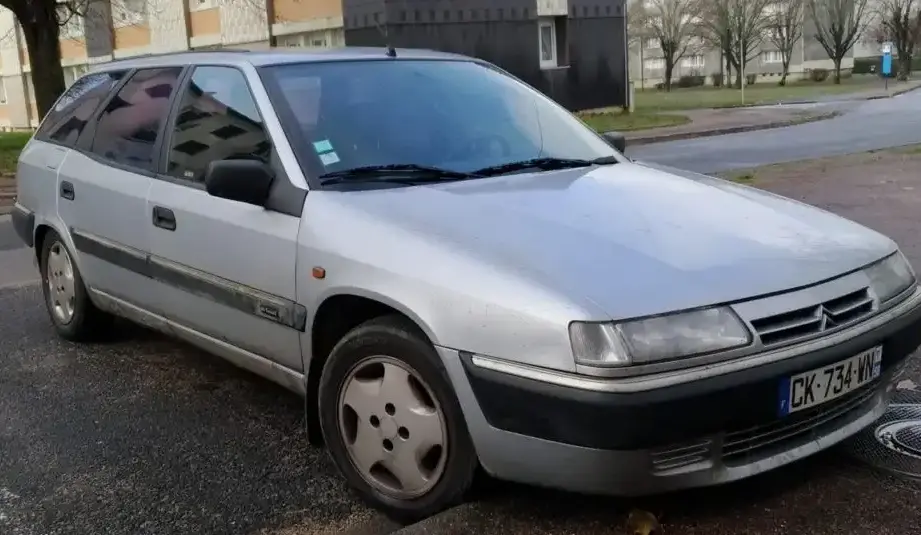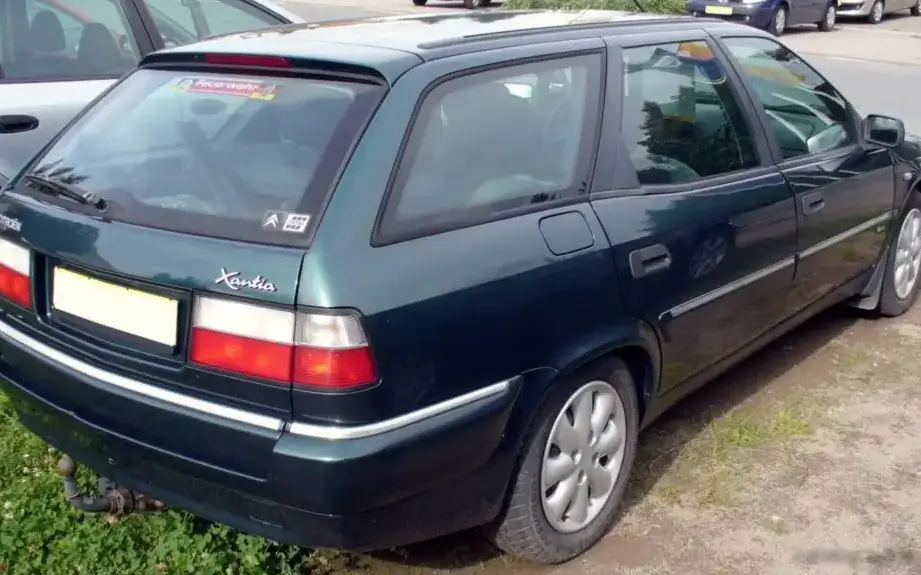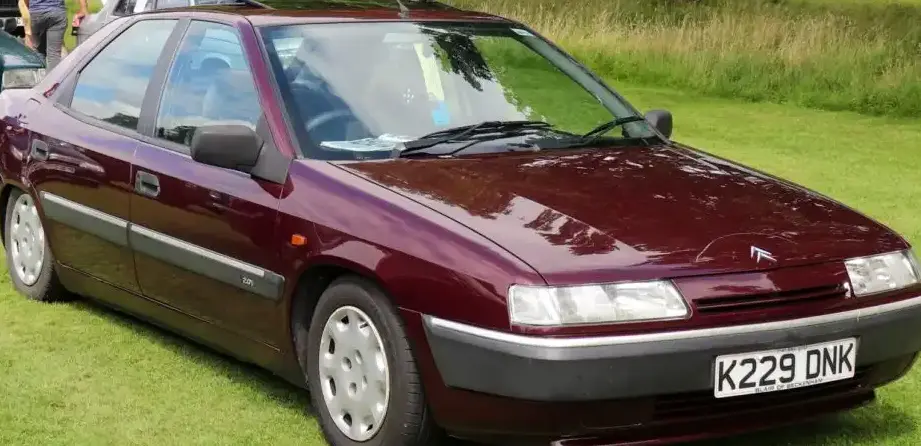
The Citroen Xantia 1.8i Automatic, produced between 1993 and 1997, represented a key offering within the first generation (X1) of Citroen’s large family car. Positioned as a comfortable and practical option, it slotted into the Xantia lineup below the more powerful 2.0i and V6 models, and above the base 1.6i. The Xantia, intended as a replacement for the aging BX, aimed to blend Citroen’s renowned hydropneumatic suspension technology with a more modern and aerodynamic design. This 1.8L automatic variant was particularly popular in European markets seeking a balance between fuel efficiency and ease of driving.
Technical Specifications
| Brand | Citroen |
| Model | Xantia |
| Generation | Xantia (X1) |
| Type (Engine) | 1.8i (101 Hp) Automatic |
| Start of production | 1993 |
| End of production | 1997 |
| Powertrain Architecture | Internal Combustion engine |
| Body type | Hatchback |
| Seats | 5 |
| Doors | 5 |
| Fuel consumption (combined) | 8.2 l/100 km (28.7 US mpg, 34.4 UK mpg, 12.2 km/l) |
| Fuel Type | Petrol (Gasoline) |
| Acceleration 0 – 100 km/h | 11 sec |
| Acceleration 0 – 62 mph | 11 sec |
| Acceleration 0 – 60 mph | 10.5 sec |
| Maximum speed | 187 km/h (116.2 mph) |
| Weight-to-power ratio | 11.6 kg/Hp, 85.9 Hp/tonne |
| Weight-to-torque ratio | 7.7 kg/Nm, 130.1 Nm/tonne |
| Power | 101 Hp @ 6000 rpm |
| Power per litre | 57.4 Hp/l |
| Torque | 153 Nm @ 3000 rpm (112.85 lb.-ft. @ 3000 rpm) |
| Engine layout | Front, Transverse |
| Engine Model/Code | BFX XU7JP |
| Engine displacement | 1761 cm3 (107.46 cu. in.) |
| Number of cylinders | 4 |
| Engine configuration | Inline |
| Cylinder Bore | 83 mm (3.27 in.) |
| Piston Stroke | 81.4 mm (3.2 in.) |
| Compression ratio | 9.3:1 |
| Number of valves per cylinder | 2 |
| Fuel injection system | Multi-port manifold injection |
| Engine aspiration | Naturally aspirated engine |
| Valvetrain | OHC |
| Engine oil capacity | 4.75 l (5.02 US qt | 4.18 UK qt) |
| Coolant | 8.3 l (8.77 US qt | 7.3 UK qt) |
| Kerb Weight | 1176 kg (2592.64 lbs.) |
| Max. weight | 1720 kg (3791.95 lbs.) |
| Max load | 544 kg (1199.31 lbs.) |
| Trunk (boot) space – minimum | 480 l (16.95 cu. ft.) |
| Trunk (boot) space – maximum | 878 l (31.01 cu. ft.) |
| Fuel tank capacity | 65 l (17.17 US gal | 14.3 UK gal) |
| Max. roof load | 75 kg (165.35 lbs.) |
| Permitted towbar download | 50 kg (110.23 lbs.) |
| Length | 4444 mm (174.96 in.) |
| Width | 1755 mm (69.09 in.) |
| Height | 1387 mm (54.61 in.) |
| Wheelbase | 2740 mm (107.87 in.) |
| Front track | 1482 mm (58.35 in.) |
| Rear (Back) track | 1442 mm (56.77 in.) |
| Front overhang | 931 mm (36.65 in.) |
| Rear overhang | 773 mm (30.43 in.) |
| Minimum turning circle | 11 m (36.09 ft.) |
| Drivetrain Architecture | Front wheel drive |
| Number of gears and type of gearbox | 4 gears, automatic transmission |
| Front suspension | Independent type McPherson, Wishbone |
| Rear suspension | Hydro-pneumatic element, Trailing arm |
| Front brakes | Ventilated discs |
| Rear brakes | Disc |
| Assisting systems | ABS (Anti-lock braking system) |
| Steering type | Steering rack and pinion |
| Power steering | Hydraulic Steering |
| Tires size | 175/70 R14 |
Powertrain & Engine Architecture
The Xantia 1.8i Automatic utilized the PSA XU7JP engine, a 1761cc inline-four cylinder petrol engine. This engine, often referred to by its BFX engine code, featured a single overhead camshaft (OHC) design and multi-point fuel injection. The XU7JP was a relatively robust and well-regarded engine within the PSA group, known for its durability and reasonable power output. The automatic transmission was a four-speed unit, designed to provide smooth and comfortable gear changes. While not known for its sportiness, this transmission was well-suited to the Xantia’s focus on ride comfort. The engine’s 9.3:1 compression ratio and relatively simple valvetrain contributed to its reliability, though it wasn’t particularly high-revving.
Driving Characteristics
The 101 horsepower and 113 lb-ft of torque produced by the 1.8L engine, coupled with the four-speed automatic transmission, resulted in a comfortable but not particularly brisk driving experience. Acceleration from 0-60 mph took around 10.5 seconds, and top speed was approximately 116 mph. The automatic transmission’s gear ratios were geared towards fuel efficiency and smooth cruising rather than outright performance. Compared to the manual transmission version of the same engine, the automatic offered less direct control and slightly slower acceleration. The Xantia’s hydropneumatic suspension, however, provided an exceptionally smooth ride, absorbing bumps and imperfections in the road with ease. This made the 1.8i Automatic a particularly appealing choice for long-distance driving.
Equipment & Trim Levels
The Xantia 1.8i Automatic typically came equipped with features such as power steering, central locking, electric front windows, and an AM/FM radio. Higher trim levels, often denoted by additions like ‘VSX’ or ‘Exclusive’, added features like alloy wheels, air conditioning, a sunroof, and upgraded interior upholstery. Interior trim generally consisted of cloth seats, with options for velour or leather on higher-spec models. The dashboard layout was functional and ergonomically designed, with easy-to-read gauges and intuitive controls. Optional extras included a CD changer, upgraded sound system, and metallic paint finishes.
Chassis & Braking
The Xantia featured independent front suspension with McPherson struts and wishbones, providing good handling and stability. The rear suspension utilized Citroen’s signature hydropneumatic system, offering a uniquely comfortable and self-leveling ride. Braking was accomplished via ventilated discs on the front wheels and solid discs on the rear. Anti-lock Braking System (ABS) was standard, enhancing safety and control during emergency braking situations. The Xantia’s chassis was designed to prioritize ride comfort, resulting in a slightly softer and more forgiving handling experience compared to some of its rivals.
Market Reception & Comparison
The Xantia 1.8i Automatic was generally well-received by automotive critics as a comfortable and practical family car. It was praised for its ride quality, spacious interior, and fuel efficiency. However, some critics noted its lack of outright performance compared to rivals like the Ford Mondeo or Opel Vectra. The 1.8L engine offered a good balance between economy and usability, making it a popular choice for drivers who prioritized comfort over sporty driving dynamics. Compared to the Xantia 2.0i, the 1.8i offered lower running costs but less power. The diesel variants (1.9TD) provided even better fuel economy but lacked the refinement of the petrol engines.
Legacy
The Citroen Xantia 1.8i Automatic, while not the most powerful or sporty version of the Xantia, remains a fondly remembered car for its comfortable ride and practical features. The XU7JP engine is known for its durability, and well-maintained examples can still be found on the road today. However, the hydropneumatic suspension requires regular maintenance and can be expensive to repair if neglected. In the used car market, the Xantia 1.8i Automatic represents an affordable and unique option for those seeking a comfortable and distinctive family car with a touch of French flair. Its blend of technology and practicality continues to appeal to enthusiasts and those seeking a classic alternative to more mainstream models.