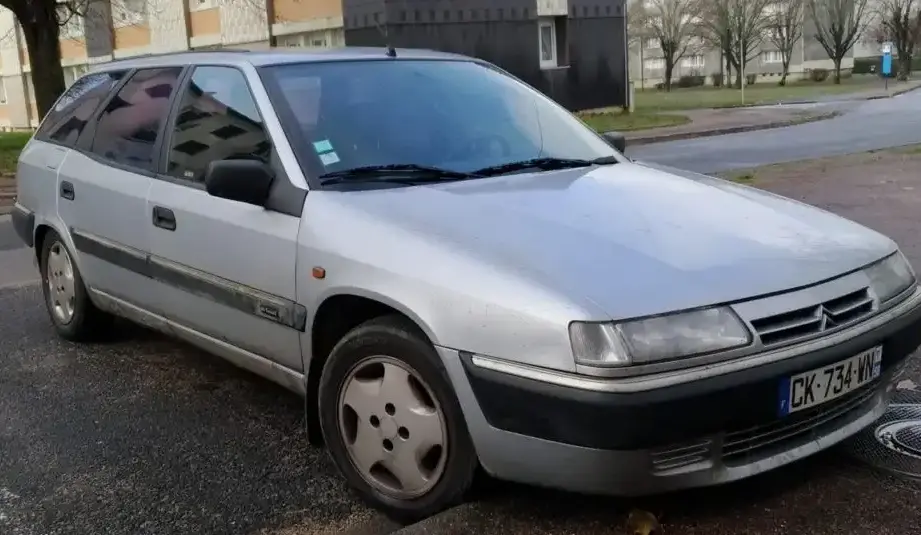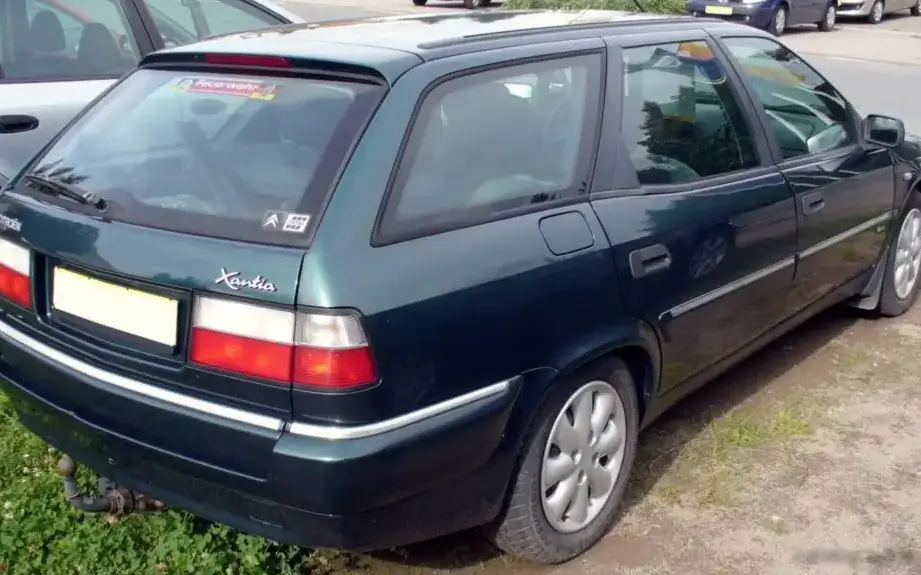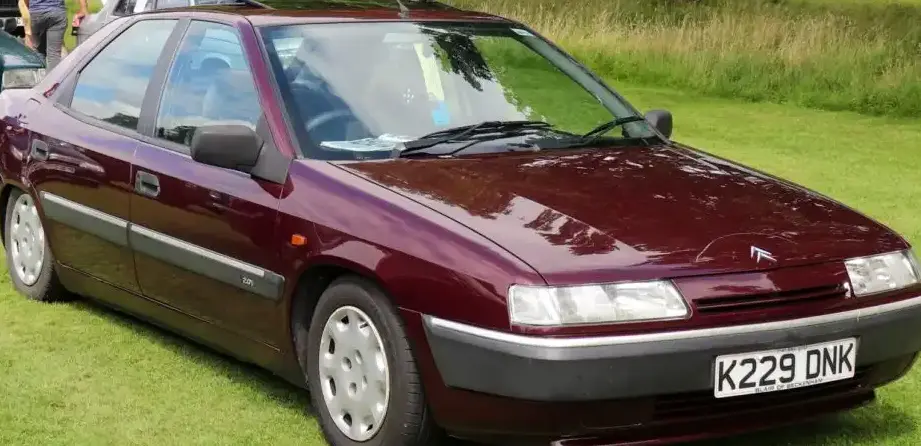
The Citroen Xantia 1.9D Automatic, produced between 1995 and 1996, represented an entry-level offering within the first generation (X1) Xantia lineup. Positioned as a comfortable and economical family hatchback, it aimed to provide a more accessible price point compared to the higher-performance petrol variants. The Xantia, launched in 1993, was Citroen’s replacement for the BX, continuing the brand’s tradition of innovative hydropneumatic suspension. This particular diesel-automatic combination was primarily targeted at buyers prioritizing fuel efficiency and ease of driving over outright performance, particularly in European markets where diesel engines held significant popularity.
Technical Specifications
| Brand | Citroen |
| Model | Xantia |
| Generation | Xantia (X1) |
| Type (Engine) | 1.9 D (68 Hp) Automatic |
| Start of production | 1995 |
| End of production | 1996 |
| Powertrain Architecture | Internal Combustion engine |
| Body type | Hatchback |
| Seats | 5 |
| Doors | 5 |
| Fuel consumption (combined) | 6.6 l/100 km (35.6 US mpg, 42.8 UK mpg, 15.2 km/l) |
| Fuel Type | Diesel |
| Acceleration 0 – 100 km/h | 18.2 sec |
| Acceleration 0 – 62 mph | 18.2 sec |
| Acceleration 0 – 60 mph | 17.3 sec |
| Maximum speed | 158 km/h (98.18 mph) |
| Weight-to-power ratio | 17.8 kg/Hp, 56.2 Hp/tonne |
| Weight-to-torque ratio | 10.1 kg/Nm, 99.2 Nm/tonne |
| Power | 68 Hp @ 4600 rpm |
| Power per litre | 35.7 Hp/l |
| Torque | 120 Nm @ 2000 rpm (88.51 lb.-ft. @ 2000 rpm) |
| Engine layout | Front, Transverse |
| Engine Model/Code | D9B XUD9A |
| Engine displacement | 1905 cm3 (116.25 cu. in.) |
| Number of cylinders | 4 |
| Engine configuration | Inline |
| Cylinder Bore | 83 mm (3.27 in.) |
| Piston Stroke | 88 mm (3.46 in.) |
| Compression ratio | 23:1 |
| Number of valves per cylinder | 2 |
| Fuel injection system | Precombustion chamber injection |
| Engine aspiration | Naturally aspirated engine |
| Valvetrain | OHC |
| Engine oil capacity | 4.25 l (4.49 US qt | 3.74 UK qt) |
| Coolant | 7.5 l (7.93 US qt | 6.6 UK qt) |
| Kerb Weight | 1210 kg (2667.59 lbs.) |
| Max. weight | 1745 kg (3847.07 lbs.) |
| Max load | 535 kg (1179.47 lbs.) |
| Trunk (boot) space – minimum | 480 l (16.95 cu. ft.) |
| Trunk (boot) space – maximum | 878 l (31.01 cu. ft.) |
| Fuel tank capacity | 65 l (17.17 US gal | 14.3 UK gal) |
| Max. roof load | 75 kg (165.35 lbs.) |
| Permitted towbar download | 50 kg (110.23 lbs.) |
| Length | 4444 mm (174.96 in.) |
| Width | 1755 mm (69.09 in.) |
| Height | 1387 mm (54.61 in.) |
| Wheelbase | 2740 mm (107.87 in.) |
| Front track | 1482 mm (58.35 in.) |
| Rear (Back) track | 1442 mm (56.77 in.) |
| Front overhang | 931 mm (36.65 in.) |
| Rear overhang | 773 mm (30.43 in.) |
| Minimum turning circle | 11 m (36.09 ft.) |
| Drivetrain Architecture | The Internal combustion engine (ICE) drives the front wheels of the vehicle. |
| Drive wheel | Front wheel drive |
| Number of gears and type of gearbox | 4 gears, automatic transmission |
| Front suspension | Independent type McPherson, Wishbone |
| Rear suspension | Hydro-pneumatic element, Trailing arm |
| Front brakes | Ventilated discs |
| Rear brakes | Disc |
| Assisting systems | ABS (Anti-lock braking system) |
| Steering type | Steering rack and pinion |
| Power steering | Hydraulic Steering |
| Tires size | 175/70 R14 |
Powertrain & Engine Architecture
The Xantia 1.9D Automatic utilized the D9B engine code, a member of the XUD9 family of diesel engines developed by Peugeot-Citroen. This 1.9-liter inline-four engine employed precombustion chamber injection, a system common in European diesels of the era. This system involved injecting fuel into a precombustion chamber connected to the main cylinder, promoting more complete combustion and reducing noise. The engine produced 68 horsepower at 4600 rpm and 120 Nm (88.51 lb-ft) of torque at 2000 rpm. The automatic transmission was a four-speed unit, chosen for its convenience rather than performance. It was a conventional hydraulic automatic, lacking the modern electronic controls found in later transmissions.
Driving Characteristics
The 1.9D Automatic Xantia offered a relaxed driving experience, prioritizing comfort over speed. Acceleration was notably slow, with a 0-60 mph time of around 17.3 seconds. The automatic transmission, while smooth, contributed to this lack of urgency. Gear ratios were optimized for fuel economy, resulting in a relatively high cruising speed but limited responsiveness during overtaking maneuvers. Compared to the 2.0-liter petrol versions, the 1.9D Automatic felt significantly less powerful. Even against other diesel Xantia models, such as the more potent 1.9 TDI, it lagged in terms of performance. However, the hydropneumatic suspension provided a uniquely comfortable ride, absorbing bumps and imperfections in the road with ease.
Equipment & Trim Levels
The 1.9D Automatic Xantia typically came with a modest level of standard equipment. This included central locking, power steering, and basic cloth upholstery. Air conditioning was often an optional extra, as were features like electric windows and a radio/cassette player. The interior design was functional and straightforward, reflecting the car’s focus on practicality. Trim levels were relatively simple, with the 1.9D Automatic generally representing the entry point to the Xantia range. Higher-spec models featured upgraded upholstery, additional comfort features, and more sophisticated audio systems.
Chassis & Braking
The Xantia’s chassis was a key element of its appeal. The front suspension utilized independent McPherson struts and wishbones, while the rear employed Citroen’s signature hydropneumatic suspension. This system allowed for self-leveling and adjustable ride height, providing exceptional ride comfort and handling. The 1.9D Automatic models typically featured ventilated disc brakes at the front and solid discs at the rear. Anti-lock braking system (ABS) was standard, enhancing safety. The suspension was tuned to prioritize comfort, with a softer setup compared to the sportier petrol variants.
Market Reception & Comparison
The Citroen Xantia 1.9D Automatic was generally well-received as a practical and economical family car. Critics praised its comfortable ride and fuel efficiency, but noted its lack of performance. Compared to the petrol-powered Xantias, the diesel model offered significantly better fuel economy but at the cost of acceleration and refinement. The 1.9 TDI variant provided a more compelling balance of performance and economy, making it a popular alternative. In terms of reliability, the XUD9 engine was generally considered robust, but the automatic transmission could be prone to issues if not properly maintained.
Legacy
The Citroen Xantia 1.9D Automatic, while not the most exciting version of the Xantia, remains a fondly remembered car for its comfort and practicality. The XUD9 engine is known for its durability, and well-maintained examples can still be found on the road today. In the used car market, these models are typically affordable and represent a good value for those seeking a comfortable and economical classic. The hydropneumatic suspension, while requiring occasional maintenance, continues to provide a unique and enjoyable driving experience. The Xantia, as a whole, is remembered as a significant car in Citroen’s history, showcasing the brand’s commitment to innovation and comfort.