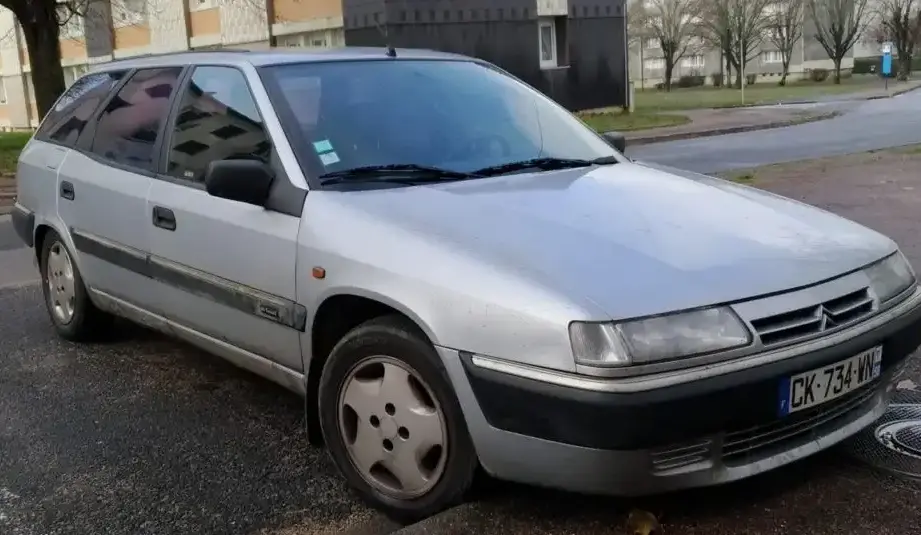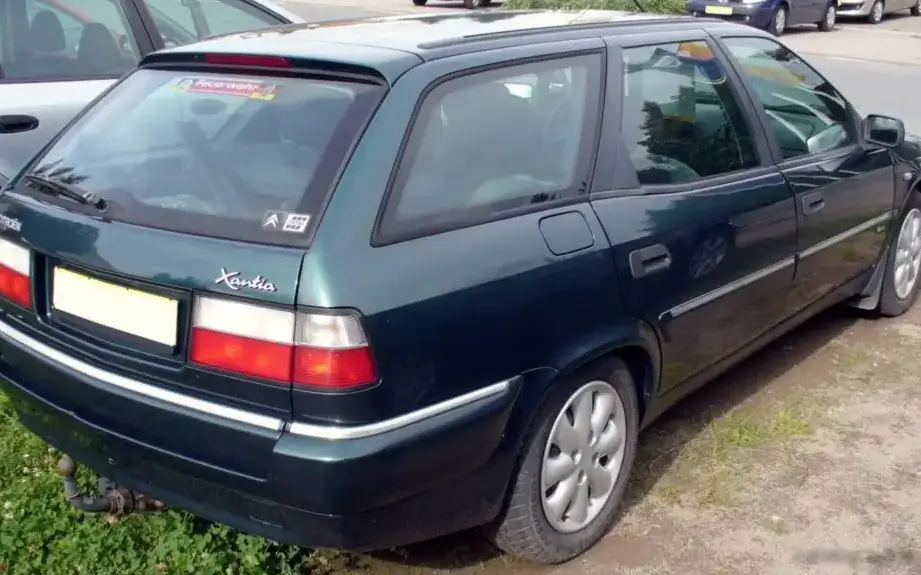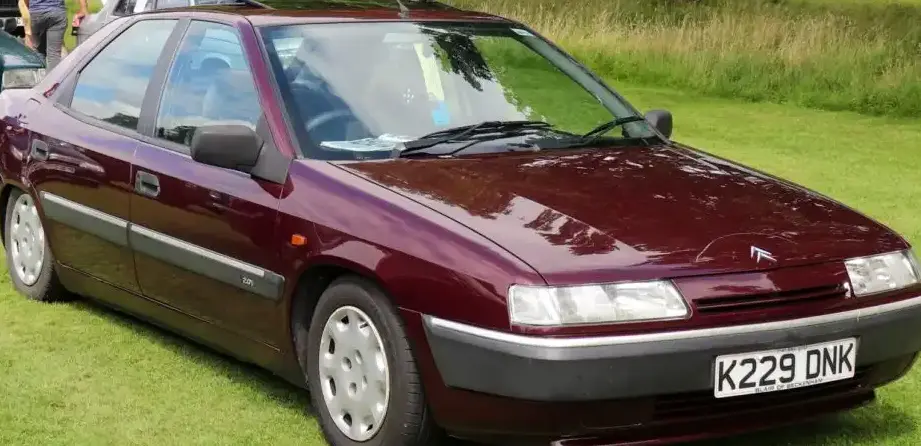
The Citroen Xantia 1.9D, produced between 1993 and 1995, represented an entry-level offering within the first generation (X1) Xantia lineup. Positioned as a practical and economical choice, it catered to buyers prioritizing fuel efficiency and affordability over outright performance. The Xantia itself was Citroen’s replacement for the BX, continuing the brand’s tradition of innovative hydropneumatic suspension and distinctive styling. This 1.9D variant, with its 69 horsepower output and automatic transmission, aimed to provide comfortable and reliable transportation for families and commuters.
Technical Specifications
| Brand | Citroen |
| Model | Xantia |
| Generation | Xantia (X1) |
| Type (Engine) | 1.9 D (69 Hp) |
| Start of production | 1993 |
| End of production | 1995 |
| Powertrain Architecture | Internal Combustion engine |
| Body type | Hatchback |
| Seats | 5 |
| Doors | 5 |
| Fuel consumption (combined) | 6.2 l/100 km (37.9 US mpg, 45.6 UK mpg, 16.1 km/l) |
| Fuel Type | Diesel |
| Acceleration 0 – 100 km/h | 23.4 sec |
| Acceleration 0 – 62 mph | 23.4 sec |
| Acceleration 0 – 60 mph | 22.2 sec |
| Maximum speed | 154 km/h (95.69 mph) |
| Weight-to-power ratio | 17.5 kg/Hp, 57 Hp/tonne |
| Weight-to-torque ratio | 10.1 kg/Nm, 99.2 Nm/tonne |
| Power | 69 Hp @ 4600 rpm |
| Power per litre | 36.2 Hp/l |
| Torque | 120 Nm @ 2000 rpm (88.51 lb.-ft. @ 2000 rpm) |
| Engine layout | Front, Transverse |
| Engine Model/Code | D9B XUD9A |
| Engine displacement | 1905 cm3 (116.25 cu. in.) |
| Number of cylinders | 4 |
| Engine configuration | Inline |
| Cylinder Bore | 83 mm (3.27 in.) |
| Piston Stroke | 88 mm (3.46 in.) |
| Compression ratio | 23:1 |
| Number of valves per cylinder | 2 |
| Fuel injection system | Precombustion chamber injection |
| Engine aspiration | Naturally aspirated engine |
| Valvetrain | OHC |
| Engine oil capacity | 5.1 l (5.39 US qt | 4.49 UK qt) |
| Coolant | 7.5 l (7.93 US qt | 6.6 UK qt) |
| Kerb Weight | 1210 kg (2667.59 lbs.) |
| Max. weight | 1745 kg (3847.07 lbs.) |
| Max load | 535 kg (1179.47 lbs.) |
| Trunk (boot) space – minimum | 480 l (16.95 cu. ft.) |
| Trunk (boot) space – maximum | 878 l (31.01 cu. ft.) |
| Fuel tank capacity | 65 l (17.17 US gal | 14.3 UK gal) |
| Max. roof load | 75 kg (165.35 lbs.) |
| Permitted towbar download | 50 kg (110.23 lbs.) |
| Length | 4444 mm (174.96 in.) |
| Width | 1755 mm (69.09 in.) |
| Height | 1387 mm (54.61 in.) |
| Wheelbase | 2740 mm (107.87 in.) |
| Front track | 1482 mm (58.35 in.) |
| Rear (Back) track | 1442 mm (56.77 in.) |
| Front overhang | 931 mm (36.65 in.) |
| Rear overhang | 773 mm (30.43 in.) |
| Minimum turning circle | 11 m (36.09 ft.) |
| Drivetrain Architecture | The Internal combustion engine (ICE) drives the front wheels of the vehicle. |
| Drive wheel | Front wheel drive |
| Number of gears and type of gearbox | 4 gears, automatic transmission |
| Front suspension | Independent type McPherson, Wishbone |
| Rear suspension | Hydro-pneumatic element, Trailing arm |
| Front brakes | Ventilated discs |
| Rear brakes | Disc |
| Assisting systems | ABS (Anti-lock braking system) |
| Steering type | Steering rack and pinion |
| Power steering | Hydraulic Steering |
| Tires size | 175/70 R14 |
Powertrain & Engine Architecture
The heart of the Xantia 1.9D is the D9B XUD9A engine, a 1.9-liter inline-four diesel. This engine, a mainstay of Citroen and Peugeot vehicles of the era, utilizes precombustion chamber injection. This system, while less sophisticated than direct injection, offered a good balance of fuel economy and refinement for its time. The XUD9A engine is known for its durability, though it can be prone to wear in the injection pump and precombustion chambers with high mileage. The engine produces 69 horsepower at 4600 rpm and 120 Nm (88.51 lb-ft) of torque at 2000 rpm. The automatic transmission is a four-speed unit, designed to provide smooth, if not particularly sporty, gear changes. It was a relatively simple automatic, lacking the electronic controls found in more modern transmissions.
Driving Characteristics
The Xantia 1.9D Automatic offered a comfortable, but unhurried, driving experience. Acceleration was modest, with a 0-60 mph time of around 22.2 seconds. The automatic transmission, while convenient, did sap some power from the engine, making it feel slower than the available manual transmission versions. The gear ratios were optimized for fuel economy rather than performance. However, the Xantia’s renowned hydropneumatic suspension provided a remarkably smooth ride, absorbing bumps and imperfections in the road with ease. This made it a particularly comfortable cruiser, even on long journeys. Compared to the more powerful 2.0i or V6 Xantia models, the 1.9D Automatic was significantly slower, but it offered a substantial fuel economy advantage.
Equipment & Trim Levels
The 1.9D Automatic typically came with a fairly basic level of equipment. Standard features included central locking, power steering, and the aforementioned hydropneumatic suspension. Interior upholstery was typically cloth, and the dashboard featured a functional, if somewhat dated, design. Optional extras included air conditioning, electric windows, and a sunroof. The trim level was generally considered entry-level, appealing to buyers seeking a practical and affordable family car. Higher trim levels, available with the more powerful engines, offered features like leather upholstery, upgraded audio systems, and alloy wheels.
Chassis & Braking
The Xantia 1.9D featured independent McPherson strut front suspension and a hydro-pneumatic rear suspension. The hydropneumatic system allowed for self-leveling and adjustable ride height, contributing to the car’s exceptional ride quality. Braking consisted of ventilated discs at the front and solid discs at the rear. An Anti-lock Braking System (ABS) was standard, enhancing safety. The chassis was designed to provide a good balance of handling and comfort, though it wasn’t particularly sporty. The relatively light weight of the 1.9D model, at 1210 kg (2667.59 lbs), helped to mitigate the effects of the low horsepower output.
Market Reception & Comparison
The Xantia 1.9D Automatic was generally well-received as a practical and economical family car. Critics praised its comfortable ride and fuel efficiency, but noted its lack of performance. Compared to other cars in its class, such as the Ford Mondeo or Vauxhall/Opel Vectra, the Xantia offered a unique driving experience thanks to its hydropneumatic suspension. However, the Mondeo and Vectra often provided more powerful engine options and a more modern interior. The 1.9D offered better fuel economy than the petrol-powered Xantia variants, but the higher-spec models with the 2.0i or V6 engines were favored by those prioritizing performance.
Legacy
The Citroen Xantia 1.9D Automatic, while not the most exciting version of the Xantia, has proven to be a durable and reliable car. The XUD9A engine is known for its longevity, and the hydropneumatic suspension, while requiring occasional maintenance, can provide years of comfortable service. Today, these cars are relatively rare, and well-maintained examples are sought after by enthusiasts who appreciate their unique character and engineering. Parts availability can be a challenge, but a dedicated community of Citroen owners helps to keep these cars on the road. The Xantia 1.9D represents a unique blend of French innovation and practicality, offering a driving experience that is unlike anything else in its class.