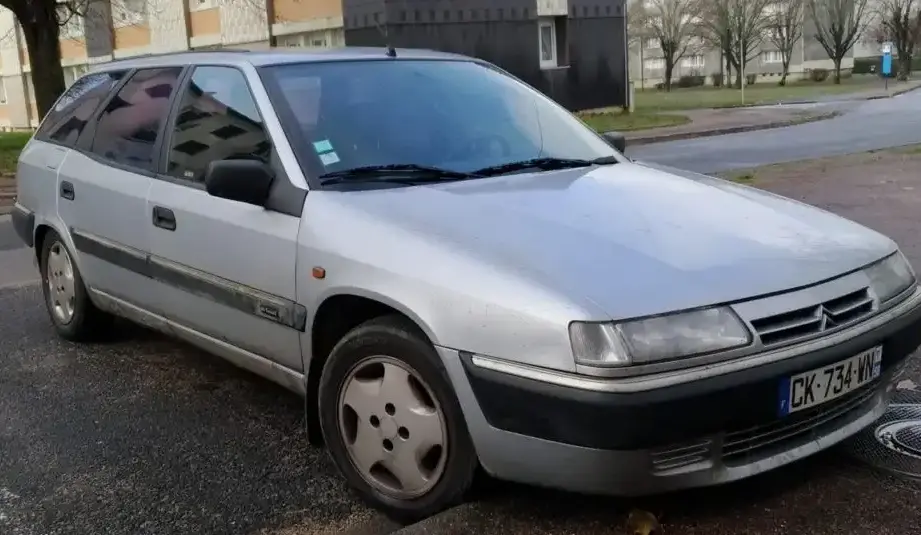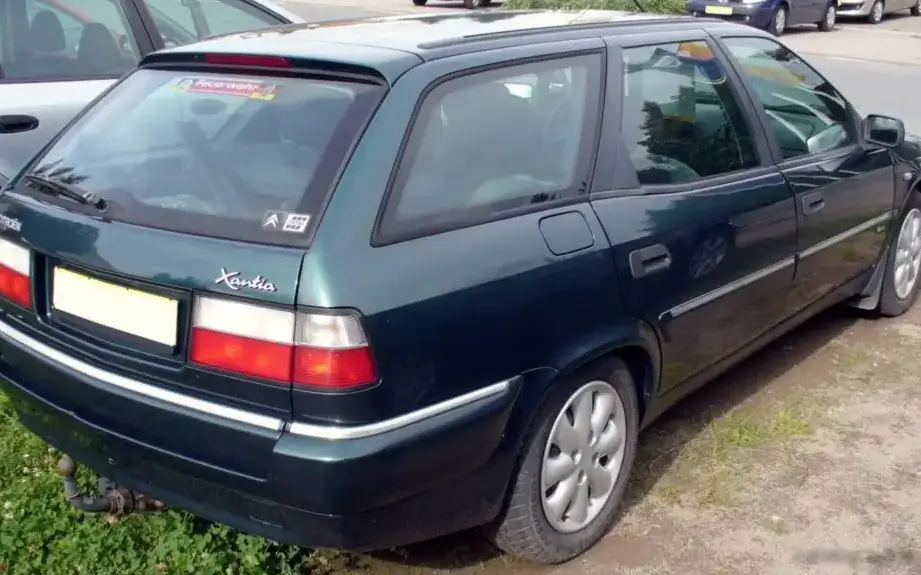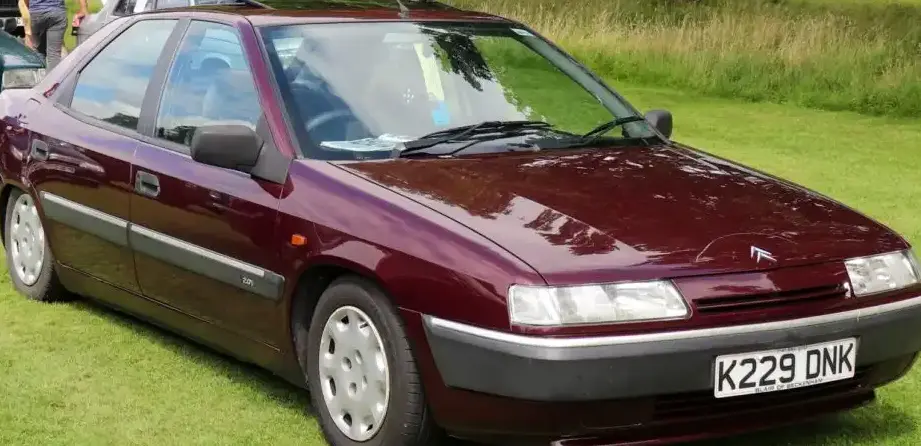
The Citroen Xantia 2.0i Automatic, produced between 1995 and 1997, represented a mid-range offering within the first generation (X1) Xantia lineup. Positioned above the base 1.6-liter models and below the more performance-oriented 2.0i 16V and V6 variants, the 2.0i Automatic aimed to provide a comfortable and refined driving experience for buyers prioritizing ease of use over outright speed. The Xantia itself was Citroen’s replacement for the BX, continuing the brand’s tradition of innovative hydropneumatic suspension and distinctive styling. It was primarily marketed in Europe, offering a blend of practicality, comfort, and technology that appealed to families and those seeking a sophisticated mid-size vehicle.
Technical Specifications
| Brand | Citroen |
| Model | Xantia |
| Generation | Xantia (X1) |
| Type (Engine) | 2.0i (121 Hp) Automatic |
| Start of production | 1995 |
| End of production | 1997 |
| Powertrain Architecture | Internal Combustion engine |
| Body type | Hatchback |
| Seats | 5 |
| Doors | 5 |
| Fuel consumption (urban) | 12.5 l/100 km (18.8 US mpg, 22.6 UK mpg, 8 km/l) |
| Fuel consumption (extra urban) | 6.6 l/100 km (35.6 US mpg, 42.8 UK mpg, 15.2 km/l) |
| Fuel consumption (combined) | 8.6 l/100 km (27.4 US mpg, 32.8 UK mpg, 11.6 km/l) |
| Fuel Type | Petrol (Gasoline) |
| Maximum speed | 195 km/h (121.17 mph) |
| Weight-to-power ratio | 10.2 kg/Hp, 97.7 Hp/tonne |
| Weight-to-torque ratio | 6.9 kg/Nm, 144.6 Nm/tonne |
| Power | 121 Hp @ 5750 rpm |
| Power per litre | 60.6 Hp/l |
| Torque | 179 Nm @ 2750 rpm (132.02 lb.-ft. @ 2750 rpm) |
| Engine layout | Front, Transverse |
| Engine Model/Code | RFX XU10J2C |
| Engine displacement | 1998 cm3 (121.93 cu. in.) |
| Number of cylinders | 4 |
| Engine configuration | Inline |
| Cylinder Bore | 86 mm (3.39 in.) |
| Piston Stroke | 86 mm (3.39 in.) |
| Compression ratio | 9.5:1 |
| Number of valves per cylinder | 2 |
| Fuel injection system | Multi-port manifold injection |
| Engine aspiration | Naturally aspirated engine |
| Valvetrain | OHC |
| Engine oil capacity | 4.75 l (5.02 US qt | 4.18 UK qt) |
| Coolant | 8.3 l (8.77 US qt | 7.3 UK qt) |
| Kerb Weight | 1238 kg (2729.32 lbs.) |
| Max. weight | 1800 kg (3968.32 lbs.) |
| Max load | 562 kg (1239 lbs.) |
| Trunk (boot) space – minimum | 480 l (16.95 cu. ft.) |
| Trunk (boot) space – maximum | 878 l (31.01 cu. ft.) |
| Fuel tank capacity | 65 l (17.17 US gal | 14.3 UK gal) |
| Max. roof load | 75 kg (165.35 lbs.) |
| Permitted towbar download | 50 kg (110.23 lbs.) |
| Length | 4444 mm (174.96 in.) |
| Width | 1755 mm (69.09 in.) |
| Height | 1387 mm (54.61 in.) |
| Wheelbase | 2740 mm (107.87 in.) |
| Front track | 1482 mm (58.35 in.) |
| Rear (Back) track | 1442 mm (56.77 in.) |
| Front overhang | 931 mm (36.65 in.) |
| Rear overhang | 773 mm (30.43 in.) |
| Minimum turning circle | 11 m (36.09 ft.) |
| Drivetrain Architecture | ICE to Front Wheels |
| Drive wheel | Front wheel drive |
| Number of gears | 4 |
| Gearbox type | automatic transmission |
| Front suspension | Independent type McPherson, Transverse stabilizer |
| Rear suspension | Hydro-pneumatic element, Trailing arm |
| Front brakes | Ventilated discs |
| Rear brakes | Disc |
| Assisting systems | ABS (Anti-lock braking system) |
| Steering type | Steering rack and pinion |
| Power steering | Hydraulic Steering |
| Tires size | 195/55 R15 |
| Wheel rims size | 15 |
Powertrain & Engine Architecture
The Citroen Xantia 2.0i Automatic utilized the PSA XU10J2C engine, a 1998cc inline-four cylinder petrol engine. This engine was a mainstay of PSA (Peugeot Société Anonyme) vehicles for many years, known for its robustness and relatively simple design. The RFX engine code specifically denotes the version fitted to the Xantia. It featured a single overhead camshaft (OHC) design operating two valves per cylinder. Fuel delivery was managed by a multi-port fuel injection system, providing adequate performance for the era. The engine produced 121 horsepower at 5750 rpm and 179 Nm (132 lb-ft) of torque at 2750 rpm. Paired with this engine was a four-speed automatic transmission, offering smooth shifts but lacking the efficiency of more modern gearboxes. This transmission was designed to prioritize comfort over sporty performance.
Driving Characteristics
The Xantia 2.0i Automatic offered a comfortable and relaxed driving experience. While not particularly quick, the engine provided sufficient power for everyday driving and overtaking maneuvers. The automatic transmission, while smooth, did detract from the engine’s potential, resulting in slightly slower acceleration compared to the manual transmission versions. The gear ratios were geared towards fuel economy and cruising comfort rather than outright performance. The Xantia’s signature hydropneumatic suspension played a crucial role in the driving experience, providing a remarkably smooth and controlled ride, even on uneven surfaces. This suspension system effectively isolated passengers from road imperfections, contributing to the car’s reputation for comfort.
Equipment & Trim Levels
The 2.0i Automatic trim typically included features such as central locking, electric front windows, power steering, and an AM/FM radio. Higher-spec versions could be equipped with options like air conditioning, alloy wheels, a sunroof, and upgraded interior trim. Interior upholstery was generally cloth, with options for velour or leather available at extra cost. The dashboard layout was functional and ergonomically designed, with easy-to-read gauges and intuitive controls. The Xantia aimed for a balance between comfort and practicality, offering a well-equipped interior without being overly luxurious.
Chassis & Braking
The Xantia featured an independent McPherson strut suspension at the front, providing good handling and stability. The rear suspension utilized Citroen’s innovative hydropneumatic system, offering self-leveling and exceptional ride comfort. Braking duties were handled by ventilated discs at the front and solid discs at the rear. An Anti-lock Braking System (ABS) was standard, enhancing safety and control during emergency braking situations. The steering was a rack and pinion system with hydraulic power assistance, providing light and precise steering feel.
Market Reception & Comparison
The Xantia 2.0i Automatic was generally well-received by automotive critics, who praised its comfortable ride, spacious interior, and innovative technology. However, some reviewers noted that the automatic transmission dulled the engine’s performance and that fuel economy was not particularly impressive. Compared to the 2.0i 16V, the automatic version offered less performance but greater ease of use. The 1.6-liter models were more affordable but lacked the power and refinement of the 2.0i. The Xantia competed with other mid-size hatchbacks such as the Ford Mondeo, Vauxhall/Opel Vectra, and Renault Laguna.
Legacy
The Xantia, and specifically the 2.0i Automatic variant, has developed a loyal following among enthusiasts who appreciate its unique blend of comfort, technology, and practicality. The XU10J2C engine is known for its durability, although regular maintenance is essential to prevent issues such as oil leaks and timing belt failure. The hydropneumatic suspension requires specialized knowledge and can be expensive to repair, but when properly maintained, it provides an unparalleled ride quality. Today, well-maintained Xantia 2.0i Automatics are becoming increasingly sought after by classic car collectors and those looking for a comfortable and distinctive alternative to more mainstream vehicles. Finding parts can be challenging, but a dedicated network of enthusiasts and specialist suppliers exists to support owners.