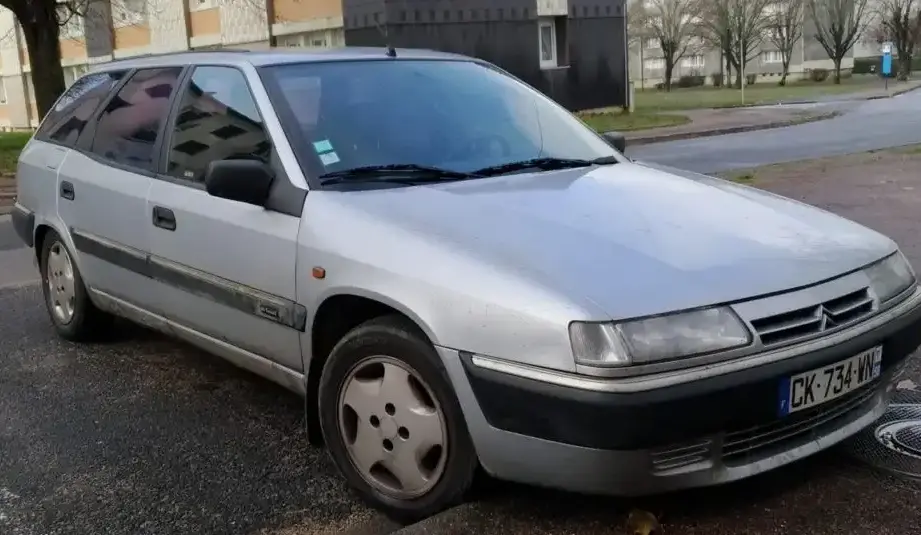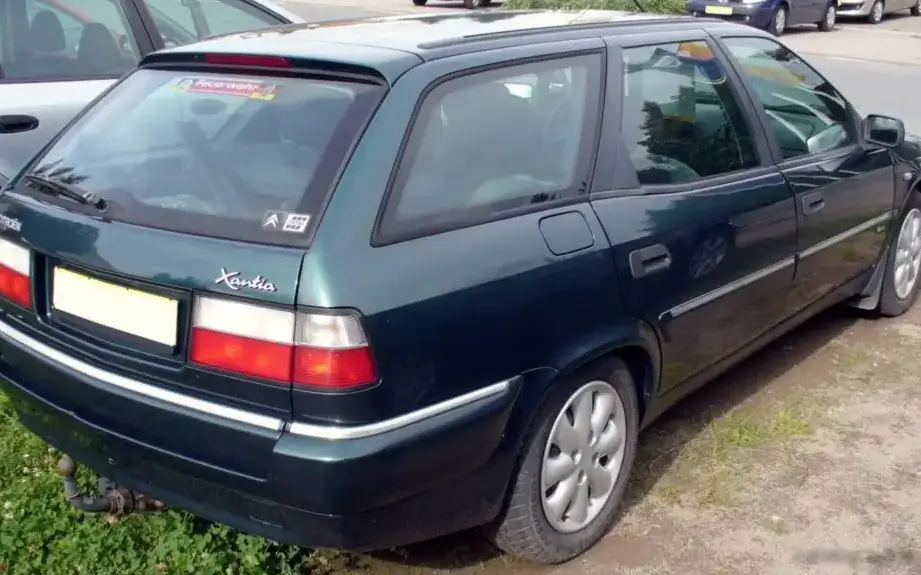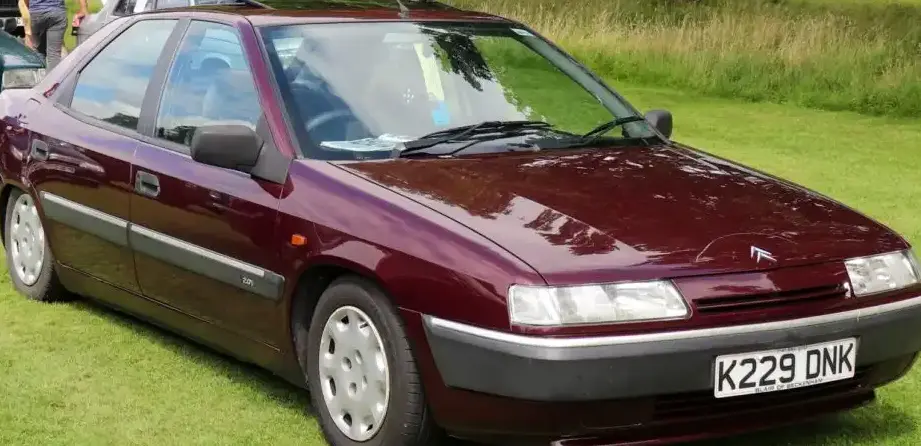
The Citroen Xantia 2.0i 16V, produced between 1993 and 1994, represented a significant offering within the first generation (X1) of the Xantia line. Positioned as a mid-range to upper-mid-range trim, it aimed to provide a blend of performance and comfort characteristic of Citroen, leveraging the innovative hydropneumatic suspension system the brand was renowned for. The Xantia itself was designed as a replacement for the BX, aiming for a more modern and aerodynamic design while retaining the comfort and practicality expected of a large family car. It was primarily marketed in Europe, offering a distinctive alternative to more conventional hatchbacks and sedans.
Technical Specifications
| Brand | Citroen |
| Model | Xantia |
| Generation | Xantia (X1) |
| Type (Engine) | 2.0i 16V (152 Hp) |
| Start of production | 1993 |
| End of production | 1994 |
| Powertrain Architecture | Internal Combustion engine |
| Body type | Hatchback |
| Seats | 5 |
| Doors | 5 |
| Fuel consumption (urban) | 12.2 l/100 km (19.3 US mpg, 23.2 UK mpg, 8.2 km/l) |
| Fuel consumption (extra urban) | 6.4 l/100 km (36.8 US mpg, 44.1 UK mpg, 15.6 km/l) |
| Fuel consumption (combined) | 8.9 l/100 km (26.4 US mpg, 31.7 UK mpg, 11.2 km/l) |
| Fuel Type | Petrol (Gasoline) |
| Acceleration 0 – 100 km/h | 9.6 sec |
| Acceleration 0 – 62 mph | 9.6 sec |
| Acceleration 0 – 60 mph | 9.1 sec |
| Maximum speed | 213 km/h (132.35 mph) |
| Weight-to-power ratio | 8.6 kg/Hp, 116.7 Hp/tonne |
| Weight-to-torque ratio | 7.1 kg/Nm, 140.6 Nm/tonne |
| Power | 152 Hp @ 6500 rpm |
| Power per litre | 76.1 Hp/l |
| Torque | 183 Nm @ 3500 rpm (134.97 lb.-ft. @ 3500 rpm) |
| Engine layout | Front, Transverse |
| Engine Model/Code | RFY XU10 |
| Engine displacement | 1998 cm3 (121.93 cu. in.) |
| Number of cylinders | 4 |
| Engine configuration | Inline |
| Cylinder Bore | 86 mm (3.39 in.) |
| Piston Stroke | 86 mm (3.39 in.) |
| Compression ratio | 10.4:1 |
| Number of valves per cylinder | 4 |
| Fuel injection system | Multi-port manifold injection |
| Engine aspiration | Naturally aspirated engine |
| Valvetrain | DOHC |
| Engine oil capacity | 4.25 l (4.49 US qt | 3.74 UK qt) |
| Coolant | 8.8 l (9.3 US qt | 7.74 UK qt) |
| Kerb Weight | 1302 kg (2870.42 lbs.) |
| Max. weight | 1835 kg (4045.48 lbs.) |
| Max load | 533 kg (1175.06 lbs.) |
| Trunk (boot) space – minimum | 480 l (16.95 cu. ft.) |
| Trunk (boot) space – maximum | 878 l (31.01 cu. ft.) |
| Fuel tank capacity | 65 l (17.17 US gal | 14.3 UK gal) |
| Max. roof load | 75 kg (165.35 lbs.) |
| Permitted towbar download | 50 kg (110.23 lbs.) |
| Length | 4444 mm (174.96 in.) |
| Width | 1755 mm (69.09 in.) |
| Height | 1387 mm (54.61 in.) |
| Wheelbase | 2740 mm (107.87 in.) |
| Front track | 1482 mm (58.35 in.) |
| Rear (Back) track | 1442 mm (56.77 in.) |
| Front overhang | 931 mm (36.65 in.) |
| Rear overhang | 773 mm (30.43 in.) |
| Minimum turning circle | 11 m (36.09 ft.) |
| Drivetrain Architecture | The Internal combustion engine (ICE) drives the front wheels of the vehicle. |
| Drive wheel | Front wheel drive |
| Number of gears and type of gearbox | 5 gears, manual transmission |
| Front suspension | Independent type McPherson, Wishbone |
| Rear suspension | Hydro-pneumatic element, Trailing arm |
| Front brakes | Ventilated discs |
| Rear brakes | Disc |
| Assisting systems | ABS (Anti-lock braking system) |
| Steering type | Steering rack and pinion |
| Power steering | Hydraulic Steering |
| Tires size | 205/55 R15 |
Powertrain & Engine Architecture
The heart of the Xantia 2.0i 16V is the RFY variant of the Peugeot-Citroen (PSA) XU10 engine. This 1998cc, inline-four cylinder engine is a naturally aspirated unit featuring a dual overhead camshaft (DOHC) design and multi-port fuel injection. The 16-valve configuration (four valves per cylinder) contributes to its relatively high power output for its displacement. The XU10 engine family is known for its robustness and relatively simple design, making it a popular choice for both factory performance and aftermarket modifications. The RFY version specifically produced 152 horsepower at 6500 rpm and 183 Nm (135 lb-ft) of torque at 3500 rpm. The engine’s design prioritized smooth power delivery over outright peak performance. The Xantia 2.0i 16V was typically paired with a 5-speed manual transmission, although an automatic transmission option was also available, albeit less common. The automatic transmission was a conventional torque converter type, offering smooth shifts but at the expense of some performance and fuel economy.
Driving Characteristics
The Xantia 2.0i 16V offered a comfortable and refined driving experience, largely thanks to Citroen’s signature hydropneumatic suspension. This system provided a remarkably smooth ride, absorbing bumps and imperfections in the road surface with ease. The 2.0-liter engine provided adequate performance for everyday driving, with a 0-60 mph time of around 9.1 seconds and a top speed of 132 mph. However, it wasn’t a particularly sporty car. Compared to the more powerful V6 versions of the Xantia, the 2.0i 16V felt less responsive, especially at higher speeds. The automatic transmission, while convenient, further dulled the driving experience, resulting in slower acceleration and a less engaging feel. The gear ratios were tuned for fuel efficiency and comfort rather than outright performance. Steering was light and precise, contributing to the car’s ease of maneuverability.
Equipment & Trim Levels
The Xantia 2.0i 16V typically came equipped with a reasonable level of standard features. These included central locking, power windows, power steering, and an AM/FM radio. Higher trim levels offered options such as air conditioning, alloy wheels, a sunroof, and upgraded interior upholstery. The interior was generally well-appointed, with comfortable seats and a functional dashboard layout. The Xantia’s interior design was modern for its time, featuring a driver-focused cockpit and intuitive controls. Optional extras could significantly enhance the car’s comfort and convenience, but also added to its overall cost.
Chassis & Braking
The Xantia featured an independent front suspension with McPherson struts and wishbones, providing good handling and stability. The rear suspension utilized Citroen’s innovative hydropneumatic system, which offered self-leveling and adjustable ride height. Braking duties were handled by ventilated discs at the front and solid discs at the rear. Anti-lock braking system (ABS) was standard, enhancing safety and control during emergency braking situations. The chassis was designed to provide a balance between comfort and handling, prioritizing ride quality over sharp cornering performance. The hydropneumatic suspension played a crucial role in maintaining a stable and controlled ride, even under challenging conditions.
Market Reception & Comparison
The Citroen Xantia 2.0i 16V was generally well-received by automotive critics, who praised its comfortable ride, spacious interior, and innovative technology. However, some critics noted that the engine lacked the punch of its V6 counterparts and that the automatic transmission detracted from the driving experience. Compared to other cars in its class, such as the Ford Mondeo and Vauxhall/Opel Vectra, the Xantia offered a unique blend of comfort and practicality. Its hydropneumatic suspension set it apart from its competitors, providing a ride quality that was unmatched by most conventional cars. Fuel economy was reasonable for a car of its size and performance, averaging around 26.4 US mpg in combined driving.
Legacy
The Xantia 2.0i 16V, while not the most sought-after version of the Xantia, remains a relatively reliable and affordable classic car. The XU10 engine is known for its durability, and the hydropneumatic suspension, while requiring occasional maintenance, can provide years of comfortable service. Today, the Xantia 2.0i 16V can be found in the used car market at relatively low prices. It appeals to enthusiasts who appreciate its unique character, comfortable ride, and innovative technology. Parts availability can be a challenge, but many components are still available from specialist suppliers. The Xantia represents a high point in Citroen’s engineering history, showcasing the brand’s commitment to innovation and comfort.