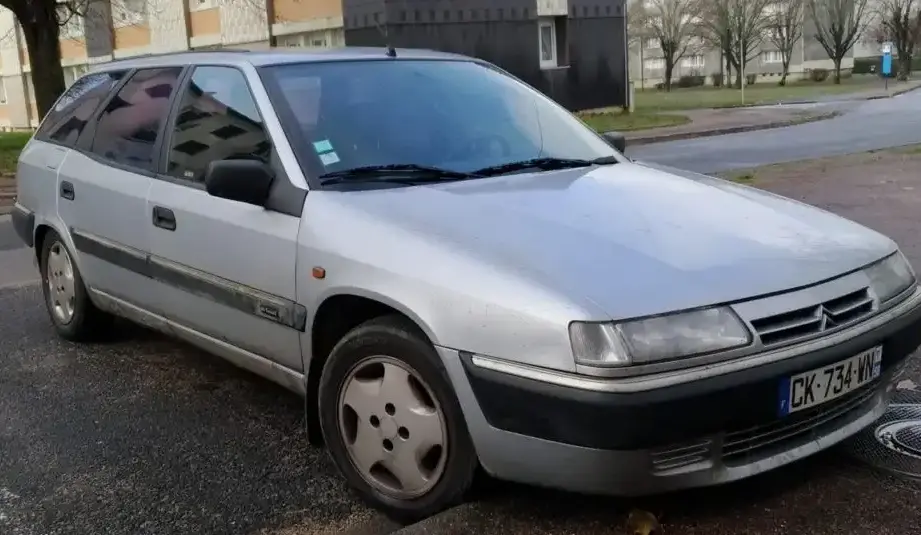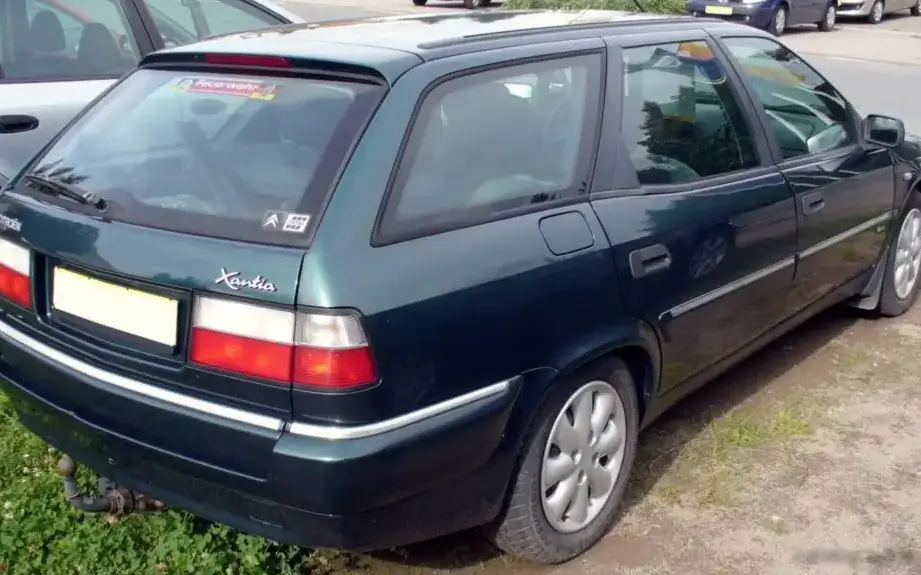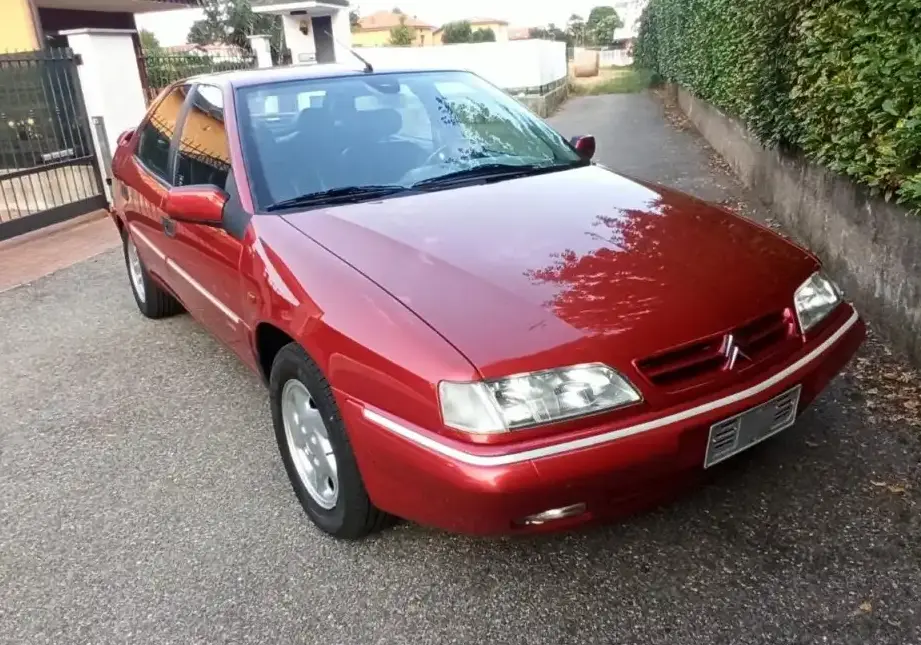
The Citroen Xantia (X2) 1.8 i 16V Automatic, produced between 1998 and 2001, represented a mid-range offering within the second generation Xantia lineup. Positioned as a comfortable and practical family hatchback, it aimed to provide a balance between performance and fuel efficiency, appealing to buyers seeking a refined driving experience without the expense of the higher-specification models. The Xantia (X2) itself was built upon the PSA Group’s PX platform, shared with the Peugeot 406, and was known for its innovative hydropneumatic suspension system. This particular variant, with its 1.8-liter engine and automatic transmission, was primarily sold in European markets.
Technical Specifications
| Brand | Citroen |
| Model | Xantia |
| Generation | Xantia (X2) |
| Type (Engine) | 1.8 i 16V (110 Hp) Automatic |
| Start of production | 1998 |
| End of production | 2001 |
| Powertrain Architecture | Internal Combustion engine |
| Body type | Hatchback |
| Seats | 5 |
| Doors | 4 |
| Fuel consumption (urban) | 12.9 l/100 km (18.2 US mpg, 21.9 UK mpg, 7.8 km/l) |
| Fuel consumption (extra urban) | 6.7 l/100 km (35.1 US mpg, 42.2 UK mpg, 14.9 km/l) |
| Fuel consumption (combined) | 8.7 l/100 km (27 US mpg, 32.5 UK mpg, 11.5 km/l) |
| CO2 emissions | 217 g/km |
| Fuel Type | Petrol (Gasoline) |
| Acceleration 0 – 100 km/h | 14.7 sec |
| Acceleration 0 – 62 mph | 14.7 sec |
| Acceleration 0 – 60 mph | 14 sec |
| Maximum speed | 186 km/h (115.58 mph) |
| Emission standard | Euro 2 |
| Weight-to-power ratio | 11.7 kg/Hp, 85.5 Hp/tonne |
| Weight-to-torque ratio | 8.3 kg/Nm, 120.5 Nm/tonne |
| Power | 110 Hp @ 5500 rpm |
| Power per litre | 62.4 Hp/l |
| Torque | 155 Nm @ 4250 rpm (114.32 lb.-ft. @ 4250 rpm) |
| Engine layout | Front, Transverse |
| Engine Model/Code | LFY XU7JP4 |
| Engine displacement | 1762 cm3 (107.52 cu. in.) |
| Number of cylinders | 4 |
| Engine configuration | Inline |
| Cylinder Bore | 83 mm (3.27 in.) |
| Piston Stroke | 81.4 mm (3.2 in.) |
| Compression ratio | 10.4:1 |
| Number of valves per cylinder | 4 |
| Fuel injection system | Multi-port manifold injection |
| Engine aspiration | Naturally aspirated engine |
| Valvetrain | DOHC |
| Engine oil capacity | 4.9 l (5.18 US qt | 4.31 UK qt) |
| Coolant | 7 l (7.4 US qt | 6.16 UK qt) |
| Kerb Weight | 1286 kg (2835.14 lbs.) |
| Max. weight | 1810 kg (3990.37 lbs.) |
| Max load | 524 kg (1155.22 lbs.) |
| Trunk (boot) space – minimum | 480 l (16.95 cu. ft.) |
| Trunk (boot) space – maximum | 878 l (31.01 cu. ft.) |
| Fuel tank capacity | 65 l (17.17 US gal | 14.3 UK gal) |
| Max. roof load | 75 kg (165.35 lbs.) |
| Permitted trailer load with brakes (12%) | 1500 kg (3306.93 lbs.) |
| Permitted trailer load without brakes | 680 kg (1499.14 lbs.) |
| Permitted towbar download | 85 kg (187.39 lbs.) |
| Length | 4524 mm (178.11 in.) |
| Width | 1755 mm (69.09 in.) |
| Width including mirrors | 1980 mm (77.95 in.) |
| Height | 1400 mm (55.12 in.) |
| Wheelbase | 2740 mm (107.87 in.) |
| Front track | 1502 mm (59.13 in.) |
| Rear (Back) track | 1468 mm (57.8 in.) |
| Front overhang | 983 mm (38.7 in.) |
| Rear overhang | 801 mm (31.54 in.) |
| Drivetrain Architecture | The Internal combustion engine (ICE) drives the front wheels of the vehicle. |
| Drive wheel | Front wheel drive |
| Number of gears and type of gearbox | 4 gears, automatic transmission |
| Front suspension | Independent type McPherson, Wishbone |
| Rear suspension | Hydro-pneumatic element, Trailing arm |
| Front brakes | Ventilated discs |
| Rear brakes | Disc |
| Assisting systems | ABS (Anti-lock braking system) |
| Steering type | Steering rack and pinion |
| Power steering | Hydraulic Steering |
| Tires size | 185/65 R15 |
| Wheel rims size | 15 |
Powertrain & Engine Architecture
The Xantia 1.8 i 16V Automatic utilized the PSA Group’s XU7JP4 engine, a 1.8-liter inline-four cylinder gasoline engine. This engine featured a double overhead camshaft (DOHC) valvetrain with four valves per cylinder, contributing to its relatively high output for its displacement. The engine employed multi-point fuel injection, managed by a Bosch Motronic engine control unit. The LFY engine code designates this specific variant. The automatic transmission was a four-speed unit, designed to provide smooth shifts and ease of driving, particularly in urban environments. While not known for its sportiness, the transmission was reliable and well-suited to the engine’s torque characteristics.
Driving Characteristics
The 1.8L Automatic Xantia offered a comfortable, rather than sporty, driving experience. With 110 horsepower, acceleration was adequate but not brisk, taking approximately 14.7 seconds to reach 62 mph. The automatic transmission, while convenient, did detract from overall performance compared to the five-speed manual versions. Gear ratios were optimized for fuel economy and smooth cruising, resulting in a noticeable delay during overtaking maneuvers. The hydropneumatic suspension, however, provided a remarkably smooth ride, absorbing bumps and imperfections in the road surface with ease. This was a defining characteristic of the Xantia and set it apart from many of its competitors.
Equipment & Trim Levels
The 1.8 i 16V Automatic typically came equipped with features such as power steering, central locking, electric front windows, and an RDS radio. Air conditioning was often standard, though sometimes offered as an option depending on the specific market. Interior upholstery was typically cloth, with a relatively simple dashboard layout. Optional extras included alloy wheels, a sunroof, and upgraded audio systems. The trim level generally fell into the mid-range of the Xantia lineup, offering a good balance of features and affordability.
Chassis & Braking
The Xantia’s chassis featured independent McPherson strut suspension at the front and a unique hydropneumatic suspension system at the rear. This system allowed for self-leveling and adjustable ride height, contributing to the car’s exceptional ride comfort. Braking was handled by ventilated discs at the front and solid discs at the rear. Anti-lock Braking System (ABS) was standard, enhancing safety and control during emergency braking situations. The suspension setup was tuned to prioritize comfort over handling sharpness, making it a pleasant cruiser but less engaging on winding roads.
Market Reception & Comparison
The Xantia 1.8 i 16V Automatic was generally well-received by automotive critics as a comfortable and practical family car. However, the automatic transmission was often criticized for detracting from the engine’s performance. Compared to the more powerful 2.0 16V and V6 models, the 1.8 offered less exhilarating performance. However, it provided better fuel economy than the larger engines and was more affordable to purchase and maintain. Against competitors like the Ford Mondeo and Vauxhall/Opel Vectra, the Xantia stood out for its unique hydropneumatic suspension and distinctive styling.
Legacy
The Xantia 1.8 i 16V Automatic, while not the most sought-after variant, remains a reasonably reliable and affordable used car. The XU7JP4 engine is known for its durability, provided it has been properly maintained. The automatic transmission, while not particularly advanced, is generally robust. However, the hydropneumatic suspension requires periodic maintenance and can be expensive to repair if neglected. Today, the Xantia is appreciated by enthusiasts for its unique character, comfortable ride, and distinctive French styling. Finding well-maintained examples is becoming increasingly difficult, but those that remain offer a unique and rewarding driving experience.