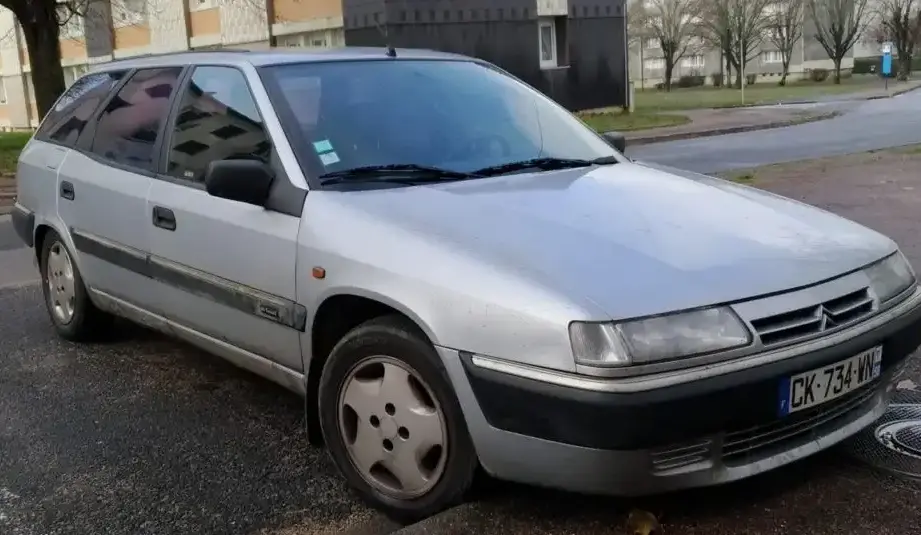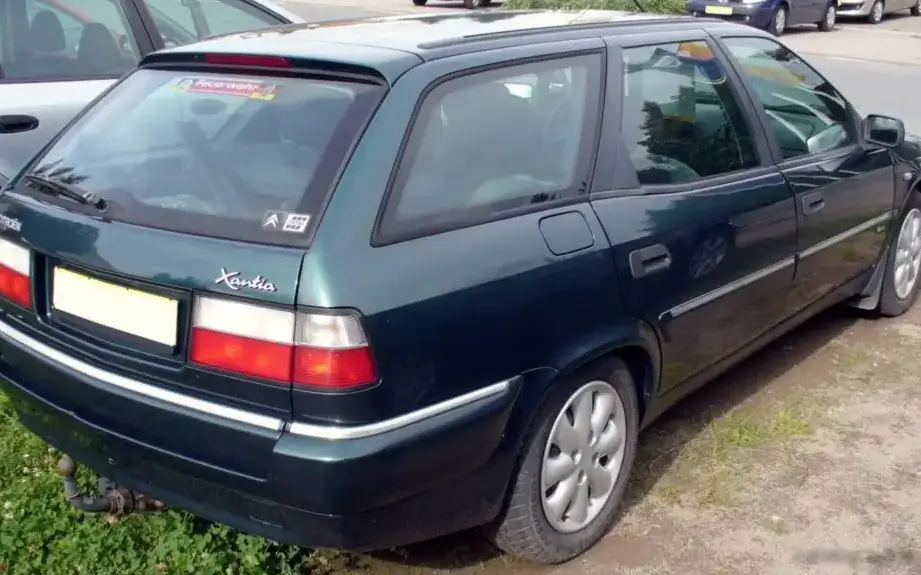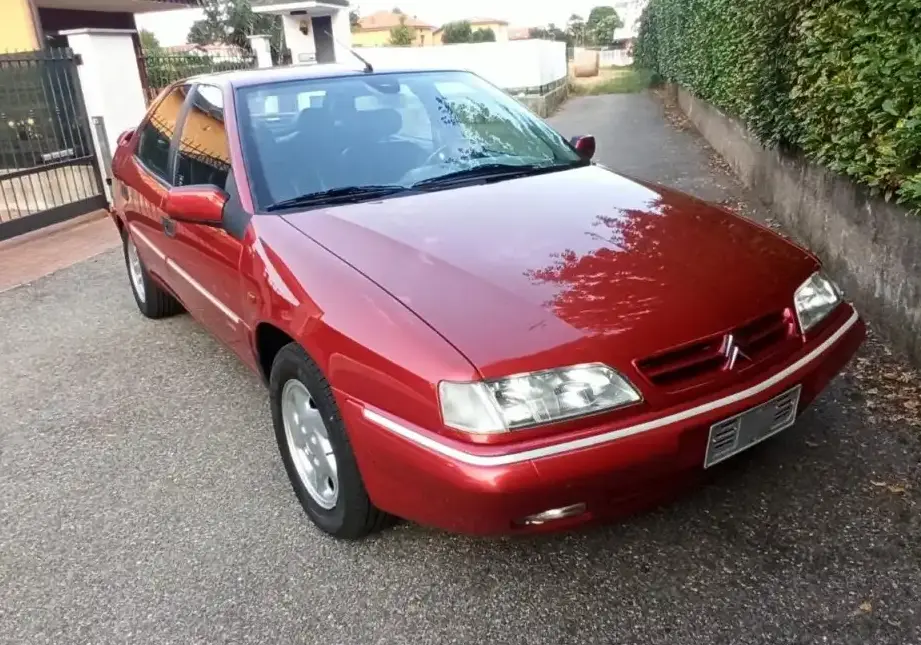
The Citroën Xantia 2.0i 16V Automatic, produced between 1998 and 2001, represents a refined iteration of Citroën’s large family car, the Xantia (X2). Positioned as a mid-range offering within the Xantia lineup, this variant combined a potent 2.0-liter 16-valve engine with the convenience of a four-speed automatic transmission. It aimed to provide a balance between performance and comfort, appealing to buyers seeking a spacious, technologically advanced vehicle without the higher price tag of the flagship models. The Xantia itself was a successor to the BX, continuing Citroën’s tradition of innovative engineering and distinctive styling, built upon the shared PSA platform known as the 1HX0/A3.
Technical Specifications
| Brand | Citroen |
| Model | Xantia |
| Generation | Xantia (X2) |
| Type (Engine) | 2.0 i 16V (132 Hp) Automatic |
| Start of production | 1998 year |
| End of production | 2001 year |
| Powertrain Architecture | Internal Combustion engine |
| Body type | Hatchback |
| Seats | 5 |
| Doors | 4 |
| Fuel consumption (urban) | 13.9 l/100 km (16.9 US mpg, 20.3 UK mpg, 7.2 km/l) |
| Fuel consumption (extra urban) | 7 l/100 km (33.6 US mpg, 40.4 UK mpg, 14.3 km/l) |
| Fuel consumption (combined) | 9.5 l/100 km (24.8 US mpg, 29.7 UK mpg, 10.5 km/l) |
| CO2 emissions | 232 g/km |
| Fuel Type | Petrol (Gasoline) |
| Acceleration 0 – 100 km/h | 12.9 sec |
| Acceleration 0 – 62 mph | 12.9 sec |
| Acceleration 0 – 60 mph | 12.3 sec |
| Maximum speed | 195 km/h (121.17 mph) |
| Emission standard | Euro 2 |
| Weight-to-power ratio | 10.2 kg/Hp, 98.5 Hp/tonne |
| Weight-to-torque ratio | 7.4 kg/Nm, 134.3 Nm/tonne |
| Power | 132 Hp @ 5500 rpm |
| Power per litre | 66.1 Hp/l |
| Torque | 180 Nm @ 4200 rpm (132.76 lb.-ft. @ 4200 rpm) |
| Engine layout | Front, Transverse |
| Engine Model/Code | RFV XU10J4R |
| Engine displacement | 1998 cm3 (121.93 cu. in.) |
| Number of cylinders | 4 |
| Engine configuration | Inline |
| Cylinder Bore | 86 mm (3.39 in.) |
| Piston Stroke | 86 mm (3.39 in.) |
| Compression ratio | 10.4:1 |
| Number of valves per cylinder | 4 |
| Fuel injection system | Multi-port manifold injection |
| Engine aspiration | Naturally aspirated engine |
| Valvetrain | DOHC |
| Engine oil capacity | 5.4 l (5.71 US qt | 4.75 UK qt) |
| Coolant | 8 l (8.45 US qt | 7.04 UK qt) |
| Kerb Weight | 1340 kg (2954.19 lbs.) |
| Max. weight | 1850 kg (4078.55 lbs.) |
| Max load | 510 kg (1124.36 lbs.) |
| Trunk (boot) space – minimum | 480 l (16.95 cu. ft.) |
| Trunk (boot) space – maximum | 878 l (31.01 cu. ft.) |
| Fuel tank capacity | 65 l (17.17 US gal | 14.3 UK gal) |
| Max. roof load | 75 kg (165.35 lbs.) |
| Permitted trailer load with brakes (12%) | 1500 kg (3306.93 lbs.) |
| Permitted trailer load without brakes | 705 kg (1554.26 lbs.) |
| Permitted towbar download | 85 kg (187.39 lbs.) |
| Length | 4524 mm (178.11 in.) |
| Width | 1755 mm (69.09 in.) |
| Width including mirrors | 1980 mm (77.95 in.) |
| Height | 1400 mm (55.12 in.) |
| Wheelbase | 2740 mm (107.87 in.) |
| Front track | 1502 mm (59.13 in.) |
| Rear (Back) track | 1468 mm (57.8 in.) |
| Front overhang | 983 mm (38.7 in.) |
| Rear overhang | 801 mm (31.54 in.) |
| Drivetrain Architecture | The Internal combustion engine (ICE) drives the front wheels of the vehicle. |
| Drive wheel | Front wheel drive |
| Number of gears and type of gearbox | 4 gears, automatic transmission |
| Front suspension | Independent type McPherson, Wishbone |
| Rear suspension | Hydro-pneumatic element, Trailing arm |
| Front brakes | Ventilated discs |
| Rear brakes | Disc |
| Assisting systems | ABS (Anti-lock braking system) |
| Steering type | Steering rack and pinion |
| Power steering | Hydraulic Steering |
| Tires size | 185/65 R15 |
| Wheel rims size | 15 |
Powertrain & Engine Architecture
The heart of the Xantia 2.0i 16V Automatic is the RFV engine, a member of the PSA XU10J4R family. This 1.998-liter inline-four cylinder engine features a double overhead camshaft (DOHC) valvetrain with four valves per cylinder, contributing to its relatively high output for its displacement. Fuel delivery is managed by a multi-port fuel injection system, ensuring precise fuel metering for optimal combustion. The engine’s 132 horsepower at 5500 rpm and 180 Nm (132.76 lb-ft) of torque at 4200 rpm provided adequate performance for comfortable cruising and overtaking. The automatic transmission is a conventional four-speed unit, designed for smooth shifts and ease of use. While not known for its sportiness, it was a reliable and well-matched partner for the engine.
Driving Characteristics
The Xantia 2.0i 16V Automatic offered a comfortable and refined driving experience. The automatic transmission, while lacking the responsiveness of a manual gearbox, provided smooth gear changes and reduced driver fatigue. Acceleration from 0-60 mph took around 12.3 seconds, and top speed was approximately 121 mph. Compared to the manual transmission version of the same engine, the automatic suffered a slight performance penalty due to the transmission’s inherent efficiency losses. However, the convenience and ease of driving often outweighed this drawback for many buyers. The Xantia’s renowned hydropneumatic suspension system, a Citroën hallmark, provided a uniquely smooth and controlled ride, absorbing bumps and imperfections in the road surface with remarkable effectiveness.
Equipment & Trim Levels
The 2.0i 16V Automatic trim typically included features such as power windows, central locking, power steering, and an AM/FM radio. Higher-spec versions could be equipped with options like leather upholstery, air conditioning, a sunroof, and upgraded audio systems. The interior was generally well-appointed, with comfortable seating and a functional dashboard layout. The Xantia prioritized practicality and comfort, offering a spacious cabin and a generous boot capacity of 480-878 liters depending on the rear seat configuration.
Chassis & Braking
The Xantia’s chassis featured an independent McPherson strut front suspension and a sophisticated hydropneumatic rear suspension. This combination provided excellent ride quality and handling characteristics. The braking system consisted of ventilated discs at the front and solid discs at the rear, supplemented by an Anti-lock Braking System (ABS) for enhanced safety. The steering was rack and pinion, providing precise and responsive control.
Market Reception & Comparison
The Xantia 2.0i 16V Automatic was generally well-received by automotive critics. It was praised for its comfortable ride, spacious interior, and refined engine. However, some reviewers noted that the automatic transmission could feel sluggish at times, and the fuel economy was not particularly impressive. Compared to other trims, such as the more economical 1.8-liter versions or the performance-oriented V6 models, the 2.0i 16V Automatic occupied a middle ground, offering a balance of performance, comfort, and features. It was a popular choice for families and drivers who prioritized ease of use and a comfortable driving experience.
Legacy
The Citroën Xantia, and specifically the 2.0i 16V Automatic variant, has developed a loyal following among enthusiasts. The RFV engine is known for its durability and relatively straightforward maintenance. While the hydropneumatic suspension system requires specialized knowledge and care, it remains a defining feature of the Xantia and contributes to its unique driving experience. Today, well-maintained examples of the Xantia 2.0i 16V Automatic are sought after by collectors and enthusiasts who appreciate its distinctive styling, innovative technology, and comfortable ride. Finding parts can sometimes be a challenge, but a dedicated community and readily available online resources help to keep these cars on the road.