Technical Specifications
| Brand | Citroen |
| Model | Xantia |
| Generation | Xantia (X2) |
| Type (Engine) | 3.0 V6 S (190 Hp) |
| Start of production | 1998 |
| End of production | 2001 |
| Powertrain Architecture | Internal Combustion engine |
| Body type | Hatchback |
| Seats | 5 |
| Doors | 4 |
| Fuel consumption (urban) | 15.9 l/100 km (14.8 US mpg, 17.8 UK mpg, 6.3 km/l) |
| Fuel consumption (extra urban) | 8 l/100 km (29.4 US mpg, 35.3 UK mpg, 12.5 km/l) |
| Fuel consumption (combined) | 10.9 l/100 km (21.6 US mpg, 25.9 UK mpg, 9.2 km/l) |
| CO2 emissions | 260 g/km |
| Fuel Type | Petrol (Gasoline) |
| Acceleration 0 – 100 km/h | 8.2 sec |
| Acceleration 0 – 62 mph | 8.2 sec |
| Acceleration 0 – 60 mph | 7.8 sec |
| Maximum speed | 230 km/h (142.92 mph) |
| Emission standard | Euro 2 |
| Weight-to-power ratio | 7.7 kg/Hp, 129.4 Hp/tonne |
| Weight-to-torque ratio | 5.5 kg/Nm, 181.9 Nm/tonne |
| Power | 190 Hp @ 5500 rpm |
| Power per litre | 64.5 Hp/l |
| Torque | 267 Nm @ 4000 rpm (196.93 lb.-ft. @ 4000 rpm) |
| Engine layout | Front, Transverse |
| Engine Model/Code | XZF ES9J4 |
| Engine displacement | 2946 cm3 (179.78 cu. in.) |
| Number of cylinders | 6 |
| Engine configuration | V-engine |
| Cylinder Bore | 87 mm (3.43 in.) |
| Piston Stroke | 82.6 mm (3.25 in.) |
| Compression ratio | 10.5:1 |
| Number of valves per cylinder | 4 |
| Fuel injection system | Multi-port manifold injection |
| Engine aspiration | Naturally aspirated engine |
| Valvetrain | DOHC |
| Engine oil capacity | 5.3 l (5.6 US qt | 4.66 UK qt) |
| Coolant | 10 l (10.57 US qt | 8.8 UK qt) |
| Kerb Weight | 1468 kg (3236.39 lbs.) |
| Max. weight | 1950 kg (4299.01 lbs.) |
| Max load | 482 kg (1062.63 lbs.) |
| Trunk (boot) space – minimum | 480 l (16.95 cu. ft.) |
| Trunk (boot) space – maximum | 878 l (31.01 cu. ft.) |
| Fuel tank capacity | 65 l (17.17 US gal | 14.3 UK gal) |
| Max. roof load | 75 kg (165.35 lbs.) |
| Permitted trailer load with brakes (12%) | 1500 kg (3306.93 lbs.) |
| Permitted trailer load without brakes | 750 kg (1653.47 lbs.) |
| Permitted towbar download | 85 kg (187.39 lbs.) |
| Length | 4524 mm (178.11 in.) |
| Width | 1755 mm (69.09 in.) |
| Width including mirrors | 1980 mm (77.95 in.) |
| Height | 1410 mm (55.51 in.) |
| Wheelbase | 2740 mm (107.87 in.) |
| Front track | 1502 mm (59.13 in.) |
| Rear (Back) track | 1454 mm (57.24 in.) |
| Front overhang | 983 mm (38.7 in.) |
| Rear overhang | 801 mm (31.54 in.) |
| Drivetrain Architecture | The Internal combustion engine (ICE) drives the front wheels of the vehicle. |
| Drive wheel | Front wheel drive |
| Number of gears and type of gearbox | 5 gears, manual transmission |
| Front suspension | Independent type McPherson, Wishbone |
| Rear suspension | Hydro-pneumatic element, Trailing arm |
| Front brakes | Ventilated discs |
| Rear brakes | Disc |
| Assisting systems | ABS (Anti-lock braking system) |
| Steering type | Steering rack and pinion |
| Power steering | Hydraulic Steering |
| Tires size | 205/60 R15 |
| Wheel rims size | 15 |
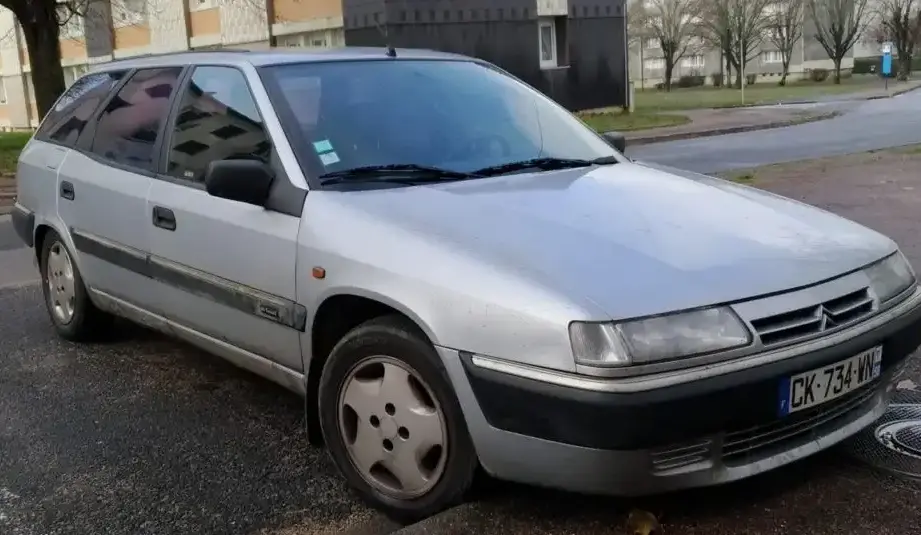
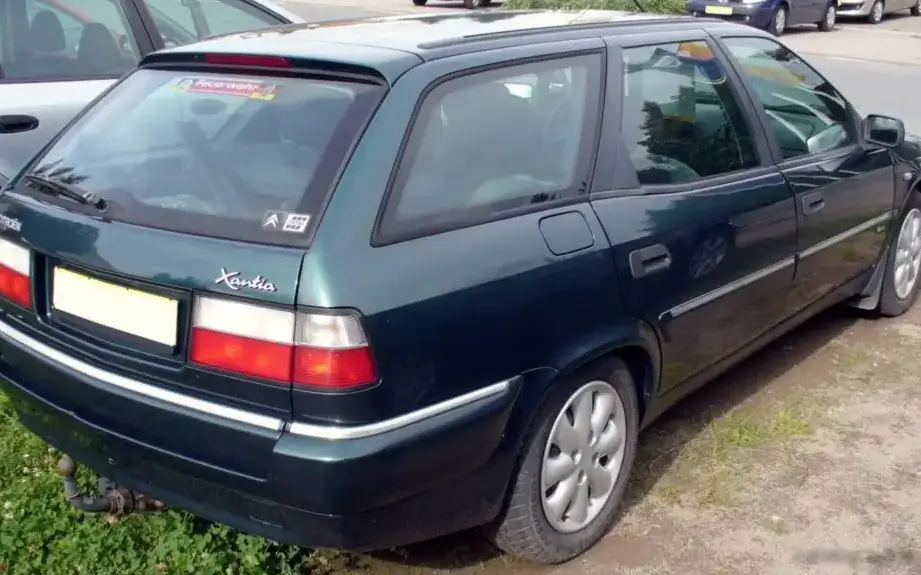
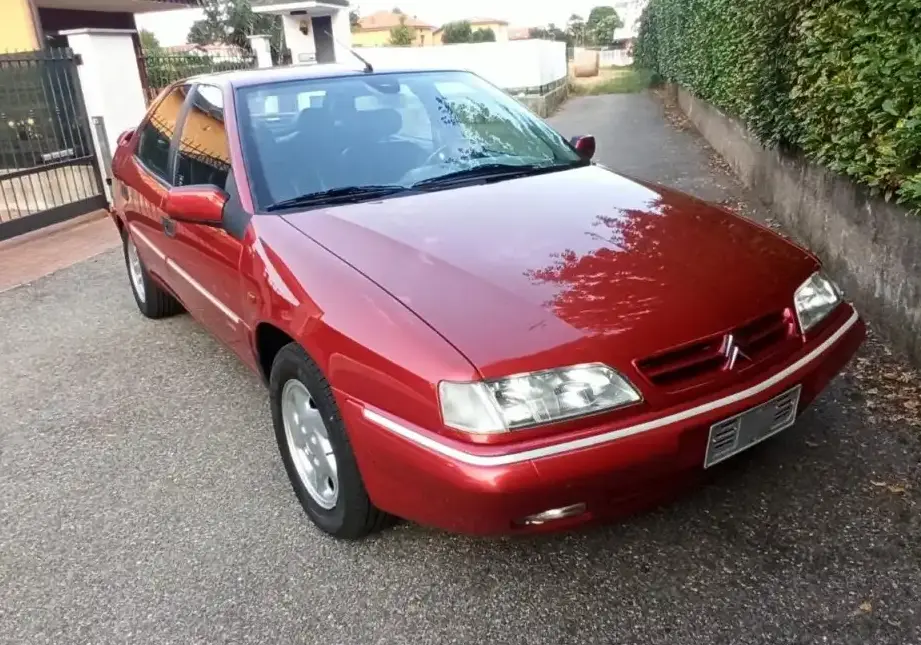
The Citroën Xantia 3.0 V6 S, produced between 1998 and 2001, represented the performance pinnacle of the X2 generation Xantia line. Positioned as the flagship model, it offered a significant step up in power and refinement compared to the more common 1.6, 1.8, and 2.0-liter variants. The Xantia itself was a large family car, intended as a replacement for the BX, and built upon the shared PSA Group platform known as the 1HX0. It aimed to combine comfort, practicality, and a touch of Citroën’s innovative hydropneumatic suspension technology, appealing to buyers seeking a distinctive alternative to mainstream offerings like the Ford Mondeo or Vauxhall/Opel Vectra.
Powertrain & Engine Architecture
The heart of the Xantia 3.0 V6 S is the XFZ ES9J4 engine, a 2.946-liter, naturally aspirated V6. This engine, a product of the PSA/Renault joint venture, features a 60-degree V-angle and a cast iron block with aluminum cylinder heads. It utilizes a multi-port fuel injection system and a double overhead camshaft (DOHC) valvetrain with four valves per cylinder. The engine produces 190 horsepower at 5500 rpm and 267 Nm (196.93 lb-ft) of torque at 4000 rpm. The engine’s design prioritized smooth power delivery over outright peak performance. Crucially, the Xantia 3.0 V6 S was exclusively offered with a 5-speed manual transmission, designed to handle the engine’s output and provide a more engaging driving experience than an automatic would have.
Driving Characteristics
The Xantia 3.0 V6 S offered a distinctly different driving experience compared to its four-cylinder siblings. The V6 engine provided ample power for effortless cruising and brisk acceleration. The 0-60 mph sprint was dispatched in around 7.8 seconds, and the car could reach a top speed of 143 mph. The manual transmission allowed for precise control, and the gear ratios were well-suited to the engine’s torque curve. However, the Xantia’s defining feature – its hydropneumatic suspension – played a crucial role in the driving experience. This system provided a remarkably smooth and comfortable ride, absorbing bumps and imperfections in the road with ease. The suspension also allowed the car to maintain a level ride height regardless of load, further enhancing stability and comfort. Compared to the 1.8 or 2.0-liter models, the V6 felt significantly more refined and capable, though it came at the cost of increased fuel consumption.
Equipment & Trim Levels
The Xantia 3.0 V6 S was generously equipped, reflecting its position as the range-topping model. Standard features typically included air conditioning, power windows, central locking, an upgraded audio system, and alloy wheels. The interior featured comfortable cloth or leather upholstery (leather was often an option), and a well-designed dashboard layout. Optional extras could include a sunroof, upgraded sound system, and metallic paint. The V6 S trim also benefited from subtle exterior styling cues, such as a rear spoiler and unique badging.
Chassis & Braking
The Xantia’s chassis was designed to complement its sophisticated suspension system. It featured independent McPherson strut front suspension and a trailing arm rear suspension, both utilizing the hydropneumatic technology. Braking duties were handled by ventilated discs at the front and solid discs at the rear, with ABS (Anti-lock Braking System) as standard. The steering was a hydraulic power-assisted rack and pinion system, providing precise and responsive control. The Xantia’s suspension allowed for a relatively soft spring rate, which, combined with the car’s weight, meant body roll was present in corners, but well-controlled.
Market Reception & Comparison
The Xantia 3.0 V6 S was generally well-received by automotive critics, who praised its comfortable ride, refined engine, and distinctive styling. However, its relatively high price and fuel consumption limited its appeal to a niche market. Compared to the more popular 1.8 and 2.0-liter models, the V6 S offered a significant performance upgrade but came with a substantial price premium. Fuel economy was considerably lower, averaging around 21.6 US mpg in combined driving. Reliability was generally good, although the complex hydropneumatic suspension system required regular maintenance and could be expensive to repair.
Legacy
The Citroën Xantia 3.0 V6 S remains a sought-after model among enthusiasts, appreciated for its unique blend of comfort, performance, and distinctive French styling. While the hydropneumatic suspension can present maintenance challenges, the V6 engine is generally considered robust and reliable. Today, well-maintained examples are becoming increasingly rare and are valued as classic cars. The Xantia, and particularly the V6 S variant, represents a high point in Citroën’s engineering and design heritage, offering a driving experience that is both refined and engaging.