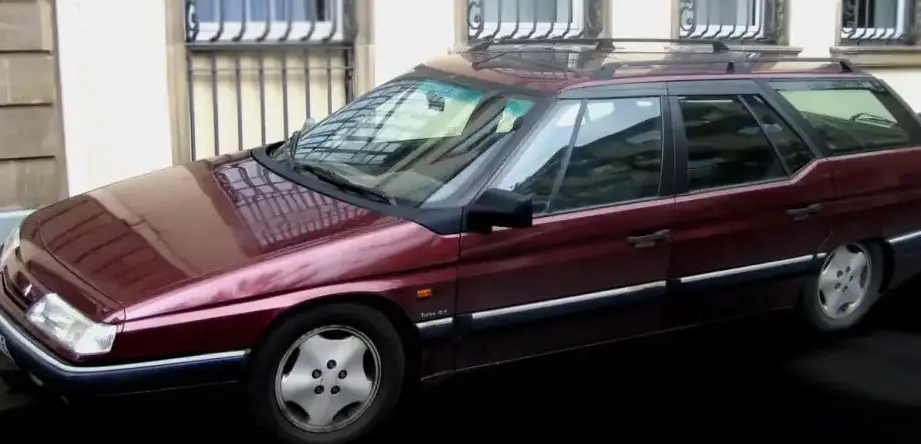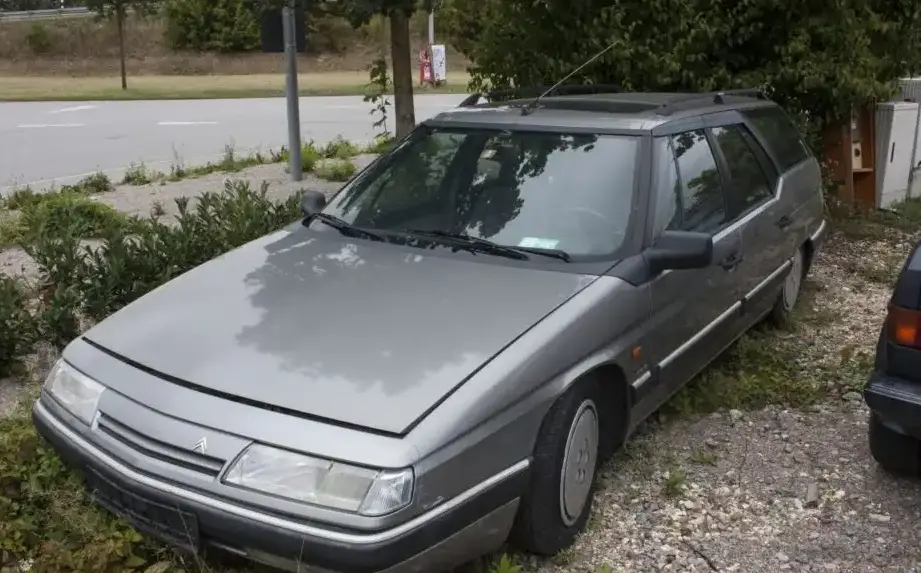
The Citroen XM Break (Y3) 2.0i, produced between 1992 and 1994, represents a compelling blend of French engineering and practical estate car design. Positioned as a mid-range offering within the broader XM Break lineup – which also included diesel and higher-performance petrol variants – the 2.0i model aimed to provide a balance of reasonable performance, acceptable fuel economy, and a comfortable driving experience for families and those requiring substantial cargo space. It was a key part of Citroen’s attempt to recapture a segment of the market where they had historically been strong, offering a technologically advanced alternative to more conventional European estates.
Technical Specifications
| Brand | Citroen |
| Model | XM |
| Generation | XM Break (Y3) |
| Type (Engine) | 2.0 i (122 Hp) |
| Start of production | 1992 |
| End of production | 1994 |
| Powertrain Architecture | Internal Combustion engine |
| Body type | Station wagon (estate) |
| Seats | 5 |
| Doors | 5 |
| Fuel consumption (urban) | 12.8 l/100 km (18.4 US mpg, 22.1 UK mpg, 7.8 km/l) |
| Fuel consumption (extra urban) | 7 l/100 km (33.6 US mpg, 40.4 UK mpg, 14.3 km/l) |
| Fuel Type | Petrol (Gasoline) |
| Acceleration 0 – 100 km/h | 13 sec |
| Acceleration 0 – 62 mph | 13 sec |
| Acceleration 0 – 60 mph | 12.4 sec |
| Maximum speed | 192 km/h (119.3 mph) |
| Weight-to-power ratio | 11.2 kg/Hp, 89.4 Hp/tonne |
| Weight-to-torque ratio | 8 kg/Nm, 124.6 Nm/tonne |
| Power | 122 Hp @ 5600 rpm |
| Power per litre | 61.1 Hp/l |
| Torque | 170 Nm @ 4000 rpm (125.39 lb.-ft. @ 4000 rpm) |
| Engine layout | Front, Transverse |
| Engine Model/Code | RFZ XU10J2 |
| Engine displacement | 1998 cm3 (121.93 cu. in.) |
| Number of cylinders | 4 |
| Engine configuration | Inline |
| Cylinder Bore | 86 mm (3.39 in.) |
| Piston Stroke | 86 mm (3.39 in.) |
| Compression ratio | 8.8:1 |
| Number of valves per cylinder | 2 |
| Fuel injection system | Multi-port manifold injection |
| Engine aspiration | Naturally aspirated engine |
| Engine oil capacity | 5.4 l (5.71 US qt, 4.75 UK qt) |
| Coolant capacity | 7.3 l (7.71 US qt, 6.42 UK qt) |
| Kerb Weight | 1364 kg (3007.11 lbs.) |
| Max. weight | 2020 kg (4453.34 lbs.) |
| Max load | 656 kg (1446.23 lbs.) |
| Trunk (boot) space – minimum | 720 l (25.43 cu. ft.) |
| Trunk (boot) space – maximum | 1960 l (69.22 cu. ft.) |
| Fuel tank capacity | 80 l (21.13 US gal, 17.6 UK gal) |
| Max. roof load | 100 kg (220.46 lbs.) |
| Permitted trailer load with brakes (12%) | 1300 kg (2866.01 lbs.) |
| Permitted trailer load without brakes | 690 kg (1521.19 lbs.) |
| Permitted towbar download | 80 kg (176.37 lbs.) |
| Length | 4963 mm (195.39 in.) |
| Width | 1794 mm (70.63 in.) |
| Width including mirrors | 2000 mm (78.74 in.) |
| Height | 1385 mm (54.53 in.) |
| Wheelbase | 2850 mm (112.2 in.) |
| Front track | 1520 mm (59.84 in.) |
| Rear track | 1450 mm (57.09 in.) |
| Front overhang | 1068 mm (42.05 in.) |
| Rear overhang | 1045 mm (41.14 in.) |
| Ride height (ground clearance) | 141 mm (5.55 in.) |
| Minimum turning circle | 12.5 m (41.01 ft.) |
| Drivetrain Architecture | Front wheel drive |
| Number of gears and type of gearbox | 5 gears, manual transmission |
| Front suspension | Independent type McPherson, Wishbone |
| Rear suspension | Hydro-pneumatic element, Trailing arm |
| Front brakes | Ventilated discs |
| Rear brakes | Disc |
| Steering type | Steering rack and pinion |
| Power steering | Hydraulic Steering |
| Tires size | 195/65 R15 |
Powertrain & Engine Architecture
The heart of the XM Break 2.0i is the RFZ XU10J2 engine, a 1.998-liter (121.93 cubic inches) inline-four cylinder petrol engine. This engine was a product of the Peugeot-Renault-Volvo (PRV) collaboration, though by the early 1990s, Peugeot and Renault had largely taken over development. The XU10J2 features a cast iron block and an aluminum cylinder head, with two valves per cylinder operated by a single overhead camshaft. Fuel delivery is managed by a Bosch multi-port fuel injection system, providing a relatively smooth and responsive power delivery. The engine produces 122 horsepower at 5600 rpm and 170 Nm (125.39 lb-ft) of torque at 4000 rpm. The engine is transversely mounted in the front of the vehicle.
The 2.0i XM Break typically came equipped with a five-speed manual transmission, although a four-speed automatic transmission was also available. The automatic, while offering convenience, did noticeably impact acceleration and fuel economy compared to the manual version. The automatic transmission was a conventional hydraulic unit, lacking the electronic controls found in more modern automatics.
Driving Characteristics
The 2.0i XM Break offered a comfortable, if not particularly sporty, driving experience. Acceleration from 0 to 60 mph took around 12.4 seconds, and top speed was approximately 119 mph. The engine provided adequate power for everyday driving and highway cruising, but it wasn’t overly eager to rev. The automatic transmission, while smooth, contributed to a somewhat lethargic feel, with noticeable delays during kickdown. The XM’s defining characteristic, however, was its ride quality. The hydro-pneumatic suspension, a Citroen hallmark, provided an exceptionally smooth and comfortable ride, absorbing bumps and imperfections in the road with remarkable ease. This suspension system also allowed for self-leveling, maintaining a consistent ride height regardless of load.
Equipment & Trim Levels
The 2.0i XM Break was generally well-equipped for its time. Standard features typically included central locking, power windows, power steering, and an adjustable steering column. Interior upholstery was usually cloth, with options for upgraded velour or leather. Higher trim levels added features such as air conditioning, a sunroof, and upgraded audio systems. The dashboard layout was functional and ergonomically designed, with a clear instrument cluster and easy-to-use controls. The XM Break’s spacious interior and large trunk (720-1960 liters) made it a practical choice for families and those needing to transport large items.
Chassis & Braking
The XM Break featured an independent McPherson strut front suspension and a hydro-pneumatic trailing arm rear suspension. This combination provided excellent ride comfort and handling stability. Brakes were ventilated discs at the front and solid discs at the rear, providing adequate stopping power for the vehicle’s weight. Hydraulic power steering was standard, offering light and precise steering feel. The XM’s tires were typically 195/65 R15, providing a good balance of comfort and grip.
Market Reception & Comparison
The Citroen XM Break 2.0i was generally well-received by critics, who praised its comfortable ride, spacious interior, and innovative technology. However, some criticized its relatively modest performance and the complexity of the hydro-pneumatic suspension system, which could be expensive to repair. Compared to other estates in its class, such as the Ford Mondeo Estate or the Volvo 940 Estate, the XM Break offered a more distinctive and sophisticated driving experience, but it was also generally more expensive to maintain. The 2.0i variant offered a compromise between the more economical diesel models and the higher-performance V6 versions.
Legacy
The Citroen XM Break, while not a massive sales success, remains a fondly remembered car among enthusiasts. The 2.0i variant, in particular, is considered a reliable and practical choice for those seeking a comfortable and spacious estate car. The hydro-pneumatic suspension system, while complex, is highly regarded for its exceptional ride quality. Today, well-maintained examples of the XM Break 2.0i are becoming increasingly collectible, appealing to those who appreciate its unique blend of French engineering and practical design. The engine itself, the XU10J2, is known for its durability when properly maintained, though finding parts can sometimes be a challenge due to the car’s age.