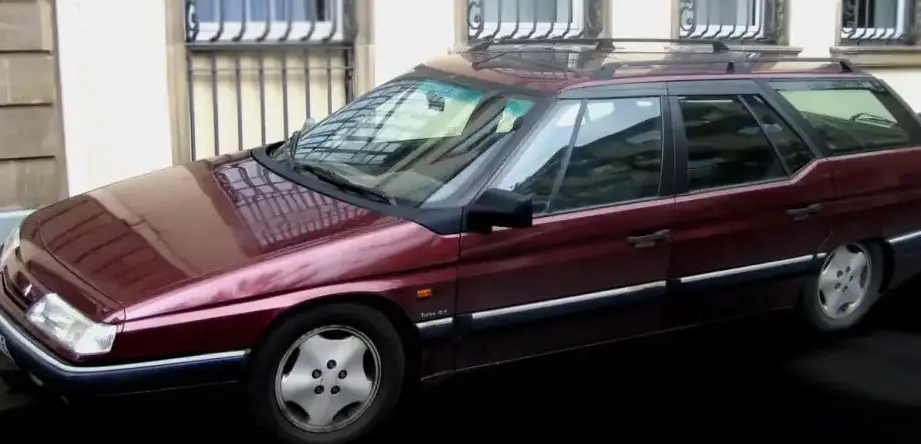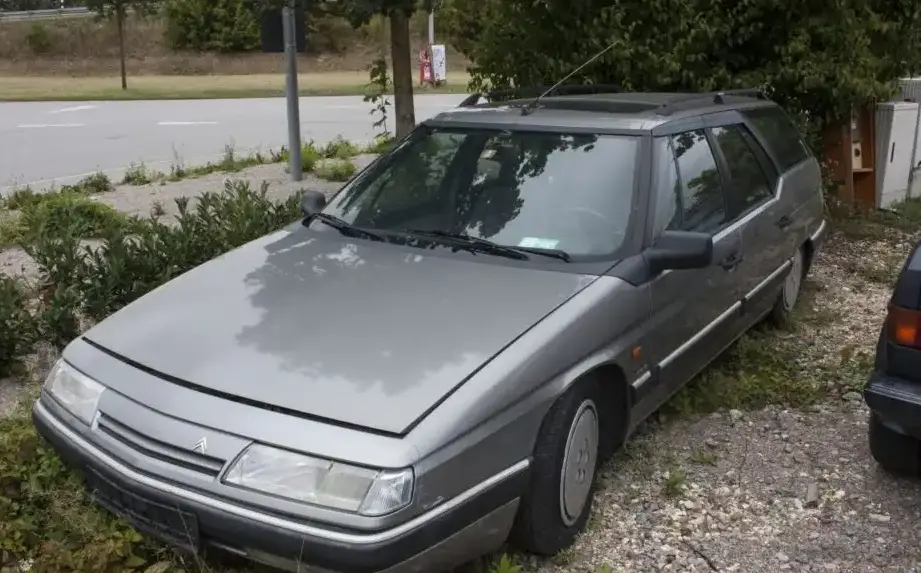
The Citroen XM Break 2.0i Automatic, produced between 1992 and 1994, represents a compelling blend of French engineering and practicality within the larger XM (Y3) series. Positioned as a mid-range offering in the XM Break (estate) lineup, it aimed to provide comfortable, long-distance cruising for families and those requiring substantial cargo space. The XM, launched in 1989, was Citroen’s flagship, intended to replace the aging CX, and was notable for its innovative hydropneumatic suspension and distinctive styling. The Break (estate) version, introduced shortly after the initial sedan, further enhanced the XM’s appeal by offering increased versatility. This 2.0-liter, 122 horsepower variant with an automatic transmission was specifically tailored for drivers prioritizing ease of use over outright performance.
Technical Specifications
| Brand | Citroen |
| Model | XM |
| Generation | XM Break (Y3) |
| Type (Engine) | 2.0 i (122 Hp) Automatic |
| Start of production | 1992 |
| End of production | 1994 |
| Powertrain Architecture | Internal Combustion engine |
| Body type | Station wagon (estate) |
| Seats | 5 |
| Doors | 5 |
| Fuel consumption (urban) | 13.8 l/100 km (17 US mpg, 20.5 UK mpg, 7.2 km/l) |
| Fuel consumption (extra urban) | 7.3 l/100 km (32.2 US mpg, 38.7 UK mpg, 13.7 km/l) |
| Fuel Type | Petrol (Gasoline) |
| Acceleration 0 – 100 km/h | 16.6 sec |
| Acceleration 0 – 62 mph | 16.6 sec |
| Acceleration 0 – 60 mph | 15.8 sec |
| Maximum speed | 190 km/h (118.06 mph) |
| Weight-to-power ratio | 11.5 kg/Hp, 87.2 Hp/tonne |
| Weight-to-torque ratio | 8.2 kg/Nm, 121.5 Nm/tonne |
| Power | 122 Hp @ 5600 rpm |
| Power per litre | 61.1 Hp/l |
| Torque | 170 Nm @ 4000 rpm (125.39 lb.-ft. @ 4000 rpm) |
| Engine layout | Front, Transverse |
| Engine Model/Code | RFZ XU10J2 |
| Engine displacement | 1998 cm3 (121.93 cu. in.) |
| Number of cylinders | 4 |
| Engine configuration | Inline |
| Cylinder Bore | 86 mm (3.39 in.) |
| Piston Stroke | 86 mm (3.39 in.) |
| Compression ratio | 8.8:1 |
| Number of valves per cylinder | 2 |
| Fuel injection system | Multi-port manifold injection |
| Engine aspiration | Naturally aspirated engine |
| Engine oil capacity | 5.4 l (5.71 US qt, 4.75 UK qt) |
| Coolant | 7.3 l (7.71 US qt, 6.42 UK qt) |
| Kerb Weight | 1399 kg (3084.27 lbs.) |
| Max. weight | 2020 kg (4453.34 lbs.) |
| Max load | 621 kg (1369.07 lbs.) |
| Trunk (boot) space – minimum | 720 l (25.43 cu. ft.) |
| Trunk (boot) space – maximum | 1960 l (69.22 cu. ft.) |
| Fuel tank capacity | 80 l (21.13 US gal, 17.6 UK gal) |
| Max. roof load | 100 kg (220.46 lbs.) |
| Permitted trailer load with brakes (12%) | 1300 kg (2866.01 lbs.) |
| Permitted trailer load without brakes | 700 kg (1543.24 lbs.) |
| Permitted towbar download | 80 kg (176.37 lbs.) |
| Length | 4963 mm (195.39 in.) |
| Width | 1794 mm (70.63 in.) |
| Width including mirrors | 2000 mm (78.74 in.) |
| Height | 1385 mm (54.53 in.) |
| Wheelbase | 2850 mm (112.2 in.) |
| Front track | 1520 mm (59.84 in.) |
| Rear (Back) track | 1450 mm (57.09 in.) |
| Front overhang | 1068 mm (42.05 in.) |
| Rear overhang | 1045 mm (41.14 in.) |
| Ride height (ground clearance) | 141 mm (5.55 in.) |
| Minimum turning circle (turning diameter) | 12.5 m (41.01 ft.) |
| Drivetrain Architecture | The Internal combustion engine (ICE) drives the front wheels of the vehicle. |
| Drive wheel | Front wheel drive |
| Number of gears and type of gearbox | 4 gears, automatic transmission |
| Front suspension | Independent type McPherson, Wishbone |
| Rear suspension | Hydro-pneumatic element, Trailing arm |
| Front brakes | Ventilated discs |
| Rear brakes | Disc |
| Steering type | Steering rack and pinion |
| Power steering | Hydraulic Steering |
| Tires size | 195/65 R15 |
Powertrain & Engine Architecture
The Citroen XM Break 2.0i Automatic utilizes the RFZ XU10J2 engine, a 1.998-liter inline-four cylinder petrol engine. This engine, part of the PSA Peugeot Citroën XU series, is known for its robust construction and relatively simple design. It features a cast iron block and an aluminum cylinder head, equipped with two valves per cylinder. Fuel delivery is managed by a multi-port fuel injection system, providing adequate, though not exceptional, performance. The engine’s 8.8:1 compression ratio contributes to its smooth operation and compatibility with readily available fuel grades. Paired with this engine is a four-speed automatic transmission, designed to prioritize comfort and ease of driving. This transmission, while not known for its sportiness, provides smooth shifts and contributes to the XM’s relaxed cruising character. The automatic transmission was a popular choice for buyers who preferred a less involved driving experience.
Driving Characteristics
The 2.0i Automatic variant of the XM Break delivers a comfortable, but not particularly brisk, driving experience. With 122 horsepower and 170 Nm (125 lb-ft) of torque, acceleration from 0-60 mph takes around 15.8 seconds, and 0-100 km/h in 16.6 seconds. The automatic transmission’s gear ratios are geared towards fuel efficiency and smooth cruising, rather than rapid acceleration. Compared to the manual transmission versions of the 2.0i, the automatic suffers a slight performance penalty. The hydropneumatic suspension, a hallmark of Citroen vehicles, provides an exceptionally smooth ride, absorbing bumps and imperfections in the road with ease. This, combined with the comfortable seats and spacious interior, makes the XM Break an excellent long-distance cruiser. However, the steering feels somewhat detached, and the car’s considerable weight (1399 kg / 3084 lbs) is noticeable in corners.
Equipment & Trim Levels
The 2.0i Automatic trim of the XM Break typically included features such as power steering, central locking, electric front windows, and a basic audio system. Interior upholstery was generally cloth, with options for upgraded materials available. Dashboard configuration was functional and ergonomically designed, with a focus on ease of use. Optional extras included air conditioning, a sunroof, and upgraded audio systems. The level of equipment was considered competitive for its price point in the early 1990s, offering a good balance of comfort and convenience.
Chassis & Braking
The XM Break utilizes an independent McPherson strut front suspension and a hydro-pneumatic trailing arm rear suspension. The hydropneumatic system allows for self-leveling and adjustable ride height, contributing to the car’s exceptional ride quality. Braking duties are handled by ventilated discs at the front and solid discs at the rear. The braking system is adequate for the car’s weight and performance, but lacks the stopping power of more modern vehicles. Power steering is standard, providing light and easy steering input.
Market Reception & Comparison
The Citroen XM Break 2.0i Automatic was generally well-received by critics for its comfort, spaciousness, and innovative suspension. However, it was often criticized for its relatively slow performance and somewhat dated styling. Compared to other estate cars in its class, such as the Ford Mondeo Estate or the Volvo 940 Estate, the XM offered a more unique and sophisticated driving experience, but at the expense of outright performance and practicality. Fuel economy was reasonable for the time, but not exceptional. Reliability was a mixed bag, with the hydropneumatic suspension requiring occasional maintenance.
Legacy
The Citroen XM Break 2.0i Automatic, while not a high-performance machine, remains a fondly remembered vehicle for its unique character and exceptional comfort. The RFZ XU10J2 engine is known for its durability, but the hydropneumatic suspension requires regular maintenance to prevent issues. In the used car market today, these vehicles are relatively rare and are often sought after by Citroen enthusiasts and collectors. Parts availability can be a challenge, particularly for the hydropneumatic system, but a dedicated community of owners and specialists exists to support these classic vehicles. The XM Break 2.0i Automatic represents a unique chapter in Citroen’s history, showcasing the brand’s commitment to innovation and comfort.