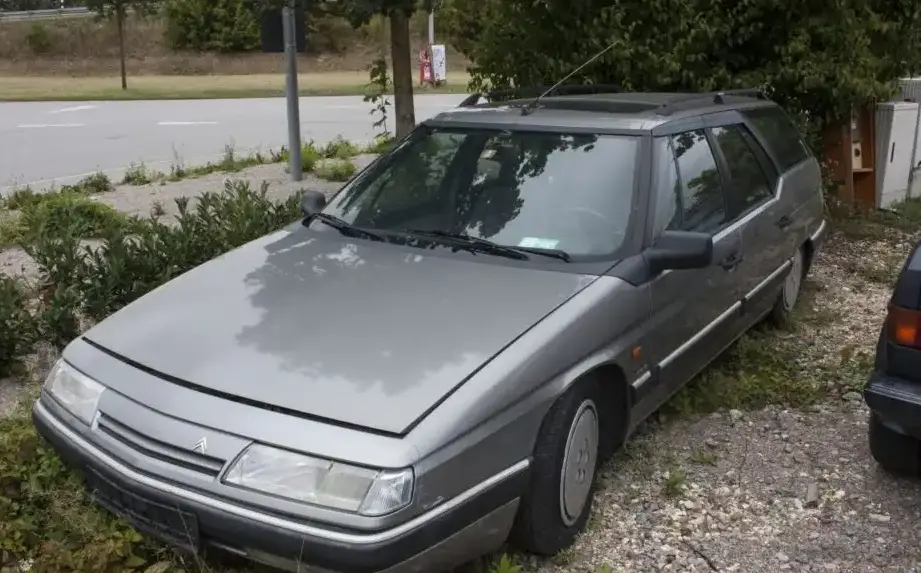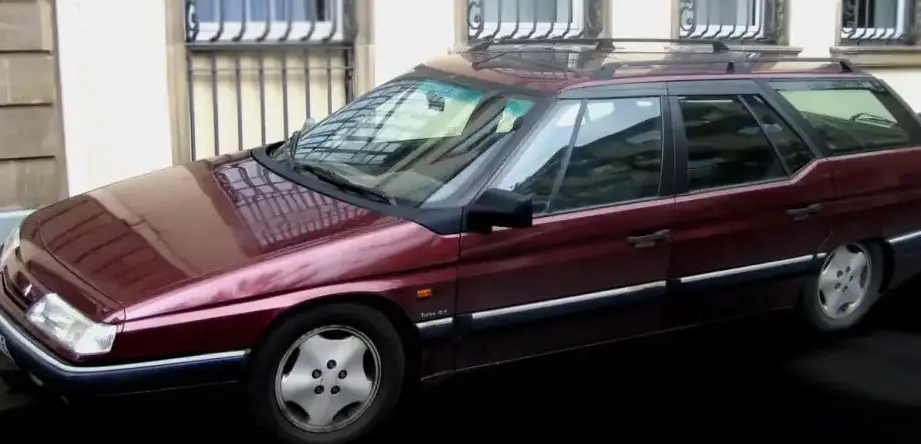
The Citroen XM Break (Y3) 2.0 i Turbo CT, produced between 1992 and 1994, represents a compelling blend of French engineering and practical estate car design. Positioned as a mid-range offering within the broader XM Break lineup, this variant aimed to provide a balance between performance, comfort, and fuel efficiency for buyers seeking a spacious and capable family vehicle. The XM Break, built on the Xantia/XM platform (X3), was Citroen’s flagship estate, known for its innovative hydropneumatic suspension and distinctive styling. This particular 2.0L turbocharged engine and five-speed manual transmission combination offered a step up in power compared to the base models, while remaining more accessible than the range-topping V6 versions.
Technical Specifications
| Brand | Citroen |
| Model | XM |
| Generation | XM Break (Y3) |
| Type (Engine) | 2.0 i Turbo CT (141 Hp) |
| Start of production | 1992 |
| End of production | 1994 |
| Powertrain Architecture | Internal Combustion engine |
| Body type | Station wagon (estate) |
| Seats | 5 |
| Doors | 5 |
| Fuel consumption (urban) | 12.7 l/100 km (18.5 US mpg, 22.2 UK mpg, 7.9 km/l) |
| Fuel consumption (extra urban) | 7.3 l/100 km (32.2 US mpg, 38.7 UK mpg, 13.7 km/l) |
| Fuel Type | Petrol (Gasoline) |
| Maximum speed | 202 km/h (125.52 mph) |
| Weight-to-power ratio | 10.6 kg/Hp, 94 Hp/tonne |
| Weight-to-torque ratio | 6.6 kg/Nm, 150.7 Nm/tonne |
| Power | 141 Hp @ 4400 rpm |
| Power per litre | 70.6 Hp/l |
| Torque | 226 Nm @ 2200 rpm (166.69 lb.-ft. @ 2200 rpm) |
| Engine layout | Front, Transverse |
| Engine Model/Code | RGY XU10 J2TE |
| Engine displacement | 1998 cm3 (121.93 cu. in.) |
| Number of cylinders | 4 |
| Engine configuration | Inline |
| Cylinder Bore | 86 mm (3.39 in.) |
| Piston Stroke | 86 mm (3.39 in.) |
| Compression ratio | 8.5:1 |
| Number of valves per cylinder | 2 |
| Fuel injection system | Multi-port manifold injection |
| Engine aspiration | Turbocharger, Intercooler |
| Valvetrain | SOHC |
| Engine oil capacity | 5.4 l (5.71 US qt | 4.75 UK qt) |
| Coolant | 7.5 l (7.93 US qt | 6.6 UK qt) |
| Kerb Weight | 1500 kg (3306.93 lbs.) |
| Max. weight | 2140 kg (4717.89 lbs.) |
| Max load | 640 kg (1410.96 lbs.) |
| Trunk (boot) space – minimum | 720 l (25.43 cu. ft.) |
| Trunk (boot) space – maximum | 1960 l (69.22 cu. ft.) |
| Fuel tank capacity | 80 l (21.13 US gal | 17.6 UK gal) |
| Max. roof load | 100 kg (220.46 lbs.) |
| Permitted towbar download | 80 kg (176.37 lbs.) |
| Length | 4963 mm (195.39 in.) |
| Width | 1794 mm (70.63 in.) |
| Width including mirrors | 2000 mm (78.74 in.) |
| Height | 1385 mm (54.53 in.) |
| Wheelbase | 2850 mm (112.2 in.) |
| Front track | 1520 mm (59.84 in.) |
| Rear (Back) track | 1450 mm (57.09 in.) |
| Front overhang | 1068 mm (42.05 in.) |
| Rear overhang | 1045 mm (41.14 in.) |
| Ride height (ground clearance) | 141 mm (5.55 in.) |
| Minimum turning circle (turning diameter) | 12.5 m (41.01 ft.) |
| Drivetrain Architecture | The Internal combustion engine (ICE) drives the front wheels of the vehicle. |
| Drive wheel | Front wheel drive |
| Number of gears and type of gearbox | 5 gears, manual transmission |
| Front suspension | Independent type McPherson, Wishbone |
| Rear suspension | Hydro-pneumatic element, Trailing arm |
| Front brakes | Ventilated discs |
| Rear brakes | Disc |
| Assisting systems | ABS (Anti-lock braking system) |
| Steering type | Steering rack and pinion |
| Power steering | Hydraulic Steering |
| Tires size | 195/65 R15 |
Powertrain & Engine Architecture
The heart of the XM Break 2.0 i Turbo CT is the Peugeot-Renault-Volvo (PRV) XU10 J2TE engine. This 1998cc inline-four cylinder engine features a single overhead camshaft (SOHC) valvetrain and utilizes multi-port fuel injection. The addition of a turbocharger and intercooler significantly boosts power output, delivering 141 horsepower at 4400 rpm and 226 Nm (166.69 lb-ft) of torque at 2200 rpm. This engine code, ‘RGY’, is specific to the Citroen application. The turbocharger provides a noticeable increase in performance over the naturally aspirated 1.8 and 2.0 liter engines available in the XM range. The five-speed manual transmission, a common unit for this era, provides precise gear changes and allows the driver to fully exploit the engine’s power band.
Driving Characteristics
The 2.0 i Turbo CT offers a noticeably more engaging driving experience than the lower-powered XM Break variants. The turbocharger provides a surge of power in the mid-range, making overtaking and highway cruising considerably easier. While not a sports car, the XM Break 2.0 i Turbo CT delivers respectable acceleration and a comfortable ride, thanks to Citroen’s renowned hydropneumatic suspension. The five-speed manual transmission allows for greater driver control, although the gear ratios are geared towards fuel efficiency and relaxed cruising rather than outright performance. Compared to the V6 models, the 2.0 i Turbo CT feels lighter and more agile, while offering a significant power upgrade over the base 1.8 and 2.0 liter non-turbo engines.
Equipment & Trim Levels
The “CT” designation indicates a mid-level trim package. Standard equipment typically included central locking, electric front windows, power steering, and an adjustable steering column. Interior upholstery was usually a cloth material, although leather options were available. The dashboard layout is characteristically Citroen of the period, featuring a blend of analog gauges and a digital display. Optional extras included air conditioning, a sunroof, and upgraded audio systems. The XM Break was designed with practicality in mind, offering a spacious interior and a large cargo area, making it ideal for families and those requiring ample carrying capacity.
Chassis & Braking
The XM Break utilizes an independent McPherson strut front suspension and a hydro-pneumatic rear suspension. This unique rear suspension system provides an exceptionally smooth and comfortable ride, automatically adjusting to road conditions and load. The front brakes are ventilated discs, while the rear brakes are solid discs, providing adequate stopping power for the vehicle’s weight and performance. ABS (Anti-lock Braking System) was standard, enhancing safety and control during emergency braking situations. The steering is a rack and pinion system with hydraulic power assistance, offering precise and responsive handling.
Market Reception & Comparison
The Citroen XM Break 2.0 i Turbo CT was generally well-received by automotive critics. It was praised for its comfortable ride, spacious interior, and strong performance. However, some critics noted the complexity of the hydropneumatic suspension system and the potential for maintenance issues. Compared to other estate cars of the time, such as the Ford Mondeo Estate or the Volvo 940 Estate, the XM Break offered a more distinctive and sophisticated driving experience, but potentially at the cost of long-term reliability. Fuel economy was reasonable for a turbocharged engine of this era, averaging around 22-32 mpg depending on driving conditions.
Legacy
The Citroen XM Break 2.0 i Turbo CT remains a relatively rare and sought-after vehicle among enthusiasts. The PRV XU10 engine is known for its durability, although regular maintenance is essential. The hydropneumatic suspension system requires specialized knowledge and can be expensive to repair. Today, well-maintained examples of the XM Break 2.0 i Turbo CT are becoming increasingly collectible, appreciated for their unique design, innovative technology, and comfortable driving experience. Finding parts can be challenging, but a dedicated community of XM owners and specialists exists to provide support and assistance.