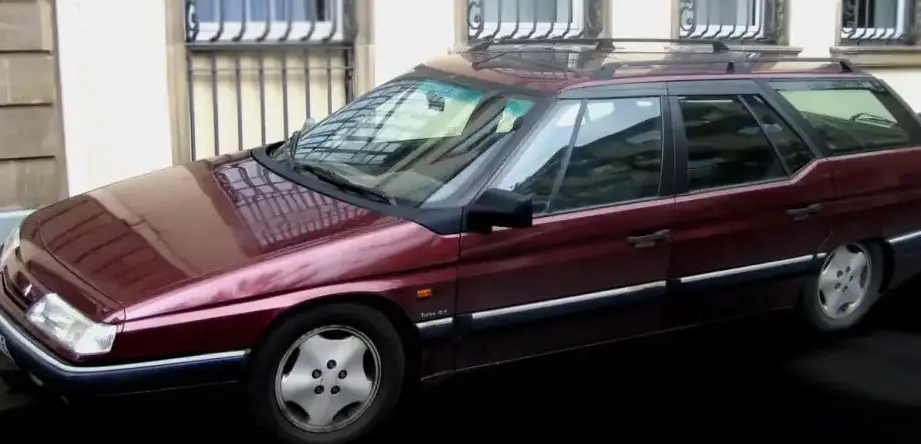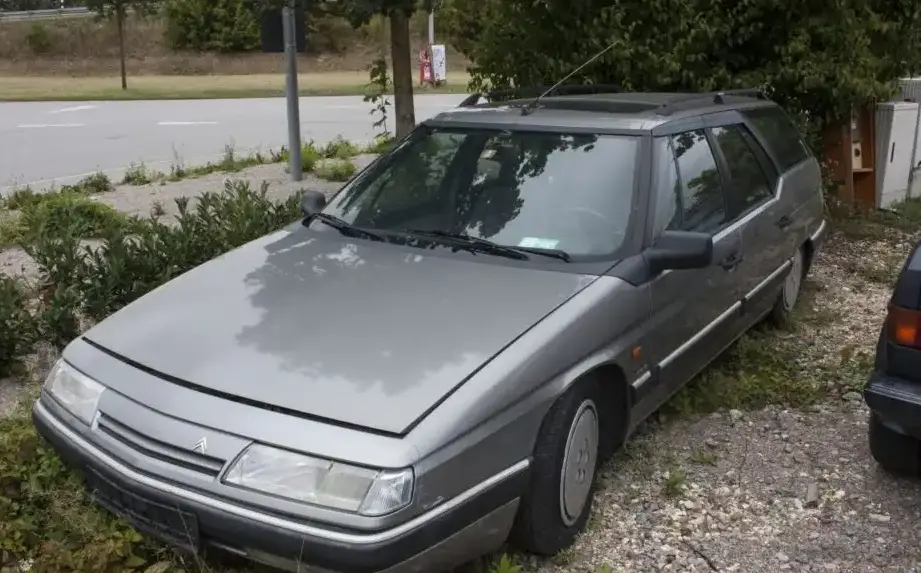
The Citroen XM Break (Y3) 2.1 Turbo D12, produced between 1991 and 1994, represents a unique offering within the second generation of the XM series. Positioned as a diesel-powered variant of the spacious Break (estate) body style, it aimed to provide a blend of practicality, comfort, and reasonable fuel economy for European buyers. The Y3 designation refers to the facelifted version of the XM, introducing subtle styling changes and refinements over the original Y2 models. This particular 2.1-liter turbocharged diesel engine, producing 110 horsepower, was a mid-range option in the XM Break lineup, slotting below the more powerful petrol engines and above the naturally aspirated diesel variants.
Technical Specifications
| Brand | Citroen |
| Model | XM |
| Generation | XM Break (Y3) |
| Type (Engine) | 2.1 Turbo D12 (110 Hp) |
| Start of production | 1991 |
| End of production | 1994 |
| Powertrain Architecture | Internal Combustion engine |
| Body type | Station wagon (estate) |
| Seats | 5 |
| Doors | 5 |
| Fuel consumption (urban) | 8.5 l/100 km (27.7 US mpg) |
| Fuel consumption (extra urban) | 5 l/100 km (47 US mpg) |
| Fuel Type | Diesel |
| Acceleration 0 – 100 km/h | 13.8 sec |
| Acceleration 0 – 62 mph | 13.8 sec |
| Acceleration 0 – 60 mph | 13.1 sec |
| Maximum speed | 184 km/h (114.33 mph) |
| Weight-to-power ratio | 13.4 kg/Hp |
| Weight-to-torque ratio | 5.9 kg/Nm |
| Power | 110 Hp @ 4300 rpm |
| Power per litre | 52.7 Hp/l |
| Torque | 250 Nm @ 2000 rpm (184.39 lb.-ft. @ 2000 rpm) |
| Engine layout | Front, Transverse |
| Engine Model/Code | PHZ XUD11ATE |
| Engine displacement | 2088 cm3 (127.42 cu. in.) |
| Number of cylinders | 4 |
| Engine configuration | Inline |
| Cylinder Bore | 85 mm (3.35 in.) |
| Piston Stroke | 92 mm (3.62 in.) |
| Compression ratio | 21.5:1 |
| Number of valves per cylinder | 3 |
| Fuel injection system | Precombustion chamber injection |
| Engine aspiration | Turbocharger, Intercooler |
| Valvetrain | OHC |
| Engine oil capacity | 4.25 l (4.49 US qt | 3.74 UK qt) |
| Coolant | 11.4 l (12.05 US qt | 10.03 UK qt) |
| Kerb Weight | 1474 kg (3249.61 lbs.) |
| Max. weight | 2085 kg (4596.64 lbs.) |
| Max load | 611 kg (1347.02 lbs.) |
| Trunk (boot) space – minimum | 720 l (25.43 cu. ft.) |
| Trunk (boot) space – maximum | 1960 l (69.22 cu. ft.) |
| Fuel tank capacity | 80 l (21.13 US gal | 17.6 UK gal) |
| Max. roof load | 100 kg (220.46 lbs.) |
| Permitted trailer load with brakes (12%) | 1500 kg (3306.93 lbs.) |
| Permitted trailer load without brakes | 725 kg (1598.35 lbs.) |
| Permitted towbar download | 80 kg (176.37 lbs.) |
| Length | 4963 mm (195.39 in.) |
| Width | 1794 mm (70.63 in.) |
| Width including mirrors | 2000 mm (78.74 in.) |
| Height | 1385 mm (54.53 in.) |
| Wheelbase | 2850 mm (112.2 in.) |
| Front track | 1520 mm (59.84 in.) |
| Rear (Back) track | 1450 mm (57.09 in.) |
| Front overhang | 1068 mm (42.05 in.) |
| Rear overhang | 1045 mm (41.14 in.) |
| Ride height (ground clearance) | 141 mm (5.55 in.) |
| Minimum turning circle (turning diameter) | 12.5 m (41.01 ft.) |
| Drivetrain Architecture | The Internal combustion engine (ICE) drives the front wheels of the vehicle. |
| Drive wheel | Front wheel drive |
| Number of gears and type of gearbox | 5 gears, manual transmission |
| Front suspension | Independent type McPherson, Wishbone |
| Rear suspension | Hydro-pneumatic element, Trailing arm |
| Front brakes | Ventilated discs |
| Rear brakes | Disc |
| Assisting systems | ABS (Anti-lock braking system) |
| Steering type | Steering rack and pinion |
| Power steering | Hydraulic Steering |
| Tires size | 195/65 R15 |
Powertrain & Engine Architecture
The heart of the XM Break 2.1 Turbo D12 is the PHZ engine, a member of the PSA Group’s XUD family of diesel engines. This 2.1-liter inline-four cylinder engine utilizes precombustion chamber injection, a system common in European diesels of the era. This system involves injecting fuel into a precombustion chamber connected to the main cylinder, promoting more complete combustion and reducing noise. The addition of a turbocharger and intercooler significantly boosted power output compared to naturally aspirated XUD engines. The turbocharger, driven by exhaust gases, forces more air into the engine, while the intercooler cools the compressed air, increasing its density and further improving performance. The engine features an overhead camshaft (OHC) valvetrain operating three valves per cylinder (two intake, one exhaust). The engine is transversely mounted, driving the front wheels through a five-speed manual transmission. While an automatic transmission was available on some XM models, it was less common with the 2.1 Turbo D12 engine.
Driving Characteristics
The 110 horsepower and 250 Nm (184 lb-ft) of torque offered by the 2.1 Turbo D12 provided adequate, though not exhilarating, performance for the XM Break. Acceleration to 60 mph took around 13.1 seconds, and top speed was approximately 114 mph. The turbocharger provided a noticeable boost in power at around 2000 rpm, offering improved responsiveness for overtaking and highway cruising. However, the engine lacked the outright punch of the petrol-powered XMs. The five-speed manual transmission allowed drivers to keep the engine in its optimal power band. The XM’s renowned hydropneumatic suspension provided a remarkably comfortable ride, absorbing bumps and imperfections in the road with ease. Steering was light and precise, contributing to a relaxed driving experience.
Equipment & Trim Levels
The XM Break 2.1 Turbo D12 typically came with a reasonable level of standard equipment. This included central locking, electric front windows, power steering, and an adjustable steering column. Interior upholstery was typically cloth, with options for upgraded materials. The dashboard featured a distinctive, somewhat futuristic design for its time, with a digital instrument cluster displaying key vehicle information. Optional extras included air conditioning, a sunroof, and upgraded audio systems. Trim levels varied depending on the market, but generally, the 2.1 Turbo D12 occupied a mid-range position in the XM Break lineup.
Chassis & Braking
The XM Break featured an independent front suspension with McPherson struts and wishbones, providing good handling and stability. The rear suspension utilized Citroen’s innovative hydropneumatic system, offering self-leveling and exceptional ride comfort. Brakes were ventilated discs at the front and solid discs at the rear. Anti-lock braking system (ABS) was standard, enhancing safety and control during emergency braking. The XM’s chassis was designed to prioritize comfort and refinement, rather than outright sportiness.
Market Reception & Comparison
The Citroen XM Break 2.1 Turbo D12 was generally well-received by automotive critics for its spaciousness, comfort, and fuel efficiency. However, some criticized its relatively modest performance compared to petrol-powered rivals. Compared to the more powerful XM V6 models, the 2.1 Turbo D12 offered significantly better fuel economy, but at the expense of acceleration and overall driving excitement. Against other diesel estate cars of the era, the XM Break offered a unique combination of comfort, practicality, and sophisticated technology. Reliability was a mixed bag, with the hydropneumatic suspension requiring periodic maintenance and potential for expensive repairs.
Legacy
The Citroen XM Break 2.1 Turbo D12, while not the most common variant, remains a fondly remembered example of French automotive engineering. The XUD engine, in its various iterations, proved to be a durable and reliable powerplant. Today, well-maintained examples are sought after by enthusiasts who appreciate the XM’s unique character and innovative technology. The hydropneumatic suspension, while requiring specialized knowledge for repair, continues to provide a ride quality that few modern cars can match. The 2.1 Turbo D12 offers a compelling blend of practicality, comfort, and fuel economy for those seeking a classic European estate car.