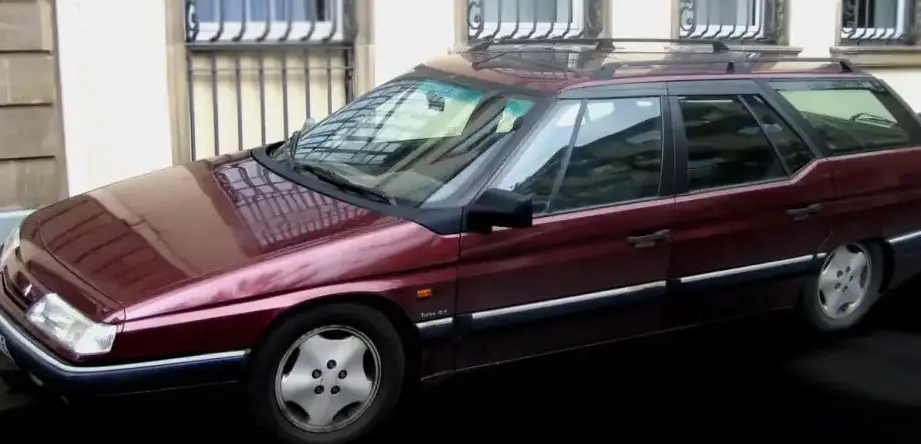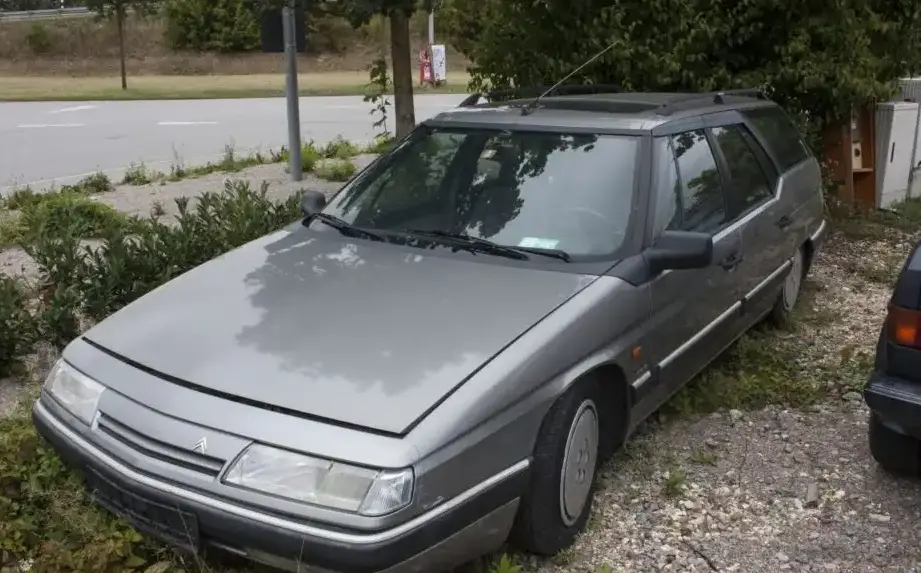
The Citroen XM Break (Y3) 3.0i V6, produced between 1991 and 1994, represents a high-performance variant within the second generation (Y3) of the XM Break (estate) model line. Positioned as a premium offering, it catered to buyers seeking a spacious, comfortable, and relatively quick wagon. The XM Break, in general, was Citroen’s flagship in the large family car segment, known for its innovative hydropneumatic suspension and distinctive styling. This 3.0i V6 model aimed to combine practicality with a more spirited driving experience than the four-cylinder options available.
Technical Specifications
| Brand | Citroen |
| Model | XM |
| Generation | XM Break (Y3) |
| Type (Engine) | 3.0 i V6 (170 Hp) |
| Start of production | 1991 |
| End of production | 1994 |
| Powertrain Architecture | Internal Combustion engine |
| Body type | Station wagon (estate) |
| Seats | 5 |
| Doors | 5 |
| Fuel consumption (urban) | 15 l/100 km (15.7 US mpg, 18.8 UK mpg, 6.7 km/l) |
| Fuel consumption (extra urban) | 8 l/100 km (29.4 US mpg, 35.3 UK mpg, 12.5 km/l) |
| Fuel Type | Petrol (Gasoline) |
| Acceleration 0 – 100 km/h | 10.9 sec |
| Acceleration 0 – 62 mph | 10.9 sec |
| Acceleration 0 – 60 mph | 10.4 sec |
| Maximum speed | 217 km/h (134.84 mph) |
| Weight-to-power ratio | 8.9 kg/Hp, 112.6 Hp/tonne |
| Weight-to-torque ratio | 6.4 kg/Nm, 155.6 Nm/tonne |
| Power | 170 Hp @ 5600 rpm |
| Power per litre | 57.1 Hp/l |
| Torque | 235 Nm @ 4600 rpm (173.33 lb.-ft. @ 4600 rpm) |
| Engine layout | Front, Transverse |
| Engine Model/Code | SFZ ZPJ |
| Engine displacement | 2975 cm3 (181.55 cu. in.) |
| Number of cylinders | 6 |
| Engine configuration | V-engine |
| Cylinder Bore | 93 mm (3.66 in.) |
| Piston Stroke | 73 mm (2.87 in.) |
| Compression ratio | 9.5:1 |
| Number of valves per cylinder | 2 |
| Fuel injection system | Multi-port manifold injection |
| Engine aspiration | Naturally aspirated engine |
| Engine oil capacity | 7 l (7.4 US qt | 6.16 UK qt) |
| Coolant capacity | 10 l (10.57 US qt | 8.8 UK qt) |
| Kerb Weight | 1510 kg (3328.98 lbs.) |
| Max. weight | 2130 kg (4695.85 lbs.) |
| Max load | 620 kg (1366.87 lbs.) |
| Trunk (boot) space – minimum | 720 l (25.43 cu. ft.) |
| Trunk (boot) space – maximum | 1960 l (69.22 cu. ft.) |
| Fuel tank capacity | 80 l (21.13 US gal | 17.6 UK gal) |
| Max. roof load | 100 kg (220.46 lbs.) |
| Permitted trailer load with brakes (12%) | 1500 kg (3306.93 lbs.) |
| Permitted trailer load without brakes | 750 kg (1653.47 lbs.) |
| Permitted towbar download | 80 kg (176.37 lbs.) |
| Length | 4963 mm (195.39 in.) |
| Width | 1794 mm (70.63 in.) |
| Width including mirrors | 2000 mm (78.74 in.) |
| Height | 1385 mm (54.53 in.) |
| Wheelbase | 2850 mm (112.2 in.) |
| Front track | 1520 mm (59.84 in.) |
| Rear track | 1450 mm (57.09 in.) |
| Front overhang | 1068 mm (42.05 in.) |
| Rear overhang | 1045 mm (41.14 in.) |
| Ride height (ground clearance) | 141 mm (5.55 in.) |
| Minimum turning circle | 12.5 m (41.01 ft.) |
| Drivetrain Architecture | Front wheel drive |
| Drive wheel | Front wheel drive |
| Number of gears and type of gearbox | 5 gears, manual transmission |
| Front suspension | Independent type McPherson, Wishbone |
| Rear suspension | Hydro-pneumatic element, Trailing arm |
| Front brakes | Ventilated discs |
| Rear brakes | Disc |
| Assisting systems | ABS (Anti-lock braking system) |
| Steering type | Steering rack and pinion |
| Power steering | Hydraulic Steering |
| Tires size | 205/60 R15 |
INTRODUCTION
The Citroen XM Break 3.0i V6, launched in 1991, was a significant addition to the XM range. The XM, replacing the aging CX, was intended to be a technologically advanced and comfortable large family car. The Break (estate) version offered increased practicality without sacrificing the XM’s core values. The 3.0i V6 was the top-of-the-line engine option for the XM Break, offering a substantial performance upgrade over the 2.0-liter four-cylinder models. It was positioned as a competitor to cars like the Volvo 960 Estate and the BMW 5 Series Touring.
Powertrain & Engine Architecture
The heart of the XM Break 3.0i V6 is the SFZ ZPJ engine, a 2,975cc 60-degree V6. This engine, developed in collaboration with Peugeot and Renault, featured a cast iron block and aluminum cylinder heads. It utilized a multi-port fuel injection system and a relatively modest 9.5:1 compression ratio. The engine produced 170 horsepower at 5,600 rpm and 235 Nm (173.33 lb-ft) of torque at 4,600 rpm. The engine’s design prioritized smoothness and refinement over outright power. The five-speed manual transmission was standard, providing a good balance between performance and fuel economy. While an automatic transmission was available on some XM models, it was less common with the V6 engine due to concerns about its ability to handle the increased torque.
Driving Characteristics
The XM Break 3.0i V6 offered a noticeably more relaxed and capable driving experience compared to the four-cylinder versions. Acceleration to 60 mph took approximately 10.4 seconds, and it could reach a top speed of 134.84 mph. The V6 engine provided ample power for overtaking and cruising on highways. The hydropneumatic suspension, a Citroen hallmark, delivered an exceptionally smooth and comfortable ride, absorbing bumps and imperfections in the road with ease. The steering was light and precise, although some drivers found it lacked feedback. The five-speed manual transmission allowed for good control over the engine’s power, while the gear ratios were well-suited for both city driving and long-distance journeys.
Equipment & Trim Levels
The 3.0i V6 XM Break was typically well-equipped, reflecting its position as the range-topping model. Standard features included central locking, electric windows, power steering, and an anti-lock braking system (ABS). Interior upholstery was typically cloth or velour, with leather options available as an extra cost. The dashboard featured a comprehensive instrument cluster with analog gauges. Optional extras included a sunroof, air conditioning, and a high-end audio system. The interior was designed with comfort and practicality in mind, offering ample space for passengers and luggage.
Chassis & Braking
The XM Break featured an independent front suspension with McPherson struts and wishbones, while the rear suspension utilized Citroen’s innovative hydropneumatic system. This system allowed for self-leveling and adjustable ride height, providing a consistently comfortable ride regardless of load. The braking system consisted of ventilated discs at the front and solid discs at the rear. The ABS system helped to maintain control during hard braking. The chassis was designed to provide a good balance between handling and comfort, prioritizing ride quality over sporty handling characteristics.
Market Reception & Comparison
The Citroen XM Break 3.0i V6 was generally well-received by automotive critics, who praised its comfortable ride, spacious interior, and refined engine. However, some critics noted its relatively high price and complex technology, which could potentially lead to higher maintenance costs. Compared to the four-cylinder XM Break models, the 3.0i V6 offered a significant performance upgrade, but at a higher price point. Fuel economy was also lower with the V6 engine. Against competitors like the Volvo 960 Estate, the XM Break offered a more distinctive design and a more sophisticated suspension system, but the Volvo was often considered more reliable.
Legacy
The Citroen XM Break 3.0i V6 remains a relatively rare and sought-after classic car today. The SFZ V6 engine, while not known for being particularly robust, is generally reliable if properly maintained. The hydropneumatic suspension requires regular attention and can be expensive to repair. However, the XM Break’s unique combination of comfort, practicality, and distinctive styling has earned it a loyal following among enthusiasts. Finding parts can be challenging, but a dedicated network of Citroen specialists and online forums provides support for owners. The XM Break 3.0i V6 represents a high point in Citroen’s engineering and design history, and it continues to offer a unique and rewarding driving experience.