Technical Specifications
| Brand | Citroen |
| Model | XM |
| Generation | XM Break (Y4) |
| Type (Engine) | 2.0 i 16V (132 Hp) Automatic |
| Start of production | 1994 |
| End of production | 1999 |
| Powertrain Architecture | Internal Combustion engine |
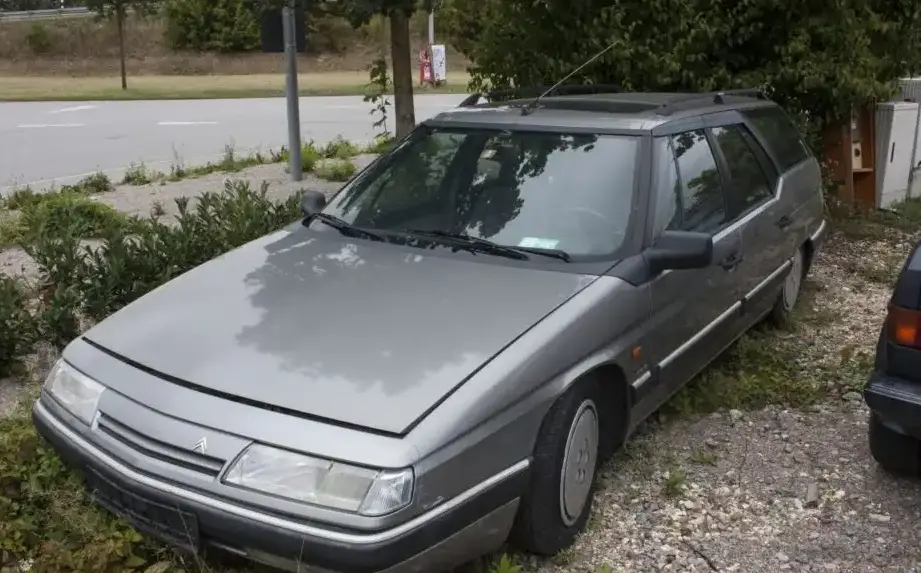
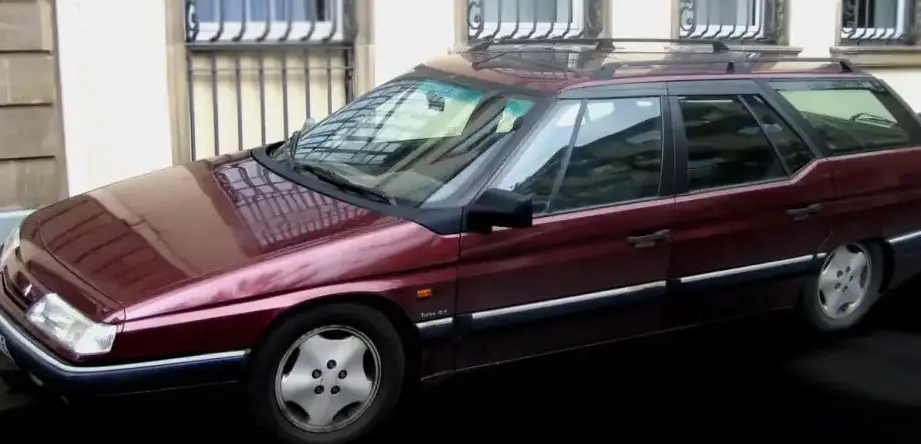
| Body type | Station wagon (estate) |
| Seats | 5 |
| Doors | 5 |
| Fuel consumption (urban) | 8.6 l/100 km (27.4 US mpg, 32.8 UK mpg, 11.6 km/l) |
| Fuel consumption (extra urban) | 6.7 l/100 km (35.1 US mpg, 42.2 UK mpg, 14.9 km/l) |
| Fuel consumption (combined) | 7.6 l/100 km (30.9 US mpg, 37.2 UK mpg, 13.2 km/l) |
| Fuel Type | Petrol (Gasoline) |
| Acceleration 0 – 100 km/h | 15.4 sec |
| Acceleration 0 – 62 mph | 15.4 sec |
| Acceleration 0 – 60 mph | 14.6 sec |
| Maximum speed | 190 km/h (118.06 mph) |
| Weight-to-power ratio | 11.1 kg/Hp, 90 Hp/tonne |
| Weight-to-torque ratio | 8.2 kg/Nm, 122.7 Nm/tonne |
| Power | 132 Hp @ 5500 rpm |
| Power per litre | 66.1 Hp/l |
| Torque | 180 Nm @ 4200 rpm (132.76 lb.-ft. @ 4200 rpm) |
| Engine layout | Front, Transverse |
| Engine Model/Code | RFV XU10J4R |
| Engine displacement | 1998 cm3 (121.93 cu. in.) |
| Number of cylinders | 4 |
| Engine configuration | Inline |
| Cylinder Bore | 86 mm (3.39 in.) |
| Piston Stroke | 86 mm (3.39 in.) |
| Compression ratio | 10.4:1 |
| Number of valves per cylinder | 4 |
| Fuel injection system | Multi-port manifold injection |
| Engine aspiration | Naturally aspirated engine |
| Valvetrain | DOHC |
| Engine oil capacity | 5.4 l (5.71 US qt | 4.75 UK qt) |
| Coolant | 7.5 l (7.93 US qt | 6.6 UK qt) |
| Kerb Weight | 1467 kg (3234.18 lbs.) |
| Max. weight | 2070 kg (4563.57 lbs.) |
| Max load | 603 kg (1329.39 lbs.) |
| Trunk (boot) space – minimum | 750 l (26.49 cu. ft.) |
| Trunk (boot) space – maximum | 1960 l (69.22 cu. ft.) |
| Fuel tank capacity | 80 l (21.13 US gal | 17.6 UK gal) |
| Length | 4963 mm (195.39 in.) |
| Width | 1794 mm (70.63 in.) |
| Height | 1456 mm (57.32 in.) |
| Wheelbase | 2850 mm (112.2 in.) |
| Front track | 1520 mm (59.84 in.) |
| Rear (Back) track | 1447 mm (56.97 in.) |
| Front overhang | 1068 mm (42.05 in.) |
| Rear overhang | 1045 mm (41.14 in.) |
| Ride height (ground clearance) | 141 mm (5.55 in.) |
| Drivetrain Architecture | The Internal combustion engine (ICE) drives the front wheels of the vehicle. |
| Drive wheel | Front wheel drive |
| Number of gears and type of gearbox | 4 gears, automatic transmission |
| Front suspension | Independent type McPherson, Wishbone |
| Rear suspension | Hydro-pneumatic element, Trailing arm |
| Front brakes | Ventilated discs |
| Rear brakes | Disc |
| Assisting systems | ABS (Anti-lock braking system) |
| Steering type | Steering rack and pinion |
| Power steering | Hydraulic Steering |
| Tires size | 195/65 R15 |
| Wheel rims size | 15 |
The Citroen XM Break 2.0i 16V Automatic, produced between 1994 and 1999, represents a compelling blend of French engineering and practicality within the larger XM Break (Y4) range. Positioned as a mid-range offering, it aimed to provide a comfortable and refined experience for families and long-distance drivers. The XM Break, a station wagon derivative of the innovative XM saloon, was Citroen’s flagship in the large family car segment, known for its distinctive styling and advanced hydropneumatic suspension. This 2.0-liter, 16-valve engine paired with an automatic transmission offered a balance between performance and ease of use, appealing to buyers who prioritized comfort over outright speed. It was part of the second generation (Y4) of the XM, which saw refinements to the original design and powertrain options.
Powertrain & Engine Architecture
The heart of the XM Break 2.0i 16V Automatic is the RFV XU10J4R engine, a 1.998-liter inline-four cylinder powerplant. This engine is part of the PSA Group’s XU series, known for its robust construction and relatively simple design. The “16V” designation indicates a four-valve-per-cylinder configuration, enhancing breathing and contributing to improved power output. Fuel delivery is managed by a multi-port fuel injection system, providing precise fuel metering for optimal combustion. The engine utilizes a double overhead camshaft (DOHC) valvetrain, further optimizing valve timing and engine efficiency. The automatic transmission is a four-speed unit, designed to provide smooth and effortless gear changes. While not known for its sportiness, this transmission was well-suited to the XM’s focus on comfort and ease of driving.
Driving Characteristics
The 132 horsepower and 180 Nm (133 lb-ft) of torque produced by the 2.0i 16V engine, when coupled with the four-speed automatic transmission, resulted in a comfortable but not particularly brisk driving experience. Acceleration from 0 to 60 mph took around 14.6 seconds, and top speed was approximately 118 mph. The automatic transmission’s gear ratios were geared towards relaxed cruising, prioritizing fuel economy and smooth operation over rapid acceleration. Compared to the manual transmission versions of the same engine, the automatic offered less direct control and slightly reduced fuel efficiency. It also lagged behind the performance of the more powerful V6 variants, but provided a more accessible and affordable entry point into the XM Break range.
Equipment & Trim Levels
The 2.0i 16V Automatic trim typically included features such as power windows, central locking, and an adjustable steering column. Interior upholstery was generally cloth, though leather options were available. Air conditioning was a common feature, and higher-spec models could be equipped with features like a sunroof, upgraded audio systems, and even rear headrests. The dashboard layout was typical of Citroens of the era, featuring a blend of analog gauges and digital displays. The XM Break was known for its spacious interior and generous luggage capacity, making it a practical choice for families.
Chassis & Braking
The XM Break featured an independent McPherson strut front suspension and a unique hydro-pneumatic rear suspension system. This hydropneumatic suspension, a Citroen hallmark, provided an exceptionally smooth and comfortable ride, automatically adjusting ride height and damping characteristics to maintain a level stance regardless of load. Braking duties were handled by ventilated discs at the front and solid discs at the rear, assisted by an Anti-lock Braking System (ABS). The steering was rack and pinion, with hydraulic power assistance for ease of maneuvering.
Market Reception & Comparison
The Citroen XM Break 2.0i 16V Automatic was generally well-received by critics as a comfortable and practical family car. However, it wasn’t lauded for its performance. Compared to the more powerful V6 models, it offered a more affordable price point and better fuel economy. The automatic transmission was seen as a convenient option for drivers prioritizing ease of use, but some reviewers noted that it detracted from the overall driving experience. Reliability was a mixed bag, with the hydropneumatic suspension requiring periodic maintenance and potential for issues. Fuel economy figures of around 31 mpg combined were respectable for the time.
Legacy
The Citroen XM Break, while not a massive sales success, remains a fondly remembered car among enthusiasts. The 2.0i 16V Automatic variant, while not the most sought-after version, offers a good balance of affordability and practicality. The RFV XU10J4R engine is known for its durability, though regular maintenance is essential. Today, well-maintained examples are becoming increasingly collectible, appealing to those who appreciate the XM’s unique design and advanced technology. The hydropneumatic suspension, while requiring specialized knowledge for repair, continues to be a defining feature and a source of fascination for many.