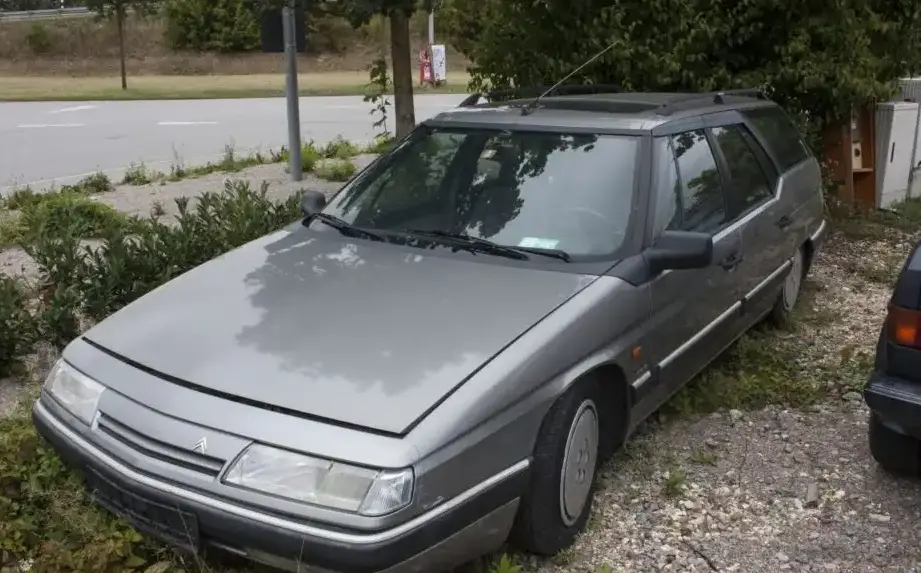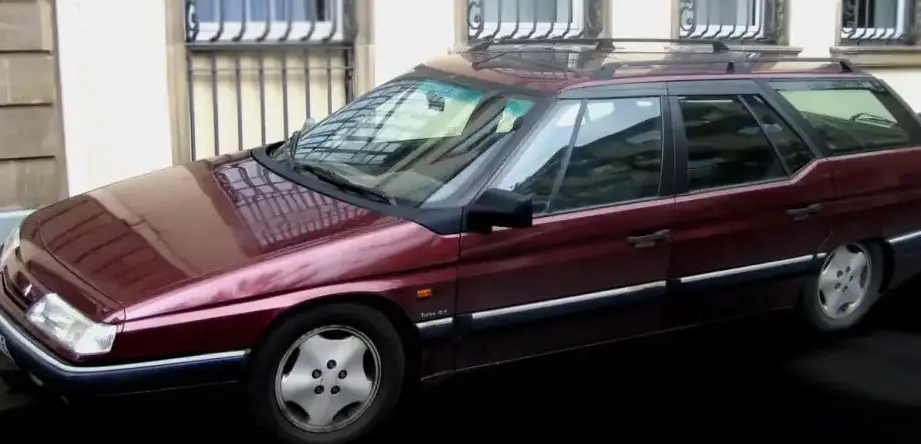
The Citroen XM Break (Y4) 2.0 Turbo CT, produced between 1994 and 1999, represents a compelling blend of French engineering and practical estate car design. Positioned as a mid-range offering within the XM Break lineup, this variant aimed to provide a balance between performance, comfort, and fuel efficiency for buyers seeking a spacious and capable family vehicle. The XM Break, built on the Xantia/XM platform (Y4), was Citroen’s large family car, known for its innovative hydropneumatic suspension and distinctive styling. The 2.0 Turbo CT model specifically targeted drivers who desired a more spirited driving experience than the base engine options offered, while remaining more accessible than the flagship V6 versions.
Technical Specifications
| Brand | Citroen |
| Model | XM |
| Generation | XM Break (Y4) |
| Type (Engine) | 2.0 Turbo CT (147 Hp) |
| Start of production | 1994 |
| End of production | 1999 |
| Powertrain Architecture | Internal Combustion engine |
| Body type | Station wagon (estate) |
| Seats | 5 |
| Doors | 5 |
| Fuel consumption (urban) | 14.5 l/100 km (16.2 US mpg, 19.5 UK mpg, 6.9 km/l) |
| Fuel consumption (extra urban) | 8 l/100 km (29.4 US mpg, 35.3 UK mpg, 12.5 km/l) |
| Fuel consumption (combined) | 10.4 l/100 km (22.6 US mpg, 27.2 UK mpg, 9.6 km/l) |
| CO2 emissions | 246 g/km |
| Fuel Type | Petrol (Gasoline) |
| Acceleration 0 – 100 km/h | 10.5 sec |
| Acceleration 0 – 62 mph | 10.5 sec |
| Acceleration 0 – 60 mph | 10 sec |
| Maximum speed | 204 km/h (126.76 mph) |
| Weight-to-power ratio | 10.4 kg/Hp, 96.4 Hp/tonne |
| Weight-to-torque ratio | 6.5 kg/Nm, 154.1 Nm/tonne |
| Power | 147 Hp @ 5300 rpm |
| Power per litre | 73.6 Hp/l |
| Torque | 235 Nm @ 2500 rpm (173.33 lb.-ft. @ 2500 rpm) |
| Engine layout | Front, Transverse |
| Engine Model/Code | RGX XU10 J2TE |
| Engine displacement | 1998 cm3 (121.93 cu. in.) |
| Number of cylinders | 4 |
| Engine configuration | Inline |
| Cylinder Bore | 86 mm (3.39 in.) |
| Piston Stroke | 86 mm (3.39 in.) |
| Compression ratio | 8:1 |
| Number of valves per cylinder | 2 |
| Fuel injection system | Multi-port manifold injection |
| Engine aspiration | Turbocharger, Intercooler |
| Valvetrain | OHC |
| Engine oil capacity | 5.4 l (5.71 US qt, 4.75 UK qt) |
| Coolant | 7.5 l (7.93 US qt, 6.6 UK qt) |
| Kerb Weight | 1525 kg (3362.05 lbs.) |
| Max. weight | 2170 kg (4784.03 lbs.) |
| Max load | 645 kg (1421.98 lbs.) |
| Trunk (boot) space – minimum | 750 l (26.49 cu. ft.) |
| Trunk (boot) space – maximum | 1960 l (69.22 cu. ft.) |
| Fuel tank capacity | 80 l (21.13 US gal, 17.6 UK gal) |
| Length | 4963 mm (195.39 in.) |
| Width | 1794 mm (70.63 in.) |
| Height | 1456 mm (57.32 in.) |
| Wheelbase | 2850 mm (112.2 in.) |
| Front track | 1520 mm (59.84 in.) |
| Rear track | 1447 mm (56.97 in.) |
| Front overhang | 1068 mm (42.05 in.) |
| Rear overhang | 1045 mm (41.14 in.) |
| Ride height (ground clearance) | 141 mm (5.55 in.) |
| Drivetrain Architecture | The Internal combustion engine (ICE) drives the front wheels of the vehicle. |
| Drive wheel | Front wheel drive |
| Number of gears and type of gearbox | 5 gears, manual transmission |
| Front suspension | Independent type McPherson, Wishbone |
| Rear suspension | Hydro-pneumatic element, Trailing arm |
| Front brakes | Ventilated discs |
| Rear brakes | Disc |
| Assisting systems | ABS (Anti-lock braking system) |
| Steering type | Steering rack and pinion |
| Power steering | Hydraulic Steering |
| Tires size | 205/60 R15 |
Powertrain & Engine Architecture
The heart of the XM Break 2.0 Turbo CT is the RGX XU10 J2TE engine, a 1.998-liter inline-four cylinder gasoline engine. This engine is a product of Peugeot-Citroen-Renault’s collaborative efforts, known for its robust construction and potential for tuning. The XU10J2TE features a single overhead camshaft (OHC) design, operating two valves per cylinder. Crucially, this variant is equipped with a turbocharger and intercooler, significantly boosting power output compared to naturally aspirated versions of the same engine. Fuel delivery is managed by a multi-port fuel injection system, ensuring precise fuel metering for optimal combustion. The engine produces 147 horsepower at 5300 rpm and 235 Nm (173 lb-ft) of torque at 2500 rpm. The engine is transversely mounted, driving the front wheels. The transmission is a 5-speed manual gearbox, chosen for its durability and driver engagement. While an automatic transmission was available on other XM models, the 2.0 Turbo CT was primarily offered with the manual, catering to drivers seeking more control.
Driving Characteristics
The 2.0 Turbo CT offered a noticeable step up in performance compared to the base XM Break models. The turbocharger provides a surge of power in the mid-range, making overtaking and highway cruising considerably easier. While not a sports car, the XM Break 2.0 Turbo CT delivers a respectable 0-60 mph time of around 10 seconds and a top speed of 126.76 mph. The manual transmission allows for precise gear selection, maximizing the engine’s power band. The gear ratios are well-suited for both city driving and long-distance journeys. Compared to the V6 models, the 2.0 Turbo CT feels lighter and more agile, though it lacks the ultimate refinement and power of the larger engine. The hydropneumatic suspension, a Citroen hallmark, provides a remarkably smooth and comfortable ride, absorbing bumps and imperfections in the road with ease. This suspension system also allows for adjustable ride height, enhancing versatility.
Equipment & Trim Levels
The “CT” designation in the XM Break 2.0 Turbo CT indicates a mid-range trim level. Standard equipment typically included power windows, central locking, power steering, and an anti-lock braking system (ABS). The interior featured comfortable cloth upholstery and a functional dashboard layout. Optional extras could include leather upholstery, a sunroof, and upgraded audio systems. The XM Break was known for its spacious interior and generous cargo capacity, making it an ideal vehicle for families. The rear seats could be folded down to create a large, flat load area. The dashboard design is typical of early 1990s French cars, prioritizing functionality over outright aesthetics.
Chassis & Braking
The XM Break utilizes an independent McPherson strut front suspension and a hydro-pneumatic trailing arm rear suspension. The hydropneumatic system provides self-leveling and adjustable ride height, contributing to the car’s exceptional ride comfort. The braking system consists of ventilated discs at the front and solid discs at the rear, providing adequate stopping power for the vehicle’s weight and performance. The ABS system enhances braking stability, particularly on slippery surfaces. The steering is a rack and pinion system with hydraulic power assistance, offering precise and responsive steering feel.
Market Reception & Comparison
The Citroen XM Break 2.0 Turbo CT was generally well-received by automotive critics, who praised its comfortable ride, spacious interior, and strong performance. However, some criticisms were leveled at its somewhat dated interior design and the complexity of the hydropneumatic suspension system. Compared to other estate cars of the time, such as the Ford Mondeo Estate or the Volvo 850 Estate, the XM Break offered a unique blend of French flair and innovative technology. Fuel economy was reasonable for a turbocharged engine of this era, averaging around 22.6 US mpg in combined driving. Reliability was a mixed bag, with the hydropneumatic suspension requiring periodic maintenance and potential repairs. However, the engine itself was generally considered to be durable and reliable.
Legacy
The Citroen XM Break 2.0 Turbo CT remains a fondly remembered vehicle among enthusiasts. Its distinctive styling, comfortable ride, and strong performance have earned it a cult following. While the hydropneumatic suspension can be expensive to maintain, the engine is generally considered to be robust and reliable. Today, well-maintained examples of the XM Break 2.0 Turbo CT are becoming increasingly collectible, appealing to those seeking a unique and characterful classic estate car. The car represents a high point in Citroen’s engineering prowess and a testament to the brand’s commitment to innovation and comfort.