Technical Specifications
| Brand | Citroen |
| Model | XM |
| Generation | XM Break (Y4) |
| Type (Engine) | 2.1 Turbo D12 (109 Hp) |
| Start of production | 1994 |
| End of production | 1999 |
| Powertrain Architecture | Internal Combustion engine |
| Body type | Station wagon (estate) |
| Seats | 5 |
| Doors | 5 |
| Fuel consumption (urban) | 9.6 l/100 km (24.5 US mpg, 29.4 UK mpg, 10.4 km/l) |
| Fuel consumption (extra urban) | 5.6 l/100 km (42 US mpg, 50.4 UK mpg, 17.9 km/l) |
| Fuel consumption (combined) | 7.1 l/100 km (33.1 US mpg, 39.8 UK mpg, 14.1 km/l) |
| CO2 emissions | 185 g/km |
| Fuel Type | Diesel |
| Acceleration 0 – 100 km/h | 14.2 sec |
| Acceleration 0 – 62 mph | 14.2 sec |
| Acceleration 0 – 60 mph | 13.5 sec |
| Maximum speed | 184 km/h (114.33 mph) |
| Emission standard | Euro 2 |
| Weight-to-power ratio | 14.7 kg/Hp, 68 Hp/tonne |
| Weight-to-torque ratio | 6.4 kg/Nm, 156.1 Nm/tonne |
| Power | 109 Hp @ 4300 rpm |
| Power per litre | 52.2 Hp/l |
| Torque | 250 Nm @ 2000 rpm (184.39 lb.-ft. @ 2000 rpm) |
| Engine layout | Front, Transverse |
| Engine Model/Code | P8C XUD11BTE |
| Engine displacement | 2088 cm3 (127.42 cu. in.) |
| Number of cylinders | 4 |
| Engine configuration | Inline |
| Cylinder Bore | 85 mm (3.35 in.) |
| Piston Stroke | 92 mm (3.62 in.) |
| Compression ratio | 21.5:1 |
| Number of valves per cylinder | 3 |
| Fuel injection system | Precombustion chamber injection |
| Engine aspiration | Turbocharger, Intercooler |
| Valvetrain | OHC |
| Engine oil capacity | 6 l (6.34 US qt | 5.28 UK qt) |
| Coolant | 10 l (10.57 US qt | 8.8 UK qt) |
| Kerb Weight | 1602 kg (3531.81 lbs.) |
| Max. weight | 2160 kg (4761.98 lbs.) |
| Max load | 558 kg (1230.18 lbs.) |
| Trunk (boot) space – minimum | 750 l (26.49 cu. ft.) |
| Trunk (boot) space – maximum | 1960 l (69.22 cu. ft.) |
| Fuel tank capacity | 80 l (21.13 US gal | 17.6 UK gal) |
| Max. roof load | 100 kg (220.46 lbs.) |
| Permitted trailer load with brakes (12%) | 1500 kg (3306.93 lbs.) |
| Permitted trailer load without brakes | 750 kg (1653.47 lbs.) |
| Permitted towbar download | 80 kg (176.37 lbs.) |
| Length | 4963 mm (195.39 in.) |
| Width | 1794 mm (70.63 in.) |
| Height | 1467 mm (57.76 in.) |
| Wheelbase | 2850 mm (112.2 in.) |
| Front track | 1520 mm (59.84 in.) |
| Rear track | 1447 mm (56.97 in.) |
| Front overhang | 1068 mm (42.05 in.) |
| Rear overhang | 1045 mm (41.14 in.) |
| Ride height (ground clearance) | 141 mm (5.55 in.) |
| Drivetrain Architecture | The Internal combustion engine (ICE) drives the front wheels of the vehicle. |
| Drive wheel | Front wheel drive |
| Number of gears and type of gearbox | 5 gears, manual transmission |
| Front suspension | Independent type McPherson, Wishbone |
| Rear suspension | Hydro-pneumatic element, Trailing arm |
| Front brakes | Ventilated discs |
| Rear brakes | Disc |
| Assisting systems | ABS (Anti-lock braking system) |
| Steering type | Steering rack and pinion |
| Power steering | Hydraulic Steering |
| Tires size | 195/65 R15 |
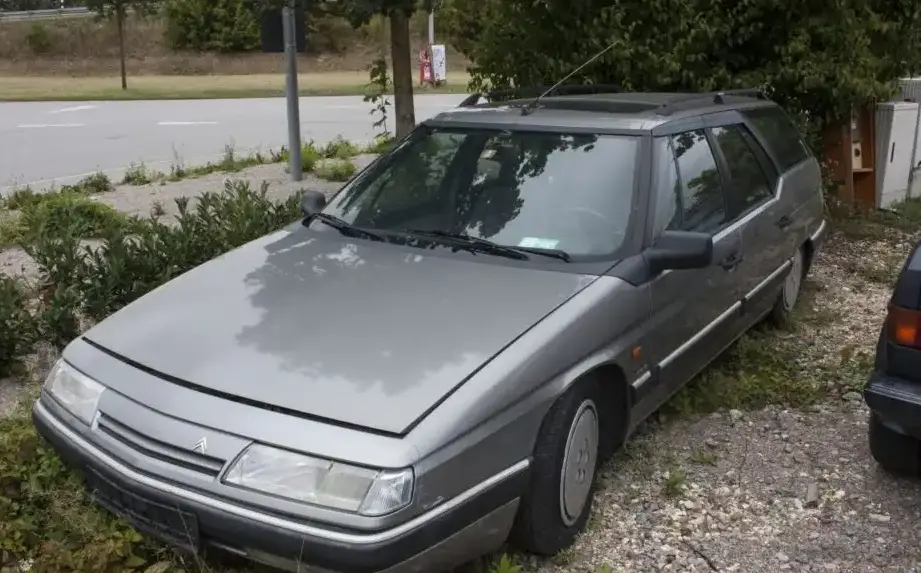
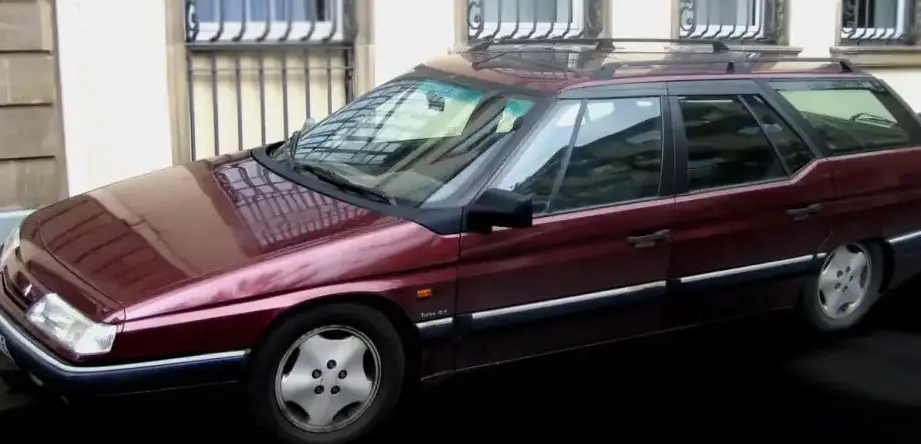
The Citroen XM Break 2.1 Turbo D12 was a station wagon produced between 1994 and 1999, representing a significant offering within the second generation (Y4) of the XM line. Positioned as a practical and comfortable family vehicle, it combined the distinctive styling of the XM with the efficiency of a turbocharged diesel engine. This variant aimed to provide a balance between performance, fuel economy, and load-carrying capacity, appealing to buyers needing a spacious and reliable estate car. It was part of the larger XM family, which included sedan body styles and a range of petrol and diesel engine options.
Powertrain & Engine Architecture
The heart of the XM Break 2.1 Turbo D12 was the P8C XUD11BTE engine, a 2.1-liter inline-four cylinder diesel. This engine utilized precombustion chamber injection, a system common in older diesel designs, where fuel is injected into a small pre-chamber before entering the main combustion chamber. This aids in better mixing and more complete combustion. The engine was turbocharged and intercooled, boosting power output to 109 horsepower and 250 Nm (184 lb-ft) of torque. The turbocharger significantly improved responsiveness and overall performance compared to naturally aspirated diesel engines. The engine featured an overhead camshaft (OHC) valvetrain with three valves per cylinder. The engine was transversely mounted in the front of the vehicle. The transmission was a five-speed manual gearbox, chosen for its durability and efficiency.
Driving Characteristics
The 2.1 Turbo D12 offered a comfortable, if not particularly sporty, driving experience. Acceleration was adequate, with a 0-60 mph time of around 13.5 seconds, but the focus was on relaxed cruising and fuel efficiency. The turbocharger provided a noticeable boost in power when accelerating, but the engine lacked the outright punch of higher-output petrol variants. The five-speed manual transmission allowed for reasonable control, but the gear ratios were geared towards economy rather than performance. Compared to the petrol-powered XMs, the diesel offered significantly better fuel economy, but at the expense of refinement and responsiveness. The hydropneumatic suspension, a Citroen hallmark, provided a remarkably smooth and comfortable ride, even on uneven surfaces.
Equipment & Trim Levels
The XM Break 2.1 Turbo D12 typically came with a reasonable level of standard equipment. This included power steering, central locking, electric front windows, and an adjustable steering column. Interior upholstery was typically cloth, with options for upgraded materials. Air conditioning was often an optional extra, as were features like a sunroof and upgraded audio systems. The dashboard layout was typical of Citroen designs of the era, with a focus on ergonomics and functionality. Trim levels varied depending on the market, but generally, this variant represented a mid-range offering within the XM Break lineup.
Chassis & Braking
The XM Break featured independent front suspension using a McPherson strut and wishbone setup, providing good handling and ride comfort. The rear suspension utilized Citroen’s innovative hydropneumatic system, which offered self-leveling and exceptional ride quality. Braking was handled by ventilated discs at the front and solid discs at the rear. Anti-lock braking system (ABS) was standard, enhancing safety. The chassis was designed to accommodate the weight of the diesel engine and the larger body of the estate car, providing a stable and predictable driving experience.
Market Reception & Comparison
The Citroen XM Break 2.1 Turbo D12 was generally well-received by critics for its practicality, comfort, and fuel efficiency. However, some reviewers noted the engine’s lack of refinement compared to petrol alternatives. Compared to the petrol-powered XMs, the diesel offered significantly better fuel economy, making it a popular choice for high-mileage drivers. Against competitors like the Volvo 940 Estate and the Ford Mondeo Estate, the XM Break stood out for its unique hydropneumatic suspension and distinctive styling. Reliability was generally good, although the complex hydropneumatic suspension could require specialized maintenance.
Legacy
The Citroen XM Break 2.1 Turbo D12 remains a relatively uncommon sight on the roads today. While not known for being a particularly collectible model, well-maintained examples are appreciated by enthusiasts for their unique character and comfortable ride. The XUD11 engine is known for its durability, but age-related issues with the hydropneumatic suspension and other components can require significant investment to maintain. In the used car market, these XMs are typically affordable, making them an attractive option for those seeking a spacious and comfortable estate car with a touch of French flair.