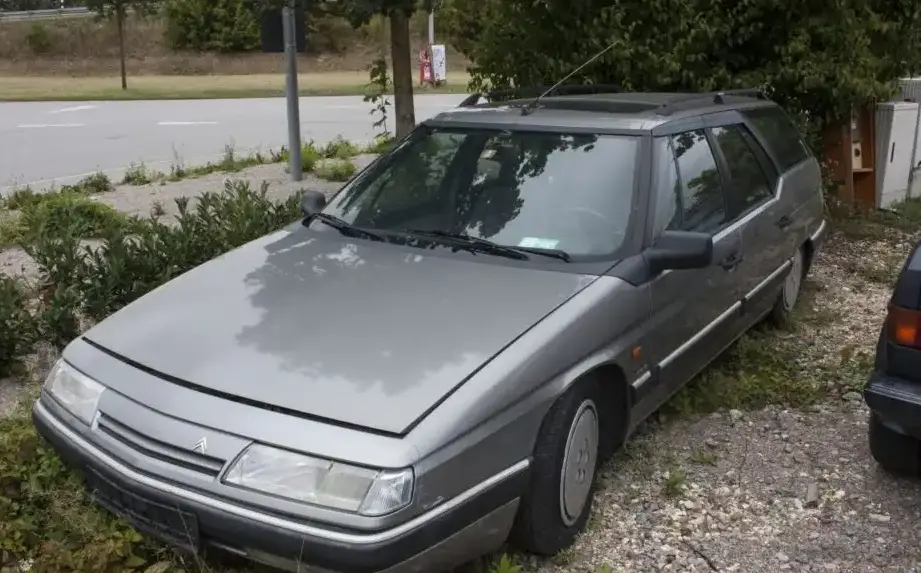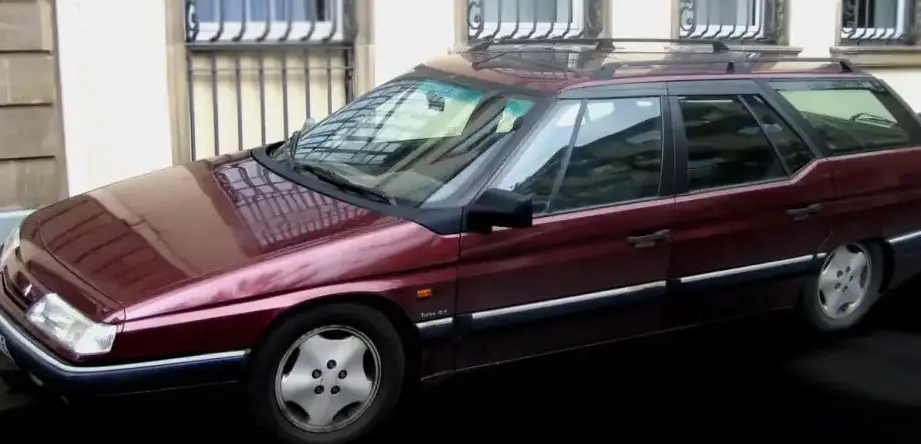
The Citroen XM Break 2.1 Turbo D12, produced between 1994 and 1999, represents a unique offering within the second generation (Y4) of Citroen’s flagship executive car. Positioned as a mid-range variant within the XM Break (estate) lineup, it combined a turbocharged diesel engine with an automatic transmission, aiming to provide a blend of comfort, practicality, and reasonable performance for long-distance touring. The XM, known for its innovative hydropneumatic suspension, was Citroen’s attempt to maintain a foothold in the premium segment against increasingly competitive German rivals. This particular 2.1-liter diesel automatic model catered to buyers prioritizing ease of driving and fuel efficiency over outright speed.
Technical Specifications
| Brand | Citroen |
| Model | XM |
| Generation | XM Break (Y4) |
| Type (Engine) | 2.1 Turbo D12 (109 Hp) Automatic |
| Start of production | 1994 |
| End of production | 1999 |
| Powertrain Architecture | Internal Combustion engine |
| Body type | Station wagon (estate) |
| Seats | 5 |
| Doors | 5 |
| Fuel consumption (urban) | 12.3 l/100 km (19.1 US mpg, 23 UK mpg, 8.1 km/l) |
| Fuel consumption (extra urban) | 6.6 l/100 km (35.6 US mpg, 42.8 UK mpg, 15.2 km/l) |
| Fuel consumption (combined) | 8.7 l/100 km (27 US mpg, 32.5 UK mpg, 11.5 km/l) |
| CO2 emissions | 230 g/km |
| Fuel Type | Diesel |
| Acceleration 0 – 100 km/h | 15.4 sec |
| Acceleration 0 – 62 mph | 15.4 sec |
| Acceleration 0 – 60 mph | 14.6 sec |
| Maximum speed | 180 km/h (111.85 mph) |
| Emission standard | Euro 2 |
| Weight-to-power ratio | 15 kg/Hp, 66.8 Hp/tonne |
| Weight-to-torque ratio | 6.5 kg/Nm, 153.2 Nm/tonne |
| Power | 109 Hp @ 4300 rpm |
| Power per litre | 52.2 Hp/l |
| Torque | 250 Nm @ 2000 rpm (184.39 lb.-ft. @ 2000 rpm) |
| Engine layout | Front, Transverse |
| Engine Model/Code | P8C XUD11BTE |
| Engine displacement | 2088 cm3 (127.42 cu. in.) |
| Number of cylinders | 4 |
| Engine configuration | Inline |
| Cylinder Bore | 85 mm (3.35 in.) |
| Piston Stroke | 92 mm (3.62 in.) |
| Compression ratio | 21.5:1 |
| Number of valves per cylinder | 3 |
| Fuel injection system | Precombustion chamber injection |
| Engine aspiration | Turbocharger, Intercooler |
| Valvetrain | OHC |
| Engine oil capacity | 6 l (6.34 US qt | 5.28 UK qt) |
| Coolant | 10 l (10.57 US qt | 8.8 UK qt) |
| Kerb Weight | 1632 kg (3597.94 lbs.) |
| Max. weight | 2190 kg (4828.12 lbs.) |
| Max load | 558 kg (1230.18 lbs.) |
| Trunk (boot) space – minimum | 750 l (26.49 cu. ft.) |
| Trunk (boot) space – maximum | 1960 l (69.22 cu. ft.) |
| Fuel tank capacity | 80 l (21.13 US gal | 17.6 UK gal) |
| Max. roof load | 100 kg (220.46 lbs.) |
| Permitted trailer load with brakes (12%) | 1500 kg (3306.93 lbs.) |
| Permitted trailer load without brakes | 750 kg (1653.47 lbs.) |
| Permitted towbar download | 80 kg (176.37 lbs.) |
| Length | 4963 mm (195.39 in.) |
| Width | 1794 mm (70.63 in.) |
| Height | 1467 mm (57.76 in.) |
| Wheelbase | 2850 mm (112.2 in.) |
| Front track | 1520 mm (59.84 in.) |
| Rear track | 1447 mm (56.97 in.) |
| Front overhang | 1068 mm (42.05 in.) |
| Rear overhang | 1045 mm (41.14 in.) |
| Ride height (ground clearance) | 141 mm (5.55 in.) |
| Drivetrain Architecture | The Internal combustion engine (ICE) drives the front wheels of the vehicle. |
| Drive wheel | Front wheel drive |
| Number of gears and type of gearbox | 4 gears, automatic transmission |
| Front suspension | Independent type McPherson, Wishbone |
| Rear suspension | Hydro-pneumatic element, Trailing arm |
| Front brakes | Ventilated discs |
| Rear brakes | Disc |
| Assisting systems | ABS (Anti-lock braking system) |
| Steering type | Steering rack and pinion |
| Power steering | Hydraulic Steering |
| Tires size | 205/65 R15 |
| Wheel rims size | 15 |
Powertrain & Engine Architecture
The heart of the XM Break 2.1 Turbo D12 is the P8C XUD11BTE engine, a 2.1-liter inline-four cylinder diesel. This engine utilizes precombustion chamber injection, a system common in older diesel designs, where fuel is injected into a small pre-chamber to initiate combustion before entering the main cylinder. This design aids in smoother combustion and reduced engine noise. The addition of a turbocharger and intercooler significantly boosts power output to 109 horsepower at 4300 rpm and 250 Nm (184 lb-ft) of torque at 2000 rpm. The engine features an overhead camshaft (OHC) valvetrain with three valves per cylinder. The automatic transmission is a four-speed unit, chosen for its convenience and suitability for long-distance cruising. While not known for its sportiness, this transmission provides smooth shifts and contributes to the XM’s overall comfort.
Driving Characteristics
The 2.1 Turbo D12 automatic XM Break offers a relaxed driving experience. Acceleration is modest, taking around 15.4 seconds to reach 62 mph, but the engine’s torque provides adequate pulling power for highway overtaking. The automatic transmission, while smooth, can feel somewhat sluggish compared to manual versions. The gear ratios are geared towards fuel efficiency and comfortable cruising rather than spirited performance. Compared to the more powerful petrol variants, such as the V6, this diesel automatic is significantly slower. However, it offers substantially better fuel economy, achieving around 32.5 mpg (UK) on a combined cycle. The hydropneumatic suspension, a Citroen hallmark, provides an exceptionally smooth and comfortable ride, absorbing bumps and imperfections in the road with ease.
Equipment & Trim Levels
The 2.1 Turbo D12 automatic trim typically included features such as central locking, electric windows, power steering, and an adjustable steering column. Interior upholstery was generally cloth, although leather options were available. Dashboard configuration was typical for the era, with analog gauges and a relatively simple layout. Optional extras included a sunroof, upgraded audio system, and climate control. The XM Break, being an estate, offered a generous amount of cargo space, ranging from 750 liters with the rear seats up to 1960 liters with them folded down.
Chassis & Braking
The XM Break utilizes an independent McPherson strut front suspension and a hydro-pneumatic trailing arm rear suspension. This suspension system is self-leveling and provides a remarkably comfortable ride. Braking is handled by ventilated discs at the front and solid discs at the rear. Anti-lock braking system (ABS) was standard, enhancing safety. The steering is a rack and pinion system with hydraulic power assistance, providing light and easy steering feel.
Market Reception & Comparison
The Citroen XM Break 2.1 Turbo D12 was generally well-received as a comfortable and practical family car. Critics praised the ride quality and spacious interior, but noted the relatively slow acceleration. Compared to the petrol-powered XMs, the diesel automatic offered significantly better fuel economy, making it a popular choice for high-mileage drivers. However, it lacked the refinement and performance of some of its German competitors. Reliability was generally good, although the complex hydropneumatic suspension could require occasional maintenance.
Legacy
The Citroen XM Break 2.1 Turbo D12, while not a performance icon, remains a fondly remembered car for its unique blend of comfort, practicality, and innovative technology. The XUD11 engine is known for its durability, and well-maintained examples can still provide reliable service today. In the used car market, these XMs are becoming increasingly sought after by enthusiasts who appreciate their distinctive styling and comfortable ride. The hydropneumatic suspension, while requiring specialized knowledge for maintenance, is a key part of the XM’s appeal and contributes to its enduring legacy as a truly unique and comfortable grand tourer.