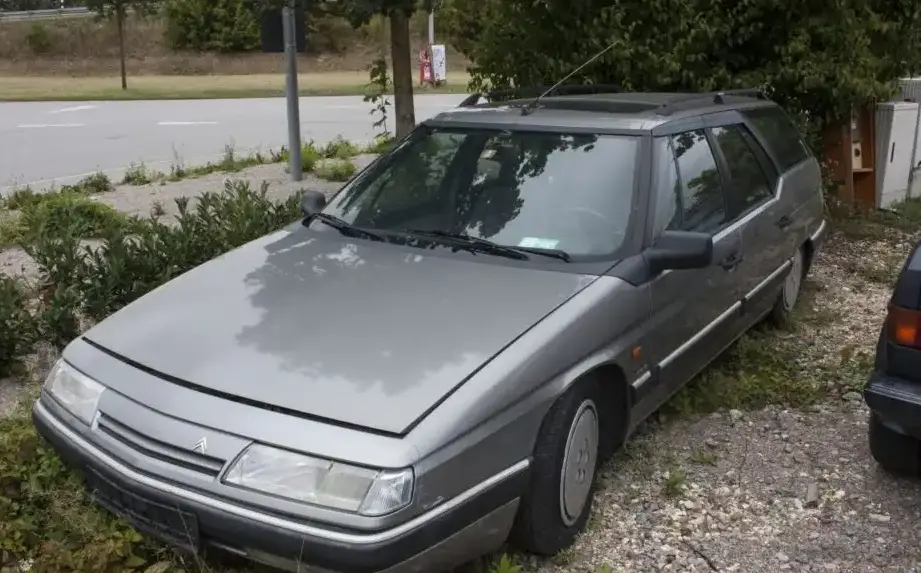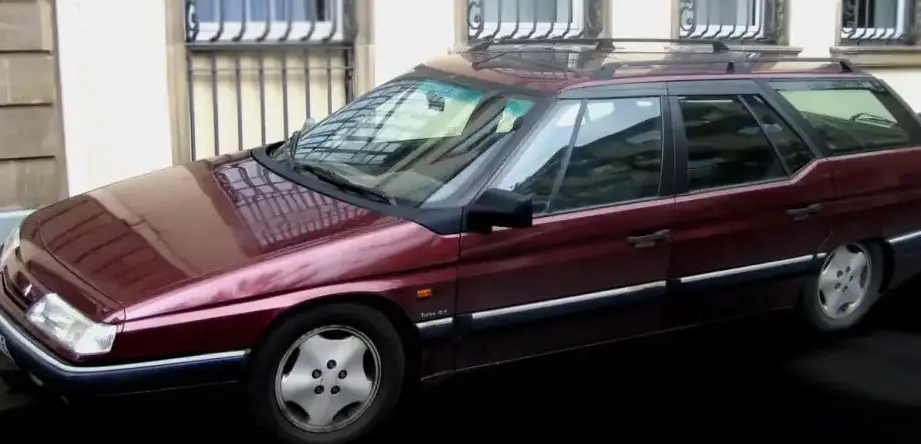
The Citroen XM Break 3.0 V6, produced between 1994 and 1997, represents the top-of-the-line engine option for the second-generation XM Break (Y4) estate car. Positioned as the flagship variant, it offered a blend of luxury, performance, and Citroen’s renowned hydropneumatic suspension technology. The XM Break, in general, was Citroen’s attempt to create a spacious, comfortable, and technologically advanced executive estate, competing with vehicles like the Volvo 960 Estate and the Mercedes-Benz E-Class Estate. The 3.0 V6 model aimed to provide a more refined and powerful experience than the four-cylinder options available, appealing to buyers prioritizing driving enjoyment alongside practicality.
Technical Specifications
| Brand | Citroen |
| Model | XM |
| Generation | XM Break (Y4) |
| Type (Engine) | 3.0 V6 (167 Hp) |
| Start of production | 1994 |
| End of production | 1997 |
| Powertrain Architecture | Internal Combustion engine |
| Body type | Station wagon (estate) |
| Seats | 5 |
| Doors | 5 |
| Fuel consumption (urban) | 14.9 l/100 km (15.8 US mpg / 19 UK mpg) |
| Fuel consumption (extra urban) | 8 l/100 km (29.4 US mpg / 35.3 UK mpg) |
| Fuel Type | Petrol (Gasoline) |
| Acceleration 0 – 100 km/h | 10.9 sec |
| Acceleration 0 – 62 mph | 10.9 sec |
| Acceleration 0 – 60 mph | 10.4 sec |
| Maximum speed | 217 km/h (134.84 mph) |
| Weight-to-power ratio | 9.2 kg/Hp |
| Weight-to-torque ratio | 6.5 kg/Nm |
| Power | 167 Hp @ 5600 rpm |
| Power per litre | 56.4 Hp/l |
| Torque | 235 Nm @ 4600 rpm (173.33 lb.-ft. @ 4600 rpm) |
| Engine layout | Front, Transverse |
| Engine Model/Code | UFZ ZPJ/Z |
| Engine displacement | 2963 cm3 (180.81 cu. in.) |
| Number of cylinders | 6 |
| Engine configuration | V-engine |
| Cylinder Bore | 93 mm (3.66 in.) |
| Piston Stroke | 72.7 mm (2.86 in.) |
| Compression ratio | 9.5:1 |
| Number of valves per cylinder | 2 |
| Fuel injection system | Multi-port manifold injection |
| Engine aspiration | Naturally aspirated engine |
| Valvetrain | OHC |
| Engine oil capacity | 7 l (7.4 US qt | 6.16 UK qt) |
| Coolant capacity | 10 l (10.57 US qt | 8.8 UK qt) |
| Kerb Weight | 1532 kg (3377.48 lbs.) |
| Max. weight | 2170 kg (4784.03 lbs.) |
| Max load | 638 kg (1406.55 lbs.) |
| Trunk (boot) space – minimum | 750 l (26.49 cu. ft.) |
| Trunk (boot) space – maximum | 1960 l (69.22 cu. ft.) |
| Fuel tank capacity | 80 l (21.13 US gal | 17.6 UK gal) |
| Length | 4963 mm (195.39 in.) |
| Width | 1794 mm (70.63 in.) |
| Height | 1456 mm (57.32 in.) |
| Wheelbase | 2850 mm (112.2 in.) |
| Front track | 1520 mm (59.84 in.) |
| Rear track | 1447 mm (56.97 in.) |
| Front overhang | 1068 mm (42.05 in.) |
| Rear overhang | 1045 mm (41.14 in.) |
| Ride height (ground clearance) | 141 mm (5.55 in.) |
| Drivetrain Architecture | Front wheel drive |
| Number of gears | 5 |
| Gearbox type | Manual transmission |
| Front suspension | Independent type McPherson, Wishbone |
| Rear suspension | Hydro-pneumatic element, Trailing arm |
| Front brakes | Ventilated discs |
| Rear brakes | Disc |
| Assisting systems | ABS (Anti-lock braking system) |
| Steering type | Steering rack and pinion |
| Power steering | Hydraulic Steering |
| Tires size | 205/60 R15 |
Powertrain & Engine Architecture
The heart of the XM Break 3.0 V6 is the UFZ (ZPJ/Z) engine, a 2.963-liter, naturally aspirated V6. This engine, derived from the Peugeot-Renault-Volvo (PRV) V6 family, was known for its smooth operation and relatively high output for its time. The engine utilizes a single overhead camshaft (OHC) valvetrain with two valves per cylinder. Fuel delivery is managed by a multi-port fuel injection system, contributing to improved efficiency and responsiveness compared to earlier carbureted designs. The engine produces 167 horsepower at 5600 rpm and 235 Nm (173 lb-ft) of torque at 4600 rpm. The engine is transversely mounted in the front of the vehicle, driving the front wheels. The standard transmission for this variant was a five-speed manual gearbox, although an automatic transmission was also available, albeit less common.
Driving Characteristics
The 3.0 V6-equipped XM Break offered a significant performance upgrade over the four-cylinder models. Acceleration to 60 mph took approximately 10.4 seconds, and it could achieve a top speed of 134.84 mph. While not a sports car, the V6 provided ample power for comfortable highway cruising and overtaking. The five-speed manual transmission allowed drivers to fully utilize the engine’s powerband, while the automatic option prioritized ease of use. The hydropneumatic suspension, a Citroen hallmark, provided an exceptionally smooth and comfortable ride, absorbing bumps and imperfections in the road with remarkable effectiveness. However, the XM’s considerable weight (around 3377 lbs) meant that handling was more about stability and comfort than outright agility.
Equipment & Trim Levels
The XM Break 3.0 V6 typically came well-equipped, reflecting its position as the range-topping model. Standard features included power windows, central locking, power steering, and an anti-lock braking system (ABS). Interior appointments were generally luxurious, with comfortable seating upholstered in high-quality cloth or leather (optional). Dashboard design was modern for its time, featuring a comprehensive instrument cluster and integrated audio system. Optional extras included a sunroof, upgraded audio systems, and climate control. The interior trim levels varied, with higher-spec versions offering more refined materials and additional features.
Chassis & Braking
The XM Break utilized an independent McPherson strut front suspension and a unique hydro-pneumatic rear suspension system. This system allowed for self-leveling, adjustable ride height, and exceptional ride comfort. The braking system consisted of ventilated discs at the front and solid discs at the rear, providing adequate stopping power for the vehicle’s weight and performance. The steering was a rack-and-pinion system with hydraulic power assistance, offering precise and responsive control.
Market Reception & Comparison
The Citroen XM Break 3.0 V6 was generally well-received by automotive critics, who praised its comfortable ride, spacious interior, and refined engine. However, it was also criticized for its complexity, potential reliability issues (particularly with the hydropneumatic suspension), and relatively high price. Compared to the four-cylinder versions, the V6 offered a significant performance boost but came at a higher cost and with slightly increased fuel consumption. Against competitors like the Volvo 960 Estate and Mercedes-Benz E-Class Estate, the XM Break offered a unique blend of French flair and advanced technology, but its reputation for reliability lagged behind its German rivals.
Legacy
The Citroen XM Break 3.0 V6 remains a relatively rare and sought-after classic car today. While the hydropneumatic suspension requires specialized maintenance, enthusiasts appreciate its unique driving experience and luxurious appointments. The UFZ V6 engine is generally considered reliable if properly maintained. The XM Break 3.0 V6 represents a high point in Citroen’s engineering and design prowess, showcasing the company’s commitment to innovation and comfort. Finding well-maintained examples can be challenging, but for those willing to invest the time and effort, the XM Break 3.0 V6 offers a distinctive and rewarding ownership experience.