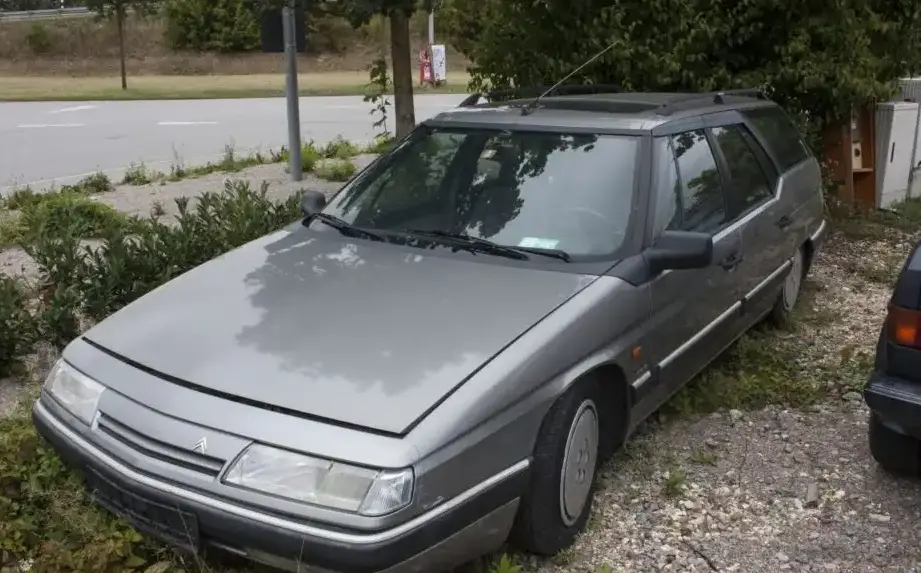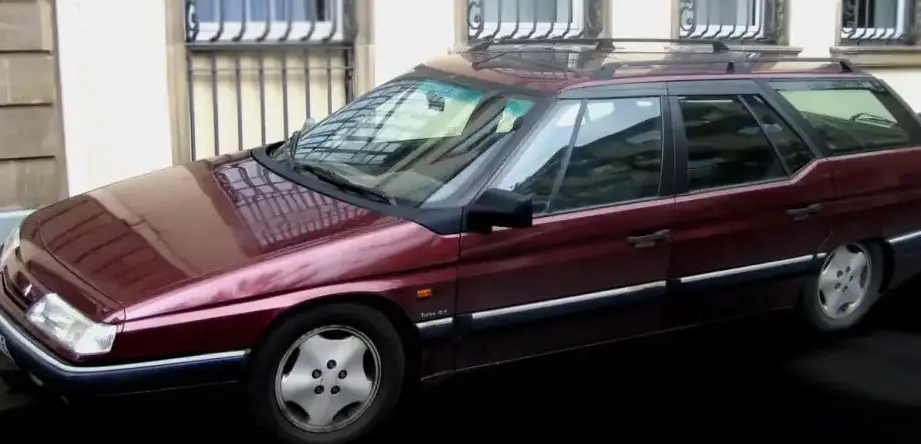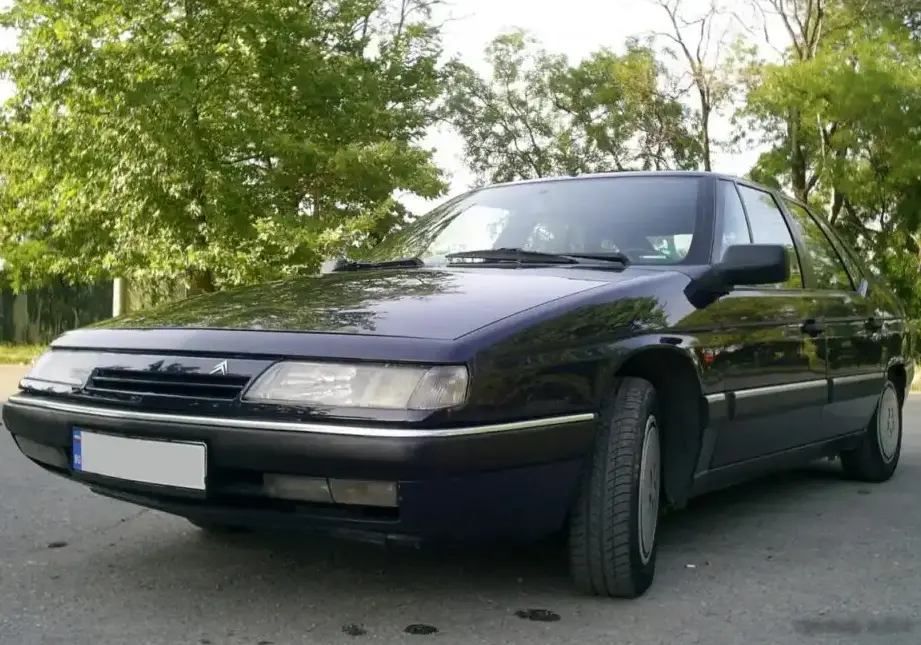
The Citroen XM (Y3) 2.0 i Automatic, produced between 1992 and 1994, represented a mid-range offering within the innovative XM series. Positioned between the base 1.6-liter models and the more powerful 3.0-liter V6, the 2.0 i Automatic aimed to provide a balance of performance, comfort, and fuel efficiency for buyers seeking a spacious and technologically advanced hatchback. The XM, launched in 1989, was Citroen’s flagship, intended to replace the aging CX, and was notable for its distinctive styling and advanced hydropneumatic suspension. This variant, utilizing the XU10J2 engine and a four-speed automatic transmission, was primarily sold in European markets, offering a more accessible entry point into the XM range than its higher-specification siblings.
Technical Specifications
| Brand | Citroen |
| Model | XM |
| Generation | XM (Y3) |
| Type (Engine) | 2.0 i (122 Hp) Automatic |
| Start of production | 1992 |
| End of production | 1994 |
| Powertrain Architecture | Internal Combustion engine |
| Body type | Hatchback |
| Seats | 5 |
| Doors | 5 |
| Fuel consumption (urban) | 13.8 l/100 km (17 US mpg, 20.5 UK mpg) |
| Fuel consumption (extra urban) | 7.1 l/100 km (33.1 US mpg, 39.8 UK mpg) |
| Fuel Type | Petrol (Gasoline) |
| Acceleration 0 – 100 km/h | 15.0 sec |
| Acceleration 0 – 62 mph | 15.0 sec |
| Acceleration 0 – 60 mph | 14.3 sec |
| Maximum speed | 197 km/h (122.41 mph) |
| Weight-to-power ratio | 11 kg/Hp |
| Weight-to-torque ratio | 7.9 kg/Nm |
| Power | 122 Hp @ 5600 rpm |
| Power per litre | 61.1 Hp/l |
| Torque | 170 Nm @ 4000 rpm (125.39 lb.-ft. @ 4000 rpm) |
| Engine layout | Front, Transverse |
| Engine Model/Code | RFZ XU10J2 |
| Engine displacement | 1998 cm3 (121.93 cu. in.) |
| Number of cylinders | 4 |
| Engine configuration | Inline |
| Cylinder Bore | 86 mm (3.39 in.) |
| Piston Stroke | 86 mm (3.39 in.) |
| Compression ratio | 8.8:1 |
| Number of valves per cylinder | 2 |
| Fuel injection system | Multi-port manifold injection |
| Engine aspiration | Naturally aspirated |
| Engine oil capacity | 5.4 l (5.71 US qt, 4.75 UK qt) |
| Coolant capacity | 7.3 l (7.71 US qt, 6.42 UK qt) |
| Kerb Weight | 1337 kg (2947.58 lbs.) |
| Max. weight | 1845 kg (4067.53 lbs.) |
| Max load | 508 kg (1119.95 lbs.) |
| Trunk (boot) space – minimum | 455 l (16.07 cu. ft.) |
| Trunk (boot) space – maximum | 1460 l (51.56 cu. ft.) |
| Fuel tank capacity | 80 l (21.13 US gal, 17.6 UK gal) |
| Max. roof load | 80 kg (176.37 lbs.) |
| Permitted trailer load with brakes (12%) | 1300 kg (2866.01 lbs.) |
| Permitted trailer load without brakes | 669 kg (1474.89 lbs.) |
| Permitted towbar download | 110 kg (242.51 lbs.) |
| Length | 4708 mm (185.35 in.) |
| Width | 1794 mm (70.63 in.) |
| Width including mirrors | 2000 mm (78.74 in.) |
| Height | 1385 mm (54.53 in.) |
| Wheelbase | 2850 mm (112.2 in.) |
| Front track | 1520 mm (59.84 in.) |
| Rear track | 1450 mm (57.09 in.) |
| Front overhang | 1068 mm (42.05 in.) |
| Rear overhang | 790 mm (31.1 in.) |
| Ride height (ground clearance) | 141 mm (5.55 in.) |
| Minimum turning circle | 12.5 m (41.01 ft.) |
| Drivetrain Architecture | Front wheel drive |
| Number of gears and type of gearbox | 4 gears, automatic transmission |
| Front suspension | Independent type McPherson, Wishbone |
| Rear suspension | Hydro-pneumatic element, Trailing arm |
| Front brakes | Ventilated discs |
| Rear brakes | Disc |
| Assisting systems | ABS (Anti-lock braking system) |
| Steering type | Steering rack and pinion |
| Power steering | Hydraulic |
| Tires size | 195/60 R15 |
Powertrain & Engine Architecture
The heart of the XM 2.0 i Automatic is the RFZ XU10J2 engine, a 1.998-liter inline-four cylinder petrol engine developed by Peugeot-Renault (PSA). This engine features a cast iron block and an aluminum cylinder head, equipped with a single overhead camshaft operating two valves per cylinder. Fuel delivery is managed by a Bosch Motronic multi-port fuel injection system, providing precise control over the air-fuel mixture. The XU10J2 is known for its relative durability and straightforward design. The four-speed automatic transmission, while offering convenience, was not known for its sportiness or efficiency. It featured a traditional torque converter and hydraulic control system. Gear ratios were geared towards comfortable cruising rather than rapid acceleration.
Driving Characteristics
The 2.0 i Automatic offered a comfortable, if not particularly exhilarating, driving experience. With 122 horsepower and 170 Nm of torque, acceleration was adequate for everyday driving, but noticeably slower than the more powerful V6 models. The automatic transmission, while smooth, contributed to a slight loss of power and responsiveness. The hydropneumatic suspension, a Citroen hallmark, provided a remarkably smooth and controlled ride, absorbing bumps and imperfections in the road with ease. However, the suspension’s self-leveling feature could sometimes feel slightly detached, and the steering, while precise, lacked significant feedback. The automatic transmission’s shift points were optimized for fuel economy, which meant the engine often felt strained during overtaking maneuvers.
Equipment & Trim Levels
The XM 2.0 i Automatic typically came equipped with a reasonable level of standard features, including central locking, electric front windows, power steering, and an AM/FM radio. Higher trim levels offered options such as leather upholstery, a sunroof, climate control, and upgraded audio systems. Interior materials were generally of good quality, reflecting Citroen’s commitment to comfort and refinement. The dashboard layout was functional and ergonomically designed, although some controls were less intuitive than others. The spacious interior and large hatchback opening provided ample room for passengers and luggage.
Chassis & Braking
The XM’s chassis featured an independent McPherson strut front suspension and a unique hydropneumatic rear suspension. This system utilized self-leveling spheres filled with nitrogen, providing a consistently smooth ride regardless of load. The braking system consisted of ventilated discs at the front and solid discs at the rear, assisted by an Anti-lock Braking System (ABS). The ABS system helped to maintain steering control during hard braking. The steering was a rack-and-pinion system with hydraulic power assistance, offering precise and relatively light steering feel.
Market Reception & Comparison
The Citroen XM 2.0 i Automatic was generally well-received by automotive critics, who praised its comfortable ride, spacious interior, and innovative technology. However, some reviewers criticized its relatively slow acceleration and the automatic transmission’s lack of responsiveness. Compared to the 3.0-liter V6 models, the 2.0 i Automatic offered significantly less power but better fuel economy. Against competitors like the Ford Granada and Rover 800, the XM stood out for its unique hydropneumatic suspension and distinctive styling. Reliability was generally good, although the complex hydropneumatic system required specialized maintenance.
Legacy
The Citroen XM, while not a commercial blockbuster, remains a fondly remembered car among enthusiasts. The 2.0 i Automatic variant, while not the most sought-after version, offers a relatively affordable entry point into XM ownership. The XU10J2 engine is known for its durability, and with proper maintenance, can provide many years of reliable service. Today, well-maintained examples of the XM 2.0 i Automatic are becoming increasingly collectible, appealing to those who appreciate its unique blend of comfort, technology, and distinctive French styling. Parts availability can be a challenge, particularly for the hydropneumatic suspension components, but a dedicated network of specialists and enthusiasts continues to support the XM community.