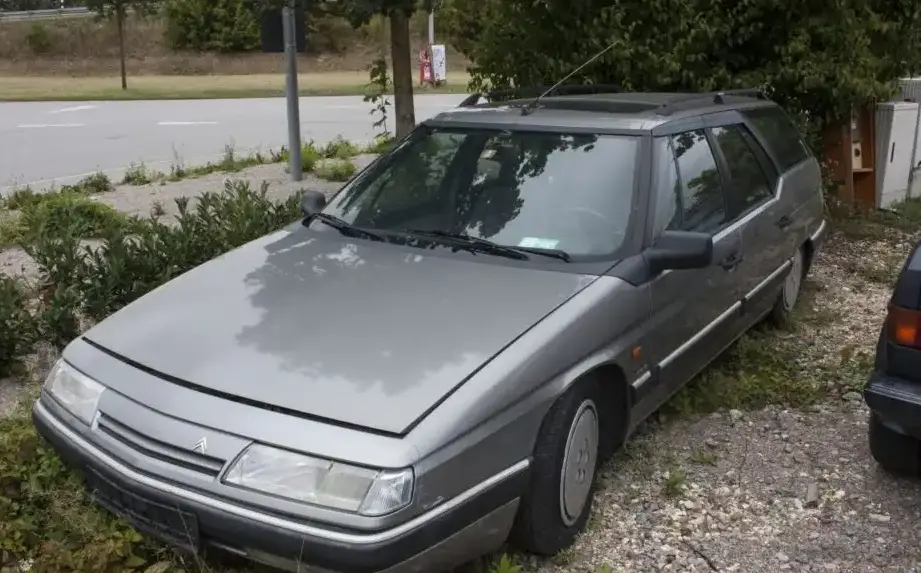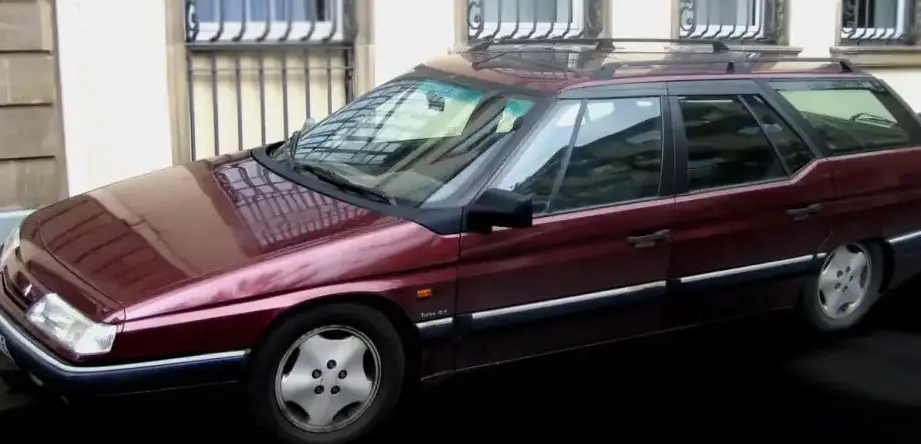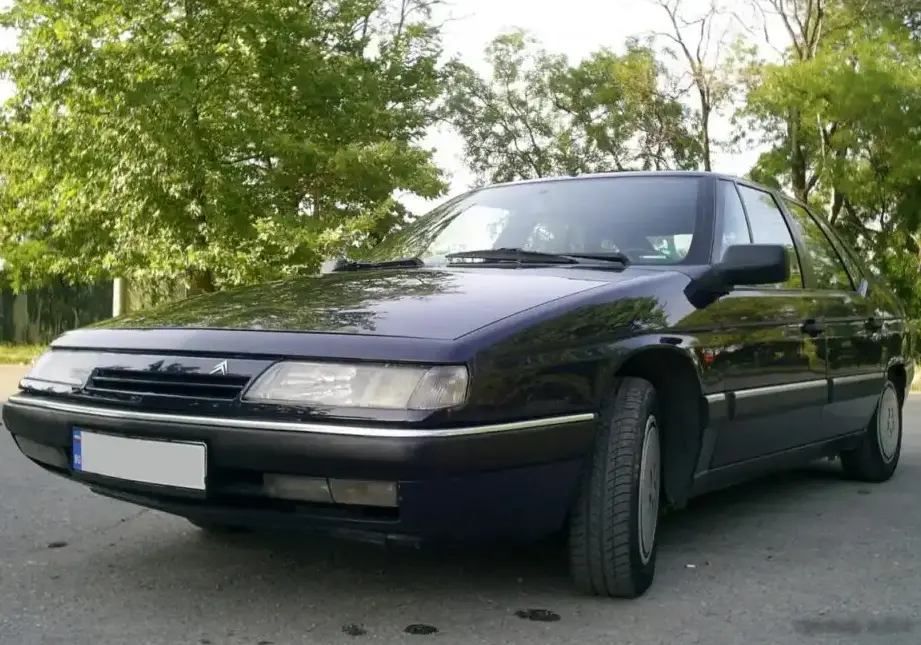
The Citroen XM (Y3) 2.0i Automatic, produced between 1989 and 1992, represented a significant offering in Citroen’s large family car lineup. Positioned as a mid-range variant within the broader XM range, it aimed to provide a balance between performance, comfort, and affordability. The XM, launched as a replacement for the aging CX, was a technologically advanced vehicle for its time, known for its distinctive styling and innovative hydropneumatic suspension. The 2.0i Automatic model specifically targeted buyers seeking a comfortable and refined driving experience without the higher price tag of the flagship V6 models. It was primarily sold in European markets, where large, comfortable saloons and hatchbacks were highly valued.
Technical Specifications
| Brand | Citroen |
| Model | XM |
| Generation | XM (Y3) |
| Type (Engine) | 2.0 i (130 Hp) Automatic |
| Start of production | 1989 year |
| End of production | 1992 year |
| Powertrain Architecture | Internal Combustion engine |
| Body type | Hatchback |
| Seats | 5 |
| Doors | 5 |
| Fuel consumption (economy) – urban | 12.9 l/100 km (18.2 US mpg, 21.9 UK mpg, 7.8 km/l) |
| Fuel consumption (economy) – extra urban | 6.8 l/100 km (34.6 US mpg, 41.5 UK mpg, 14.7 km/l) |
| Fuel consumption (economy) – combined | 9.4 l/100 km (25 US mpg, 30.1 UK mpg, 10.6 km/l) |
| Fuel Type | Petrol (Gasoline) |
| Acceleration 0 – 100 km/h | 14.4 sec |
| Acceleration 0 – 62 mph | 14.4 sec |
| Acceleration 0 – 60 mph | 13.7 sec |
| Maximum speed | 202 km/h (125.52 mph) |
| Weight-to-power ratio | 10.1 kg/Hp, 99.2 Hp/tonne |
| Weight-to-torque ratio | 7.4 kg/Nm, 135.9 Nm/tonne |
| Power | 130 Hp @ 5600 rpm |
| Power per litre | 65.1 Hp/l |
| Torque | 178 Nm @ 4800 rpm (131.29 lb.-ft. @ 4800 rpm) |
| Maximum engine speed | 6300 rpm |
| Engine layout | Front, Transverse |
| Engine Model/Code | XU10J2 |
| Engine displacement | 1998 cm3 (121.93 cu. in.) |
| Number of cylinders | 4 |
| Engine configuration | Inline |
| Cylinder Bore | 86 mm (3.39 in.) |
| Piston Stroke | 86 mm (3.39 in.) |
| Compression ratio | 8.8:1 |
| Number of valves per cylinder | 2 |
| Fuel injection system | Multi-port manifold injection |
| Engine aspiration | Naturally aspirated engine |
| Valvetrain | OHC |
| Engine oil capacity | 5.4 l (5.71 US qt | 4.75 UK qt) |
| Coolant | 7.3 l (7.71 US qt | 6.42 UK qt) |
| Kerb Weight | 1310 kg (2888.06 lbs.) |
| Max. weight | 1845 kg (4067.53 lbs.) |
| Max load | 535 kg (1179.47 lbs.) |
| Trunk (boot) space – minimum | 455 l (16.07 cu. ft.) |
| Trunk (boot) space – maximum | 1460 l (51.56 cu. ft.) |
| Fuel tank capacity | 80 l (21.13 US gal | 17.6 UK gal) |
| Max. roof load | 80 kg (176.37 lbs.) |
| Permitted trailer load with brakes (12%) | 1300 kg (2866.01 lbs.) |
| Permitted trailer load without brakes | 655 kg (1444.03 lbs.) |
| Permitted towbar download | 110 kg (242.51 lbs.) |
| Length | 4708 mm (185.35 in.) |
| Width | 1794 mm (70.63 in.) |
| Width including mirrors | 2000 mm (78.74 in.) |
| Height | 1385 mm (54.53 in.) |
| Wheelbase | 2850 mm (112.2 in.) |
| Front track | 1520 mm (59.84 in.) |
| Rear (Back) track | 1447 mm (56.97 in.) |
| Front overhang | 1068 mm (42.05 in.) |
| Rear overhang | 790 mm (31.1 in.) |
| Ride height (ground clearance) | 141 mm (5.55 in.) |
| Drag coefficient (Cd) | 0.28 |
| Minimum turning circle (turning diameter) | 12.5 m (41.01 ft.) |
| Drivetrain Architecture | The Internal combustion engine (ICE) drives the front wheels of the vehicle. |
| Drive wheel | Front wheel drive |
| Number of gears and type of gearbox | 4 gears, automatic transmission |
| Front suspension | Independent type McPherson, Wishbone |
| Rear suspension | Hydro-pneumatic element, Trailing arm |
| Front brakes | Ventilated discs, 276×22 mm |
| Rear brakes | Drum, 224×9 mm |
| Assisting systems | ABS (Anti-lock braking system) |
| Steering type | Steering rack and pinion |
| Power steering | Hydraulic Steering |
| Tires size | 195/60 R15 |
Powertrain & Engine Architecture
The 2.0i Automatic XM utilized the PSA XU10J2 engine, a naturally aspirated, inline-four cylinder petrol engine. This engine was a mainstay in Peugeot and Citroen vehicles throughout the 1980s and 1990s. It featured a cast iron block and an aluminum cylinder head with a single overhead camshaft (OHC) operating two valves per cylinder. Fuel delivery was managed by a Bosch multi-port fuel injection system, providing a balance between efficiency and performance. The XU10J2 engine was known for its relative robustness and straightforward maintenance. The automatic transmission was a four-speed unit, designed to provide smooth and comfortable gear changes. While not particularly sporty, it was well-suited to the XM’s focus on ride comfort.
Driving Characteristics
The 2.0i Automatic XM offered a comfortable, but not particularly brisk, driving experience. With 130 horsepower and 178 Nm of torque, acceleration from 0-60 mph took around 13.7 seconds, and top speed was approximately 125 mph. The automatic transmission, while smooth, did detract from the engine’s available power, resulting in a noticeable difference in performance compared to the five-speed manual versions. Gear ratios were optimized for cruising comfort rather than outright acceleration. The hydropneumatic suspension, a Citroen hallmark, provided an exceptionally smooth ride, absorbing bumps and imperfections in the road with ease. However, the suspension also contributed to a somewhat detached and floaty feeling, particularly at higher speeds.
Equipment & Trim Levels
The 2.0i Automatic XM typically came equipped with a reasonable level of standard features. These included central locking, electric front windows, power steering, and an AM/FM radio. Interior upholstery was typically cloth, with a focus on comfort and durability. Optional extras included leather upholstery, a sunroof, and upgraded audio systems. The dashboard layout was functional and ergonomically designed, with most controls within easy reach of the driver. The XM’s interior was spacious and well-appointed, reflecting its status as a large family car.
Chassis & Braking
The XM featured an independent front suspension with McPherson struts and wishbones, providing good handling and stability. The rear suspension utilized Citroen’s innovative hydropneumatic system, offering a uniquely comfortable ride. Braking was accomplished via ventilated discs on the front wheels and drum brakes on the rear. An anti-lock braking system (ABS) was standard, enhancing safety and control during emergency braking. The chassis was designed to prioritize ride comfort and stability over sporty handling, reflecting the XM’s overall character.
Market Reception & Comparison
The Citroen XM 2.0i Automatic was generally well-received by critics as a comfortable and refined family car. However, its performance was often criticized as being somewhat underwhelming, particularly compared to the more powerful V6 models. Fuel economy was reasonable for a car of its size and class, but not exceptional. Compared to rivals such as the Ford Granada and Rover 800, the XM offered a unique combination of comfort, technology, and distinctive styling. The automatic transmission was seen as a good match for the engine, providing a smooth and relaxed driving experience.
Legacy
The XU10J2 engine, found in the 2.0i Automatic XM, is known for its durability and relatively simple maintenance requirements. While not without its quirks, the engine has proven to be reliable over the long term. Today, the XM 2.0i Automatic is a relatively affordable classic car, appealing to enthusiasts who appreciate its unique character and innovative technology. Parts availability can be a challenge, but a dedicated community of XM owners and specialists exists to provide support and assistance. The hydropneumatic suspension requires regular maintenance to ensure optimal performance, but when properly maintained, it continues to provide an exceptional ride quality.