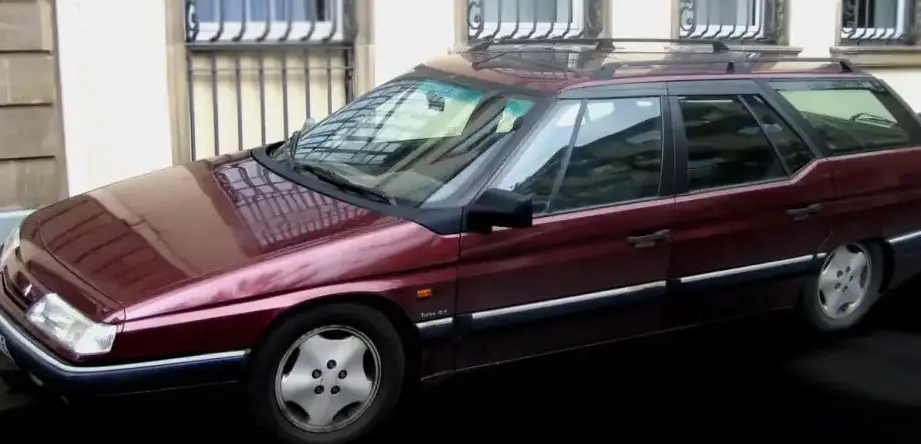
The Citroën XM (Y4) 2.0 Turbo CT, produced from 1994 to 2000, represents a compelling blend of French engineering and performance within the larger XM range. Positioned as a mid-range offering, it slotted between the naturally aspirated 2.0L models and the flagship 3.0L V6 variants. The XM, launched in 1989, was Citroën’s replacement for the aging CX, aiming to provide a technologically advanced and comfortable executive car. The Y4 series, introduced in 1994, brought significant styling revisions and mechanical updates. The 2.0 Turbo CT, with its 147 horsepower, offered a balance of performance and fuel economy that appealed to buyers seeking a more spirited driving experience than the base models, without the higher running costs of the V6.
Technical Specifications
| Brand | Citroen |
| Model | XM |
| Generation | XM (Y4) |
| Type (Engine) | 2.0 Turbo CT (147 Hp) |
| Start of production | 1994 |
| End of production | June, 2000 |
| Powertrain Architecture | Internal Combustion engine |
| Body type | Hatchback |
| Seats | 5 |
| Doors | 5 |
| Fuel consumption (urban) | 12.7 l/100 km (18.5 US mpg, 22.2 UK mpg, 7.9 km/l) |
| Fuel consumption (extra urban) | 7.1 l/100 km (33.1 US mpg, 39.8 UK mpg, 14.1 km/l) |
| Fuel Type | Petrol (Gasoline) |
| Acceleration 0 – 100 km/h | 9.3 sec |
| Acceleration 0 – 62 mph | 9.3 sec |
| Acceleration 0 – 60 mph | 8.8 sec |
| Maximum speed | 215 km/h (133.59 mph) |
| Weight-to-power ratio | 9.5 kg/Hp, 104.9 Hp/tonne |
| Weight-to-torque ratio | 6 kg/Nm, 167.7 Nm/tonne |
| Power | 147 Hp @ 5300 rpm |
| Power per litre | 73.6 Hp/l |
| Torque | 235 Nm @ 2500 rpm (173.33 lb.-ft. @ 2500 rpm) |
| Engine layout | Front, Transverse |
| Engine Model/Code | RGX XU10 J2TE |
| Engine displacement | 1998 cm3 (121.93 cu. in.) |
| Number of cylinders | 4 |
| Engine configuration | Inline |
| Cylinder Bore | 86 mm (3.39 in.) |
| Piston Stroke | 86 mm (3.39 in.) |
| Compression ratio | 8:1 |
| Number of valves per cylinder | 2 |
| Fuel injection system | Multi-port manifold injection |
| Engine aspiration | Turbocharger, Intercooler |
| Valvetrain | OHC |
| Engine oil capacity | 5.4 l (5.71 US qt | 4.75 UK qt) |
| Coolant | 7.5 l (7.93 US qt | 6.6 UK qt) |
| Kerb Weight | 1401 kg (3088.68 lbs.) |
| Max. weight | 1940 kg (4276.97 lbs.) |
| Max load | 539 kg (1188.29 lbs.) |
| Trunk (boot) space – minimum | 455 l (16.07 cu. ft.) |
| Trunk (boot) space – maximum | 1460 l (51.56 cu. ft.) |
| Fuel tank capacity | 80 l (21.13 US gal | 17.6 UK gal) |
| Length | 4708 mm (185.35 in.) |
| Width | 1794 mm (70.63 in.) |
| Height | 1396 mm (54.96 in.) |
| Wheelbase | 2850 mm (112.2 in.) |
| Front track | 1520 mm (59.84 in.) |
| Rear (Back) track | 1447 mm (56.97 in.) |
| Front overhang | 1068 mm (42.05 in.) |
| Rear overhang | 790 mm (31.1 in.) |
| Drivetrain Architecture | The Internal combustion engine (ICE) drives the front wheels of the vehicle. |
| Drive wheel | Front wheel drive |
| Number of gears and type of gearbox | 5 gears, manual transmission |
| Front suspension | Independent type McPherson, Wishbone |
| Rear suspension | Hydro-pneumatic element, Trailing arm |
| Front brakes | Ventilated discs |
| Rear brakes | Disc |
| Assisting systems | ABS (Anti-lock braking system) |
| Steering type | Steering rack and pinion |
| Power steering | Hydraulic Steering |
| Tires size | 205/60 R15 |
Powertrain & Engine Architecture
The heart of the XM 2.0 Turbo CT is the Peugeot-Renault-Volvo (PRV) XU10J2TE engine. This 1998cc inline-four cylinder engine features a single overhead camshaft (OHC) and two valves per cylinder. The ‘TE’ designation indicates a fuel-injected, turbocharged version. The XU10J2TE utilizes multi-port fuel injection and a Garrett turbocharger with an intercooler to boost power output to 147 horsepower. This engine was known for its relatively smooth operation and decent power delivery, although it could exhibit some turbo lag. The engine’s 8:1 compression ratio was a compromise between performance and reliability. The five-speed manual transmission, while not particularly sporty, was robust and well-matched to the engine’s torque curve. The gearbox was designed to provide comfortable cruising rather than aggressive downshifts.
Driving Characteristics
The 2.0 Turbo CT offered a noticeable step up in performance compared to the naturally aspirated 2.0L XM. Acceleration to 60 mph took around 8.8 seconds, and the car could reach a top speed of 133.59 mph. While not a sports car, the turbocharger provided a useful surge of power for overtaking and highway cruising. The hydropneumatic suspension, a Citroën hallmark, provided an exceptionally comfortable ride, absorbing bumps and imperfections in the road with ease. However, the suspension could also feel somewhat detached, and body roll was noticeable in corners. The steering, while precise, lacked significant feedback. The five-speed manual transmission had relatively long throws, but was easy to operate. The turbo lag was present, requiring drivers to anticipate acceleration, but once the turbo spooled up, the engine delivered a strong and usable amount of power.
Equipment & Trim Levels
The “CT” designation in the XM 2.0 Turbo CT signified a mid-range trim level. Standard equipment typically included central locking, electric windows, power steering, and an anti-lock braking system (ABS). The interior featured cloth upholstery, although leather was available as an option. The dashboard layout was typical of Citroëns of the era, with a focus on ergonomics and functionality. Optional extras included a sunroof, upgraded audio system, and automatic climate control. The XM was known for its innovative features, such as the self-leveling hydropneumatic suspension and the digital instrument cluster.
Chassis & Braking
The XM’s chassis featured independent McPherson strut suspension at the front and a sophisticated hydropneumatic suspension system at the rear. This rear suspension allowed for adjustable ride height and exceptional ride comfort. The braking system consisted of ventilated discs at the front and solid discs at the rear. ABS was standard, providing enhanced stopping power and stability. The XM’s suspension geometry was tuned for comfort rather than outright handling, resulting in a stable but not particularly sporty driving experience. The steering utilized a rack and pinion system with hydraulic power assistance.
Market Reception & Comparison
The Citroën XM 2.0 Turbo CT was generally well-received by automotive critics. It was praised for its comfortable ride, spacious interior, and innovative technology. However, some critics noted the engine’s turbo lag and the somewhat detached handling. Compared to the naturally aspirated 2.0L XM, the Turbo CT offered significantly improved performance. Compared to the 3.0L V6, it provided a more economical option, albeit with less power. The 2.0 Turbo CT competed with other executive cars of the time, such as the Ford Granada, Rover 800, and Peugeot 605.
Legacy
The Citroën XM, while not a massive sales success, remains a fondly remembered car among enthusiasts. The 2.0 Turbo CT powertrain, while not without its quirks, proved to be relatively reliable when properly maintained. Today, the XM is becoming increasingly sought after by collectors and classic car enthusiasts. The hydropneumatic suspension requires regular maintenance, and parts availability can be a challenge. However, the XM’s unique blend of comfort, technology, and distinctive styling continues to appeal to those seeking a classic French car with a difference. The XU10J2TE engine, in particular, is considered a robust and tunable unit, making it a popular choice for enthusiasts looking to restore and modify these vehicles.