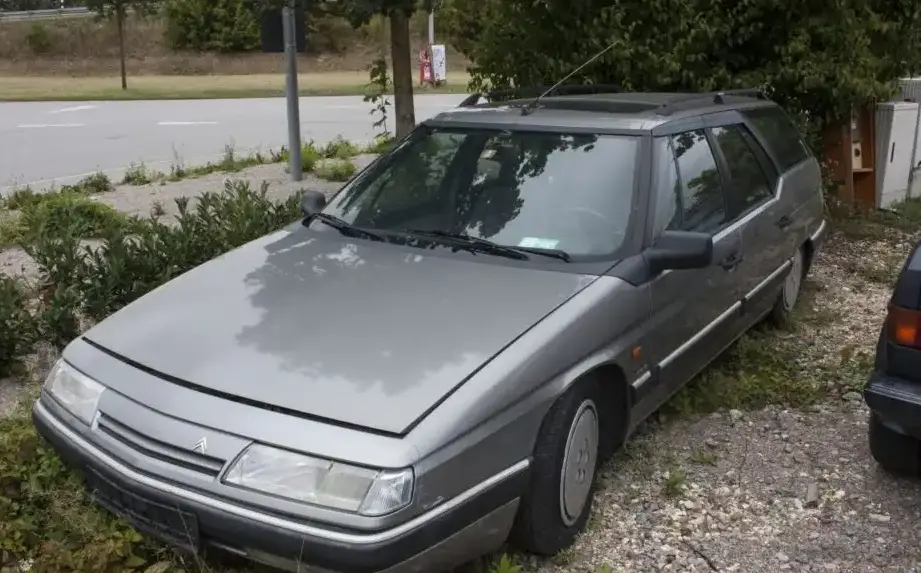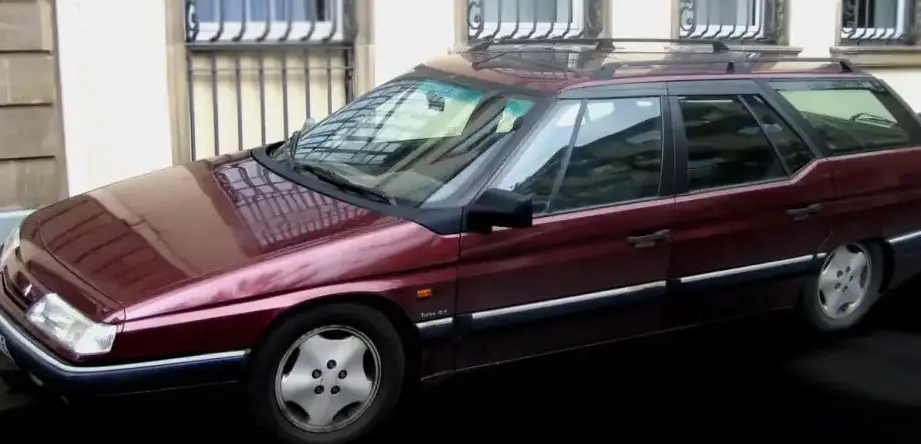
The Citroen XM (Y4) 3.0 V6 Automatic, produced between 1997 and 2000, represented the pinnacle of comfort and technology within the second-generation XM range. Positioned as the flagship variant, it offered a significantly more powerful engine and a smooth automatic transmission compared to the more common four-cylinder options. The XM, as a whole, was Citroen’s large executive car, intended to replace the aging CX, and continued the company’s tradition of innovative hydropneumatic suspension. The Y4 series, launched in 1994, brought a more contemporary design and improved refinement. This 3.0 V6 Automatic model catered to buyers seeking a luxurious and capable grand tourer, though its complexity and fuel consumption limited its broader appeal.
Technical Specifications
| Brand | Citroen |
| Model | XM |
| Generation | XM (Y4) |
| Type (Engine) | 3.0 V6 (190 Hp) Automatic |
| Start of production | 1997 |
| End of production | June, 2000 |
| Powertrain Architecture | Internal Combustion engine |
| Body type | Hatchback |
| Seats | 5 |
| Doors | 5 |
| Fuel consumption (urban) | 18 l/100 km (13.1 US mpg, 15.7 UK mpg, 5.6 km/l) |
| Fuel consumption (extra urban) | 8.4 l/100 km (28 US mpg, 33.6 UK mpg, 11.9 km/l) |
| Fuel consumption (combined) | 11.9 l/100 km (19.8 US mpg, 23.7 UK mpg, 8.4 km/l) |
| CO2 emissions | 284 g/km |
| Fuel Type | Petrol (Gasoline) |
| Acceleration 0 – 100 km/h | 10.2 sec |
| Acceleration 0 – 62 mph | 10.2 sec |
| Acceleration 0 – 60 mph | 9.7 sec |
| Maximum speed | 230 km/h (142.92 mph) |
| Emission standard | Euro 2 |
| Weight-to-power ratio | 8.4 kg/Hp, 119.4 Hp/tonne |
| Weight-to-torque ratio | 6 kg/Nm, 167.8 Nm/tonne |
| Power | 190 Hp @ 5500 rpm |
| Power per litre | 64.5 Hp/l |
| Torque | 267 Nm @ 4000 rpm (196.93 lb.-ft. @ 4000 rpm) |
| Engine layout | Front, Transverse |
| Engine Model/Code | XZF ES9J4-L3 |
| Engine displacement | 2946 cm3 (179.78 cu. in.) |
| Number of cylinders | 6 |
| Engine configuration | V-engine |
| Cylinder Bore | 87 mm (3.43 in.) |
| Piston Stroke | 82.6 mm (3.25 in.) |
| Compression ratio | 10.5:1 |
| Number of valves per cylinder | 4 |
| Fuel injection system | Multi-port manifold injection |
| Engine aspiration | Naturally aspirated engine |
| Valvetrain | DOHC |
| Engine oil capacity | 7 l (7.4 US qt | 6.16 UK qt) |
| Coolant | 10 l (10.57 US qt | 8.8 UK qt) |
| Kerb Weight | 1591 kg (3507.55 lbs.) |
| Max. weight | 2125 kg (4684.82 lbs.) |
| Max load | 534 kg (1177.27 lbs.) |
| Trunk (boot) space – minimum | 455 l (16.07 cu. ft.) |
| Trunk (boot) space – maximum | 1460 l (51.56 cu. ft.) |
| Fuel tank capacity | 80 l (21.13 US gal | 17.6 UK gal) |
| Max. roof load | 100 kg (220.46 lbs.) |
| Permitted trailer load with brakes (12%) | 1500 kg (3306.93 lbs.) |
| Permitted trailer load without brakes | 750 kg (1653.47 lbs.) |
| Permitted towbar download | 80 kg (176.37 lbs.) |
| Length | 4708 mm (185.35 in.) |
| Width | 1794 mm (70.63 in.) |
| Height | 1396 mm (54.96 in.) |
| Wheelbase | 2850 mm (112.2 in.) |
| Front track | 1520 mm (59.84 in.) |
| Rear (Back) track | 1447 mm (56.97 in.) |
| Front overhang | 1068 mm (42.05 in.) |
| Rear overhang | 790 mm (31.1 in.) |
| Ride height (ground clearance) | 141 mm (5.55 in.) |
| Drivetrain Architecture | The Internal combustion engine (ICE) drives the front wheels of the vehicle. |
| Drive wheel | Front wheel drive |
| Number of gears and type of gearbox | 4 gears, automatic transmission |
| Front suspension | Independent type McPherson, Wishbone |
| Rear suspension | Hydro-pneumatic element, Trailing arm |
| Front brakes | Ventilated discs |
| Rear brakes | Disc |
| Assisting systems | ABS (Anti-lock braking system) |
| Steering type | Steering rack and pinion |
| Power steering | Hydraulic Steering |
| Tires size | 205/65 R15 |
| Wheel rims size | 15 |
Powertrain & Engine Architecture
The heart of the XM 3.0 V6 Automatic is the XFZ ES9J4-L3 engine, a 2.946-liter, naturally aspirated V6. This engine, derived from the PSA-Renault collaboration, features a 60-degree V-angle and utilizes a cast iron block with aluminum cylinder heads. It employs multi-port fuel injection and a double overhead camshaft (DOHC) valvetrain with four valves per cylinder. The engine produces 190 horsepower at 5500 rpm and 267 Nm (196.93 lb-ft) of torque at 4000 rpm. The automatic transmission is a four-speed unit, designed to provide smooth shifts and complement the engine’s characteristics. While not a particularly modern transmission by today’s standards, it was well-regarded for its reliability and refinement during its time. The engine code ‘ES9J4-L3’ is crucial for identifying specific parts and service information.
Driving Characteristics
The 3.0 V6 Automatic XM offers a distinctly different driving experience compared to the lower-powered versions. The increased horsepower and torque provide noticeably stronger acceleration, making highway overtaking and merging much more confident. However, the automatic transmission, while smooth, does detract slightly from the overall responsiveness. Compared to the manual transmission options, the automatic feels less engaging and slightly slower to react. The gear ratios are tuned for comfort and cruising, rather than outright performance. The hydropneumatic suspension, a Citroen hallmark, provides an exceptionally smooth and comfortable ride, absorbing bumps and imperfections in the road with ease. This, combined with the V6 engine, makes the XM an excellent long-distance cruiser.
Equipment & Trim Levels
The 3.0 V6 Automatic typically came with a high level of standard equipment. This included leather upholstery, power-adjustable front seats, climate control, electric windows and mirrors, and an upgraded audio system. Optional extras included a sunroof, upgraded wheels, and metallic paint. The interior trim was generally well-appointed, with a focus on comfort and practicality. The dashboard layout is typical of early 1990s French design, featuring a mix of analog gauges and digital displays. The XM aimed for a luxurious feel, though the materials used weren’t always on par with German competitors.
Chassis & Braking
The XM’s chassis features independent suspension all around. The front utilizes a McPherson strut setup, while the rear employs Citroen’s innovative hydropneumatic suspension with trailing arms. This system allows for self-leveling and adjustable ride height, contributing to the car’s exceptional ride quality. Braking is handled by ventilated discs at the front and solid discs at the rear, with ABS (Anti-lock Braking System) as standard. The steering is rack and pinion with hydraulic power assistance, providing a relatively light and precise feel.
Market Reception & Comparison
The Citroen XM 3.0 V6 Automatic was generally well-received by critics, who praised its comfortable ride, refined engine, and spacious interior. However, it was also criticized for its relatively high price, complex technology, and fuel consumption. Compared to the 2.0-liter four-cylinder versions, the V6 offered significantly more performance but at a considerable cost in terms of fuel economy and maintenance. The V6 was also more expensive to insure and repair. Against competitors like the BMW 5 Series and Mercedes-Benz E-Class, the XM offered a unique driving experience but lacked the prestige and brand recognition of its German rivals.
Legacy
The Citroen XM 3.0 V6 Automatic, while not a huge sales success, remains a fondly remembered car among enthusiasts. The ES9J4 engine, when properly maintained, is known for its durability. However, the complexity of the hydropneumatic suspension and the electronic systems can lead to expensive repairs. Today, well-maintained examples are becoming increasingly rare and sought after by collectors. The car represents a high point in Citroen’s engineering innovation and a commitment to providing a uniquely comfortable and refined driving experience. Finding parts can be challenging, but a dedicated community of XM owners and specialists exists to support the preservation of these vehicles.