Technical Specifications
| Brand | Citroen |
| Model | Xsara |
| Generation | Xsara Break (N2, Phase III) |
| Type (Engine) | 2.0 HDi (109 Hp) |
| Start of production | February, 2003 |
| End of production | 2004 |
| Powertrain Architecture | Internal Combustion engine |
| Body type | Station wagon (estate) |
| Seats | 5 |
| Doors | 5 |
| Fuel consumption (urban) | 7.1 l/100 km (33.1 US mpg, 39.8 UK mpg, 14.1 km/l) |
| Fuel consumption (extra urban) | 4.3 l/100 km (54.7 US mpg, 65.7 UK mpg, 23.3 km/l) |
| Fuel consumption (combined) | 5.3 l/100 km (44.4 US mpg, 53.3 UK mpg, 18.9 km/l) |
| CO2 emissions | 141 g/km |
| Fuel Type | Diesel |
| Acceleration 0 – 100 km/h | 11.8 sec |
| Acceleration 0 – 62 mph | 11.8 sec |
| Acceleration 0 – 60 mph | 11.2 sec |
| Maximum speed | 194 km/h (120.55 mph) |
| Emission standard | Euro 3 |
| Weight-to-power ratio | 11.6 kg/Hp, 86.2 Hp/tonne |
| Weight-to-torque ratio | 5.1 kg/Nm, 197.6 Nm/tonne |
| Power | 109 Hp @ 4000 rpm |
| Power per litre | 54.6 Hp/l |
| Torque | 250 Nm @ 1750 rpm (184.39 lb.-ft. @ 1750 rpm) |
| Engine layout | Front, Transverse |
| Engine Model/Code | RHZ DW10ATED |
| Engine displacement | 1997 cm3 (121.86 cu. in.) |
| Number of cylinders | 4 |
| Engine configuration | Inline |
| Cylinder Bore | 85 mm (3.35 in.) |
| Piston Stroke | 88 mm (3.46 in.) |
| Compression ratio | 18:1 |
| Number of valves per cylinder | 2 |
| Fuel injection system | Diesel Commonrail |
| Engine aspiration | Turbocharger, Intercooler |
| Valvetrain | OHC |
| Engine oil capacity | 4.2 l (4.44 US qt | 3.7 UK qt) |
| Coolant | 5.8 l (6.13 US qt | 5.1 UK qt) |
| Kerb Weight | 1265 kg (2788.85 lbs.) |
| Max. weight | 1771 kg (3904.39 lbs.) |
| Max load | 506 kg (1115.54 lbs.) |
| Trunk (boot) space – minimum | 517 l (18.26 cu. ft.) |
| Trunk (boot) space – maximum | 1512 l (53.4 cu. ft.) |
| Fuel tank capacity | 54 l (14.27 US gal | 11.88 UK gal) |
| Max. roof load | 100 kg (220.46 lbs.) |
| Permitted trailer load with brakes (12%) | 1100 kg (2425.08 lbs.) |
| Permitted trailer load without brakes | 630 kg (1388.91 lbs.) |
| Permitted towbar download | 70 kg (154.32 lbs.) |
| Length | 4369 mm (172.01 in.) |
| Width | 1705 mm (67.13 in.) |
| Width including mirrors | 2014 mm (79.29 in.) |
| Height | 1420 mm (55.91 in.) |
| Wheelbase | 2540 mm (100 in.) |
| Front track | 1433 mm (56.42 in.) |
| Rear (Back) track | 1442 mm (56.77 in.) |
| Front overhang | 880 mm (34.65 in.) |
| Rear overhang | 949 mm (37.36 in.) |
| Minimum turning circle | 11.5 m (37.73 ft.) |
| Drivetrain Architecture | The Internal combustion engine (ICE) drives the front wheels of the vehicle. |
| Drive wheel | Front wheel drive |
| Number of gears and type of gearbox | 5 gears, manual transmission |
| Front suspension | Independent, type McPherson with coil spring and anti-roll bar |
| Rear suspension | Torsion |
| Front brakes | Ventilated discs |
| Rear brakes | Disc |
| Assisting systems | ABS (Anti-lock braking system) |
| Steering type | Steering rack and pinion |
| Power steering | Hydraulic Steering |
| Tires size | 195/55 R15 |
| Wheel rims size | 6J x 15 |
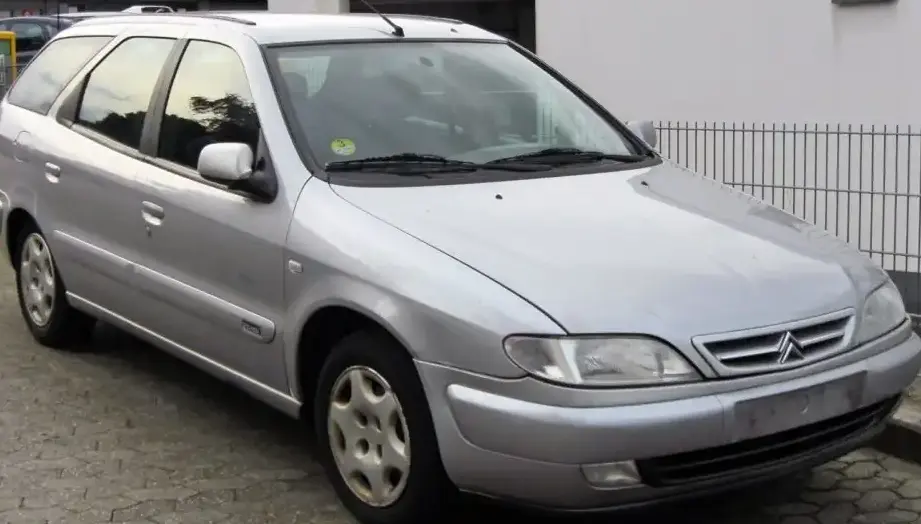
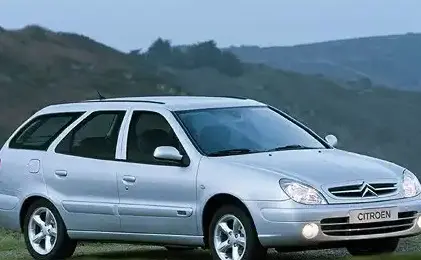
The Citroën Xsara Break 2.0 HDi (109 hp) represented a significant offering in the compact estate car segment during its production run from 2003 to 2004. Built on the PSA Group’s 1HX0/A3 platform (shared with the Peugeot 307), the Xsara Break aimed to provide a practical and affordable vehicle for families and individuals needing ample cargo space. The 2.0 HDi engine was a key component of Citroën’s diesel strategy, offering a blend of fuel efficiency and reasonable performance. This particular variant occupied a mid-range position within the Break lineup, offering more power and refinement than the lower-capacity diesel options, but remaining more accessible than the flagship petrol models.
Powertrain & Engine Architecture
The heart of the Xsara Break 2.0 HDi is the DW10ATED engine, a four-cylinder, inline diesel engine displacing 1997cc. This engine, often referred to by its code RHZ, was a product of PSA’s ongoing development of common-rail diesel technology. It featured a turbocharger with an intercooler to boost power and efficiency. The DW10ATED utilized a Bosch common-rail direct injection system, delivering fuel at extremely high pressure for improved combustion and reduced emissions. The engine employed an overhead camshaft (OHC) valvetrain with two valves per cylinder. The 5-speed manual transmission was the standard offering, providing a balance between fuel economy and drivability. The transmission’s gear ratios were tuned to maximize the engine’s torque output, providing adequate acceleration for everyday driving.
Driving Characteristics
The 109 hp 2.0 HDi engine in the Xsara Break provided a noticeable step up in performance compared to the smaller 1.6 HDi variants. While not a sports car, it offered sufficient power for comfortable cruising and overtaking on highways. The 250 Nm of torque, available from just 1750 rpm, meant that the car felt responsive in most driving situations. The 5-speed manual transmission allowed drivers to keep the engine in its optimal power band. Compared to the petrol-powered Xsaras, the 2.0 HDi offered significantly better fuel economy, making it a more economical choice for high-mileage drivers. However, the diesel engine was noticeably louder and less refined than the petrol alternatives. The suspension, tuned for comfort, provided a reasonably smooth ride, although it could feel slightly wallowy when fully loaded.
Equipment & Trim Levels
The Xsara Break 2.0 HDi typically came equipped with a reasonable level of standard features. These included central locking, power windows, power steering, and an ABS anti-lock braking system. Interior upholstery was typically cloth, with a functional and durable design. Dashboard configuration was straightforward and user-friendly. Optional extras available for this trim level included air conditioning, alloy wheels, a CD stereo system, and rear parking sensors. Higher trim levels, such as the Exclusive, added features like automatic headlights, rain-sensing wipers, and upgraded interior trim.
Chassis & Braking
The Xsara Break utilized an independent McPherson strut suspension setup at the front, providing good handling and ride comfort. The rear suspension employed a torsion beam, a cost-effective and space-saving solution. The front brakes were ventilated discs, offering good stopping power, while the rear brakes were solid discs. The hydraulic power steering provided light and precise steering feel. The car’s weight distribution was reasonably balanced, contributing to its stable handling characteristics. The 195/55 R15 tires provided adequate grip in most conditions.
Market Reception & Comparison
The Citroën Xsara Break 2.0 HDi was generally well-received by automotive critics. It was praised for its fuel efficiency, spacious interior, and practical design. However, some reviewers noted the engine’s lack of refinement compared to petrol alternatives. Compared to the 1.6 HDi version, the 2.0 HDi offered a significant performance boost, making it a more suitable choice for drivers who frequently carried passengers or cargo. Against competitors like the Ford Focus Estate and Volkswagen Golf Estate, the Xsara Break offered a competitive package in terms of price, space, and fuel economy. The 2.0 HDi variant was often seen as a sweet spot in the lineup, offering a good balance between performance, economy, and price.
Legacy
The DW10ATED engine, found in the Xsara Break 2.0 HDi, proved to be a relatively reliable unit when properly maintained. Common issues included turbocharger wear and potential problems with the fuel injection system. However, these were generally not widespread and could often be addressed with regular servicing. Today, the Xsara Break 2.0 HDi can be found as an affordable used car, appealing to buyers seeking a practical and economical estate car. Its robust engine and spacious interior continue to make it a viable option for those needing a versatile vehicle. Parts availability is generally good, and the car’s relatively simple mechanical design makes it relatively easy to maintain and repair.